A Milestone in Financial Restitution
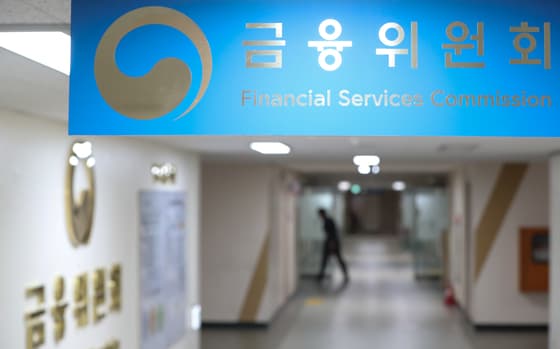
South Korea has reached a significant milestone in its long journey to resolve the lingering financial obligations from the 1997-1998 Asian financial crisis, with the government announcing that it has recovered 72.5 percent of the public funds injected to stabilize the national banking sector. According to data released Tuesday by the Financial Services Commission, Seoul has retrieved 122.1 trillion won (83.4 billion dollars) of the 168.7 trillion won deployed to rescue troubled financial institutions during the darkest economic period in modern Korean history.
The recovery rate represents a 0.5 percentage point increase from the previous year, signaling steady progress in unwinding the massive state intervention that prevented total collapse nearly three decades ago. This achievement stands as a measurable indicator of how far Asia’s fourth-largest economy has traveled from the brink of sovereign bankruptcy in December 1997, when depleted foreign exchange reserves and cascading corporate failures forced Seoul to seek the largest bailout package in International Monetary Fund history.
The steady recovery of these funds contrasts sharply with the situation in 2014, when the government had retrieved only 65.2 percent of the disbursed amount. The additional 7.3 percentage points recovered over the past decade reflect sustained efforts to liquidate assets, privatize recapitalized banks, and collect on bad loans purchased during the crisis era. Financial regulators expressed satisfaction with the progress, noting that the recovery demonstrates the long term viability of the stabilization measures undertaken during the emergency period.
The bailout funds initially deployed between November 1997 and the end of 1998 served as a lifeline for an economy facing imminent meltdown. At the time, South Korea confronted not merely a liquidity shortage but a solvency crisis that threatened the entire financial architecture built during the preceding three decades of rapid industrialization. The current recovery statistics validate the difficult decisions made by policymakers to use taxpayer money to backstop the system, while the ongoing collection efforts continue to return value to the national treasury.
The 1997 Crisis and the IMF Intervention
To understand the significance of the current recovery figures, one must recall the severity of the crisis that necessitated such extraordinary government intervention. In late 1997, South Korea’s economy, long celebrated as the Miracle on the Han River for transforming a war-torn nation into an industrial powerhouse, faced catastrophic collapse. The crisis originated in Thailand with the devaluation of the baht in July 1997, but rapidly spread to South Korea through contagion effects and exposed fundamental weaknesses in the Korean economic model.
Foreign investors, witnessing consecutive bankruptcies among large chaebol (industrial conglomerates) and financial instability across East Asia, lost confidence in Korean institutions. Foreign banks refused to roll over short term credit lines, and capital flight accelerated dramatically. By mid-December 1997, South Korea’s foreign exchange reserves had plummeted from approximately 30 billion dollars to roughly 4 billion dollars, while external debt reached 153 billion dollars. The Korean won, which had been maintained within a tight band against the dollar, halved in value within weeks, breaching 2,000 won per dollar by Christmas Eve.
On December 3, 1997, Seoul signed a three-year Stand-By Arrangement with the IMF totaling 58 billion dollars, drawing from the IMF itself (21 billion dollars), the World Bank and Asian Development Bank (14 billion dollars), and bilateral contributions from the United States, Japan, Germany, and Canada (20 billion dollars). This rescue package exceeded even the 50 billion dollars extended to Mexico during the 1994 Tequila Crisis, marking it as the Fund’s largest intervention to that date.
The bailout came with stringent conditions that would reshape Korean society. The IMF mandated austerity measures including high interest rates, reduced government expenditures, trade liberalization, and comprehensive structural reforms targeting the financial and corporate sectors. Labor market reforms made it easier for companies to terminate employment, shattering the lifelong employment guarantees that had previously defined Korean work culture.
From National Humiliation to Early Liberation
The immediate aftermath of the bailout brought what Koreans remember as the IMF days, a period of profound national shame and economic hardship. In 1998, the economy contracted by 6.7 percent, the worst performance since the Korean War. Unemployment surged from 2.6 percent to 6.8 percent, with more than a million Koreans losing their jobs between October 1997 and July 1998. Major conglomerates including Kia and Daewoo collapsed or required massive restructuring, while the Halla Group, the 12th largest chaebol, foundered under 5.3 billion dollars in debts.
Yet the crisis also sparked remarkable displays of civic solidarity. The nationwide gold collecting campaign of early 1998 saw 3.51 million citizens donate or sell 227 metric tons of gold jewelry, including wedding rings and family heirlooms, to bolster national reserves. This collective sacrifice generated approximately 2 billion dollars and symbolized the population’s commitment to national recovery. An orphanage director lamented the changed circumstances at the time, noting that charitable giving had dried up.
‘Not a single institution had volunteered to present gifts to children.’
Against expectations, South Korea repaid the IMF loans ahead of schedule. The government retired the 13.5 billion dollars special relief facility in September 1999, followed by the remaining 6 billion dollars standby loan on August 23, 2001. This early repayment, made possible by swift structural reforms and export led recovery, allowed South Korea to exit the IMF program three years ahead of the original timeline. At the ceremony marking the final repayment, Bank of Korea Governor Chon Chol-hwan expressed gratitude to citizens while acknowledging that the nation remained challenged by ingrained structural weaknesses.
The Mechanics of Fund Recovery
The 168.7 trillion won in public funds originally deployed served multiple purposes during the crisis resolution. The government injected capital into insolvent banks, purchased non-performing loans, and provided liquidity to prevent complete market breakdown. Recovery of these funds has occurred through various channels, including sales of restructured financial institutions to private investors, repayments by recapitalized banks that returned to profitability, and liquidation of assets seized from defaulted borrowers.
The progression toward the current 72.5 percent recovery rate has been gradual but steady. Data from 2014 indicated a 65.2 percent recovery rate at that time, meaning the government has retrieved an additional 7.3 percentage points over the subsequent decade. The Financial Services Commission reported that the government recovered 2.4 trillion won in just the fourth quarter of the most recent reporting period, demonstrating continued momentum in asset resolution.
Financial analysts note that full recovery of the remaining 27.5 percent presents significant challenges, as some assets have become stranded in illiquid markets or lost value over the extended resolution period. Real estate collateral held by failed merchant banks and corporate bonds issued by subsequently bankrupted chaebols remain difficult to monetize fully. Nevertheless, the current trajectory suggests South Korea may eventually achieve near complete recovery of the taxpayer funds committed to financial stabilization, marking a rare success among nations that have undertaken massive financial sector bailouts.
Structural Transformation and Economic Opening
The crisis and subsequent IMF program forced fundamental restructuring of South Korea’s economic architecture. The government closed 56 insolvent finance companies in Thailand’s wake and implemented similar measures domestically, shuttering nonviable merchant banks that had engaged in risky short term foreign borrowing. Financial sector reforms eliminated interest rate ceilings, deregulated exchange rates, and strengthened prudential supervision.
Corporate restructuring targeted the chaebol system that had driven Korean industrialization but accumulated dangerous debt levels. A vice president of a company in one conglomerate that staggered under a 1 billion dollar debt explained the underlying corruption that plagued the system.
‘Everyone knew the problem. But bankers were very weak, lending to businessmen on the recommendation of government officials. The businessmen, in turn, took care of the officials.’
The IMF program demanded transparency in accounting, elimination of cross debt guarantees between affiliates, and reduction of leverage ratios. These reforms opened previously closed sectors to foreign investment, allowing international banks to establish operations and foreign investors to acquire stakes in Korean corporations.
The results of these changes have been transformative. South Korea has evolved from a crisis-wracked economy with 20.4 billion dollars in foreign exchange reserves to the world’s 14th largest economy holding 384.46 billion dollars in reserves, ranking ninth globally. The ratio of short term foreign debt dropped from 286.1 percent in 1997 to 30.8 percent by 2017. Sovereign credit ratings have improved from B+ or B- levels during the crisis to high AA or Aa2 ratings today.
The Social Cost and Generational Divide
Despite the macroeconomic success story, the 1997 crisis created enduring social fissures that continue to shape Korean society. The labor market reforms implemented under IMF conditionality introduced widespread non-regular employment, creating a two-tier system dividing secure, well paid permanent workers from temporary contract employees who receive lower wages and fewer benefits.
This transformation has given rise to what Korean media term the seven-give-up generation, referring to young people who have abandoned aspirations for love, marriage, childbirth, home ownership, personal dreams, stable human relations, and hope. Youth unemployment stands at approximately 9.9 percent, more than triple the overall rate, with 410,000 Koreans in their twenties currently jobless. The average service period for first jobs has shrunk to just over one year, while 58 percent of the population aged 15-29 lack paid employment.
Income inequality has widened significantly since the crisis. According to research by the Korea Development Institute, the poorest 10 percent of households suffered income declines exceeding 20 percent during the crisis period, while the richest 10 percent experienced income increases of 10 percent. President Moon Jae-in, during his first budget proposal, recalled the dark days that upended Korean lives and pledged to address the structural inequality that resulted from the foreign exchange crisis.
‘The crisis upended the lives of all Koreans, and the socio-economic structure that was transformed by the foreign exchange crisis has damaged the fabric of people’s everyday lives.’
Many Koreans still view the period as the worst economic trauma in living memory. Surveys indicate that over 60 percent of the population believes the crisis negatively affected their lives, with more than 80 percent identifying employment issues as requiring continued remedy. The dichotomy between regular and irregular workers remains a central political issue, with successive administrations attempting to address precarious employment without undermining business competitiveness.
Lessons for Crisis Management
South Korea’s experience offers significant lessons for international financial crisis management. The coordinated debt rollover arranged in late 1997, combined with high initial interest rates followed by strategic reduction, succeeded in stabilizing the exchange rate and restoring market confidence. The rapid implementation of structural reforms, while painful, enabled quicker recovery than experienced by other crisis-affected nations.
However, critics including Korean economists have questioned whether the high interest rate policy initially deepened rather than resolved the crisis by accelerating corporate bankruptcies. The bank-focused restructuring strategy initially neglected investment trust companies, allowing weak chaebol like Daewoo to issue corporate bonds through these less supervised channels, ultimately leading to further credit crunches when these instruments matured.
The Korean case demonstrates that swift crisis resolution requires not only macroeconomic stabilization but also fundamental corporate and financial restructuring. The country’s subsequent accumulation of substantial foreign exchange reserves and currency swap agreements with major trading partners, including recent renewals with China and Canada, reflect institutional learning from the 1997 vulnerability.
Key Points
- South Korea has recovered 72.5 percent (122.1 trillion won or 83.4 billion dollars) of the 168.7 trillion won in public funds used to bail out financial firms during the 1997-1998 Asian financial crisis.
- The recovery rate increased by 0.5 percentage points from the previous year, according to Financial Services Commission data released in February 2026.
- The 1997 crisis forced South Korea to accept a 58 billion dollar IMF rescue package, the largest in the Fund’s history at that time, following the collapse of the won and depletion of foreign exchange reserves.
- South Korea repaid all IMF loans by August 2001, three years ahead of schedule, marking one of the fastest crisis recoveries among emerging economies.
- While macroeconomic indicators have improved dramatically, with foreign reserves growing from 20.4 billion dollars to 384.46 billion dollars, the crisis created lasting social inequalities and a dual labor market dividing regular and irregular workers.
- The seven-give-up generation phenomenon reflects ongoing youth unemployment and precarious employment conditions stemming from the crisis-era labor reforms.