600,000 Terminals and Four Ground Stations
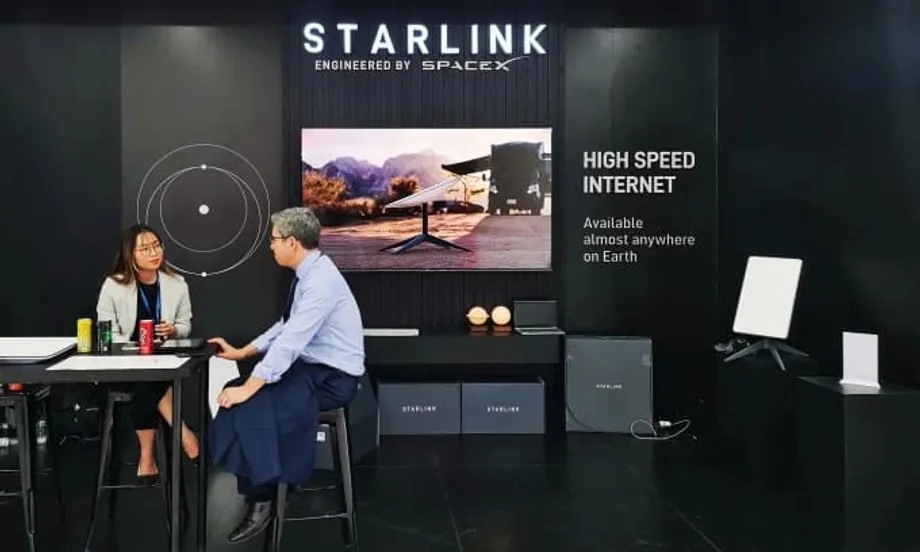
Vietnam has authorized SpaceX to operate Starlink satellite internet nationwide, allowing up to 600,000 user terminals and four gateway stations in an initial deployment. The Ministry of Science and Technology issued telecommunications licenses to Starlink Services Vietnam Co., Ltd. in mid February 2026, moving the company toward commercial service under a controlled pilot that must end before January 1, 2031.
Contents
- 600,000 Terminals and Four Ground Stations
- A Pilot With a Firm End Date
- How Satellites Bring the Connection Closer
- Ground Stations Put Traffic Under Local Oversight
- A Hanoi Company With Local Leadership
- The Dates Behind the Approval
- Trade Negotiations Give the Decision Added Weight
- Why Domestic Operators Expect Limited Disruption
- A Reserve Connection When Ground Networks Fail
- The Essentials
The approval follows a pilot process lasting nearly a year and makes Vietnam the fifth Southeast Asian country to host the satellite network operated by Elon Musk's company. Starlink has not announced a commercial launch date. As of February 16, its website still lists Vietnam as "coming soon."
Vietnam's immediate aim is to reach mountainous areas, offshore islands and remote border regions where laying fiber optic cables or building cellular towers has been difficult. Satellite connections would also provide a reserve route for communications when typhoons and floods damage terrestrial lines or when undersea cables are disrupted.
Nearly 80% of Vietnam's 100 million people are already online. The government's effort focuses on the remaining 20% described as living beyond the reach of traditional infrastructure, while adding backup capacity for places that already have internet access. The initial terminal limit is equivalent to approximately 0.6% of the population, giving regulators a limited deployment through which to assess network effects and the management of radio frequencies.
A terminal is the equipment at a customer's location that connects to satellites, usually a compact dish antenna weighing a few kilograms. A gateway station connects the satellite system with networks on the ground. Vietnam's approval covers both ends of that connection, alongside requirements for security, oversight and compatibility with existing wireless services.
The decision also arrives during negotiations over United States tariffs and shortly before Communist Party General Secretary To Lam's scheduled visit to Washington. It brings together two Vietnamese priorities: extending digital access at home and maintaining relations with an important trading partner.
A Pilot With a Firm End Date
Deputy Prime Minister Ho Duc Phoc first issued the directive establishing the pilot framework in April 2025. The arrangement allows a controlled experiment lasting five years, with completion required before January 1, 2031, rather than an immediate authorization for unlimited deployment.
Starlink is the first foreign entity permitted to test and now commercially operate satellite internet services in Vietnam's tightly regulated telecommunications sector. Its entry represents a calculated opening to a new communications technology, with the government retaining oversight of how the service operates.
The Ministry of Science and Technology granted two distinct authorizations. One covers fixed and mobile satellite telecommunications services. A separate license from the Radio Frequency Department permits the use of specified radio frequencies and related equipment.
Radio frequencies are the channels through which wireless equipment sends signals. Licensing those channels allows Starlink to build transmission and reception infrastructure while protecting services already operated by Viettel, VNPT and MobiFone from interference.
The Radio Frequency Management authority set an explicit condition for the satellite system:
no interference with existing radio communication networks
Local science and technology departments across Vietnam have been instructed to coordinate oversight and ensure compliance with national defense and security requirements. The arrangement reflects the government's effort to adopt new technology while maintaining strict control over information infrastructure in a one party state.
How Satellites Bring the Connection Closer
Starlink uses satellites in low Earth orbit, approximately 550 kilometers above the planet. Traditional geostationary satellites operate at about 36,000 kilometers. Signals traveling to those more distant satellites take longer, creating a noticeable delay in communications.
The shorter distance allows Starlink to provide high speed internet with low latency, meaning less waiting between sending information and receiving a response. That makes the service capable of supporting video conferencing, online gaming and remote work, with performance comparable to fiber optic broadband.
SpaceX had launched more than 10,000 Starlink satellites by the end of 2025, although about 6,750 remained operational. The network served approximately 5 million users across 125 countries and territories.
Starlink demonstrated its service in Vietnam at the Vietnam International Innovation Expo in October 2023. During testing at the event in Hanoi's Hoa Lac area, it achieved speeds of approximately 200 Mbps. That measurement describes the amount of data the connection could carry each second.
Ground Stations Put Traffic Under Local Oversight
Starlink's initial deployment includes four gateway stations. Regulatory filings and industry information identify Da Nang as a planned location for one station, with a possible eventual network of between 10 and 15 facilities nationwide. Estimated investment is around $3 million per station.
The gateways serve a purpose beyond routing signals between satellites and ground networks. All Starlink traffic must pass through these facilities, allowing Vietnamese authorities to monitor and control data flows, require local information storage under cybersecurity laws and identify users when necessary.
The arrangement also allows authorities to suspend service on security grounds. These controls address longstanding government concerns about internet access operating outside its supervision.
Vietnam's cybersecurity requirements include data localization, which means keeping required information within the country, and government access to networks. Starlink must satisfy those conditions despite its historical resistance to such requirements in other markets.
The four stations and the cap of 600,000 terminals give regulators a defined starting scale. Expansion to a larger gateway network is a potential later development, while the initial phase allows authorities to evaluate the service's effect on communications networks and radio spectrum use.
A Hanoi Company With Local Leadership
Starlink Services Vietnam Co., Ltd. is headquartered in Hanoi's Cua Nam Ward and has charter capital of approximately $1.15 million. It is wholly owned by Starlink Holdings Netherlands B.V., a SpaceX affiliate based in Amsterdam.
The Dutch holding company structure is common among multinational technology companies managing international tax and liability concerns while operating in individual national markets. In Vietnam, the local company provides the corporate presence required for licensing and regulatory accountability.
SpaceX appointed Do Ba Thich, a 36 year old Vietnamese national from Hanoi, as chief executive officer. Lauren Ashley Dreyer, an American citizen born in 1983, serves as chairwoman and legal representative.
The combination of Vietnamese executive leadership and a foreign parent company is common among foreign technology businesses entering Vietnam. It provides local accountability and a basis for government relations while leaving ultimate corporate control with the parent company.
The Vietnamese legal entity was established in late 2025 after approval of the pilot license. Its creation allowed SpaceX to proceed with applications for full commercial licensing. Industry analysts suggest the structure could also support further investment, with earlier information indicating that SpaceX may invest up to $1.5 billion in Vietnam depending on the pilot's success.
The Dates Behind the Approval
Vietnam's decision follows a sequence that began with a public demonstration and moved through pilot authorization, company formation and commercial licensing. The main dates show how the service progressed from a technical presentation to permission for an initial national deployment.
- October 2023: Starlink demonstrated speeds of approximately 200 Mbps at the Vietnam International Innovation Expo in Hanoi's Hoa Lac area.
- April 2025: Deputy Prime Minister Ho Duc Phoc first issued the directive establishing the controlled pilot framework.
- Late 2025: Starlink Services Vietnam Co., Ltd. was established after pilot license approval, allowing commercial licensing applications to proceed.
- December 2025: Telecommunications Authority representatives described satellite internet as a reserve communications channel during natural disasters.
- Mid February 2026: The Ministry of Science and Technology issued telecommunications licenses for Starlink's Vietnamese operation, alongside authorization for radio frequencies and equipment.
- February 19, 2026: To Lam is scheduled to attend the inaugural meeting of President Donald Trump's Board of Peace initiative in Washington.
- Before January 1, 2031: The five year pilot must conclude.
The licensing milestone puts Starlink in a position to begin commercial operations within the pilot's limits. The framework continues to place its deployment under Vietnamese telecommunications, radio frequency and security supervision.
Trade Negotiations Give the Decision Added Weight
To Lam's scheduled Washington visit comes just days after the Starlink licensing announcement. He is due to attend the inaugural meeting of President Donald Trump's Board of Peace initiative on February 19, while Vietnam and the United States remain engaged in tense trade negotiations.
The United States imposed tariffs of 20% on Vietnamese exports in 2025. Six rounds of talks toward a new trade agreement have taken place, but an agreement remains unresolved.
Vietnam's economy depends heavily on manufacturing and recorded growth of 8% last year despite tariff pressures. The government is seeking double digit expansion in 2026, making better trade relations with the United States economically important.
Analysts view the Starlink decision as a gesture of goodwill toward the Trump administration, given Musk's role as a close presidential adviser and head of the Department of Government Efficiency. Permission for a prominent American technology company to enter the Vietnamese market carries diplomatic value alongside its commercial purpose.
Hanoi's decision also serves its own digital transformation agenda. Approval before a concrete trade breakthrough allows Vietnam to pursue its telecommunications policy while signaling openness to American investment.
Satellite internet can support civilian connectivity and potential military communications applications. That combination adds a strategic dimension to the licensing decision and helps explain the attention to national defense, security and government control over data flows.
Why Domestic Operators Expect Limited Disruption
Viettel, VNPT and MobiFone dominate Vietnam's established telecommunications market. Viettel is owned by the military, VNPT is the former monopoly carrier, and all three are linked to the state.
The operators have invested billions in fiber connections to homes and in 4G and 5G mobile coverage. Their networks reach most populated areas with competitive speeds and pricing. Urban centers have widespread gigabit fiber broadband, while mobile penetration exceeds 100% nationally.
Vietnam has built Southeast Asia's most dynamic internet ecosystem, leaving Starlink to enter a market where many people already have access to established ground networks. Its strongest role is expected to be filling concentrated coverage gaps and providing backup connections.
Doan Quang Hoan, vice chairman of the Radio-Electronics Association of Vietnam and former head of the Radio Frequency Department, said satellite service could close the remaining gaps quickly. He also explained why its effect on existing operators would probably be limited:
Satellite internet could quickly eliminate remaining coverage gaps in Vietnam. However, its impact on the domestic telecom market is likely to be limited because current coverage gaps are relatively small and largely confined to areas without access to the national power grid.
Hoan's assessment places geography at the center of Starlink's opportunity. The gaps are concentrated in difficult locations, often also lacking national electricity connections, rather than across the densely populated areas already served by domestic carriers.
A Reserve Connection When Ground Networks Fail
Telecommunications Authority representatives highlighted disaster resilience during a press briefing in December 2025. They described satellite internet as a communications reserve that could remain useful when ordinary transmission routes are damaged:
Satellite internet is a crucial reserve channel during natural disasters, because it does not rely on terrestrial transmission lines.
Typhoons and floods can sever terrestrial lines. Undersea fiber optic cables can also be disrupted by anchor strikes, earthquakes or accidents during maintenance on the seabed. Satellite connections bypass those transmission routes, giving users another way to communicate when ground networks fail.
Remote islands in the South China Sea and mountainous border regions near Laos and China are among the places where the service could be useful. Running fiber through difficult terrain can be economically impractical, while satellite service connects through a terminal rather than requiring a cable along the entire route to the user.
Vietnam's approach therefore positions Starlink as a complement to its existing networks. The service can fill the final gaps in universal service goals, meaning efforts to bring communications access to everyone, while adding redundancy for emergencies. Redundancy means having another connection available when the main one stops working.
The pilot brings those objectives together within a limited deployment: access for difficult locations, a reserve channel during disasters, and local oversight through licensed equipment and gateway stations. Its scale and duration give Vietnam a defined period in which to assess satellite internet alongside its established telecommunications system.
The Essentials
- Vietnam authorized an initial Starlink deployment of up to 600,000 terminals and four gateway stations.
- The Ministry of Science and Technology issued telecommunications licenses in mid February 2026, with separate permission for radio frequencies and equipment.
- The five year pilot must conclude before January 1, 2031.
- Starlink Services Vietnam Co., Ltd. is based in Hanoi, with Do Ba Thich as chief executive officer and Lauren Ashley Dreyer as chairwoman and legal representative.
- All Starlink traffic must pass through local gateway facilities for oversight and compliance with cybersecurity requirements.
- The service is intended to reach remote mountains, border regions and islands while providing backup communications during disasters.
- Domestic market disruption is expected to be limited because Viettel, VNPT and MobiFone already serve most populated areas.
- The approval comes during United States trade negotiations and before To Lam's scheduled February 19 visit to Washington.
- As of February 16, 2026, Starlink had not announced a commercial launch date in Vietnam.