A Sharp Fall in Corn Imports Signals a Bigger Shift
China cut corn imports from nearly 30 million metric tons in 2022 to 2.65 million in 2025, according to official data, as Beijing pushed to grow more food at home and reduce dependence on American agriculture. Brazil now supplies more than 70 percent of Chinese soybean imports, while the United States accounts for roughly 24 percent. Together, those figures show how domestic production and changing trade routes are reshaping the country's food supply.
Contents
- A Sharp Fall in Corn Imports Signals a Bigger Shift
- Why Memories of Famine Shape Today's Policy
- The Production Targets Behind the 2035 Plan
- Digital Networks Reach Small Farms
- Seeds Become a Strategic Investment
- Why Soybeans Remain the Hardest Crop to Replace
- Brazil Gains Ground as American Sales Shrink
- Desert Restoration Opens New Growing Areas
- Farmland and Water Put Limits on Expansion
- American Farmers Face a Lasting Market Change
- The Dates That Define the Transition
- What to Know
Beijing's ambition extends to 2035, when it aims to achieve agricultural powerhouse status and complete independence from American crops. A government initiative running for 10 years combines seed development, agricultural machinery, artificial intelligence, farmland protection and infrastructure investment. Food security has become a matter of national security, with officials describing it as a ballast stone that helps keep the country stable.
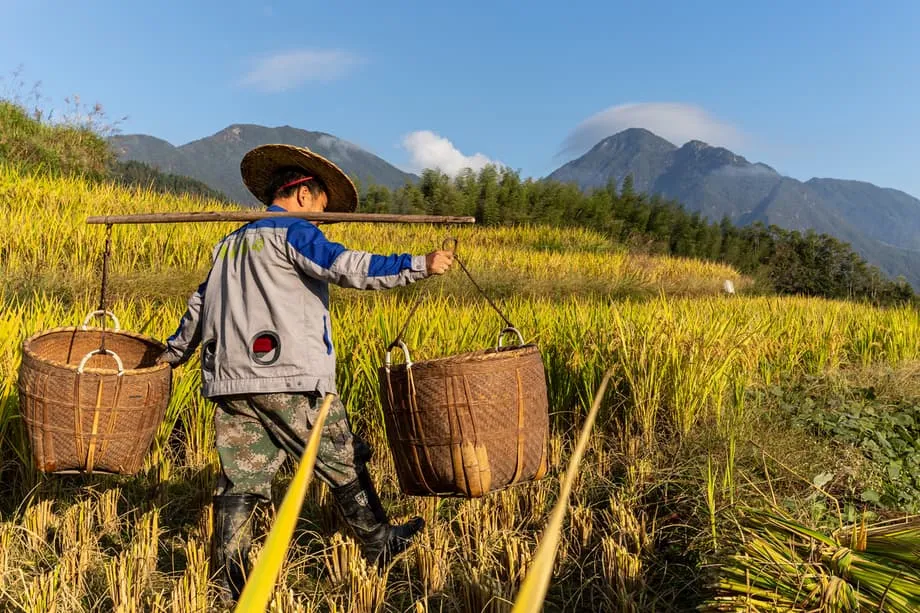
China has only 10 percent of the world's arable land but must feed nearly 20 percent of humanity. American farmers supplied crucial parts of that system for decades, especially soybeans used to feed the pigs that support China's large appetite for pork. Beijing now wants greater control over both the crops it grows and the imports it still needs.
In Beijing, smartphone orders can bring apples or vacuum sealed corn from rural farms to customers within days. The appeal is produce that tastes crisp and natural, compared with varieties sold in urban supermarkets. Behind that convenience lies a larger transformation: digital sales networks connect farms with cities, while researchers develop corn containing more protein and engineers grow tropical fruit on reclaimed desert land.
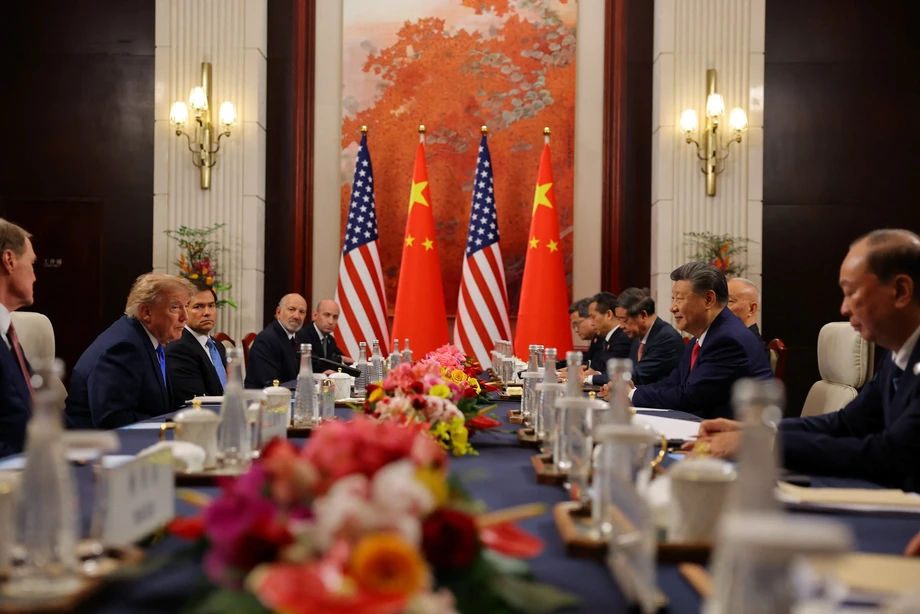
The shift is driven by trade conflict and geopolitical calculation as well as farming improvements. For producers in Iowa and Illinois, a customer that once bought vast quantities of American crops could become a permanently smaller market.
Why Memories of Famine Shape Today's Policy
China's food security policy carries the weight of the famine associated with Mao Zedong's Great Leap Forward between 1958 and 1962. The drive for rapid industrialization moved agricultural workers into backyard steel production. Local officials overstated harvests while actual crops rotted, contributing to a famine that killed between 30 million and 40 million people, the largest such catastrophe in modern history.
President Xi Jinping has made food security a leading national priority. His warning to officials is political as well as practical: a failure to fill Chinese rice bowls threatens the legitimacy of the Communist Party.
At the Central Rural Work Conference in 2013, Xi warned against allowing improved harvests to erase the memory of earlier suffering.
We cannot allow the recent, steady gains we have achieved in grain production to lull us into a false sense of security. We should not forget about the suffering caused by previous famines just because we have managed to recover.
The State Council has carried that urgency into policy and legislation. The 2025 No. 1 Central Document, Beijing's first policy statement of the year, sets out six priority areas, including stable grain supplies and rural revitalization. The Food Security Law, submitted in 2023, establishes protections covering farmland, reserves and emergency responses.
These measures treat agricultural independence as part of economic and political survival. Grain reserves provide another layer of protection against interrupted trade: China holds 69 percent of global corn stocks and 60 percent of rice reserves.
The Production Targets Behind the 2035 Plan
Beijing's plan sets interim benchmarks for 2027 before its larger goal in 2035. It calls for annual grain production capacity of 700 million metric tons within two years of the plan's announcement, alongside breakthroughs in seed technology and agricultural machinery.
China produced a record 706.5 million metric tons of grain in 2024. Production capacity describes what the farming system can deliver, while annual output records what was actually harvested. Planners also seek another 50 million metric tons by 2030, making further improvements necessary despite the record harvest.
More than 1.75 billion mu, approximately 117 million hectares, is to remain dedicated to grain cultivation. A mu is a Chinese measure of land area. The plan also identifies core production zones: rice grown in two cropping cycles in the Yangtze River Economic Belt, wheat of high quality in the northern plains, and specialized areas for oilseeds.
Han Wenxiu, director of the Central Rural Affairs Office, has urged officials to stay focused on production even when crop prices change.
Grain production must be strengthened, not relaxed. Temporary price fluctuations should not blind us to the fact that food security remains fragile.
The central government plans minimum purchase rates for rice and wheat, market support purchases in various provinces, and expanded grain storage facilities. These measures are intended to protect farmer morale and income when market prices weaken. Officials also recently allocated 10 billion yuan, equivalent to $1.38 billion, in direct subsidies to boost farmer incomes.
Digital Networks Reach Small Farms
Qicaihong, a company operating in Shenzhen's technology sector, is using artificial intelligence from DeepSeek to improve corn production in Yunnan province. Its subsidiary, Shijing Agriculture Technology, equips small mountain plots with sensors and coordinates standardized production. Farmers can sell at guaranteed prices instead of facing changing market prices alone.
JD.com and Pinduoduo have built digital connections between remote farms and urban consumers. E commerce platforms now connect 500 million rural residents to city markets, making the movement of produce from mountain plots to household doorsteps part of the agricultural strategy.
DJI has established an entire division devoted to agricultural automation. Autonomous drones spray crops across terraced hillsides, including areas visible along the route of trains travelling at high speed between Beijing and Shanghai. Such machinery brings automated work to places where farms can be small or difficult to reach.
The National Agricultural Technology and Education Cloud Platform, launched in 2015, gives farmers another digital service. They can photograph pests and receive pesticide recommendations generated by artificial intelligence. The system connects a problem in a field with advice that a farmer can use without waiting for an in person visit.
Seeds Become a Strategic Investment
Chinese researchers have commercialized gene edited seeds that improve corn yields by 10 percent. Gene editing changes selected parts of a plant's genetic instructions to obtain a desired trait. Researchers are also cultivating corn with higher protein content specifically to replace some imported soybeans in animal feed.
Scientists at the Chinese Academy of Sciences are accelerating breeding programs for soybeans with higher oil content. Their aim is to narrow the yield gap with American farms, increasing the value and productivity of China's own soybean crop.
China's public sector spent roughly $6.6 billion on agricultural research and development in 2021, twice the American public investment. That spending supports a strategy in which better seeds and more productive farms help compensate for limited land.
Syngenta Group illustrates how foreign acquisitions fit into Beijing's domestic seed ambitions. The agricultural technology company, acquired by state run ChemChina, is headquartered in Switzerland. It received approval for 111 new seed varieties in late 2024 and is pursuing a Hong Kong initial public offering to fund further research. An initial public offering allows a company to sell shares to investors through a stock exchange.
Syngenta gives Beijing access to global intellectual property and distribution networks while supporting seed development inside China. Combining overseas acquisitions with domestic innovation is intended to eliminate reliance on Western genetic resources.
Why Soybeans Remain the Hardest Crop to Replace
China imports approximately 100 million metric tons of soybeans each year, primarily to supply animal feed for its enormous pork industry. Soybeans therefore remain the biggest challenge in the effort to reduce agricultural dependence.
Beijing wants to reduce the share of soymeal in animal feed from 17 percent to 10 percent by 2030. Soymeal is the protein rich material used in feed after soybeans are processed. The strategy relies on diets containing less protein but a balanced supply of amino acids, supported by synthetic lysine and methionine. Amino acids are the building blocks of protein, so balancing them can help animals receive the nutrients they need with less soymeal.
Official statistics put the soymeal inclusion rate below 13 percent in 2023, while figures from the U.S. Department of Agriculture and third party data providers place it near 16 percent, with substantial variation from year to year. That gap matters because the starting point determines how far the industry still has to move toward the 2030 target.
Soybean imports continue to reach historic highs. Efforts to substitute other feed ingredients have therefore not substantially reduced the absolute amount China buys. A smaller percentage of soymeal in each batch of feed can still leave a large national requirement when the livestock industry consumes enormous quantities.
No single measure resolves the soybean problem. Higher protein corn, improved domestic soybean varieties and changes in feed composition address different parts of the same demand, while imports continue to supply a large share of the raw material.
Brazil Gains Ground as American Sales Shrink
Brazil now supplies more than 70 percent of China's soybean imports, compared with roughly 24 percent from the United States. The change accelerated during the Trump administration's tariff wars and continued through later tensions. When trade escalations occurred in early 2025, Chinese customs officials readily found alternative suppliers.
Brazilian production costs are lower because of abundant land, favorable currency exchange rates and established infrastructure. Chinese investment in railways and ports has helped support that infrastructure, tying agricultural purchases to the systems that move crops to export markets.
Beijing and Brasilia have also negotiated currency swap agreements that allow transactions to bypass dollar denominated payments. These arrangements reduce China's financial exposure to American banking systems and create an additional reason to maintain agricultural trade with Brazil.
The resulting shift has two connected parts. China is trying to produce more of its own food while directing much of its remaining soybean demand toward Brazil. American farmers face shrinking access even while China's total soybean imports remain high.
Desert Restoration Opens New Growing Areas
The Three North Shelterbelt program began in 1978 and is scheduled to continue until 2050. Spanning 13 provinces across northern China, it seeks to stabilize desert areas covering more than 4 million square kilometers and ranks among history's largest ecological restoration efforts.
In the Kubuqi Desert of Inner Mongolia, technicians grow bananas, papayas and dragon fruit inside greenhouses powered by solar energy. The cultivation takes place in an area where temperatures once fell below minus 30 degrees Celsius.
The Engebei Ecological Demonstration Zone sends produce to Hong Kong and Shenzhen. Turning wasteland into productive agricultural land adds a new source of food while connecting the restoration project to distant urban markets.
Workers stabilize dunes by laying straw grids by hand, then plant shrubs resistant to drought. After decades of experimentation, survival rates for planted vegetation now reach 85 percent in some areas. Stabilizing the sand is part of making land usable rather than simply planting crops on moving dunes.
Farmland and Water Put Limits on Expansion
China lost more than 5 percent of its arable land between 2013 and 2019 because of urbanization and industrial conversion. Beijing has set a red line of 120 million hectares that must remain agricultural and is using farmland restoration and crop rotation programs to protect production.
Authorities reclaimed more than 170,000 hectares between 2021 and 2023 by returning industrial zones to cultivation. Reclaimed land can require years of soil remediation, the work needed to restore soil quality before it can support reliable farming.
The South North Water Diversion project, costing trillions of yuan, addresses the mismatch between water supplies and farmland. Some agricultural regions face severe groundwater depletion, while others experience seasonal flooding. Moving water across watersheds attempts to redistribute a resource that is unevenly spread.
Environmental effects and disputes between provinces complicate those large infrastructure projects. Climate change adds pressure by altering rainfall patterns and threatening traditional grain belts. More land, better seeds and new machinery still depend on having enough usable water in the right places.
American Farmers Face a Lasting Market Change
American agricultural producers are losing what had been their most reliable bulk customer. Goldman Sachs put China's share of U.S. imports at roughly 7.5 percent in 2025, describing a reversal of two decades of growth following China's accession to the World Trade Organization in 2001. The agricultural shift forms part of that wider economic separation.
Missouri farmers face a particularly complicated relationship with China. WH Group, a Chinese owned conglomerate, controls Smithfield Foods, America's largest pork processor, while those farmers are also losing export markets to Brazilian competitors.
Washington restricts Chinese land purchases near military installations such as Whiteman Air Force Base. Beijing, meanwhile, regards American food exports as a potential source of pressure during geopolitical crises. Chinese officials explicitly say grain reserves and diversified suppliers would allow the country to withstand a complete cessation of American agricultural imports without domestic shortages.
Some American manufacturers are moving component production home to avoid tariffs. Farmers have less flexibility because corn and soybeans grow where climate and soil permit. As China advances toward its 2035 self sufficiency targets, the American Midwest faces the prospect of structural oversupply, meaning production that exceeds the demand available to buy it.
Analysts suggest excess American crops may go into biofuel programs or alternative export markets. Neither is expected to provide the scale or pricing power that the Chinese market offered at its peak. The costs of the agricultural separation therefore fall unevenly on the two countries.
Technology is also becoming part of the separation. Beijing restricts foreign ownership of agricultural data platforms and seed technologies, while Washington scrutinizes Chinese acquisitions of American farmland and agricultural businesses. Both governments increasingly treat food production as a strategic contest in which one side's gain can be viewed as the other's loss.
The Dates That Define the Transition
China's current campaign brings together restoration projects begun decades ago, more recent food security policies and targets extending into the next decade. The milestones show how farming, technology and trade have become parts of a sustained national program.
- 1978: The Three North Shelterbelt program began, with work scheduled through 2050.
- 2013: Xi Jinping warned the Central Rural Work Conference against complacency about grain production and memories of famine.
- 2015: The National Agricultural Technology and Education Cloud Platform launched.
- 2023: The Food Security Law was submitted, covering farmland, reserves and emergency responses.
- 2024: Grain output reached 706.5 million metric tons, and Syngenta received approval for 111 new seed varieties late in the year.
- 2025: The No. 1 Central Document set six rural policy priorities, while corn imports fell to 2.65 million metric tons.
- 2027: The agricultural plan sets interim production and technology benchmarks.
- 2030: Beijing aims for another 50 million metric tons of grain and a 10 percent soymeal share in feed.
- 2035: Beijing targets agricultural powerhouse status and independence from American crops.
As of February 20, 2026, soybeans remain the central difficulty: China still imports approximately 100 million metric tons annually even as it changes suppliers and feed formulas. The scale of that continuing demand makes the soybean industry a crucial test of the broader strategy.
What to Know
- China's corn imports fell from nearly 30 million metric tons in 2022 to 2.65 million in 2025, according to official data.
- Brazil supplies more than 70 percent of Chinese soybean imports; the American share is roughly 24 percent.
- Beijing aims to reduce soymeal in animal feed from 17 percent to 10 percent by 2030, while soybean imports remain near 100 million metric tons annually.
- China produced a record 706.5 million metric tons of grain in 2024 and seeks another 50 million metric tons by 2030.
- Seed development, artificial intelligence, drones, farmland restoration and water infrastructure support the drive toward agricultural independence.
- China holds 69 percent of global corn stocks and 60 percent of rice reserves as protection against trade disruption.
- The 2035 goal combines agricultural powerhouse status with independence from American crops, putting lasting pressure on American farm exports.