Tokyo’s First Flying Car Flight Marks New Era
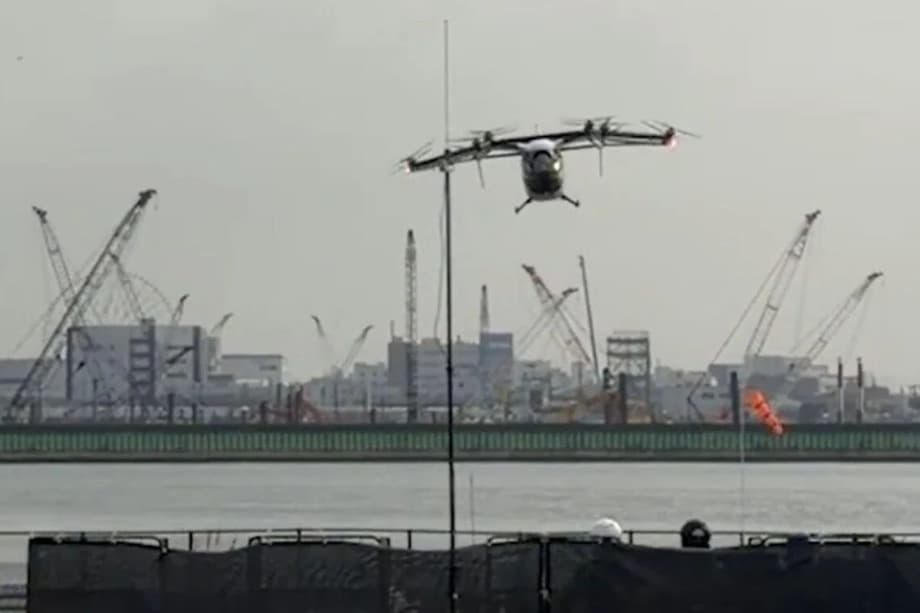
On February 24, 2026, Japanese startup SkyDrive Inc. achieved a milestone in urban transportation history by conducting the first demonstration flight of its electric vertical take off and landing aircraft in Tokyo. The battery powered SD 05 model lifted off from a temporary site at Tokyo Big Sight, an iconic convention center in the Ariake district, and flew over Tokyo Bay for approximately three and a half minutes. The unmanned aircraft covered roughly 150 meters during this carefully orchestrated test, which marked the company’s debut flight in Japan’s capital city.
The demonstration operated without a pilot on board, instead using a combination of automated control systems and remote piloting technology to maintain strict safety standards. This flight represented the culmination of years of development and followed a postponed attempt originally scheduled for January at the company’s test facility in Yamaguchi Prefecture, which was canceled when wind conditions failed to meet government safety requirements. The successful execution in Tokyo demonstrated SkyDrive’s ability to coordinate complex logistics involving local government, private partners, and aviation authorities in one of the world’s most densely populated urban centers.
Inside the SD 05 Aircraft
The SkyDrive SD 05 represents the latest generation of electric vertical take off and landing technology, commonly referred to as eVTOL in the aviation industry. This battery powered aircraft features twelve rotors distributed across its compact frame and offers seating for three passengers. The vehicle can travel distances between 15 and 40 kilometers on a single charge, making it suitable for short urban hops and journeys between cities. This range covers significant portions of the Greater Tokyo Area, potentially connecting business districts with outlying residential neighborhoods or tourist destinations.
Engineers designed the SD 05 with a specific focus on urban integration. Its compact dimensions and light weight allow the aircraft to land in significantly smaller spaces than conventional helicopters, which require large helipads and extensive safety zones. This smaller footprint enables rooftop landings in dense metropolitan areas and reduces the infrastructure costs associated with establishing vertiports, the specialized terminals where these aircraft depart and arrive. The aircraft’s electric powertrain produces zero direct emissions during flight, aligning with global efforts to reduce urban air pollution and supporting Tokyo’s environmental goals.
The twelve rotor configuration provides redundancy for safety, allowing the aircraft to maintain control even if several rotors experience failure. This distributed electric propulsion system represents a significant advancement over traditional single rotor helicopters, offering improved stability through multiple points of lift. The SD 05 builds upon lessons learned from SkyDrive’s earlier SD 03 prototype, incorporating feedback from hundreds of test flights and operational demonstrations.
Building the Infrastructure for Urban Air Mobility
Alongside the aircraft demonstration, SkyDrive and its partners unveiled a fully operational terminal prototype designed to handle future passenger operations. This facility, developed in collaboration with Mitsubishi Estate Co. and Kanematsu Corp., incorporates advanced biometric technology including an automatic registration system based on facial recognition. Passengers participating in trial runs experienced the complete pre flight process, from security screening to digital safety briefings, though actual flight boarding remains restricted while the aircraft operates in unmanned mode.
The demonstration formed part of the Tokyo Metropolitan Government’s Project for Developing Business Models for eVTOL Services in Tokyo, an initiative designed to integrate flying cars into the city’s transportation network by 2030. The partnership structure assigns specific responsibilities to each entity: Mitsubishi Estate provides overall coordination and real estate expertise, Kanematsu manages vertiport installation and ground operations, while SkyDrive handles the aircraft and flight demonstrations. This division of labor reflects the complex nature of urban air mobility, which requires expertise in aviation, real estate development, and logistics.
Future Infrastructure and Public Engagement
Looking ahead, the company plans to collaborate with Skyports, based in the UK and a global leader in vertiport infrastructure, to install a permanent facility equipped with a Vertiport Automation System in Tokyo. This system would manage departure and arrival sequences, monitor airspace, and coordinate with existing air traffic control systems. The Tokyo Big Sight location serves as a proof of concept for these future installations, testing how temporary vertiports can be established in existing parking lots or open spaces without permanent construction.
Public engagement played a central role in this week’s demonstrations. Between February 24 and February 28, visitors could view the terminal interior and watch flights from designated viewing areas. Selected participants tested the passenger flow through registration and security processes, providing feedback that will shape future operations. The operations room, where technical staff monitor airspace and weather conditions, opened for public viewing on select days to increase transparency about safety protocols and build public trust in this new form of transportation.
Learning from Setbacks
The successful Tokyo demonstration followed a series of challenges that tested the company’s resilience and commitment to safety protocols. An earlier demonstration planned for January 2026 at SkyDrive’s test facility in Yamaguchi Prefecture was canceled after wind conditions failed to meet the safety standards established by Japanese aviation authorities. This cautious approach reflects the highly regulated nature of aviation development and the company’s unwillingness to compromise on passenger safety even for public relations gains.
Previous setbacks also included the cancellation of commercial flight plans for the 2025 World Exposition in Osaka. SkyDrive abandoned those commercial service plans, citing persistent challenges in addressing safety and technological development issues. However, the company did conduct non commercial demonstration flights at the Osaka Expo, allowing thousands of visitors to witness the technology in action without carrying paying passengers. These experiences provided valuable operational data while highlighting the gap between demonstration capabilities and certified commercial readiness.
These delays illustrate the difficult path from experimental technology to certified commercial aviation. Unlike software development, where companies can release minimum viable products and iterate quickly, aviation requires exhaustive testing and regulatory approval before carrying passengers. SkyDrive’s decision to prioritize safety over speed has won support from investors and government partners who recognize that success over the long term depends on maintaining impeccable safety records from the very first commercial flight.
The Commercial Timeline
SkyDrive has established 2028 as the target year for launching commercial operations in parts of Japan. The company began production of the SD 05 in March 2024 at a manufacturing plant owned by Suzuki Motor Corporation, SkyDrive’s official production partner. This manufacturing capability supports the company’s goal of making urban air travel a regular feature of city life within the next three years. The partnership with Suzuki provides access to automotive manufacturing expertise and quality control systems essential for scaling production.
Chief Executive Officer Tomohiro Fukuzawa has articulated an ambitious vision for affordability that could distinguish SkyDrive from competitors positioning eVTOL services as luxury transportation. He predicted that fares could fall to approximately twice the cost of a taxi ride, or possibly even less, sometime after 2030. The economic case rests on significant time savings, as the aircraft travels four to five times faster than ground transportation, potentially turning hour long commutes into fifteen minute journeys.
I believe adoption will increase rapidly because, compared with a taxi, the travel speed would be four to five times faster. Given that level of speed and time savings, people might feel the pricing is only slightly higher.
International expansion is already underway despite the company not yet completing domestic commercial certification. SkyDrive recently reached a general understanding with 7A Drones Co., a major Taiwanese drone system company, for the purchase of ten SD 05 aircraft. This agreement represents the company’s first significant international sales commitment and suggests growing global interest in Japanese eVTOL technology. The company is also working with civil aviation authorities in both Japan and the United States to obtain the necessary certifications for commercial operations in multiple jurisdictions.
The business model envisions initial services connecting major transportation hubs, business districts, and airports before expanding to residential neighborhoods. Early routes might include connections between Haneda Airport and central Tokyo, or between the Marunouchi business district and Tokyo Bay area developments. These routes would serve business travelers and tourists willing to pay premium prices for time savings, with costs decreasing as the technology matures and operations scale.
From Prototype to Production
SkyDrive’s journey began in 2014 when engineers started testing prototypes, leading to the company’s official incorporation in 2018. The firm gained international attention in 2020 when it conducted the first public demonstration flight of its earlier SD 03 model at Toyota’s test field in Aichi Prefecture. That one seat aircraft, which measured two meters high by four meters wide and four meters long, flew for approximately four minutes with a pilot on board supported by computer assisted control systems.
Following that 2020 demonstration, SkyDrive raised 3.9 billion yen (approximately $48 million) in Series B funding from investors including the Development Bank of Japan, Itochu Corporation, NEC Corporation, and Obayashi Corporation. These investors represent a mix of government backed financial institutions and major corporations with expertise in construction, technology, and trading. The company further raised its international profile at the Consumer Electronics Show in Las Vegas in 2022, where crowds lined up daily to view the demonstration aircraft and where SkyDrive received coverage from major television networks in the United States and United Kingdom.
The transition from the one seat SD 03 to the three seat SD 05 reflects the company’s evolution from experimental technology to practical transportation solutions. While the SD 03 was designed as the world’s smallest eVTOL aircraft to prove the concept and attract investment, the SD 05 addresses actual market needs for multi passenger urban transport. The company has been testing prototypes since 2014, giving it over a decade of flight data and engineering experience to apply to commercial certification.
Global Competition Intensifies
SkyDrive operates within an increasingly crowded global field of companies racing to establish urban air mobility services. Chinese manufacturer XPeng Aeroht tested its electric flying car, the XPeng X2, in Dubai in 2022, demonstrating the international scope of this technological race. American companies like Joby Aviation and Archer Aviation have also conducted extensive testing and are pursuing certification with the Federal Aviation Administration, while European firms are developing competing platforms with similar launch timeframes around 2028.
Fukuzawa believes SkyDrive’s compact design approach provides a competitive advantage through intentional optimization for dense urban environments. By prioritizing smaller footprint over maximum passenger capacity, the company aims to increase the number of potential landing sites while reducing development costs. This strategy contrasts with some competitors who are developing larger aircraft that may require more extensive infrastructure and longer certification processes.
The Tokyo demonstration represents a step toward normalizing these aircraft as everyday transportation options rather than exotic novelties. As cities worldwide grapple with traffic congestion and overcrowded public transit systems, eVTOL technology offers a potential solution for moving people and goods across urban centers more efficiently. Japan’s regulatory environment, which has been supportive of innovation while maintaining strict safety standards, may provide a model for other nations seeking to integrate flying cars into their transportation networks.
What to Know
- SkyDrive conducted its first Tokyo demonstration flight on February 24, 2026, with the SD 05 aircraft flying over Tokyo Bay for approximately three and a half minutes covering 150 meters.
- The battery powered eVTOL seats three passengers, features twelve rotors, and has a range of 15 to 40 kilometers on a single charge.
- The company targets commercial launch in 2028, with production already underway at a Suzuki Motor Corporation facility since March 2024.
- Partners include Mitsubishi Estate, Kanematsu Corp., and the Tokyo Metropolitan Government, with a terminal featuring facial recognition registration unveiled at Tokyo Big Sight.
- CEO Tomohiro Fukuzawa predicts fares could drop to twice taxi costs or less after 2030, with travel speeds four to five times faster than ground transport.
- An earlier January 2026 test was canceled due to wind conditions, while commercial plans for Osaka Expo 2025 were previously abandoned due to safety development challenges.
- SkyDrive has secured an agreement with Taiwanese company 7A Drones for the purchase of ten SD 05 aircraft, marking its first international sales commitment.