A Stronger Ringgit Has Further to Run, MUFG Says
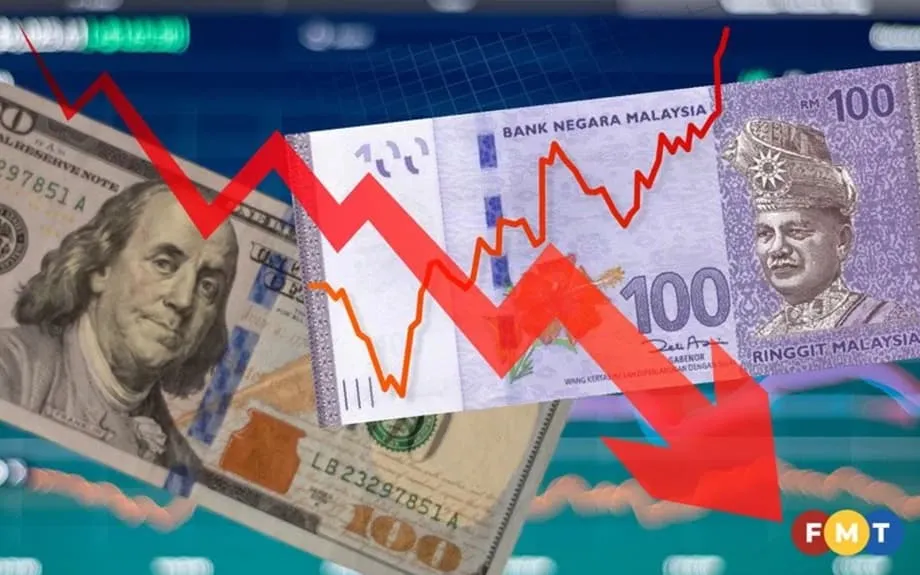
MUFG Bank forecasts that Malaysia's ringgit will strengthen to 3.7000 against the US dollar by the end of 2026, extending a rally that has already taken the currency close to its strongest level since April 2018. The forecast from Japan's largest bank is among the most optimistic from major financial institutions.
Contents
- A Stronger Ringgit Has Further to Run, MUFG Says
- How the Forecast Changed in Less Than a Year
- Technology Leads a Stronger Investment Cycle
- Steady Malaysian Rates Meet Expected US Cuts
- Inflation and the Budget Support Confidence
- Exports, Commodities and the Yuan Add Support
- Investors Reconsider Malaysia's Economic Role
- What Could Interrupt the Rally?
- The Essentials
As of February 20, 2026, the ringgit had recently touched 3.8995 per dollar. Moving from that level to MUFG's target would represent roughly another 5 percent gain in the Malaysian currency, following appreciation of about 17 percent since the beginning of 2024.
The exchange rate shows how many ringgit are needed to buy one US dollar. A fall from about 3.90 to 3.70 therefore means a stronger ringgit: each dollar would buy fewer units of Malaysia's currency.
Lloyd Chan, a senior currency analyst at MUFG Bank, links the forecast to a change in Malaysia's economic drivers. Technology investment, sustained foreign direct investment and economic stability are providing support beyond the temporary changes in market sentiment that can move currencies from day to day.
The ringgit has been Asia's best performing currency over the period since early 2024, ahead of regional peers including the Singapore dollar and Japanese yen. It has also recorded gains of more than 10 percent against the Indonesian rupiah and Vietnamese dong.
MUFG's argument is that this advance can continue because Malaysia is attracting investment that builds factories, digital infrastructure and productive capacity. That would give the currency a more durable foundation than a rally resting mainly on higher commodity prices or traders expecting a weaker dollar.
How the Forecast Changed in Less Than a Year
MUFG's target marks a sharp change from its assessment just three months earlier. In November 2025, the bank had anticipated a level of only 4.10 by year end. Its latest projection points to a substantially stronger ringgit.
March 2025 brought a more cautious assessment still. At that time, MUFG warned of extended weakness because monetary policy in Malaysia and the United States was moving differently and Malaysia's trade balance was deteriorating. A trade balance compares what a country earns from exports with what it spends on imports.
The sequence shows how far the bank's view has shifted:
- Beginning of 2024: The starting point for the ringgit's subsequent gain of about 17 percent against the dollar.
- March 2025: MUFG warned that differences in monetary policy and a weakening trade balance could prolong pressure on the currency.
- November 2025: The bank anticipated a year end exchange rate of 4.10 per dollar.
- February 20, 2026: Its outlook points to 3.7000 by the end of 2026, after the ringgit recently touched 3.8995.
Behind the revision is a reassessment of Malaysia's place among emerging economies. The bank's outlook describes a move away from a currency whose fortunes depend heavily on the US Federal Reserve toward an investment destination supported more strongly by its own economic performance.
That shift matters because interest rates abroad would become only one part of the explanation for ringgit movements. Investment, productivity, export earnings and confidence in domestic policy would carry more weight, leaving room for appreciation as global financial conditions change.
Technology Leads a Stronger Investment Cycle
Malaysia's approved investments across manufacturing and services rose 14.7 percent compared with a year earlier in the first nine months of 2025. Information and communications technology, or ICT, was the largest contributor to total approvals, while foreign direct investment approvals in that sector increased by approximately 32 percent.
Chan, MUFG Bank's senior currency analyst, described the investment cycle as a source of support for growth beyond the immediate currency rally.
Malaysia's economy is undergoing a strong investment cycle that will support its medium-term growth outlook.
Foreign participation in Malaysian technology investment has strengthened consistently since 2022. Capital has been directed toward manufacturing with greater value, data centers and digital services, reflecting renewed confidence in the country's policies, infrastructure and place within regional supply chains.
Foreign direct investment means businesses committing capital to operations in another country, such as a manufacturing facility or research center. Those operations create continuing demand for local workers, goods and services. Exporting businesses can also bring foreign currency earnings into the economy.
Chan's assessment is that sustained inflows of this kind tend to support a currency over time by raising productivity and strengthening external balances. Productivity means producing more, or producing goods and services of greater value, with the resources available. Stronger external balances give an economy a firmer position in its financial dealings with the rest of the world.
Malaysia's present expansion draws support from semiconductor manufacturing, cloud computing infrastructure and supply chains connected to artificial intelligence. Earlier periods of ringgit strength often followed changes in palm oil and petroleum prices, leaving the currency more exposed to volatile raw material markets.
Technology investment changes that balance. It reduces dependence on commodity exports and places Malaysia more firmly within global technology production networks. Investors who see steadier earnings potential in that industrial base may demand less compensation for the risks of holding Malaysian assets, supporting the currency.
Steady Malaysian Rates Meet Expected US Cuts
Bank Negara Malaysia's monetary policy is another pillar of MUFG's forecast. The bank expects the central bank to keep its overnight policy rate at 2.75 percent throughout 2026, maintaining a neutral stance while other economies undertake more aggressive interest rate cuts.
The overnight policy rate is a key benchmark influencing borrowing costs and returns on financial assets. If Malaysian rates stay steady while the Federal Reserve cuts US rates, the gap between the two narrows. Malaysian bonds can then become more appealing relative to alternatives in the United States.
MUFG expects further Federal Reserve cuts during 2026. Falling US yields, combined with stable Malaysian rates, could draw international bond investors seeking positive returns after inflation. A bond's yield is the return an investor receives relative to the price paid.
Net foreign bond inflows into Malaysia have already picked up steadily since 2024. Further narrowing of the interest rate gap would add to the appeal of Malaysian government securities for investors weighing returns against risk.
Reasonable equity valuations also contribute to the outlook. Together with solid economic conditions and improving bond returns relative to developed market alternatives, they could attract renewed foreign investment in Malaysian financial markets. Those purchases would provide another source of support for the ringgit alongside trade and investment in businesses.
Inflation and the Budget Support Confidence
Malaysia has kept inflation contained despite changes to RON95 fuel subsidies and adjustments to sales and services tax. That has allowed Bank Negara Malaysia to avoid raising rates in reaction to a price surge, a move that could otherwise disrupt economic growth.
Stable inflation also matters to investors because rising prices reduce the purchasing power of investment returns. A predictable price environment helps make the returns on Malaysian assets easier to assess.
Chan also points to fiscal discipline as a reason that risks attached to government finances have stayed in check. The budget deficit narrowed to 3.3 percent of gross domestic product during the first nine months of 2025, compared with 4.1 percent in the same period of 2024.
A budget deficit occurs when government spending exceeds revenue. Measured against the size of the economy, Malaysia's deficit fell by 0.8 percentage points between those periods. That improvement supports confidence in the government's financial management.
Contained inflation and a smaller deficit help explain why domestic policy adjustments have not undermined the broader investment case. Investors have required less extra return to compensate for perceived economic and government financing risks, strengthening confidence in local financial markets.
Exports, Commodities and the Yuan Add Support
Resilient demand for electronics and semiconductors is providing an external source of support. US spending on computers, peripherals and infrastructure connected to artificial intelligence helps sustain demand for products made within Malaysia's technology supply chains.
Firmer commodity prices also improve Malaysia's terms of trade, meaning the relationship between the prices it receives for exports and those it pays for imports. Palm oil benefits from zero percent US tariff treatment, while Malaysia's strategic role in rare earth exports adds resilience to its trade balance against potential shocks.
China's currency provides another influence. The yuan and ringgit have historically moved closely together, so a stronger yuan can ease downward pressure on the Malaysian currency and support Malaysia's position within Asian supply chains.
MUFG forecasts that the yuan will strengthen to 6.8000 per US dollar by the end of 2026. Its view rests on expectations of higher valuations for Chinese assets and structural reforms intended to rebalance China's economy.
MUFG places the ringgit among its three preferred Asian currencies for 2026, alongside the South Korean won and Taiwanese dollar. All three benefit from exposure to continuing investment linked to artificial intelligence, together with momentum for domestic structural reform.
These external supports complement Malaysia's domestic investment cycle. Technology demand helps exports, commodity earnings support the trade position, and a firmer yuan provides a more favorable regional currency setting.
Investors Reconsider Malaysia's Economic Role
Goldman Sachs has recently recommended buying the ringgit against the Singapore dollar, expecting the Malaysian currency to outperform across Asia as supply chains are reorganized around technology manufacturing.
Buying one currency against another expresses a view about their relative performance. In this case, the recommendation favors the ringgit over the Singapore dollar, extending the investment argument beyond expectations for the US dollar alone.
The changing view of Malaysia also involves how investors group the country with other markets. Analysts increasingly describe it less as a currency that mainly reflects expectations about China and more as a manufacturing hub connected to semiconductors and artificial intelligence.
That reassessment places greater attention on Malaysia's industrial capabilities and future earnings. The expectation is that it can attract institutions willing to hold investments for longer, providing more stable currency support than money moving quickly in pursuit of short trading gains.
MUFG's forecast brings those elements together: stronger investment in productive businesses, confidence in economic policy, and improving appeal for bonds and equities. The projected exchange rate remains a bank forecast, with its achievement dependent on how those conditions develop through the end of 2026.
What Could Interrupt the Rally?
MUFG identifies a sharp slowdown in global growth as a threat to the outlook. Weaker demand would hurt Malaysian exports in both technology and commodities, putting pressure on a current account position that has strengthened considerably in recent quarters. The current account records trade in goods and services alongside income and other international transfers.
A steep fall in commodity prices would remove another support. An electronics downturn could do the same, particularly if spending on artificial intelligence reaches its peak sooner than expected or faces regulatory constraints.
US monetary policy presents a further risk. The outlook anticipates the nomination of a new Federal Reserve chair in 2026, and markets are factoring in possible changes to the policy framework. Persistent inflation could keep US rates higher than investors currently expect.
Some analysts also warn that new leadership could favor a tougher approach to inflation than under Jerome Powell. If US monetary conditions stay tighter, the interest rate gap could widen again, strengthening the dollar and putting pressure on the ringgit despite Malaysia's domestic strengths.
Trading conditions could produce shorter interruptions. Currency specialists describe the ringgit as technically overbought on various momentum indicators. In simple terms, those measures suggest that its recent rise has been fast enough to encourage some traders to sell and collect their gains.
Japan adds another possible source of volatility. Recent yen weakness has influenced regional currencies, while possible intervention by Japanese authorities could send unpredictable effects through Asian foreign exchange markets.
MUFG's broader case is that investment inflows and policy stability provide protection against sustained depreciation or a complete reversal. Even within that favorable outlook, the ringgit could experience temporary setbacks or periods of little movement as investors reassess prices and risks.
The Essentials
- MUFG forecasts 3.7000 ringgit per US dollar by the end of 2026, compared with a recent level of 3.8995 and its November 2025 projection of 4.10.
- The ringgit has gained about 17 percent against the dollar since early 2024, making it Asia's best performing currency over that period.
- Manufacturing and services investment approvals rose 14.7 percent in the first nine months of 2025, while foreign direct investment approvals in ICT increased approximately 32 percent.
- MUFG expects Bank Negara Malaysia to hold its policy rate at 2.75 percent throughout 2026 while further US rate cuts improve the relative appeal of Malaysian assets.
- Malaysia's budget deficit narrowed to 3.3 percent of GDP from 4.1 percent in the first nine months of the previous year.
- Technology exports, firmer commodity prices and an expected stronger yuan support the outlook.
- A global slowdown, weaker commodity prices, an electronics downturn, tighter US policy and profit taking could interrupt the currency's advance.