RM2.50 Offer Sets Out a New Ownership Plan
MISC Bhd, Yinson Holdings Bhd's founding Lim family and Malaysia's Employees Provident Fund (EPF) have proposed paying RM4.03 billion to acquire the remaining 55.2% of Yinson, offering shareholders RM2.50 a share in a transaction intended to remove the energy infrastructure group from Bursa Malaysia.
Contents
- RM2.50 Offer Sets Out a New Ownership Plan
- Who Would Own Yinson?
- How Much More Are Shareholders Being Offered?
- Why RM4.03 Billion and RM7.31 Billion Describe Different Things
- MISC Plans to Borrow Most of Its Contribution
- What MISC Wants From the Offshore Business
- A Large Contract Book and a Brazilian Opportunity
- Profit Rose Even as Revenue Fell
- The Approval Process and Dates to Watch
- Key Points
The proposal, submitted on November 6, 2026, values all of Yinson's shares at RM7.31 billion. PETRONAS-controlled MISC would supply about RM3.03 billion of the cash consideration and emerge with the same effective ownership interest as the Lim family's investment vehicle: 41.464% each. EPF would retain an effective 17.072% interest.
Yinson's board has been asked to say by 5 p.m. on December 4, 2026, whether it recommends putting the scheme to shareholders. Yinson confirmed receiving the proposal. Shareholder, court and regulatory approvals remain necessary, with completion expected in the second half of 2027.
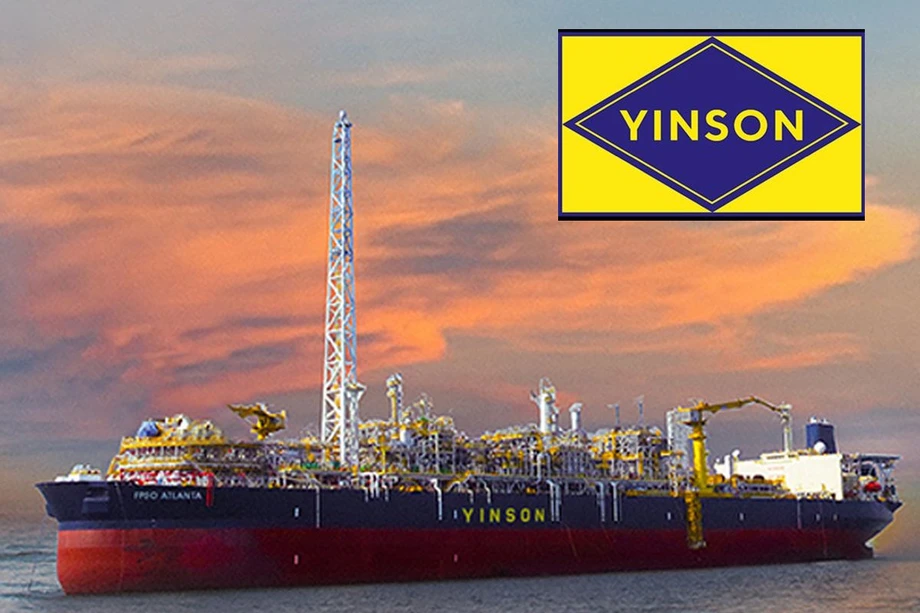
The transaction brings together two Malaysian offshore energy businesses with operations in Brazil and other international markets. Yinson operates eight floating production, storage and offloading vessels, known as FPSOs, and three floating storage and offloading units. Its contracted offshore revenue backlog is about US$19.3 billion.
For investors covered by the scheme, the central choice is between receiving cash at a premium to recent trading prices and continuing to hold shares in a company with substantial future contracted revenue. For MISC, which currently owns no Yinson shares, the proposal offers a large ownership interest in an established offshore business without having to build that portfolio vessel by vessel.
Who Would Own Yinson?
MY Offshore Holdings Sdn Bhd, currently a subsidiary of Yinson Legacy Sdn Bhd, would become the vehicle owning all of Yinson. Yinson Legacy is the investment vehicle of Yinson executive chairman Lim Han Weng.
MISC would participate through its indirectly wholly owned subsidiary, MISC OBU Holdings (L) Pte Ltd. EPF would participate through its wholly owned subsidiary, Kwasa Layar Sdn Bhd. These companies, together with Yinson Legacy and MY Offshore Holdings, form the proposed transaction structure.
The Lim family would contribute both existing shares and new cash. Lim and his children would first transfer their respective Yinson holdings to Yinson Legacy, increasing that company's direct stake from about 27.17% to 27.73%. Yinson Legacy would then transfer its holding into MY Offshore Holdings and contribute approximately RM1 billion in cash.
EPF would retain its investment through the new structure rather than sell its entire holding for cash. Its 17.072% Yinson interest would be transferred to Kwasa Layar within 10 business days after the scheme becomes unconditional, meaning its conditions have been satisfied or otherwise resolved under the transaction terms.
The resulting ownership would give MISC and the Lim family equal economic interests, while EPF would remain a substantial investor. Together, the three parties would own 100% of Yinson through MY Offshore Holdings.
How Much More Are Shareholders Being Offered?
The RM2.50 cash price is 15 sen, or about 6.4%, above the RM2.35 indicative price discussed when the potential privatisation was announced on August 28, 2026. For an investor holding 10,000 shares covered by the scheme, that increase would mean an additional RM1,500.
Against Yinson's RM2.27 closing price on November 5, the formal offer carries a 10.13% premium. It is also 16.28% above the RM2.15 closing price on August 28, before the initial privatisation announcement, and 30.14% above the three month volume weighted average market price cited in the proposal. That average gives greater weight to prices at which more shares traded.
Yinson closed at RM2.26 on November 6, down 0.44%. At that price, the gap to the proposed cash payment was 24 sen a share. Investors would still have to wait for the transaction process to finish before receiving payment under a completed scheme.
Why RM4.03 Billion and RM7.31 Billion Describe Different Things
The RM4.03 billion cash consideration covers approximately 1.61 billion shares, representing the 55.2% interest being acquired. The RM7.31 billion valuation describes the value of all Yinson shares at the offer price, including the existing holdings being carried into the new ownership structure.
A higher estimate of about RM8 billion has also been cited for the company's value. The detailed transaction figures put the equity valuation at RM7.31 billion and the cash needed for the remaining shares at RM4.03 billion.
At RM2.50 a share, the proposal values Yinson at 1.36 times its net asset value, also described as its price to book ratio, based on financial information for the period ended July 31, 2026. In simple terms, the offer is 36% above the accounting value of assets remaining after liabilities.
The implied enterprise value to earnings before interest, taxes, depreciation and amortisation ratio is 8.72 times. Enterprise value considers the business's financing, including debt and cash, while the earnings measure, commonly called EBITDA, looks at earnings before several financing and accounting costs. This gives investors another way to compare the proposed price with the scale of the operating business.
MISC Plans to Borrow Most of Its Contribution
MISC expects about 75% of its RM3.03 billion contribution to come from bank borrowings and 25% from internal funds. Based on those proportions, that would mean approximately RM2.27 billion in borrowing and RM758 million from its own resources.
MISC said the final funding mix could change according to market conditions, including interest rates, and its operational requirements. At the end of June, it held RM7.2 billion in cash, deposits and bank balances, against total borrowings of RM12.96 billion.
The planned borrowing component therefore matters alongside the purchase price. MISC would gain exposure to Yinson's assets and future contracts while taking on financing commitments to pay for its investment. The proposed use of internal funds would preserve most of its reported cash balance, although the balance and borrowing figures are a snapshot from June.
MISC described its funding plan in its Bursa Malaysia filing:
MISC's portion of the funding is expected to comprise approximately 75 per cent bank borrowings and 25 per cent internal funds, although the final composition may vary depending on prevailing market conditions, including interest rates, and the group's operational requirements.
What MISC Wants From the Offshore Business
Yinson's main attraction for MISC is its portfolio of offshore production and storage assets, together with the ability to develop, deliver and operate them. An FPSO is a floating facility that processes oil from offshore fields, stores it and transfers it to other vessels. An FSO primarily provides storage and transfer functions.
Yinson's fleet operates across Brazil, Africa and Southeast Asia. Its assets include FPSO Helang, which serves ENEOS offshore Sarawak. MISC and Yinson Production, Yinson's offshore floating asset subsidiary, already work in the FPSO industry, with Brazil among their shared markets.
MISC said the acquisition would fit its plan to expand its offshore business. Explaining the rationale in its filing, the company said:
YHB's portfolio of long-term contracted assets, project development and execution capabilities, and geographical presence are expected to complement the group's existing offshore capabilities.
The consortium also sees opportunities for strategic, operational and commercial cooperation where appropriate. Yinson Production has begun developing specialist capabilities for floating liquefied natural gas vessels, which process natural gas into liquid at sea. PETRONAS, which controls MISC, is already active in that market.
A Large Contract Book and a Brazilian Opportunity
Yinson's approximately US$19.3 billion contracted offshore revenue backlog represents revenue expected from contracts over future years. Payments arrive as contractual work and services are delivered, while operating expenses, financing costs and other obligations affect how much becomes profit.
The company has also received letters of intent from Petrobras for the Marlim 2 project in Brazil. The proposed project runs for 25 years and has been described as worth up to US$5.4 billion. Letters of intent set out an intention to proceed toward an agreement, with the eventual contract terms governing the work and payments.
Projects of that scale help explain the consortium's stated preference for private ownership. Offshore facilities require substantial spending before they begin earning revenue, and development and operating commitments can extend over decades. The proposal argues that removing Yinson from the stock exchange would give it greater flexibility over investments, funding and the allocation of capital.
Yinson also brings businesses outside offshore oil and gas. Its renewable energy arm has more than 500 megawatts of generation capacity across India and Peru. Its green technology business operates an electric vehicle charging network in Malaysia and Singapore, among other activities. The proposed privatisation covers the listed group that owns these operations.
Profit Rose Even as Revenue Fell
Yinson earned net profit of RM248 million in the six months ended July 2026, up 14.81% from RM216 million in the corresponding period a year earlier. Revenue fell 15.77% to RM2.19 billion from RM2.59 billion.
Those figures show a RM32 million increase in profit alongside a RM400 million reduction in revenue. Net profit was equivalent to approximately 11.3% of revenue in the latest period, compared with about 8.3% a year earlier, calculated from the stated figures.
The financial results give shareholders another reference point when considering the offer alongside the market premiums, asset valuation and future contract book. The proposal places a cash value on their investment today, while the business's contracts and financing obligations extend well beyond the expected transaction timetable.
The Approval Process and Dates to Watch
The acquisition is proposed as a members' scheme of arrangement under Section 366 of Malaysia's Companies Act 2016. This is a court supervised process through which a company can arrange a transaction with its shareholders. The plan requires shareholder approval and High Court sanction, as well as approval from MISC shareholders who are not interested parties in the transaction.
Merger control clearances are required in Brazil, Angola, Nigeria, Vietnam and the European Union. Consent is also required from Ghana's Petroleum Commission and Norway's Ministry of Energy for changes in Yinson's indirect ownership. The number of jurisdictions reflects the international reach of its business.
The main dates and steps are:
- August 28, 2026: MISC disclosed preliminary discussions about a possible privatisation, with an indicative price of RM2.35 a share.
- November 6, 2026: The consortium submitted the formal proposal at RM2.50 a share.
- December 4, 2026, at 5 p.m.: The requested deadline for Yinson's board to state whether it recommends putting the scheme to shareholders.
- Second half of 2027: Expected completion of the acquisition and delisting, subject to the necessary approvals.
The consortium intends to remove Yinson from Bursa Malaysia's Main Market after completion. Shareholders whose shares are acquired under the scheme would receive cash, while MISC, the Lim family and EPF would hold the business through MY Offshore Holdings.
Key Points
- The consortium proposes RM2.50 a share for the remaining 55.2% of Yinson, requiring approximately RM4.03 billion in cash.
- The detailed proposal values all Yinson shares at RM7.31 billion.
- MISC and Yinson Legacy would each hold 41.464% through the acquisition vehicle, with EPF retaining 17.072%.
- MISC expects to finance about 75% of its RM3.03 billion contribution through bank borrowing.
- Yinson has eight FPSOs, three storage and offloading units, and approximately US$19.3 billion in contracted offshore revenue backlog.
- The board's requested response deadline is December 4, 2026. Completion is expected in the second half of 2027, subject to approvals.