Indonesia Pursues Massive Legal Action Over Environmental Catastrophe
The Indonesian government has initiated a sweeping legal offensive against corporate entities it holds responsible for the environmental degradation that exacerbated deadly floods in Sumatra. Following the catastrophic inundation that claimed over 1,000 lives late last year, authorities have filed civil lawsuits seeking 4.8 trillion rupiah, approximately 284 million US dollars, in damages from six companies. The legal action marks a significant escalation in the state’s efforts to enforce environmental accountability, targeting firms accused of damaging more than 2,500 hectares of land across the island’s northwestern regions.
The floods and subsequent landslides, which devastated North Sumatra, West Sumatra, and Aceh between November and December 2025, were triggered by extreme rainfall from Tropical Cyclone Senyar. However, investigators determined that the scale of the disaster was not solely a result of meteorological phenomena. The torrents of mud and wooden logs that buried villages and swept away bridges were, according to officials, directly linked to upstream deforestation and land degradation caused by corporate activities.
Environment Minister Hanif Faisol Nurofiq announced the lawsuits, which were filed simultaneously in courts across Jakarta and North Sumatra’s capital, Medan. The government’s claim meticulously breaks down the financial demands, allocating roughly 4.6 trillion rupiah for direct environmental losses and an additional 178 billion rupiah specifically for ecosystem restoration costs. This financial structure aims to ensure that the funds are strictly utilized to rehabilitate the devastated terrain.
We firmly uphold the principle of polluter pays. Any corporation that profits by damaging the ecosystem must be held fully responsible for restoring it.
Minister Nurofiq’s statement underscores a policy shift known as the “polluter pays” principle, which asserts that those who produce pollution should bear the costs of managing it to prevent damage to human health or the environment. By applying this framework, the state aims to shift the financial burden of disaster recovery away from taxpayers and onto the entities whose operations allegedly destabilized the land.
The Science Behind the Disaster
To understand the government’s aggressive stance, one must look at the ecological mechanics of the recent tragedy. Sumatra’s lush rainforests have historically acted as a natural sponge, absorbing heavy rainfall and stabilizing soil with their intricate root systems. When these forests are cleared for mining, plantations, or infrastructure development, the land loses its ability to retain water. This results in rapid surface runoff, which converges into rivers, causing them to swell and burst their banks with unprecedented force.
The disaster was not a simple flood but a complex event involving landslides and massive debris flows. Satellite imagery and field analysis revealed that the waters carried vast quantities of timber, much of it believed to be from illegal logging or land clearance operations. This debris acted as a battering ram, destroying bridges and infrastructure that might have otherwise survived the water surge. In the Tapanuli region, the presence of such large logs in the rivers served as undeniable physical evidence of the deforestation occurring upstream.
The government’s case relies on scientific evidence linking specific land-use changes to the severity of the flooding. By converting forest cover into non-forest areas, corporations fundamentally altered the hydrology of the region. The soil, no longer protected by canopy or roots, became saturated and unstable, leading to landslides that buried entire communities. This recognition of the link between corporate land management and natural disasters is central to the lawsuits.
Data from conservation start-up The TreeMap indicates that Indonesia lost over 240,000 hectares of primary forest in 2024 alone. This staggering statistic provides context for the vulnerability of the region. The loss of these primary forests reduces the landscape’s resilience to extreme weather events, making floods more likely and more destructive when they occur. The government argues that the companies named in the suits contributed directly to this reduction in resilience.
The Accused and Their Operations
While the initial government statement listed the defendants only by their initials, further reports and local environmental watchdogs have shed light on the sectors involved. The lawsuits target entities operating in critical watershed areas, specifically within the Garoga and Batang Toru River Basins. These areas are ecologically sensitive and serve as vital water catchments for the region.
Among the companies identified by local environmental groups and media reports are major players in the mining, energy, and plantation sectors. PT Toba Pulp Lestari, a pulpwood producer, faces scrutiny over its conversion of forest land into industrial plantations. PT Agincourt Resources, operator of the Martabe gold mine, has been accused of clearing hundreds of hectares of forest. PT North Sumatra Hydro Energy (NSHE), developer of a hydropower plant in the Batang Toru ecosystem, is also under the microscope for its impact on forest cover and river dynamics.
The Batang Toru ecosystem holds particular significance because it is home to the Tapanuli orangutan, the world’s rarest great ape. Environmentalists argue that damaging this ecosystem not only endangers unique wildlife but also removes a critical buffer for human settlements against natural disasters. The allegations against these companies suggest that their pursuit of economic resources came at the expense of environmental stability.
It is important to note that the companies involved often maintain that they operate within the bounds of their permits. For instance, PT Toba Pulp Lestari has publicly denied the accusations, stating that their activities comply with all government regulations and follow standard operating procedures. This defense highlights a central tension in the case: the difference between legal compliance and ecological responsibility. The government’s new stance suggests that holding a permit may no longer serve as a shield against liability if those operations result in environmental harm and loss of life.
A Government in Transition on Environmental Policy
Beyond the immediate lawsuits, the Indonesian administration is signaling a broader shift in how it manages the environment. The Ministry of Environment has launched what it describes as a sweeping, science-based intervention. This includes a comprehensive audit of more than 100 business entities across the mining, energy, plantation, and housing sectors in the affected provinces.
Forestry Minister Raja Juli Antoni articulated this change in direction, noting that the balance between economic development and ecological preservation had swung too far toward the former. He suggested that the disaster provided a necessary opportunity to evaluate and correct national policies. As part of this recalibration, the government plans to revoke 22 forestry permits across the country, including permits covering over 100,000 hectares in Sumatra.
This regulatory pivot involves reviewing provincial zoning plans. Officials are comparing approved zoning documents with environmental assessments and actual ground conditions. If existing zoning plans led to disastrous outcomes despite being technically compliant on paper, the government acknowledges that the planning framework itself is flawed. This admission is rare for a government that has historically prioritized rapid economic growth and resource extraction.
The audit process is expected to take up to a year, though investigations into major cases are being fast-tracked for completion by March. Authorities have made it clear that enforcement will not distinguish between licensed and unlicensed activities. The message is that if an activity causes environmental destruction and loss of life, it will be acted upon, regardless of paperwork. This represents a significant challenge to the business-as-usual model that has dominated Indonesia’s resource sectors for decades.
Civil Society Response and Criticism
While the government’s legal action has been welcomed by many as a step in the right direction, environmental groups and civil society organizations have offered a more critical perspective. Greenpeace Indonesia characterized the lawsuits as a “minimalist” move. Arie Rompas, a forest campaigner for the organization, argued that authorities must go beyond suing individual companies and comprehensively review the policies that enabled the damage to occur.
The core of the criticism lies in the fact that the companies now being sued were granted their permits by the government itself. Environmentalists point out that suing these firms amounts to the state correcting its own failures in governance and oversight. They argue that the disaster is the result of “legally sanctioned environmental destruction,” where zoning plans and permits provided cover for large-scale forest conversion.
The Indonesian Forum for the Environment, known as Walhi, has been particularly vocal. Walhi identified seven companies they believe are responsible for the damage in North Sumatra, contrasting with the six companies currently sued by the government. They have raised questions about why the scope of the lawsuit appears limited compared to the scale of the disaster. Furthermore, Walhi has criticized the slow pace of post-disaster recovery efforts, noting that fifty days after the event, significant humanitarian challenges remain.
This is undeniable evidence of ecosystem damage. This is evidence of human intervention through policies that allowed forest clearance, leading to these disasters.
Rianda Purba, Executive Director of Walhi North Sumatra, emphasized that the floods were not merely a natural occurrence but the result of policy choices. Civil society groups are demanding that the government not only seek financial compensation but also halt the operations of companies in vulnerable ecosystems like Batang Toru to prevent future catastrophes.
The Human Cost and Road to Recovery
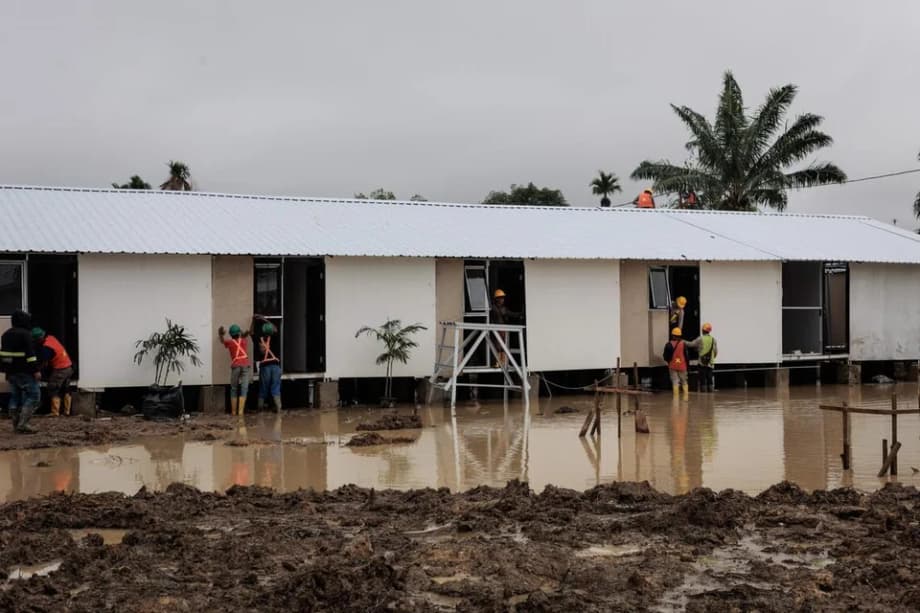
Amidst the legal and political debates, the human toll of the disaster remains staggering. According to the National Disaster Management Agency (BNPB), the death toll has climbed to 1,178 people, with 148 others still missing. The floods displaced nearly 150,000 residents, destroying homes, infrastructure, and livelihoods. In total, nearly 190,000 homes across the three provinces were affected, ranging from slight damage to complete destruction.
The government is now accelerating the construction of permanent housing for those displaced. Sites have been prepared in Aceh, North Sumatra, and West Sumatra to accommodate tens of thousands of new housing units. The reconstruction effort must navigate the challenge of building in a way that avoids future disaster zones, requiring careful planning and adherence to safety standards.
However, the recovery process is uneven. Reports from the ground indicate that economic activities have stalled, with crop failures, disrupted transportation, and soaring prices for basic necessities. The humanitarian crisis extends beyond physical shelter to include the loss of food security and access to clean water. Critics have noted that while the state was slow to provide aid to victims, heavy equipment was quickly deployed to recover logs from rivers, highlighting what they see as a prioritization of economic value over human life.
The path forward for Indonesia involves reconciling its development needs with the imperative of environmental protection. The lawsuits against the six firms serve as a test case for whether the state can effectively enforce the “polluter pays” principle and deter future environmental degradation. As the legal process unfolds, the eyes of the world, and especially those of the affected communities, will be watching to see if justice and restoration can truly be achieved.
The Essentials
- The Indonesian government is suing six companies for 4.8 trillion rupiah ($284 million) over environmental damage linked to deadly floods.
- The disasters in Sumatra killed at least 1,178 people and displaced nearly 150,000 residents.
- Officials attribute the severity of the floods to deforestation and land degradation caused by corporate activities.
- More than 200 companies are under audit, with potential criminal charges being considered.
- Environmental groups criticize the government for issuing the permits that allowed the damage in the first place.