Global Urban Rankings Undergo Dramatic Shift
The global urban landscape has experienced a significant transformation with the release of the United Nations World Urbanization Prospects 2025 report. Jakarta, Indonesia’s capital, has now surpassed Tokyo to become the world’s most populous city, marking a historic change in global urban hierarchy. This shift reflects broader demographic trends reshaping our world, with Asian cities dominating the rankings while traditional megacities in developed nations face stagnation or decline.
- Global Urban Rankings Undergo Dramatic Shift
- New Methodology Reshapes Rankings
- Asia’s Dominance in Global Urbanization
- Future Projections Reshape Urban Landscape
- Challenges of Rapid Urban Growth
- The Importance of Smaller Cities
- Rural Transformation and Global Settlement Patterns
- Methodological Innovations Enhance Analysis
- Implications for Sustainable Development
- The Bottom Line
Jakarta now tops the list with approximately 42 million residents, followed closely by Dhaka, Bangladesh with 37 million, and Tokyo, Japan with 33 million. The change represents more than just numerical adjustments. It signals how rapidly cities in developing regions are expanding, drawing millions of people seeking economic opportunity while established metropolitan areas contend with aging populations and limited growth capacity.
The United Nations Department of Economic and Social Affairs (UN DESA) compiled this comprehensive report, which examines urbanization patterns worldwide and projects future trends through 2050. The findings demonstrate how urban growth has become concentrated in specific regions, particularly Asia and Africa, while other parts of the world experience urban plateau or contraction.
New Methodology Reshapes Rankings
The dramatic shift in rankings stems partly from new methodology implemented by the United Nations for this report. Previous assessments relied on data from countries with varying definitions of urban boundaries, which led to inconsistencies in comparing cities across different nations. This time, researchers adopted a more standardized approach using satellite mapping and consistent geospatial criteria.
Patrick Gerland, head of the UN department’s population estimates and projection section, explained the significance of this change. Earlier assessments using data from countries based on wildly varying definitions tended to prioritize Tokyo, he noted. The new assessment provides a more internationally comparable delimitation of the urban extent based on similar population and geospatial criteria.
The UN now defines a city as a contiguous agglomeration with grid cells containing at least 1,500 people per square kilometer and a minimum total population of 50,000. This satellite-based approach analyzes urban footprints rather than administrative boundaries, offering a more accurate picture of how people actually live and move within metropolitan areas.
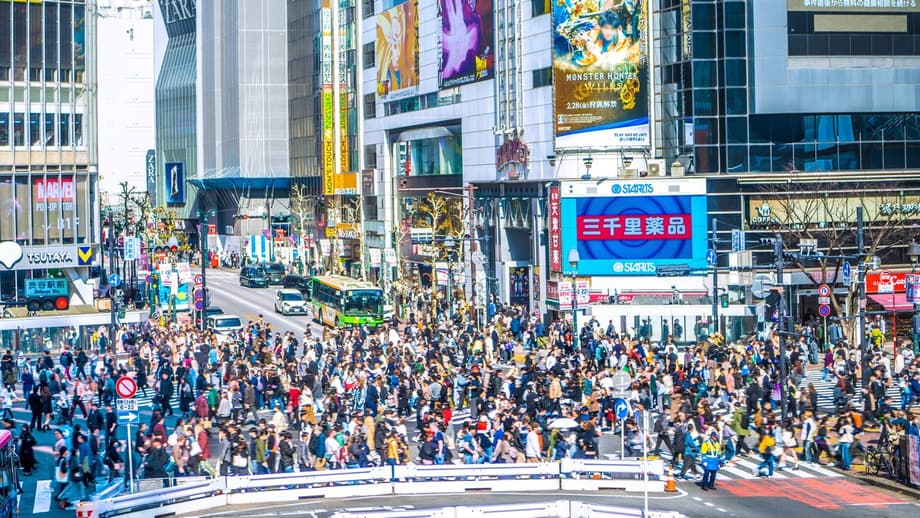
This methodological refinement explains some of Tokyo’s decline in ranking. While the Japanese capital remains enormous, its sprawling population across multiple prefectures is now measured differently. The Tokyo region defined in the UN study includes the surrounding prefectures of Saitama, Chiba, and Kanagawa, covering a wide area that includes Yokohama, itself a city of 3.7 million people.
Under this new definition, Tokyo was the world’s most populous city until around 2010, when it was replaced by Jakarta. While the Tokyo region used in the UN study has mirrored the rest of Japan in experiencing population decline in recent years, the city itself is heading in the opposite direction. According to the Tokyo metropolitan government, the population of the 23 special wards and 26 smaller cities comprising Tokyo proper is currently just over 14 million, compared to 13.2 million a decade ago.
Asia’s Dominance in Global Urbanization
The 2025 report highlights the overwhelming concentration of urban population growth in Asia. Nine out of the ten most populated cities are now located on the Asian continent. After Jakarta, Dhaka, and Tokyo, the remaining top ten cities include New Delhi, India (30.2 million), Shanghai, China (29.6 million), Guangzhou, China (27.6 million), Cairo, Egypt (25.6 million), Manila, Philippines (24.7 million), Kolkata, India (22.6 million), and Seoul, South Korea (22.5 million).
Cairo remains the only non-Asian city in the top ten, representing the African continent’s growing urban presence. Egypt’s capital demonstrates how rapidly cities in developing regions are expanding, with a population more than double that of New York City, which ranks 22nd globally with 13.9 million residents.
The dominance of Asian cities reflects broader demographic and economic trends. China and India alone account for a significant share of the top 30 cities, including Shanghai, Guangzhou, New Delhi, Mumbai, Bengaluru, and Chennai. These megacities benefit from large domestic populations, economic concentration, and long-standing roles as regional hubs that attract migration from rural areas.
Li Junhua, United Nations Under-Secretary-General for Economic and Social Affairs, emphasized the broader significance of these trends. Urbanization is a defining force of our time, he stated. When managed inclusively and strategically, it can unlock transformative pathways for climate action, economic growth, and social equity.
The Megacity Phenomenon Expands Globally
The UN report tracks the remarkable growth of megacities, defined as urban areas with 10 million or more inhabitants. In 1975, only eight such cities existed worldwide. By 2025, that number has quadrupled to 33, with 19 located in Asia. The United States has only two megacities, Los Angeles and New York City, while other regions show varying levels of urban concentration.
This proliferation of megacities represents one of the most significant demographic shifts in human history. The number of people living in cities has more than doubled since 1950, when only 20 percent of the world’s 2.5 billion people lived in urban areas. Today, cities are home to 45 percent of the global population of 8.2 billion people.
Looking ahead, the UN projects continued growth in megacity numbers. By 2050, 37 megacities are expected to exist globally. Cities such as Addis Ababa, Ethiopia, Dar es Salaam, Tanzania, Hajipur, India, and Kuala Lumpur, Malaysia are projected to surpass the 10-million mark in the coming decades.
Future Projections Reshape Urban Landscape
The UN report offers intriguing projections about how global city rankings will evolve over the next quarter century. While Jakarta currently holds the top position, Dhaka is expected to become the world’s largest city by mid-century. Projections indicate Dhaka will reach 52.1 million residents by 2050, just ahead of Jakarta at 51.8 million.
This anticipated growth for Dhaka underscores the massive urbanization occurring in South Asia. Bangladesh’s capital is already experiencing rapid expansion, with projections suggesting continued high growth rates close to 5 percent annually between 2025 and 2050. Similar growth is expected in other Asian cities like Shanghai, which will continue to draw residents from rural areas.
Conversely, Tokyo’s population is projected to decline to approximately 30.7 million by 2050, with its global ranking falling to seventh place. This decrease reflects Japan’s broader demographic challenges, including an aging population, low birth rates, and limited immigration. Japan’s experience may foreshadow what other currently growing cities might face as they mature economically and demographically.
The report also highlights divergent growth patterns among cities globally. While many urban areas continue to expand, others are experiencing population decline. Notably, some city populations are shrinking even as their countries’ populations grow, while others are growing despite national population decline. Mexico City and Chengdu, China have both seen population decreases despite their immense size.
Challenges of Rapid Urban Growth
The rapid expansion of megacities presents significant challenges for urban planners and policymakers. Jakarta’s rise to the top ranking comes despite facing serious environmental and infrastructure challenges. The Indonesian capital is prone to earthquakes and flooding, suffers from severe pollution, and is rapidly sinking due to groundwater extraction.
These challenges prompted the Indonesian government to initiate plans to relocate its capital to Nusantara, located on the island of Borneo, approximately 1,200 miles from Jakarta. The roughly $32 billion project aims to create a new capital city better positioned for sustainable growth. Originally slated for a 2024 inauguration, authorities now aim to have Nusantara functioning as the political capital by around 2028, with broader development stretching toward 2045.
The move has faced several setbacks, including construction delays, lack of foreign investment, and managerial and land issues. The difficulties highlight the complex challenges inherent in managing rapid urban growth and developing new urban centers from scratch.
Dhaka faces similarly daunting challenges as it continues to expand. As one of the world’s fastest-growing megacities, it contends with infrastructure struggles, environmental degradation, and the difficulties of providing basic services to millions of new residents. The rapid pace of growth often outstrips the ability of local governments to plan and implement necessary improvements.
Li Junhua addressed these challenges in his statement, noting that to achieve balanced territorial development, countries must adopt integrated national policies that align housing, land use, mobility, and public services across urban and rural areas. This comprehensive approach becomes increasingly critical as cities grow larger and more complex.
The Importance of Smaller Cities
While megacities often dominate headlines, the UN report emphasizes that small and medium-sized cities are actually home to more people than megacities and are growing at a faster pace. These urban centers, particularly in Africa and Asia, play crucial roles in regional development and serve as essential links between rural areas and major metropolitan centers.
The data reveals that of the 12,000 cities analyzed in the report, 96 percent have fewer than one million inhabitants, and 81 percent have fewer than 250,000. These smaller urban areas often offer more manageable scale for development while still providing economic opportunities and services that attract rural migrants.
By 2050, projections indicate that the number of cities worldwide could exceed 15,000, with most having populations below 250,000. This proliferation of smaller urban centers suggests that future urbanization will be characterized not just by a handful of enormous megacities, but by thousands of growing mid-sized cities distributed across the globe.
Towns, defined as population clusters of at least 5,000 inhabitants with a density of at least 300 people per square kilometer, represent another important component of the urban hierarchy. These settlements are the most common settlement type in 71 countries as diverse as Germany, India, Uganda, and the United States. They play vital roles in connecting rural areas and cities, offering essential services and supporting local economies.
Rural Transformation and Global Settlement Patterns
The report documents the ongoing transformation of rural areas alongside urban growth. Rural settlements remain the most common settlement type in 62 countries today, down from 116 in 1975. By 2050, this number is projected to decline further to 44 countries, demonstrating the global shift toward urban living.
However, rural populations continue to play significant roles in many regions. Rural settlements still dominate in some countries in Europe, including Austria, Bulgaria, Finland, and Romania, as well as in numerous sub-Saharan African countries such as the Central African Republic, Chad, Eswatini, Mozambique, and Zambia.
Sub-Saharan Africa stands out as the only region where rural populations have continued to grow significantly. The region is expected to account for nearly all future rural population growth, presenting unique development challenges as countries must simultaneously address rural development needs and manage rapid urban expansion.
This dual pattern of rural population growth in sub-Saharan Africa alongside urban expansion creates complex policy challenges. Governments must develop integrated approaches that address the needs of both rural and urban populations while managing the transition between these settlement types.
Methodological Innovations Enhance Analysis
The 2025 edition of the World Urbanization Prospects report introduces major methodological innovations that enhance its analytical capabilities. For the first time, the report integrates the Degree of Urbanization, a harmonized geospatial approach that provides projections for three categories of settlements: cities, towns, and rural areas.
This new approach enhances international comparability and offers a more nuanced understanding of urbanization trends. By using standardized definitions based on population density and contiguity rather than administrative boundaries, researchers can more accurately compare urban development across different countries and regions.
The 2025 revision also significantly expands geographic coverage. The minimum population threshold for cities has been lowered from 300,000 to 50,000 inhabitants, resulting in an increase in the number of cities analyzed to over 12,000. This expanded scope provides a more comprehensive picture of urbanization patterns worldwide.
In addition to population estimates, this new grid-based approach provides land area and built-up area data for each settlement type. This additional data layer offers researchers and planners a more comprehensive view of urban development, enabling better analysis of density, sprawl, and land use patterns.
These methodological improvements represent significant advances in urban data collection and analysis. As cities continue to grow in importance globally, having accurate, comparable data becomes increasingly critical for effective policymaking and planning.
Implications for Sustainable Development
The findings of the World Urbanization Prospects 2025 report carry significant implications for sustainable development efforts worldwide. As governments convene at COP30 to advance global climate commitments, the United Nations underscores the pivotal role of urbanization in driving sustainable development and climate resilience across all settlement types.
Urban centers account for a disproportionate share of global resource consumption and greenhouse gas emissions, making them critical battlegrounds for climate action. At the same time, cities offer opportunities for more efficient service delivery, economic innovation, and sustainable living when properly planned and managed.
The report emphasizes that how urbanization unfolds will have profound implications for global efforts to achieve the Sustainable Development Goals. Well-managed cities can drive economic growth, reduce poverty, improve public health, and promote environmental sustainability. Poorly managed urbanization, however, can exacerbate inequality, environmental degradation, and social tensions.
Li Junhua highlighted these connections in his statement, noting that when managed inclusively and strategically, urbanization can unlock transformative pathways for climate action, economic growth, and social equity. This balanced perspective acknowledges both the opportunities and challenges presented by ongoing global urbanization.
The data provided in the report offers a critical evidence base for policymakers, planners, and researchers working to shape sustainable, inclusive, and resilient urban futures. By understanding current trends and future projections, decision-makers can develop more effective policies to address the complex challenges of urban development.
The Bottom Line
- Jakarta, Indonesia is now the world’s most populous city with approximately 42 million residents
- Dhaka, Bangladesh ranks second with 37 million, followed by Tokyo, Japan with 33 million
- The UN report uses new satellite-based methodology for more consistent city measurements worldwide
- Asia dominates global megacity rankings with 9 of the 10 largest cities located on the continent
- The number of megacities has quadrupled from 8 in 1975 to 33 in 2025
- Projections indicate Dhaka will become the world’s largest city by 2050 with 52.1 million residents
- Tokyo’s population is expected to decline to 30.7 million by 2050, falling to seventh place globally
- Small and medium-sized cities contain more people globally than megacities and are growing faster
- By 2050, 37 megacities are projected to exist worldwide, up from 33 currently
- Cities like Addis Ababa, Dar es Salaam, Hajipur, and Kuala Lumpur are expected to join the megacity club