A New Paradigm for Asian Urbanization
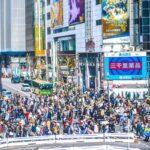
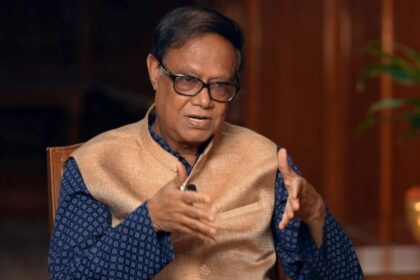
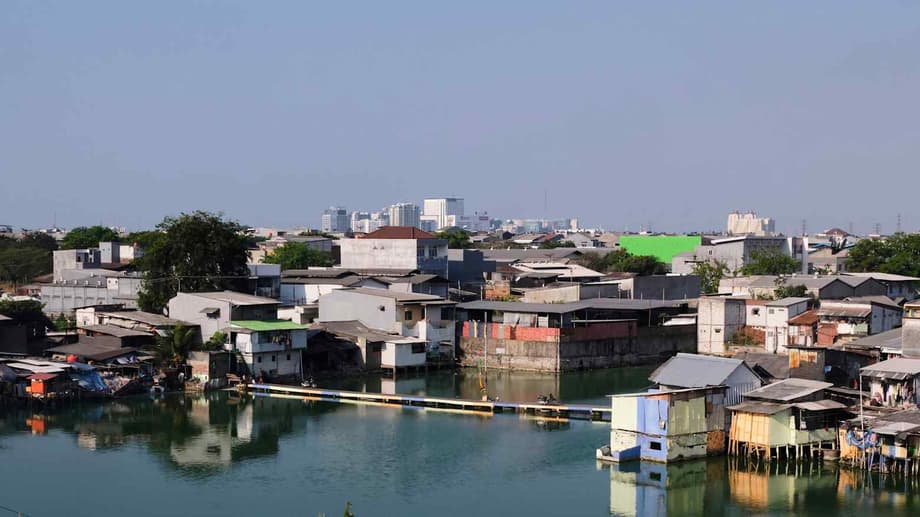
The rapid urbanization of Asia has long been viewed through Western lenses, with development models often imported from Europe or North America. However, as Asian cities continue their unprecedented growth, planners and scholars are increasingly recognizing that these urban giants require distinct approaches tailored to their unique cultural, economic, and environmental contexts. Benjamin Bansal, an economic historian of postwar Tokyo and consultant for the United Nations Department of Economic and Social Affairs, points out that “Jakarta, now the world’s largest functional urban area, faces a version of the same tension between incremental neighborhood life and large-scale infrastructure that once defined Tokyo.” This observation encapsulates a fundamental truth: Asian cities face similar challenges but must develop contextually appropriate solutions through intra-regional learning rather than wholesale adoption of Western paradigms.
- A New Paradigm for Asian Urbanization
- The Tokyo-Jakarta Learning Dynamic
- Policy Mobilities and Cross-Regional Learning
- Urban Expansion Patterns Across East Asia
- Environmental Challenges and Climate Resilience
- New Urban Models and Planning Approaches
- The Geopolitical Significance of Asian Megacities
- Technology and Innovation in Urban Management
- Social Dimensions: Inequality, Resilience, and Vitality
- The Essentials
The demographic scale of Asia’s urbanization alone necessitates new approaches. Seven of the world’s 10 largest cities are in Asia, including Tokyo, Delhi, Shanghai, and Dhaka. These urban centers contain populations and densities that dwarf their Western counterparts. The entire Northeast corridor of the United States—Boston, New York, and Washington combined—contains approximately 60 to 70 million people, roughly comparable to China’s Greater Bay Area. Such scale differences mean that Western solutions often prove inadequate or inappropriate for Asian contexts, driving the need for region-specific urban development models.
This shift away from Western-centric urban planning has gained momentum across Asia, with cities increasingly looking to each other for inspiration and lessons. From the replication of China’s Special Economic Zone (SEZ) model in India to the adaptation of Japanese urban greening practices in Dalian, what scholars term “intra-Asian urbanism” has become a growing phenomenon. This cross-pollination of ideas acknowledges the shared characteristics of Asian cities while respecting their unique cultural and historical contexts.
The Tokyo-Jakarta Learning Dynamic
The relationship between Tokyo and Jakarta offers valuable insights into how Asian cities can learn from each other’s experiences. Tokyo, having undergone massive reconstruction after World War II and managing explosive growth during its economic miracle, faced tensions between preserving neighborhood-scale urban life and implementing large-scale infrastructure projects. This tension now defines Jakarta’s urban landscape as it contends with similar challenges at an even greater scale.
Tokyo’s experience offers several lessons for Jakarta. The Japanese capital successfully managed its growth through a combination of vertical expansion, efficient public transportation, and the preservation of neighborhood-level commerce and services. Rather than completely demolishing and rebuilding districts, Tokyo often allowed incremental development that maintained social networks while gradually updating infrastructure. This approach preserved the vibrant street-level culture that characterizes many Asian cities, even as skyscrapers transformed skylines.
Jakarta, meanwhile, provides valuable lessons about managing rapid urbanization in a tropical, coastal environment. As the world’s largest functional urban area, it faces extreme challenges related to flooding, traffic congestion, and informal settlements. The city’s approach to these problems—particularly its innovative solutions for managing water and transportation—offers insights that may prove valuable for other rapidly growing Asian cities facing similar pressures.
The comparison between these two metropolises highlights the importance of context-sensitive urban planning. What worked in Tokyo cannot be simply transplanted to Jakarta, but the underlying principles of balancing neighborhood life with large-scale infrastructure offer a valuable framework that can be adapted to local conditions.
Policy Mobilities and Cross-Regional Learning
The transfer of urban development models between Asian countries represents a significant trend that scholars call “policy mobilities.” Unlike traditional policy transfer, which conceptualizes the movement of policies as the careful selection and application of best practices by rational decision-makers, policy mobilities research provides a more geographically sensitive approach emphasizing socio-spatial contexts and the relationality of policymaking.
A prominent example of this phenomenon is the replication of China’s Special Economic Zone (SEZ) model in India. After India’s Commerce Minister Murasoli Maran visited Shenzhen in 2000 and described it as “an eye-opener,” India began implementing new rules for establishing private zones modeled on the Chinese approach. The 2005 SEZ Act was described explicitly by a government report as “a growth catalyst, on the model of the SEZs in China” aiming to “help India replicate the Chinese success story of rapid industrialization.”
However, as researchers have documented, this translation process was far from straightforward. The Indian context—with its different land ownership structures, labor regulations, and socio-cultural norms—resulted in significantly different outcomes than the Chinese model. While China’s SEZs were largely state-developed and strategically located in underdeveloped areas, India’s zones are predominantly privately developed and often situated in already-developed regions.
“Models cannot be straightforwardly replicated, and we call for more attention to the outcomes of attempted replication, in particular the urban development implications of selective, complex, multi-level adaptation of a Chinese ‘model’ and its interaction with local Indian contexts.”
This experience underscores an important principle for Asian cities: learning from each other requires adaptation rather than imitation. Successful policy transfer depends on understanding the complex array of actors, components, and outcomes associated with any urban model, then thoughtfully translating these elements to fit local contexts.
Urban Expansion Patterns Across East Asia
Recent research examining urban expansion patterns in three East Asian megacities—Beijing, Seoul, and Tokyo—provides valuable insights into how these cities have evolved differently despite facing similar pressures. The study, analyzing horizontal and vertical urban expansion from the late 1980s to the mid-2010s, revealed that all three cities exhibited both horizontal and vertical growth, but with important differences in their expansion patterns.
Seoul almost doubled its area of mid-rise or taller buildings between 2002 and 2015, indicating significant vertical densification. Beijing maintained both fast vertical growth and extensive horizontal expansion during 2001-2014, reflecting its rapid development phase. Tokyo, as a more mature megacity, showed more balanced growth with limited horizontal expansion due to geographical constraints and established development patterns.
These different patterns reflect not only the varying developmental stages of these cities but also their distinct geographical contexts and policy approaches. The study found that all three megacities tended to expand horizontally initially and then grow vertically in already developed areas—a pattern that may offer valuable lessons for other rapidly growing Asian cities. This approach allows cities to manage density strategically, preserving certain areas while concentrating development in others.
The research also highlighted that urban residents in East Asia are more likely to live in mid-rise or taller buildings close to urban centers, while urban dwellers in North America generally tend to live in single-family houses in suburban areas. This fundamental difference in urban form has significant implications for transportation, energy consumption, and environmental impact, suggesting that Asian cities may inherently follow different optimal development paths than Western counterparts.
Environmental Challenges and Climate Resilience
Asian megacities face escalating environmental challenges due to rapid urbanization and climate change, particularly those situated in riverine coastal regions. Research on Karachi, Pakistan—one of the world’s most populous megacities—reveals significant urban expansion from 13.4% to 23.7% of total area between 1990 and 2020, with concurrent reductions in vegetation cover, water bodies, and wetlands.
This transformation has profound consequences for urban resilience. The study found that erosion along the riverbank caused the Malir River’s area to decrease from 17.19 to 5.07 km² by 2020, highlighting a key factor contributing to urban flooding during the monsoon season. Flood risk projections indicate that urbanized areas will be most affected, with 66.65% potentially inundated by 2035.
The climate crisis is pushing many of Asia’s cities to their limits. In 2024, record temperatures swept through South and Southeast Asia—from Dhaka and Delhi to Phnom Penh and Manila—straining infrastructure and healthcare systems. The “urban heat island effect,” which causes cities to be hotter than surrounding rural areas, is worsening these conditions, especially for elderly and low-income residents in crowded informal settlements. Between 2000 and 2019, nearly half of all global heat-related deaths occurred in Asia and the Pacific.
A study on Jakarta projects a drastic increase in August heat-related elderly deaths by 12-15 times in the 2050s compared to the 2010s, driven by population aging and rising temperatures. These projections highlight the urgent need for climate adaptation strategies specifically tailored to Asian urban contexts.
New Urban Models and Planning Approaches
In response to these challenges, Asian countries are developing innovative urban models that break from Western paradigms. Indonesia’s development of a new capital, Ibu Kota Nusantara (IKN), represents a bold experiment in creating a megacity designed from the ground up for sustainability and climate resilience.
Although promoted as a sustainable city integrated with tropical ecosystems, research on Nusantara reveals that even with its planned green design (67.75% of land designated for protected areas including forests and city parks), the new capital will still experience urban heat island effects. The study shows that early nighttime temperatures are projected to increase by up to 0.78°C from urbanization alone, 1.9°C from global warming, and 2.54°C when both effects combine in the mid-twenty-first century. This finding underscores that even thoughtfully planned Asian cities face significant climate challenges.
China, meanwhile, is pioneering a different approach by breaking up existing megacities into clusters with a central hub surrounded by smaller cities. Plans are already underfoot to transform regions like the Pearl River Delta around Guangdong and Shenzhen into urban units of a truly grand scale—approaching and potentially exceeding 100 million people. These cluster cities comprise at least one very large city as a central hub surrounded by many smaller cities as its spokes.
“We think of clusters as the most sustainable form of urbanization… in all ways.”
This cluster model allows for more diversity, as each city remains an individual player and can bring its complementary strengths to bear regionally through smart integration. The approach represents a fundamental rethinking of urban form that diverges significantly from Western models of urban development.
The Geopolitical Significance of Asian Megacities
Beyond their immediate urban planning challenges, Asian megacities play crucial roles in the geopolitical landscape of the 21st century. The Chicago Council on Global Affairs emphasizes that “there is no understanding geopolitical competition in the 21st century without an understanding of urbanization and cities.”
Within Asian megacities, there is distinct stratification and micropolitics depending on economic equality and inequality, access to services, and different spatial organizations. There is a clear relationship to geopolitics based on the function different city components serve in terms of domestic and international economic connectivity and connection to global supply chains.
The story of this growth and stratification begins with Special Economic Zones (SEZs). As urban populations in Asia expanded rapidly through the 20th century, SEZs represented a conscious strategy for countries to attract investment, become part of global supply chains, expand the labor force, and boost incomes and savings. Shenzhen, which was declared China’s first SEZ just over 40 years ago, exemplifies this approach and has grown from a fishing village to a global technology hub.
This development pattern has geopolitical implications. “The origin of any system story of imperial rise is industrial policy. In many ways, this harkens back to the European colonial era and the way cities connect to global supply chains and anchor a country’s growing economic weight and gravity in the world. In other words, geopolitical power begins with building a supply chain empire, and that begins with building cities.”
Technology and Innovation in Urban Management
Asian megacities are increasingly leveraging advanced technologies to address urban challenges. Beijing’s approach to urban space optimization through artificial intelligence represents a cutting-edge example of how technology can support sustainable urban development.
Researchers have developed an AI technology framework for implementing urban inventory and reduction planning in Beijing. Utilizing the U-Net deep learning model and high-frequency remote sensing images, they analyzed building space dynamics between 2018 and 2019. The results revealed a substantial decrease in building area, primarily affecting environmentally important areas such as agricultural land and urban green spaces.
By combining random forest regression methods with data on vacated building spaces, researchers developed strategies to optimize and simulate layout for various reuse functions, including recultivation and regreening in non-construction areas, as well as residential, industrial, and public service facilities in planned construction areas. This approach represents a sophisticated integration of technology, planning, and policy that could serve as a model for other megacities facing similar spatial constraints.
Similarly, researchers in Shenzhen have developed innovative methods for assessing urban vitality using social media-derived big data combined with spatial accessibility modeling. This approach leverages open-access APIs from Chinese platforms—Dianping, Amap, and Baidu Maps—combined with the two-step floating catchment area method to evaluate the intricate spatial interactions between Points of Interest (POIs) and residential zones.
These technology-driven approaches represent a distinctly Asian innovation in urban management, leveraging the region’s digital infrastructure and data ecosystem to address urban challenges in ways that Western cities are only beginning to explore.
Social Dimensions: Inequality, Resilience, and Vitality
As Asian megacities continue their rapid growth, social dimensions of urbanization have become increasingly critical. The UN Economic and Social Commission for Asia and the Pacific (ESCAP) warns that without urgent and inclusive reforms, unchecked urban growth could deepen inequality, overwhelm public services, and fuel social and environmental tensions.
Soaring housing costs and stagnant wages are pushing millions into expanding slums that are highly vulnerable to climate shocks. These informal settlements are often the first to face climate-related disasters and the last to receive services like sanitation or emergency relief. “When housing becomes a commodity, rather than a place to live, it creates systemic risks for urban economies and by extension national and even global economies,” ESCAP notes.
Demographic shifts are also reshaping Asian cities. By 2050, the region’s older population is expected to nearly double to 1.3 billion. As birth rates fall and rural migration slows, some cities are even starting to shrink, putting pressure on planners to adapt infrastructure and services for aging residents.
Research on urban vitality in high-density cities like Shenzhen offers insights into creating more inclusive urban environments. The study found that high-vitality communities are characterized by diverse and densely clustered amenities, including restaurants, shopping centers, and hotels. These areas demonstrate higher population densities and more efficient land use, suggesting that density, when properly managed with adequate amenities and services, can contribute to rather than detract from urban livability.
The research also emphasizes the importance of polycentric development models for megacities. Establishing sub-commercial and mixed-use centers in non-core areas can effectively redistribute resources and urban functions, reducing overconcentration in the core and promoting more equitable development.
The Essentials
- Asian urbanization requires distinct approaches tailored to unique cultural, economic, and environmental contexts rather than Western models
- Seven of the world’s 10 largest cities are in Asia, with demographic scales that dwarf Western counterparts
- Policy mobilities between Asian countries—such as China’s SEZ model being adapted in India—highlight the importance of contextual adaptation
- East Asian megacities (Beijing, Seoul, Tokyo) show different expansion patterns reflecting developmental stages and policy approaches
- Coastal Asian megacities face severe environmental challenges, including flooding, heat islands, and climate vulnerability
- Indonesia’s new capital Nusantara and China’s cluster city model represent innovative Asian approaches to urban development
- Asian megacities have significant geopolitical importance as foundations of economic power and global supply chains
- Cities like Beijing and Shenzhen are pioneering AI-driven approaches to urban management and vitality assessment
- Social challenges including inequality, aging populations, and informal settlements require urgent attention in Asian megacities
- Polycentric development models and density management with adequate amenities can enhance urban vitality and equity