Structural Vulnerabilities Exposed in Latest Report
The International Monetary Fund has issued a stark warning regarding South Korea’s financial stability, highlighting a severe imbalance between the country’s vast dollar-denominated asset holdings and the capacity of its foreign exchange market to manage the associated risks. According to the IMF’s Global Financial Stability Report, the volume of US dollar assets exposed to exchange rate fluctuations in Korea is nearly 25 times larger than the size of the country’s onshore FX market. This disproportionate ratio signals heightened vulnerability to volatility and suggests the market possesses limited capacity to absorb sudden surges in hedging demand.
- Structural Vulnerabilities Exposed in Latest Report
- Global Comparisons Highlight Market Depth Issues
- The Mechanics of a ‘Rush to Hedge’
- Policy Responses and Limited Effectiveness
- Calls for International Coordination
- Expert Warnings of a Potential Crisis
- Broader Economic Challenges and Corporate Flight
- The Essentials
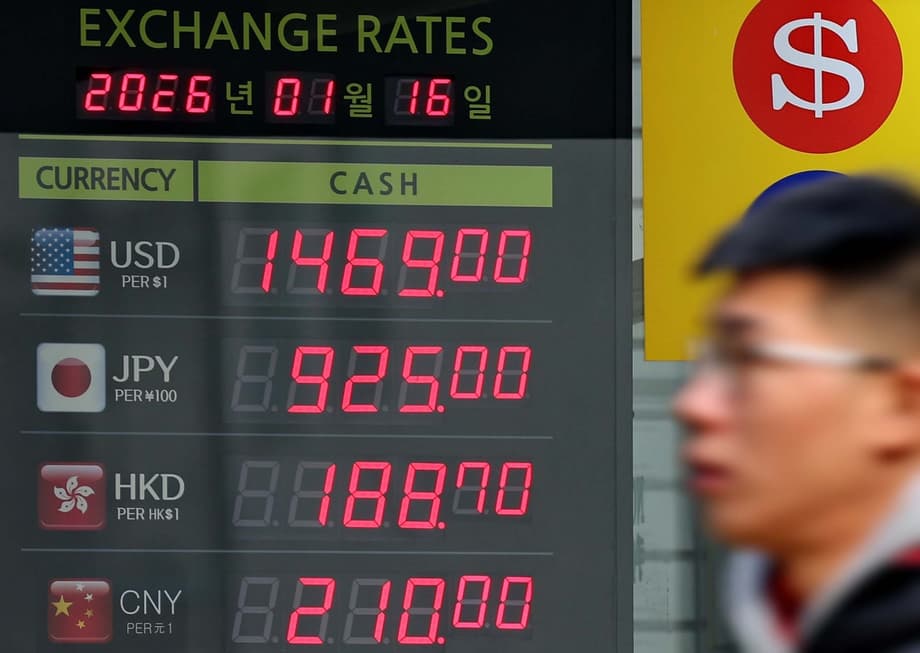
The report, originally published in October, has garnered renewed attention as the Korean won continues to weaken against the dollar, sliding toward the 1,480 level despite concerted efforts by authorities to stabilize the currency. When the IMF initially released its findings, the won was already under pressure, trading around 1,400 per dollar. It has since experienced significant turbulence, plunging to near-crisis levels in late December before staging a brief recovery following market intervention on December 24.
The core issue lies in the structural mismatch between the depth of the local financial market and the scale of the economy’s global exposure. Korean companies and financial institutions have accumulated substantial dollar assets over decades of export-led growth and overseas investment. However, the domestic infrastructure designed to hedge the currency risk associated with these assets has not kept pace. This creates a precarious situation where any rush to hedge against a falling won could overwhelm the market, exacerbating the very volatility investors seek to protect against.
The IMF report explicitly warned that this limited absorption capacity leaves the FX market more susceptible to funding stress during periods of currency turbulence. The organization noted that in some economies, dollar exposures are disproportionately large relative to the depth of the local foreign exchange market. This dynamic creates a feedback loop where currency weakness forces investors to buy dollars to hedge their positions, which in turn drives the currency even lower.
Global Comparisons Highlight Market Depth Issues
To fully grasp the severity of Korea’s situation, economists often look to comparative data with other major economies. The IMF data reveals that while South Korea’s ratio of 25 times is high, it is not entirely unique among advanced economies with large sovereign wealth or pension funds. Canada and Norway posted similar ratios around 25 times, driven largely by their massive sovereign and pension portfolios invested abroad.
Taiwan presents an even more extreme case, with a ratio exceeding 45 times. This figure reflects Taiwan’s smaller FX market relative to its significant dollar asset holdings. Like South Korea, Taiwan is a major exporter with substantial foreign reserves but lacks the deep liquidity of a reserve currency market. This structural similarity puts both nations in a vulnerable category compared to their Western counterparts.
Japan, while holding the largest volume of dollar assets by absolute volume, maintains a much safer ratio of approximately 15 times. This lower risk profile is attributed to the exceptional depth of Japan’s FX market. The Japanese yen’s status as a global reserve currency allows for greater liquidity and more sophisticated hedging instruments, providing a shock absorber that Seoul and Taipei lack.
Most eurozone economies, such as Germany, France, and Spain, record single-digit ratios. These countries benefit from the euro’s reserve currency status and deeply integrated financial markets. The contrast between these single-digit ratios and Korea’s 25-fold multiple underscores the specific challenges faced by non-reserve currency economies. Without the inherent trust and liquidity enjoyed by the US dollar, euro, or Japanese yen, emerging market currencies like the won are far more prone to speculative attacks and sudden capital flight.
The Mechanics of a ‘Rush to Hedge’
The specific mechanism flagged by the IMF involves a phenomenon described as a ‘rush to hedge.’ In times of global financial stress or domestic currency weakness, institutional investors holding dollar assets face immediate pressure to protect the value of their portfolios. To do this, they typically utilize financial derivatives known as forward contracts to lock in exchange rates. This process effectively involves buying dollars and selling the local currency in the forward market.
Under normal circumstances, the banking system can facilitate these transactions smoothly. However, when a vast amount of dollar assets exists relative to the daily turnover of the FX market, a simultaneous effort by major players to hedge can strain the system. Banks, scrambling to cover their own positions, may drive up the cost of dollars, making the currency even more expensive and potentially triggering a self-reinforcing cycle of devaluation.
The report noted that heavier selling of dollar forwards can intensify dollar funding pressures. This activity accelerated following Washington’s sweeping tariff announcements in April, illustrating how geopolitical and trade policy shifts can rapidly destabilize currency markets. For Korea, an economy heavily reliant on exports, these external shocks pose a persistent threat to financial stability.
The concern is that during a global crisis, liquidity in non-reserve currencies tends to dry up as international banks retreat to their home markets. If Korean institutions are forced to hedge billions of dollars in assets simultaneously during such a retreat, the thin domestic market may simply fail to provide a clearing price, leading to chaotic price swings and a potential liquidity crunch.
Policy Responses and Limited Effectiveness
In response to these looming risks, South Korean authorities have implemented several measures aimed at shoring up the currency and reducing volatility. The government recently extended the National Pension Service’s strategic currency hedging arrangement with the central bank. This move is designed to contain risks tied to the NPS’s massive overseas investments, providing a backstop that prevents the pension fund from having to dump dollars onto the open market during periods of stress.
Additionally, the government is preparing to roll out retail forward-selling products through major brokerages. This initiative aims to rein in dollar demand driven by individual investors’ overseas stock buying. Often referred to locally as ‘Seohak Ants,’ these retail investors have been pouring money into US equities, contributing to persistent dollar buying pressure in the local market. By offering accessible hedging tools, officials hope to smooth out these retail-driven capital flows.
Despite these efforts, the policy impact has been limited so far. The won closed onshore trading recently at 1,473.6 per dollar, surrendering gains from a previous session. That brief rally followed a rare intervention by US Treasury Secretary Scott Bessent, who stated that the currency’s recent slide was not in line with Korea’s strong economic fundamentals. While verbal intervention from the United States provided a temporary psychological boost, it has done little to alter the fundamental supply and demand dynamics driving the exchange rate.
Market participants have been vocal in their assessment that current measures are insufficient. Bank of America released a report arguing that Korea’s current steps are inadequate to arrest the currency’s decline. The financial institution warned that political pressure to stabilize the won is likely to intensify if the downward trend persists. The analysis suggests that altering the flow dynamics may require more potent levers, such as tax incentives to encourage capital inflows or discourage outflows.
Calls for International Coordination
Given the scale of the exposure, financial analysts are increasingly looking toward international solutions. Citi highlighted the critical need for stronger international coordination, particularly with the United States. The bank suggested that Korean authorities could seek ‘symbolic FX backstops such as a form of FX swap’ to support trade and financial stability.
While a crisis-style unlimited swap line similar to those established during the 2008 global financial crisis is considered unlikely in the current environment, Seoul has other options. Citi noted that Korea could tap the Federal Reserve’s Foreign and International Monetary Authorities repo facility. This mechanism would allow South Korea to use its US Treasury holdings as collateral to obtain dollar liquidity, effectively providing a safety net during periods of market stress.
Such arrangements would serve as a powerful signal of confidence, potentially deterring speculative attacks by assuring the market that dollar liquidity will remain available. Access to Fed swap lines or repo facilities is often viewed as a ‘seal of approval’ for a country’s financial standing, distinguishing core economies from those on the periphery.
However, securing these arrangements often requires complex diplomatic negotiations and a demonstration of sound underlying economic policy. The ongoing discussions reflect a growing recognition that domestic policy tools alone may not be enough to counter global forces in an era of interconnected financial markets.
Expert Warnings of a Potential Crisis
While the IMF focuses on structural market issues, some domestic experts are sounding the alarm about a more immediate risk of a foreign exchange crisis. Kim Dae-jong, a business administration professor at Sejong University, provided a sobering assessment of Korea’s economic defense capabilities in a recent interview. He argued that the country’s foreign exchange reserves relative to GDP stand at around 22%, a figure he described as woefully inadequate.
‘Without government preparedness, the likelihood of a foreign exchange crisis approaches 30%. We must significantly increase foreign exchange reserves to Taiwan’s level and establish safety nets through measures like Korea-Japan currency swaps.’
Professor Kim pointed out that Taiwan holds reserves equivalent to 80% of its GDP, providing a massive buffer against speculative attacks. In contrast, he noted that the Korean won’s share of international payments is a mere 0.1%, making it a currency that few international counterparties will accept during a crisis. This lack of external acceptance forces the country to rely on dollar reserves, which can be depleted quickly in a crisis scenario.
The professor projected an 84% probability of an upward trend in the exchange rate, forecasting that the won could surge to between 1,550 and 1,600 won per dollar by 2026. He emphasized that the interest losses incurred by holding large reserves are a necessary cost of insurance against a crisis. The cost of a crisis, he argued, would be far higher than the cost of holding liquid assets.
These warnings are compounded by broader concerns about fiscal health. While the government highlights a debt ratio of 52%, Professor Kim contends that this figure is an illusion. He argues that broad national debt, including public enterprise debt and unfunded pension liabilities, has already surpassed 130% of GDP. The IMF classifies countries with non-reserve currencies as risky when their debt ratio exceeds 60%, a threshold South Korea is expected to cross by 2029.
Broader Economic Challenges and Corporate Flight
The currency instability is not occurring in a vacuum but is symptomatic of deeper structural challenges within the Korean economy. High corporate tax rates and stringent regulations are driving capital flight, as companies seek more favorable environments overseas. Professor Kim noted that Korea’s corporate tax rate of 26% is higher than the global average of 21% and significantly exceeds rates in competitor nations like Singapore and Ireland.
This regulatory and fiscal environment stifles innovation and discourages new business formation. The professor cited the ride-sharing sector as an example, noting that allowing platforms like Uber could create over 300,000 jobs. Instead, Korea maintains what critics describe as ‘positive regulation,’ which dictates what is allowed rather than what is forbidden, effectively cutting off new industries at the bud.
As companies flee, the tax base erodes, making it harder to service the national debt and fund social programs. This creates a vicious cycle where the government must either raise taxes further or borrow more, both of which negatively impact investor confidence in the currency. For individuals, Professor Kim advised a defensive investment strategy, recommending a portfolio heavily weighted toward dollar-denominated assets to protect wealth against the projected rise in the exchange rate.
The convergence of these factors—a structurally shallow FX market, massive dollar exposure, declining reserves, and a weakening fiscal position—paints a complex picture for South Korea’s economic future. While the authorities are taking steps to manage immediate volatility, the fundamental imbalances identified by the IMF and domestic experts suggest that the pressure on the won is likely to persist.
The Essentials
- The IMF reported that Korea’s dollar asset exposure is 25 times the size of its onshore FX market, creating high volatility risk.
- The won has weakened toward 1,480 per dollar despite government intervention efforts to stabilize the currency.
- Taiwan faces a higher risk ratio at over 45 times, while Japan maintains a safer ratio of 15 times due to market depth.
- A ‘rush to hedge’ by investors during stress periods can overwhelm the market, creating a self-reinforcing cycle of currency decline.
- Policy measures like NPS hedging extensions and retail forward products have so far failed to halt the currency’s slide.
- Experts warn of a potential foreign exchange crisis, citing low reserves relative to GDP and a high projected exchange rate of 1,600 by 2026.
- Analysts suggest Korea may need US Federal Reserve swap lines or repo facilities to ensure adequate dollar liquidity.