A Policy Shift Rocks the Market
Honda has long reigned supreme over the bustling streets of Vietnam, commanding more than 80% of the market in a nation where the motorcycle is the primary mode of transport for millions. However, the Japanese giant’s dominance is facing an unprecedented challenge. The Vietnamese government, driven by urgent environmental concerns, has implemented a sudden and stringent policy aimed at phasing out fossil-fuel motorbikes. This abrupt regulatory pivot has caught traditional manufacturers off guard, forcing a rapid acceleration in the transition to electric mobility.
The catalyst for this market upheaval was a directive issued by Prime Minister Pham Minh Chinh in July. The order sets a strict timeline for removing petrol-powered motorcycles from Hanoi, the capital city. Starting in mid-2026, these vehicles will be banned from operating within Ring Road 1, the city center. The restrictions will expand significantly by 2028, covering larger areas and eventually extending to private cars by 2030. Ho Chi Minh City, the country’s southern economic hub, is preparing similar measures, signaling a nationwide shift that redefines the future of transportation in Southeast Asia.
Honda’s Immediate Struggle
For Honda, which sold 2.6 million vehicles in Vietnam last year, the policy change arrived with little warning. The company had grown comfortable catering to a massive demand for internal combustion engine bikes, but the landscape shifted overnight. Industry data reveals the immediate financial impact of the government announcement. In August, Honda’s sales in Vietnam fell by nearly 22% compared to July, representing a 13% drop year-on-year. This decline highlights a sudden consumer hesitation as buyers weigh the risks of purchasing petrol bikes that may soon face restrictions in urban areas.
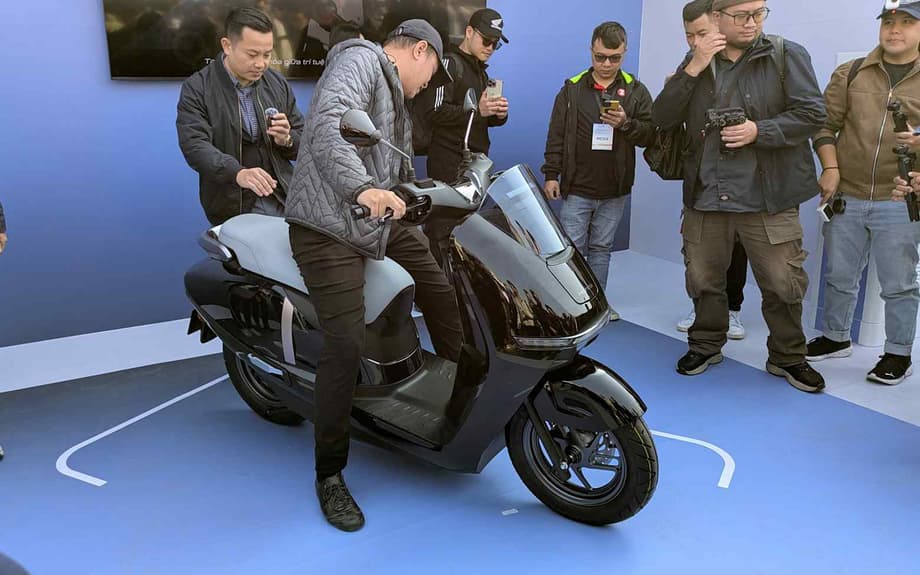
The company has been forced to scramble in response. Just last week, Honda unveiled its third electric bike model for the Vietnamese market, a clear signal that it is advancing its electrification plan much faster than originally anticipated. This new model is part of a broader strategy to defend its market share against local competitors who are better positioned to capitalize on the new regulations. The shift requires Honda to pivot its production lines and supply chains, a complex logistical feat for a manufacturer so deeply entrenched in traditional petrol engine technology.
Consumer Sentiment and the Wait-and-See Approach
The confusion in the market is palpable among consumers. Dealers across major cities report that potential buyers are adopting a wait-and-see approach, hesitant to invest in vehicles that might lose value or utility in the near future. A major distributor explained that people are wondering whether buying a petrol bike now could restrict them later or if it is better to wait until electric options become more affordable. This hesitation has effectively put the market on pause, contributing to the overall slowdown in sales.
Despite the uncertainty, consumer attitudes are shifting. A survey conducted in September by market research firm Asia Plus Inc. found that 54% of respondents in Hanoi and Ho Chi Minh City plan to choose an electric model for their next motorbike purchase. Only 24% intend to stick with a gasoline model. In Hanoi specifically, where the ban will hit first, the preference for electric bikes rises to 60%. The primary driver for this change is the government’s endorsement of electric vehicles, suggesting that policy is a powerful tool in shaping public behavior.
The Rise of Local Competitors
While Honda grapples with the transition, Vietnam’s homegrown electric vehicle manufacturer, VinFast, is experiencing a surge in momentum. The company stands to benefit significantly from the government’s pro-EV stance. According to industry reports, VinFast’s electric motorbike sales have quadrupled, and the company delivered 71,000 electric motorbikes last year. In the second quarter of this year alone, VinFast sold 70,000 electric motorbikes and bicycles, a 55% increase from the previous quarter.
VinFast has moved aggressively to capture the market, introducing new models like the Vero X, Feliz, and Feliz Lite, which feature dual-battery support and an expanded battery-swapping network. Other local players such as Yadea, Dat Bike, and Pega are also gaining traction, chipping away at the market share traditionally held by Japanese firms. The Asia Plus survey indicates that while 50% of respondents would still consider buying a Honda, 32% are now leaning toward VinFast. This statistic is particularly alarming for Honda given that more than 80% of survey respondents currently own a Honda vehicle, suggesting a potential erosion of brand loyalty in the face of regulatory change.
Industry Pushback and Economic Concerns
The speed of the transition has sparked alarm among Japanese manufacturers and industry groups. Honda, Yamaha, and Suzuki have jointly warned that the abrupt ban could force suppliers into bankruptcy and cause production interruptions. The Japanese embassy in Hanoi sent a letter to the Vietnamese government in September, urging authorities to delay implementation and provide a transition period. The coalition argues that the industry needs at least two to three years to realign production lines, expand charging networks, and update safety standards.
Sayaka Arai, the Chairwoman of the Vietnam Association of Motorcycle Manufacturers (VAMM) and a Honda Vietnam Director, raised concerns about the transition’s impact on millions of residents. She warned that the shift could affect 2,000 dealerships, 200 suppliers, and hundreds of thousands of workers who rely on the internal combustion engine ecosystem.
The Supply Chain at Risk
The economic stakes extend beyond the major manufacturers. Industry groups estimate that nearly 2,000 dealerships and 200 component suppliers could be hit hard by the ban. These businesses have invested hundreds of thousands of dollars in new technology and equipment to meet upcoming regulations like EURO4 emission standards, which are effective from 2027. A sudden pivot to electric vehicles could render these recent investments wasteful. VAMM has petitioned the government, warning that an abrupt shift risks disrupting the entire motorcycle ecosystem, from production and distribution to after-sales services.
Socioeconomic Challenges and the Path Forward
The transition to electric mobility presents significant hurdles for lower-income groups. Ride-hailing drivers, for example, rely heavily on affordable motorbikes for their livelihoods. Data from Grab Vietnam indicates that more than 70% of ride-hailing drivers are freelance workers with unstable incomes. High upfront costs remain a major barrier to switching vehicles, with over 53% of Grab drivers saying they can afford no more than $80 per month in installments for an electric motorbike. Furthermore, around 56% lack access to home charging facilities, a critical requirement for daily operation.
To address these disparities, Grab has proposed that the city provide at least $400 in support per driver for vehicle conversion. For poor and near-poor households, the company recommends a subsidy of up to 100%, capped at $800. The Vietnamese government has acknowledged the need for support. Hanoi’s Department of Construction has proposed direct cash subsidies for residents currently using gasoline or diesel-powered motorbikes. Additionally, the city aims to equip at least 10% of parking spaces in existing buildings and 30% in new developments with EV chargers by the end of 2026.
Honda’s Strategic Response
Despite the challenges, Honda is moving to adapt its strategy. The company recently launched the Honda UC3, a fixed-battery electric commuter positioned as the electric equivalent of a 110cc internal combustion engine motorcycle. The UC3 features a wheel-side motor developed in-house and offers a cruising range of up to 122 km per charge. Honda is also expanding its charging infrastructure, installing CHAdeMO charging stations at dealerships in major cities like Hanoi, Ho Chi Minh City, and Da Nang.
Honda’s global business briefing from May 2025 highlights a commitment to electrifying its motorcycle products while improving fuel economy for its remaining internal combustion models. The company plans to modularize models developed exclusively as electric versions and begin production at a highly efficient, dedicated electric motorcycle plant in India by 2028. For now, the immediate focus remains on Vietnam, where Honda must convince its loyal customer base that its electric offerings can match the reliability and affordability of the petrol bikes that have dominated the roads for decades.
The Essentials
- Honda sold 2.6 million motorcycles in Vietnam in 2024, holding over 80% of the market.
- A new government directive bans petrol bikes from Hanoi’s center by mid-2026, expanding citywide by 2028.
- Honda’s sales in Vietnam dropped nearly 22% in August 2025 following the policy announcement.
- A survey by Asia Plus found 60% of Hanoi residents plan to buy an electric motorbike next.
- VinFast, a local EV maker, saw electric motorbike sales quadruple amid the regulatory shift.
- Industry groups warn the ban could impact 2,000 dealerships and 200 suppliers, risking job losses.
- Honda unveiled its third e-bike model and the UC3 electric commuter to accelerate its local electrification strategy.