From Rice Fields to Industrial Zones
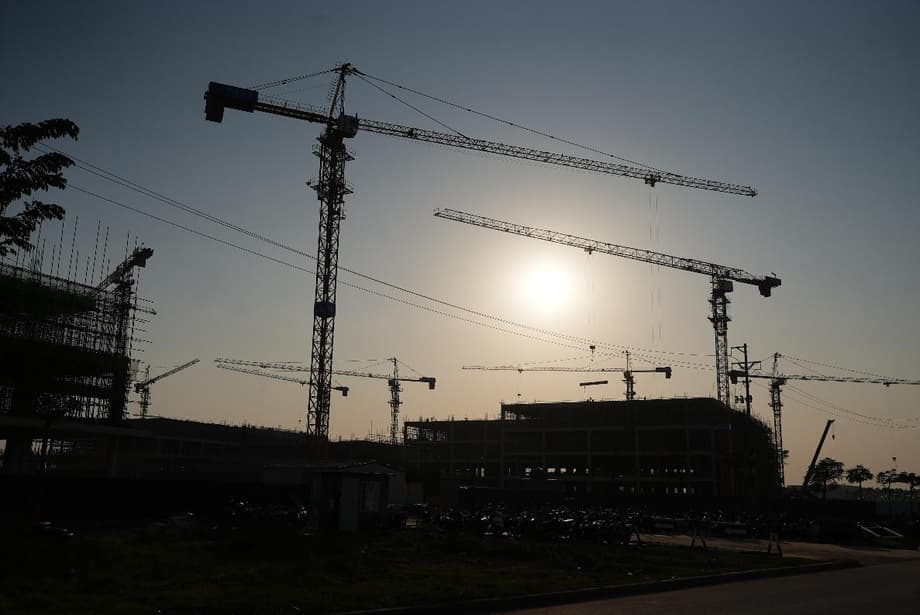
The transformation of Bac Ninh is visible everywhere one looks. Located just north of Hanoi, this city was once defined by its verdant rice fields and the haunting melodies of Quan Ho folk love duets. Today, the landscape is dominated by sprawling factory complexes, billboards in Chinese and Korean advertising services, and shops named after Asian retail giants. This rapid metamorphosis reflects a broader trend reshaping Southeast Asia. As geopolitical tensions and trade wars between Washington and Beijing intensify, global supply chains are unraveling and reassembling elsewhere. Vietnam has emerged as a primary beneficiary of this shift, absorbing a wave of foreign investment accelerated by tariff hikes and the search for manufacturing alternatives to China.
The initial boom was driven by early investments from Japan and South Korea, which helped establish Vietnam as a global manufacturing hub. However, the current surge is distinct. It is fueled largely by Chinese companies diversifying their production bases to circumvent U.S. trade restrictions. While this influx has brought unprecedented economic growth, it has also exposed the structural limits of Vietnam’s rapid rise. The nation now faces a complex set of challenges, including rising labor costs, worker shortages, and infrastructure that is struggling to keep pace with demand.
As Bac Ninh evolves from an artisan center into a high-tech industrial zone, it serves as a microcosm of Vietnam’s broader economic ambitions and obstacles. The country is striving to ascend the value chain, moving from low-cost assembly to sophisticated manufacturing, but the path forward is fraught with competition and internal constraints.
<
The Drivers of the Great Migration
The exodus of manufacturing from China is not a sudden phenomenon but rather an acceleration of existing trends. For decades, China was the world’s factory floor, offering low labor costs, vast infrastructure, and a massive workforce. However, the calculus has changed. Rising wages in China have eroded its cost advantage, while geopolitical tensions, particularly the trade war initiated by the Trump administration, have introduced significant uncertainty. Companies are increasingly adopting a “China plus one” strategy, spreading their manufacturing footprint to mitigate risks associated with relying on a single country.
Intellectual property concerns and supply chain vulnerabilities exposed by the COVID-19 pandemic have further incentivized this relocation. Major corporations like Samsung and Apple have led the charge. Samsung has moved a significant portion of its smartphone production out of China, with reports indicating that up to 80% of its Chinese capacity is shifting to Vietnam. Apple has also begun diversifying, moving some iPhone production to India and Vietnam. These moves are not merely about finding cheaper labor. They are about creating resilient, flexible supply chains that can withstand geopolitical shocks and trade disruptions.
Fredric Neumann, chief Asia economist at HSBC, notes that even if trade tensions ease, the momentum for diversification remains strong. He observes that companies are not just trying to shift factories out of China but are actively spreading them across several countries to build redundancy. This structural shift means that the demand for manufacturing capacity in Southeast Asia is likely to persist, regardless of short-term tariff fluctuations.
<
A Tale of Two Vietnams
The Northern Industrial Hub
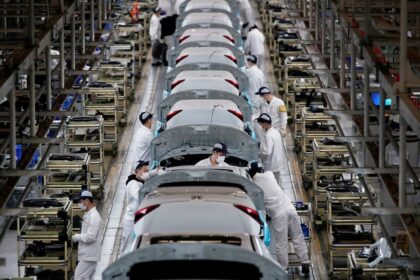
Vietnam’s manufacturing landscape is not monolithic. Analysts often distinguish between the North and the South, which serve fundamentally different manufacturing models. Northern Vietnam, anchored by provinces like Bac Ninh, Hai Phong, and Thai Nguyen, has evolved into a concentrated corridor for high-precision manufacturing. This region is deeply integrated into East Asian production networks, particularly with China. It hosts electronics giants and heavy industrial assembly plants that rely on tight supply chains and synchronized production cycles.
Bac Ninh’s rise is closely tied to this specialization. The city’s first major boom began around 2008 when Samsung built its first phone factory there, turning Vietnam into the company’s largest offshore manufacturing base. This presence acted as a magnet, attracting suppliers and partners. Now, Chinese companies are pouring in, utilizing the same supply chain infrastructure and labor force. The region’s proximity to the Chinese border facilitates the quick movement of components, a critical factor for electronics manufacturers who operate on just-in-time delivery models.
The Southern Export Platform
In contrast, Southern Vietnam, centered on Ho Chi Minh City and surrounding provinces like Binh Duong and Dong Nai, functions as a diversified manufacturing and export platform. The region is known for flexibility, supporting industries ranging from fast-moving consumer goods and garments to footwear and furniture. While the North focuses on technical depth and integration with Asian suppliers, the South is characterized by broader supplier depth and adaptability.
For manufacturers with revenue tied to fixed delivery schedules in the United States or European Union, the South offers logistical advantages. The Cai Mep-Thi Vai deep-water port complex supports direct shipping services to the U.S. West and East Coasts, shortening transit times compared to northern routes. This geographical divide highlights the strategic choices foreign investors must make when entering the Vietnamese market, choosing between technical integration in the North or logistical flexibility in the South.
<
The Limits of Rapid Growth
Despite the optimism, the boom is creating significant friction points. The most immediate challenge is the labor market. As factories compete for workers, wages are rising, and recruitment is becoming difficult. Peng, an employee at a telecommunications equipment company that moved from Shenzhen, described the tightening market. He noted that labor costs have jumped 10% to 15% since 2024 and are expected to continue rising. To attract staff, companies in Bac Ninh have resorted to offering perks like higher wages, signing bonuses, and even daily necessities like a box of instant noodles or free bus fares for commuters.
This wage pressure undermines one of Vietnam’s core competitive advantages: low labor costs. The minimum wage increased by 6% in July 2024, and experts warn this trend will continue as workers demand better standards of living. Furthermore, the workforce, while young and dynamic, often lacks the specialized skills required for high-tech manufacturing. A report by the Healy Consulting Group found that a large percentage of the Vietnamese workforce lacks certification or vocational training, forcing companies to invest heavily in education and training to bridge the gap.
Brian Bourke, global chief commercial officer at U.S.-based SEKO Logistics, pointed out that while Vietnam remains a top destination for footwear, furniture, and technology firms, it still lags behind China in infrastructure and logistics capabilities. These limitations are surfacing in boomtowns like Bac Ninh, where the rapid influx of industry is outpacing the development of supporting utilities and transportation networks.
<
The Supply Chain Dilemma
Another critical vulnerability is Vietnam’s dependence on imported materials, particularly from China. Jacob Rothman, co-founder and CEO of China-based Velong Enterprises, emphasized that China spent decades building the “best manufacturing ecosystem” through government support and massive investment. He stated plainly, “You can’t recreate that overnight.” Vietnamese manufacturers often rely heavily on imports of intermediate goods, semi-processed products, and capital goods from China and South Korea. This reliance creates a trade deficit with these nations and a supply chain domino effect.
When disruptions occur in China, such as factory shutdowns or port congestion, the ripples are felt immediately in Vietnam. If a Vietnamese factory cannot secure essential components from across the border, production lines stall and deliveries are delayed. This dependence complicates the goal of becoming a fully independent manufacturing powerhouse. It also means that Vietnam is essentially performing assembly work for Chinese supply chains rather than wholly replacing them.
Logistics remain a hurdle for companies targeting Western markets. Vietnam is located across the Pacific, meaning shipping goods to the United States takes weeks and involves substantial costs compared to nearshoring options like Mexico. Shipping rates from Asia to the U.S. have skyrocketed, and the long transit times introduce risks of delay and inventory shortages. Additionally, the country’s internal transportation infrastructure is rated as weak. Road transport infrastructure ranks 103rd globally, and only a small fraction of the national highway system is paved, creating bottlenecks for moving goods from factories to ports.
<
Navigating Trade Relations and Competition
Vietnam’s success has drawn political scrutiny. Few countries have benefited more from the U.S.-China trade war than Vietnam. In 2024, the country ran a $123.5 billion surplus with the United States, the third largest behind China and Mexico. This massive surplus irked the Trump administration, which threatened a 46% import tax on Vietnamese goods before settling on 20%. While the two countries are working to maintain tariffs at this level, the threat of higher duties looms large. Scrutiny regarding Vietnam’s role as a hub for tariff-dodging transshipments has also made some manufacturers wary.
To mitigate these risks, companies are diversifying their own portfolios. Brian Bourke noted that one of SEKO Logistics’ customers shifted some furniture production to India specifically because it did not want to “put all their eggs in Vietnam.” This sentiment reflects a growing caution among investors who recognize that Vietnam, while promising, cannot absorb unlimited capacity.
Furthermore, regional competition is intensifying. Countries like Indonesia and the Philippines, which missed the early gains Vietnam captured, are aggressively promoting themselves as alternative manufacturing bases. The Philippines recently passed a law allowing foreign investors to lease private land for up to 99 years to attract long-term investment. Meanwhile, India is positioning itself as a rival superpower, leveraging its large domestic market and skilled workforce to attract giants like Apple. Mexico is also gaining ground, capitalizing on its proximity to the U.S. and favorable trade agreements like the USMCA to lure manufacturers seeking to shorten their supply chains.
<
Looking Toward 2045
Aware of these challenges, the Vietnamese government is launching a synchronized nationwide push to upgrade its economy. The country has set a goal of becoming rich by 2045, aspiring to join the ranks of Asia’s “tiger economies” like South Korea and Taiwan. This vision requires moving beyond low-cost assembly to higher-value manufacturing, such as electronics, pharmaceuticals, and clean energy equipment.
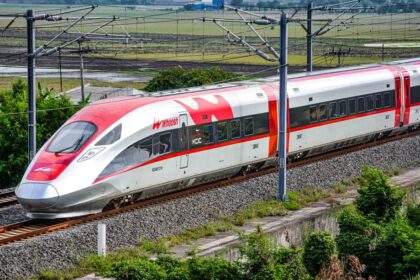
Infrastructure development is a top priority. New highways are being built to cut travel times to the Chinese border, and a planned railway will connect Hanoi to the port city of Haiphong and the border town of Lao Cai. In December, Bac Ninh broke ground on the expansion of an industrial zone dedicated to high-tech manufacturing. Nationally, the government launched 234 major projects worth more than $129 billion in a display of fiscal ambition ahead of a major political assembly.
To support this transition, Vietnam is offering incentives like tax breaks on imported machinery and discounted rent to help suppliers upgrade and modernize. The country is also trying to reduce its dependence on the U.S. market by expanding exports to the Middle East, Latin America, Africa, and India. Prime Minister Pham Minh Chinh has framed the stakes ambitiously, urging the nation to expand its reach and capabilities. However, the reality is that Vietnam is too small to replace China entirely, as its economy is 40 times smaller. The strategy is not replacement but integration and elevation within a diversified global network.
<
Key Points
- Vietnam, particularly Bac Ninh, has transformed from an agricultural region into a major manufacturing hub due to an influx of foreign investment and the “China plus one” strategy.
Major corporations like Samsung and Apple are shifting production to Vietnam to diversify supply chains and mitigate geopolitical risks associated with China.
The rapid industrial growth is constrained by rising labor costs, worker shortages, and inadequate infrastructure, including poor road networks and port congestion.
The country remains heavily reliant on China for raw materials and intermediate goods, creating a supply chain vulnerability that undermines total independence.
Large trade surpluses with the U.S. have attracted scrutiny and tariff threats, prompting some companies to hedge their bets by expanding into other countries like India and Mexico.
Vietnam aims to become a high-tech “tiger economy” by 2045, investing billions in infrastructure and incentives to move up the value chain.