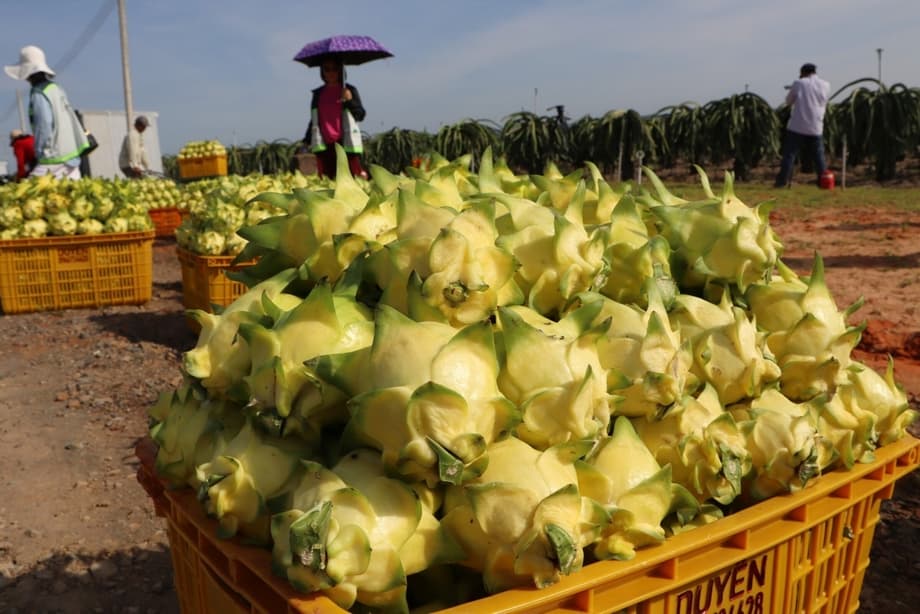
A Decline of Historic Proportions
Vietnam’s dragon fruit industry, once a golden standard of the nation’s agricultural export success, has hit its lowest level in eleven years. This drastic fall from the billion-dollar highs of the past decade signals a tough new reality for farmers and exporters. According to Vietnam Customs, export revenue for the first eleven months of the recent year reached only $485.2 million. This figure represents a 0.8% decrease compared to the previous year and marks the weakest performance since 2014. The decline stands in sharp contrast to the period between 2014 and 2018, when the industry routinely generated over $1 billion annually, peaking at an impressive $1.3 billion in 2018. This reversal of fortune reflects deep structural changes in the global agricultural market, where Vietnam no longer enjoys the uncontested dominance it once held.
The Challenge from China
China remains the largest single destination for Vietnamese dragon fruit, accounting for approximately 62% of total exports with a turnover of $301.7 million. However, heavy reliance on this market has become a significant vulnerability. Exports to China fell by 4.5% year-on-year as the northern neighbor aggressively expanded its own domestic cultivation. Chinese farmers now produce an estimated 1.6 million tonnes of dragon fruit annually, a volume that exceeds Vietnam’s output and is sufficient to meet most domestic demand. This surge in local supply has drastically reduced the need for imports and driven prices down. Recent reports from the Chinese market indicate that prices for red-fleshed dragon fruit have plummeted to as low as $0.42 per kilogram, a reflection of severe oversupply and weak consumer demand. As China becomes self-sufficient, the primary outlet for Vietnamese produce is rapidly shrinking.
Loss of North American Markets
While China retreats, Vietnam is also losing ground in the West due to fierce competition from Latin America. Mexico has successfully cultivated dragon fruit and, using its geographical proximity to the United States and Canada, has largely displaced Vietnamese produce in these lucrative markets. Business representatives report that in the early 2010s, Vietnam exported white-fleshed dragon fruit smoothly to North America. Since 2019, however, Mexico has expanded production significantly. As a result, Vietnam has almost entirely ceased exporting white-fleshed dragon fruit to the US and Canada, retaining only a small niche market for red-fleshed varieties. This loss highlights the difficulty of competing with producers who have lower freight costs and preferential trade access.
Navigating the Indian Market
In search of alternative revenue streams, Vietnamese exporters have turned their attention to India. Exports to this market grew by 6.4%, reaching nearly $41.8 million. Thailand also saw a surge of 71.1% in imports. Nevertheless, industry analysts warn that the scale of these emerging markets remains too small to offset the massive decline in Chinese demand. The Indian market offers its own set of complications. Vivek Aggarwal, Business Head at Angel Fine Foods Company Ltd., notes that while Vietnam remains a key supplier, margin pressure is significant.
“In India, the margin pressure is significant. Though buyers continue importing regularly, the high level of competition makes profitability uncertain,” Aggarwal said.
He explains that competition comes not just from other exporters but from India’s own expanding dragon fruit production, which peaks during harvest season and causes Vietnamese imports to drop sharply from 200 containers per month to about 50 or 60.
Logistics and Pricing Pressures
Logistics have improved with direct vessels reducing transit time from Vietnam to major Indian ports to roughly 9 to 13 days, down from 25 days via indirect routes. This improvement helps preserve fruit freshness and quality. Despite better logistics, pricing remains a hurdle. CIF Nhava Sheva prices dropped by 25% between August and October compared to the previous year. Aggarwal stresses that retail price adjustments in India are necessary to sustain importer margins. Currently, retail prices in India range from $0.7 to $1.1 per piece, while farm-gate returns in Vietnam hover around $5.5 to $6.5 per box, indicating low earnings for farmers despite high consumer prices abroad.
Administrative and Quality Hurdles
Beyond market competition, Vietnamese exporters face severe administrative and quality control challenges. In June 2025, dragon fruit exports plummeted by 53% month-over-month. Huynh Canh, chairman of the Binh Thuan Dragon Fruit Association, attributes this to unfavorable weather causing fungal diseases and crop damage, leading to many shipments failing quality standards. Additionally, changes in government bureaucracy created a bottleneck for European-bound shipments.
“By July 25, over 100 tons of dragon fruit had spoiled due to prolonged storage, with an additional 50-70 tons still awaiting certification,” Canh said regarding the administrative delays.
These delays stemmed from a new government circular effective July 1, which moved responsibility for issuing food safety certificates for the European Union from the Department of Crop Production to provincial People’s Committees. This transition, occurring alongside a major merger of provinces, disrupted the certification process. Exporters reported that shipments remained in cold storage for up to 10 days as provincial authorities sorted out their new responsibilities. Given the EU’s strict quarantine standards, these delays resulted in significant spoilage and financial losses. The Prime Minister has since directed agencies to resolve these bottlenecks, but the disruption highlights the fragility of the current export infrastructure.
Strategic Shifts for Survival
Industry leaders agree that the old model of mass production is no longer viable. Dang Phuc Nguyen, secretary-general of the Vietnam Fruit and Vegetable Association, argues that farmers and businesses must fundamentally reassess their markets and competitive advantages. The focus must shift from volume to value. Experts suggest increasing the share of off-season production to capture windows when competitor nations face weather-related shortages. Promoting red-fleshed varieties, which command higher prices and face different competitive dynamics than white-fleshed fruit, is another recommended strategy. Furthermore, developing the processing industry to create products like juice, wine, and dried snacks could relieve pressure on the fresh fruit market and reduce waste.
Moving Toward Sustainability
Long-term recovery may also require a commitment to sustainable farming practices. The United Nations Development Programme (UNDP) and Vietnam’s Ministry of Agriculture and Rural Development have advocated for a shift toward low-carbon, climate-resilient agriculture. This involves modernizing farm management systems and establishing robust connections between farmers, cooperatives, and distributors. By focusing on transparency, traceability, and reducing carbon footprints, Vietnamese producers can meet the rising global demand for sustainable food and access premium markets willing to pay for certified eco-friendly products.
The Bottom Line
Vietnam’s dragon fruit industry is at a crossroads. The days of easy growth and billion-dollar revenues driven by a single market are over. To recover, the sector must navigate a complex landscape of aggressive competition, particularly from China and Mexico, while overcoming internal logistical hurdles.
- Vietnam’s dragon fruit exports fell to $485.2 million in the first 11 months of the recent year, the lowest since 2014.
- China, the largest market, reduced imports by 4.5% as domestic production reached 1.6 million tonnes.
- Mexico has displaced Vietnam in the North American white-fleshed dragon fruit market due to proximity.
- Exports to India grew by 6.4%, though profit margins remain squeezed by competition and falling CIF prices.
- Administrative changes in food safety certification caused over 100 tons of fruit to spoil in cold storage awaiting EU export approval.
- Industry experts recommend shifting focus to quality, off-season production, and processing to ensure long-term viability.