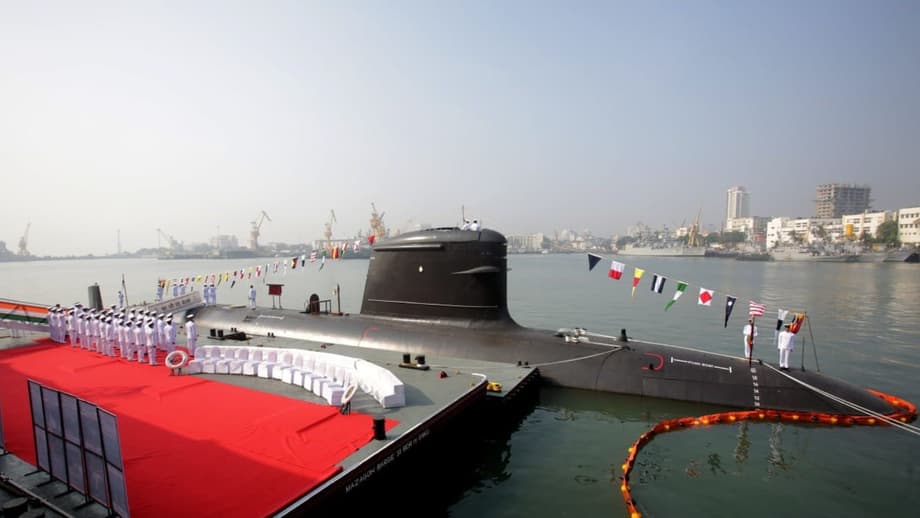
A new cornerstone for India’s undersea deterrent
India is on the cusp of commissioning its third nuclear powered ballistic missile submarine, INS Aridhaman, a step that would broaden the Navy’s sea based nuclear deterrent and give planners greater flexibility at sea. The submarine has moved into the final phase of harbour and sea trials after a quiet launch in 2021 and progressive testing through 2022 to 2025. Senior naval leadership has signaled that the boat will be inducted soon. Once commissioned, Aridhaman will join INS Arihant and INS Arighaat under the Strategic Forces Command, marking the first time India can draw on three SSBNs for deterrent patrols. This is a practical milestone for a nuclear posture designed to assure a second strike in the event of a nuclear attack.
- A new cornerstone for India’s undersea deterrent
- What Aridhaman adds to the Arihant class
- Trials, timeline, and the classified ATV program
- How SSBNs shape a second strike posture
- Regional balance, China and the Malacca factor
- Basing, security, and protecting the bastion
- Maritime partnerships and outreach
- Next steps and future missiles
- The Bottom Line
Aridhaman is a larger, upgraded variant of the Arihant design. It displaces about 7,000 tonnes when submerged, measures roughly 125 to 130 meters in length, and carries close to 95 to 100 crew. The boat uses an 83 megawatt compact light water reactor developed for naval propulsion, driving a single shaft with a seven blade propeller. Reported speeds are around 12 to 15 knots on the surface and about 24 knots underwater. Its hull metallurgy, internal isolation of machinery, and acoustic coatings are intended to lower noise, which is the decisive variable for survivability in contested waters.
Where the new boat stands out is missile capacity. Aridhaman mounts eight vertical launch tubes, double the number fitted in Arihant and Arighaat. That configuration can host up to 24 short range K-15 Sagarika missiles, a mix of K-15 and longer range K-4 missiles, or a full load of K-4s. The K-4 has a reported reach of roughly 3,500 kilometers, while K-15 is designed for ranges near 750 kilometers. The larger hull also permits more stores and better endurance, supporting longer patrols in the Bay of Bengal and beyond. This additional volume and flexibility align the boat more closely with the requirements of a credible second strike capability.
The submarine is expected to embark Indian designed USHUS and Panchendriya sonar suites that support detection, classification, targeting, and underwater communications. Defensive systems are believed to include broadband expendable countermeasures to confuse incoming torpedoes. Six 533 millimeter tubes provide close range defense with heavyweight torpedoes. Final reactor and weapon checks have been a focus of late stage trials, which aim to validate endurance, stealth, and system reliability before handover to the fleet.
What Aridhaman adds to the Arihant class
Internally designated S4 or SSBN 82, Aridhaman is an enlarged evolution of the Arihant class built at the Ship Building Centre in Visakhapatnam. The design change is purposeful. Doubling the number of missile tubes increases patrol flexibility and strike reach, while refinements to propulsion, noise reduction, and electronics improve survivability. These changes bring India closer to maintaining a round the clock at sea deterrent, where at least one boat remains on patrol while others undergo training, upkeep, or refit.
Propulsion and stealth
The reactor is an upgraded compact light water design that uses enriched uranium fuel and draws on experience from INS Arihant. Engineers focused on quieter operation, easier maintenance access, and crew safety. The hull uses special low carbon steel and likely carries anechoic tiles that absorb sound. A seven blade propeller, resilient mountings for rotating machinery, and attention to hydrodynamics reduce acoustic signature. In submarine warfare, every decibel matters. A quieter platform is more likely to avoid detection by adversary sensors and to complete a deterrent patrol without compromise.
Missile loadout and reach
Eight vertical launch tubes give the boat a flexible loadout. A K-15 Sagarika load supports multiple aim points with shorter range weapons, while a K-4 load allows standoff strikes at targets 3,500 kilometers away. The boat is expected to be compatible with future K-5 missiles in development, which are reported to have longer reach. As missile ranges grow, an Indian SSBN can remain in safer bastions, such as sectors of the Bay of Bengal guarded by friendly air and sea assets, yet still hold distant targets at risk. That reduces exposure to hostile anti submarine forces.
Sensors and self defense
Aridhaman is expected to field the USHUS and Panchendriya sonar families for active and passive detection, underwater communications, and fire control. For close in defense, the submarine carries heavyweight torpedoes and deploys broadband expendable countermeasures to disrupt tracking by enemy weapons. Electronic support measures, navigation aids, and secure communications systems round out a sensor suite that must work reliably in the dark, high pressure, noisy conditions of the deep ocean.
Crew and endurance
A crew of around 95 to 100 operates the reactor, drives the ship, maintains the weapon system, and sustains day to day life deep below the surface. Endurance is limited primarily by food, spares, and crew fatigue, not fuel. Modern SSBNs commonly execute patrols measured in weeks or months. Habitability, training, and well practiced procedures are key to safe and silent operations over long durations.
Trials, timeline, and the classified ATV program
Aridhaman was laid down in the late 2010s, launched in 2021, and has conducted trials since 2022. By mid 2025, major reactor and weapon checks were reported complete, with the boat now in the last stretch of evaluations before commissioning. The submarine is built under the Advanced Technology Vessel program (ATV), a decades long national effort that integrates the Department of Atomic Energy, the Navy, the Defence Research and Development Organisation, shipyards, and a web of public and private suppliers. Estimates place the broader program investment at about 900 billion rupees. Arihant, the first boat, entered service in 2016. The second, Arighaat, was commissioned in 2024. The fourth unit, internally referred to as S4*, is under construction and expected later in the decade. Together, these boats form the backbone of the sea leg of the nuclear triad.
When Aridhaman commissions, it will likely be based at the new naval facility near Rambilli, close to Visakhapatnam, under Eastern Naval Command. Operational control of nuclear payloads resides with the Strategic Forces Command. The Navy has invested in specialized infrastructure for loading, storage, training, and maintenance to support sustained operations and high readiness while keeping the fleet secure and discreet.
How SSBNs shape a second strike posture
An SSBN is built for one purpose, to survive and retaliate. Unlike land based missiles and aircraft, a nuclear powered submarine can remain hidden at sea for long periods. That survivability makes it the most resilient leg of a nuclear triad composed of land, air, and sea delivery systems. A second strike posture does not seek to strike first. It aims to guarantee a credible response if India is attacked with nuclear weapons. That assurance is the core of deterrence.
Continuous at sea deterrence
Maintaining a constant deterrent patrol at sea requires more than a single submarine. While one boat patrols, another prepares to sail, and a third undergoes maintenance or training. The United Kingdom and France sustain continuous at sea deterrence with four SSBNs each. With three boats available, India can cover more patrols, react best to maintenance needs, and close gaps. The commissioning of a fourth unit later this decade would improve the probability of always having one submarine on station, even as the fleet cycles through refit periods. Aridhaman, with greater missile capacity and endurance, strengthens this posture.
Regional balance, China and the Malacca factor
The timing of Aridhaman’s entry is closely watched across the Indo Pacific. China fields a growing SSBN fleet that is typically assessed at six Jin class boats, paired with JL-3 submarine launched ballistic missiles that can reach intercontinental ranges. Pakistan does not operate SSBNs, but is pursuing a submarine launched cruise missile program to add survivability to its deterrent. India currently maintains a smaller sea based nuclear force than the largest nuclear navies, yet the trajectory is clear. More capable platforms, longer range missiles, and improved basing and support will gradually make patrol patterns more robust.
Geography shapes strategy. The Strait of Malacca is a narrow connector between the Indian and Pacific Oceans, and a large share of Chinese trade and energy imports flows through it. SSBNs are not built to interdict shipping. Their mission is survivable deterrence, not peacetime coercion. Even so, the presence of quiet Indian nuclear powered platforms in the eastern Indian Ocean complicates the planning of any adversary. In a crisis, their endurance and stealth create uncertainty for opponents seeking to project power or monitor Indian waters. This uncertainty can influence strategic calculations, reinforce restraint, and give Indian decision makers more options.
A contest of undersea forces would be intense. Chinese anti submarine warfare assets, including surface ships, aircraft, and sensors, are expanding their operating footprint. India has responded by building anti submarine warfare capacity of its own, from P-8I maritime patrol aircraft and multi role helicopters to surface ships and corvettes configured for submarine hunting. As the SSBN fleet grows, so will the need to secure safe patrol areas, robust communications, and layered defenses that keep patrol routes confidential and boats undetected.
Basing, security, and protecting the bastion
The SSBN fleet will concentrate on the eastern seaboard, using bases and facilities that support discreet arming, maintenance, and crew training. Protecting these boats is a whole of fleet mission. Attack submarines, surface escorts, maritime patrol aircraft, and seabed sensors create a protective envelope around patrol areas, sometimes called a bastion. India is leasing a nuclear powered attack submarine from Russia on a ten year arrangement, with delivery expected later this decade, to sharpen skills and fill near term gaps. In parallel, the government has approved an indigenous program to build nuclear powered attack submarines with larger reactors and greater endurance. These boats would shadow and protect SSBNs in wartime and perform intelligence, surveillance, and targeting tasks in peacetime.
Maritime partnerships and outreach
Deterrence at sea also benefits from cooperative security. The Navy has stepped up engagement with regional partners through initiatives such as the Indian Ocean Ship Sagar deployment and the Africa India Key Maritime Engagement. Port calls, joint drills, and professional exchanges build trust, improve procedures, and help partners share best practices for safety and maritime domain awareness. A transparent, capable, and connected Indian Navy makes it easier to manage crises, reassure friends, and deter opportunism in congested sea lanes.
Next steps and future missiles
The immediate focus is commissioning Aridhaman and validating repeatable patrol cycles with three boats. The fourth unit is under construction with a similar displaced volume and missile capacity. Work on longer range submarine launched ballistic missiles continues. The K-4 program has seen extensive testing and integration, and future K-5 and K-6 missiles have been reported in development. Longer range systems would allow Indian SSBNs to operate from safer waters while holding a wider set of targets at risk. Beyond the current line, planners have discussed a larger S5 class with more missile tubes and higher power reactors, which would raise payload and endurance further. These steps would deepen the credibility of the sea leg of the nuclear triad and reduce stress on individual hulls over time.
The Bottom Line
- INS Aridhaman, India’s third SSBN, is in final trials and set to commission soon.
- The boat is a larger evolution of the Arihant design with eight missile tubes and around 7,000 tonnes submerged displacement.
- An 83 megawatt compact light water reactor powers a seven blade propeller for quiet endurance at sea.
- The submarine can carry up to eight K-4 missiles or up to 24 K-15 missiles, expanding reach and flexibility.
- Indian designed USHUS and Panchendriya sonar systems and expendable countermeasures support stealth and self defense.
- With three SSBNs, India strengthens its second strike posture and moves closer to continuous at sea deterrence.
- A fourth boat is under construction, and future larger classes and longer range missiles are in planning and development.
- Basing near Visakhapatnam, layered protection, and growing anti submarine warfare capacity will safeguard deterrent patrols.
- Regional dynamics, including Chinese undersea growth and the Malacca chokepoint, raise the strategic value of quiet SSBN patrols.
- Maritime outreach initiatives complement deterrence by improving cooperation, crisis management, and domain awareness.