A rare bloom, a familiar dispute
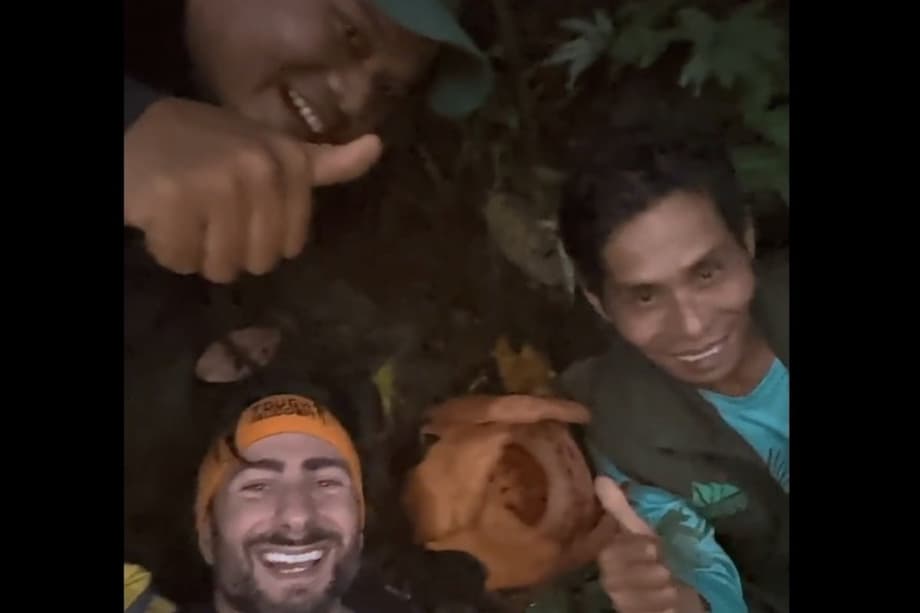
A flower that almost no one ever sees bloomed in a forest in West Sumatra, and a debate about fairness in science quickly followed. In mid November, a joint team in Indonesia documented a blooming Rafflesia hasseltii, an extremely rare parasitic plant famous for its large, red, white-speckled petals and short-lived, pungent flowers. The video of Indonesian field botanist and conservationist Septian Andriki kneeling and crying beside the bloom rocketed across social media. Days later, praise turned to criticism after a University of Oxford post highlighted the moment but initially credited only its own scientist, Chris Thorogood, not the Indonesian colleagues who made the rediscovery possible.
The backlash was swift. Indonesian researchers, conservationists, and many observers said the omission echoed a long standing pattern in global research where Western institutions and scholars receive the spotlight while local partners are sidelined. The university updated the post and later emphasized that the project was collaborative. For many Indonesians and for scientists across Southeast Asia, the damage had been done, and the rediscovery became an example of how narratives are shaped in ways that can erase local expertise.
The story matters on two levels. First, Rafflesia hasseltii is one of the world’s most unusual plants, blooming rarely and for just a few days, so a confirmed sighting is news on its own. Second, the dispute touches a sensitive topic in international research, often called academic colonialism or parachute research, where credit, funding, and voice are not shared equally. Both parts of the story are tightly linked. The way a discovery is communicated can shape who benefits from it, who is trusted as an authority, and whose work receives support.
How the rediscovery happened
The November expedition took place in Sumpur Kudus, Sijunjung regency, in a community forest known for challenging terrain and wildlife, including Sumatran tigers. It was organized under the Community for the Conservation and Research of Rafflesia partnership, with a team that included Indonesian conservationist Septian Andriki of Bengkulu, botanist Joko Ridho Witono from Indonesia’s National Research and Innovation Agency (BRIN), local forest ranger and guide Iswandi, and Oxford Botanic Garden and Arboretum deputy director Chris Thorogood. The group had a narrow window to find a bloom at the right moment, and the logistics were punishing, from a lengthy drive across Sumatra to a steep, muddy hike in dense rainforest.
Rafflesia hunts are notoriously uncertain. The plant lives hidden inside its host vines for months, then opens a single flower that shrivels within a week. Very few people ever witness the full bloom. For Septian, who has tracked rafflesia across Sumatra for more than a decade and helped discover Rafflesia kemumu in 2017, the sight carried special weight. He had chased reports of hasseltii for years.
Septian later described both the grind and the emotion of the moment.
“I witnessed the blooming process. After 13 years of searching, a 20-hour journey and a three-hour hike, it bloomed right before my eyes. I was moved. Chris said I was over-hallucinating and Iswandi said I was possessed.”
For the team, the find was a rare scientific success and a powerful reminder of how fragile the species is in the wild. The bloom was confirmed in the forest, photographed, and shared online to enthusiastic reactions worldwide.
Who got credit, who did not
Controversy began when Oxford’s social media post celebrating the rediscovery mentioned Thorogood but did not name the Indonesian researchers visible in the video. Commenters accused the university of erasing the people whose knowledge of the terrain, the plant, and the local conservation networks enabled the encounter. The criticism grew quickly, with many Indonesians noting that this pattern is familiar across scientific fields.
Members of the field team were offline at first. Once they learned of the reaction, Thorogood asked the university to update the post to name Septian, which it did. Oxford later issued a message praising its Indonesian partners and describing them as “conservation heroes,” and on November 27 the university posted a follow up video that explicitly thanked Indonesian collaborators. Those steps helped, yet the episode continued to resonate because it fit a recognisable script that many Global South scientists know well.
The dispute drew attention to decisions that shape public understanding in research. A single institutional post can set the tone for global coverage. When powerful universities publish polished content, newsrooms often re-use that material. If local scientists are labeled simply as guides or an unnamed team, the framing can flatten their roles and reduce their visibility.
The pull of institutional framing and churnalism
Media scholars use the term churnalism for a dynamic in which press offices become de facto news producers. Large institutions create strong narratives and visuals, and those packages get replicated by busy news desks. The Rafflesia story shows how that process can sideline Southeast Asian scientists as analytic voices even when they lead fieldwork or contribute essential expertise. Indonesian coverage, by contrast, emphasized community stewardship and collaboration with BRIN and local groups. The difference speaks to more than messaging. It affects whose priorities guide conservation and whose work receives recognition and support.
Why recognition matters in global science
Getting the credits right is not a matter of politeness. Naming researchers on the record affects careers, grants, leadership roles, and the ability to shape future projects. When local contributors are labeled as assistants, they lose visibility as scientific authorities. That loss can echo in funding decisions, student recruitment, and policy influence.
The difference naming makes
Scientists build reputations through citations, authorship, and public visibility. Captions, press notes, and interviews are part of that ecosystem. When communications highlight a Western institution and reduce Southeast Asian researchers to the background, the pattern reinforces old hierarchies. Indonesian scholars who study academic labor argue that changing those habits requires action on both sides. Global North institutions need to share authorship and platform. Local researchers and agencies need to assert their roles, demand equitable terms, and invest in their own communications capacity, so national narratives are not drowned out by foreign press machines.
Many collaborations already model a different approach. Teams agree on shared authorship and joint communications before fieldwork begins. They build budgets that include training and resources for local media work. They ensure that quotes from Southeast Asian researchers appear in international coverage as expert voices, not only as subjects of emotional scenes. The Rafflesia case, with its charged online reaction, shows how fast these choices become visible to a global audience.
What makes Rafflesia hasseltii so elusive
Rafflesia is a botanical outlier. It is a holoparasitic plant, which means it lacks leaves, stems, and roots, and cannot photosynthesize. It spends most of its life concealed inside the vines of its host, typically species of Tetrastigma, a member of the grape family. The plant exists for months as a swelling within the host tissue. Then it reveals a flower, a large, fleshy disk with five thick lobes, often patterned with pale warts and a mottled interior chamber.
The bloom is rare and brief. Buds may take many months to mature. The flower opens suddenly and then collapses within a week. In a place like Sumpur Kudus, where tigers patrol and trails are faint, people seldom arrive at the right spot on the right day. That is why locals joke that tigers see Rafflesia more often than anyone else. The scent is part of the strategy. The flower smells like rotting meat to attract carrion flies, which serve as pollinators. The flower of R. hasseltii is not the largest in the genus, but it is impressive, with a red surface marked by prominent white speckles. Its famous relative, Rafflesia arnoldii, produces the largest single flower on Earth.
Rafflesia hasseltii has been recorded in Sumatra, the Malay Peninsula, and Sarawak in Malaysia. Despite the genus’s fame, much about its life cycle remains mysterious. Seeds are tiny, and how they find new host vines is not fully understood. Many populations are isolated, with little documented genetic exchange, which raises concerns about the plant’s long term survival.
The current research program involving BRIN, Bengkulu University, and partners in Malaysia and the Philippines has gathered DNA from most Indonesian species in the genus. The goal is a clearer picture of relationships within Rafflesia and a foundation for conservation plans. Researchers hope that a more complete genetic map can help identify distinct lineages, potential new species, and priority sites for habitat protection.
Conservation stakes in Sumatra
Field botanists celebrate every confirmed bloom of Rafflesia, but each sighting also underscores a challenge. Many Rafflesia populations occur outside national parks and reserves. Studies and local reports indicate that a large share of known sites for R. hasseltii lie on unprotected land, which increases exposure to logging, agriculture, and mining. When host vines are cut or disturbed, the invisible Rafflesia embedded within them is lost as well.
Pressure is intense in parts of West Sumatra. The Sumpur Kudus community forest, where the team found the November bloom, is affected by small scale gold mining and expansion of oil palm. Nationally, forest loss remains a concern. Independent monitoring groups recorded more than 260,000 hectares of forest cleared in 2024, with new clearing often proceeding under legal permissions. That context makes community-based conservation essential. Local stewardship, education, and quick reporting improve the odds that a bud can reach full flower and that the host vine remains intact.
Partnerships in Indonesia already reflect that reality. BRIN botanists work alongside university researchers, community forest organizations such as KPPL Bengkulu, and rangers like Iswandi who know the terrain intimately. Conservationists use simple tools that work, including training villagers to recognize host vines, log sightings, and contact researchers when buds appear. They also focus on local pride. Rafflesia has deep cultural resonance in Sumatra and Bengkulu. That pride translates into protection when communities see clear benefits and recognition.
What effective protection could look like
Experts point to three priorities. First, secure host vine habitats, even when outside formal reserves, through community forests, customary land protection, and targeted conservation agreements with landowners. Second, integrate Rafflesia sites into district and provincial planning, so new roads and plantations avoid the most sensitive areas. Third, support low cost monitoring networks and rapid response teams that can reach a site in time to document blooms without disturbing them. Documentation carries weight. It raises awareness and strengthens the case for safeguarding the surrounding habitat.
Toward fairer collaboration
The Rafflesia rediscovery shows how science, conservation, and communications intersect. When projects set clear rules for credit and public messaging at the start, disputes become less likely. Simple changes can help. Posts and press notes should list collaborating institutions and name researchers from all partners. Captions should avoid calling local scientists guides unless that is their actual role. When interviews are arranged, spokespersons from each partner should have equal space to explain the science and the local context.
Shared planning goes a long way. Teams can agree on joint press materials and synchronized releases in Bahasa Indonesia and English. Institutions with large media teams can offer resources and training to local partners so national and regional coverage carries equally strong voices. Project budgets should include communications for all partners, not just the most prominent institution. That investment pays off in public trust, better policy engagement, and stronger grant proposals.
Fairness also involves where samples, data, and benefits end up. Many biodiversity projects now plan for local repositories, co-management of data, and equitable sharing of credit in subsequent publications. These practices respect national priorities while building durable collaborations. They also reflect the reality on the ground. Without local knowledge and presence, a flower like Rafflesia hasseltii would keep its secrets.
Key Points
- A joint Indonesian and international team documented a rare Rafflesia hasseltii bloom in a community forest in West Sumatra in mid November.
- A University of Oxford social media post initially credited only its scientist, triggering backlash for failing to name Indonesian researchers involved.
- Oxford later updated the post, issued a message praising Indonesian partners as conservation heroes, and published a thank you video.
- The dispute revived concerns about academic colonialism and parachute research, where Global South scientists are under-credited in international projects.
- Rafflesia hasseltii is a holoparasitic plant reliant on Tetrastigma vines, with a brief bloom window and limited distribution, making sightings rare.
- Researchers in Indonesia, Malaysia, and the Philippines are building a genetic map of Rafflesia to guide conservation and identify distinct lineages.
- Many Rafflesia sites, including those for hasseltii, are outside protected areas and face pressure from logging, mining, and plantation expansion.
- Community-based conservation, local monitoring networks, and recognition of local expertise are central to protecting the species.
- Clear, shared rules for authorship and public communications can prevent credit disputes and ensure equitable recognition across partners.