A record low gap reflects a shifting trade balance
South Korea has drawn almost level with Japan in exports in 2025, setting up a year end sprint with historical stakes. Official customs tallies indicate that from January to October, South Korea exported 579.1 billion dollars while Japan shipped 606.1 billion dollars. The 27 billion dollar difference is the smallest gap recorded at this point in a year and it comes after a period when the spread widened sharply in 2024 as global volatility bit into sales. With two months of data still to post, the contest to finish the year on top is alive.
The broader trend is hard to miss. The difference in annual exports has shrunk from 128.8 billion dollars in 2020 to 85.1 billion dollars in 2023. South Korea ranks sixth among global exporters so far this year, just behind Japan in fifth, according to trade promotion and customs agencies. Exchange rates can complicate comparisons from month to month, yet the direction of travel is clear.
Industry officials who reviewed data from the Korea International Trade Association (KITA), the Japan Tariff Association and the International Monetary Fund (IMF) said the mid autumn reading underscores how quickly the gap has narrowed.
An industry official said: “The interim figure is especially noteworthy, a record low, with two months remaining to watch for further developments.”
Another official emphasized the importance of the final stretch of the year as order books close and prices in key categories firm.
Another industry official said: “Under these circumstances, Korea could achieve the milestone for the first time, and even surpass Japan, with a final sprint through the end of the year being crucial.”
What is driving the surge
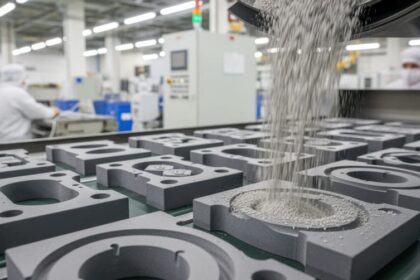
Semiconductors sit at the center of South Korea’s advance. A powerful artificial intelligence cycle has lifted both volumes and prices for memory chips, the country’s single largest export category. Data centers and device makers are racing to deploy more compute for large language models and generative applications, a shift that requires advanced graphics processors paired with stacks of high bandwidth memory, as well as vast quantities of conventional DRAM and fast storage. In November, semiconductor exports jumped 38.6 percent year on year to a record 17.26 billion dollars, surpassing the previous high set in September. That performance reflects both higher average selling prices and tight supply in premium memory.
This upswing has fed into the broader electronics ecosystem, from wafer fabrication to advanced packaging. South Korean leaders in memory have reconfigured production lines for HBM and for server grade DRAM, while foundries and equipment suppliers are reporting fuller order books for the kinds of tools needed to build and assemble chips for AI servers. The ripple effects span logistics, testing and materials, helping lift export receipts even as some consumer electronics categories remain uneven.
Semiconductors lead the way
Demand for HBM is now a central driver of value. Training and running AI models is constrained by memory bandwidth and capacity, so buyers prioritize chips that move data quickly between accelerators and memory stacks. Those specifications command a premium, and the pipeline of new AI server installations suggests that elevated demand will persist. At the same time, mainstream DRAM and NAND shipments have benefited from inventory normalization after a deep downturn in 2023. Pricing recovery in those segments has supported revenue gains without a proportional increase in units, magnifying the lift to export totals.
Automobiles stay in high gear
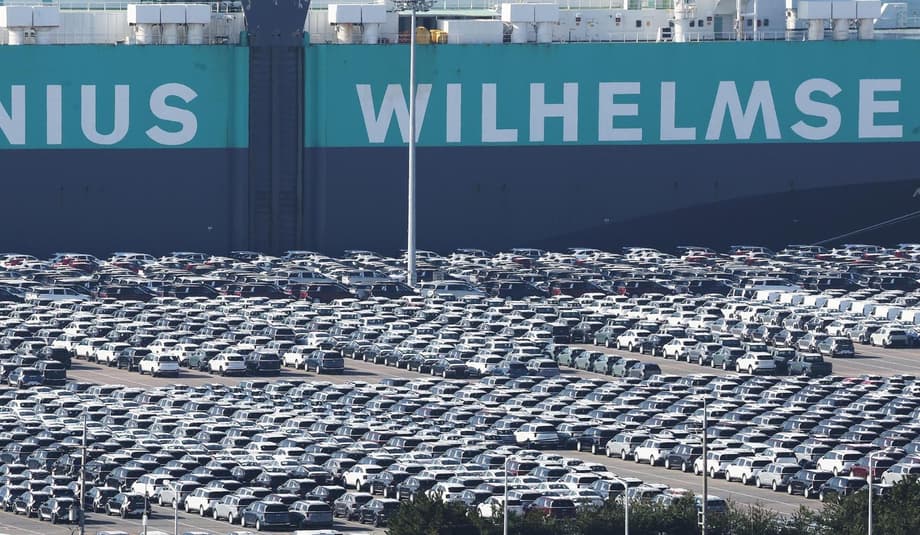
Automobile exports have added a second engine to this year’s performance. In November, export shipments of internal combustion and hybrid vehicles rose 13.7 percent to 6.41 billion dollars. The product mix has been favorable, with steady demand for SUVs and electrified powertrains in Europe and the Middle East and ongoing strength in parts. Brand perception gains in safety and design have helped, as have new model cycles in core segments. The sector faces challenges in North America because of tariff uncertainty, yet sales to other regions have offset pockets of weakness.
Computers, cosmetics and pharmaceuticals have also contributed to the narrowing gap, according to KITA. Those categories benefited from recovering consumer demand in key markets and the steady expansion of South Korean brands in Southeast Asia.
Japan’s export performance and the limits of a weak yen
Japan remains a heavyweight exporter, but several structural shifts have softened the boost of a weaker yen. When domestic manufacturers move production to Southeast Asia, North America or Europe, a growing share of shipments are recorded as exports from those locations rather than as made in Japan goods. That reduces the direct lift from currency depreciation in official export data. At the same time, competition from China and South Korea in automobiles, ships and intermediate goods has intensified.
The same forces can cut both ways for South Korea. Korean manufacturers are investing in plants in the United States, China, Europe and ASEAN to control tariff risk, qualify for local content rules and manage labor costs. That strategy protects market access and margins, yet it also means a greater share of vehicles and electronics get counted as overseas production rather than Korean exports. A weaker won can support price competitiveness, but it also raises the cost of imported inputs, which can squeeze suppliers until final selling prices adjust.
Tariffs and geopolitics could swing the finish
The United States is central to both countries’ export math, and policy remains in flux. Negotiations between Seoul and Washington on tariff terms have advanced, but key rates on cars and chips have not been finalized on paper. In the meantime, Japanese vehicles entering the United States benefit from a reduced 15 percent tariff. Korean vehicles are still subject to a 25 percent rate as legal texts are completed, which has narrowed pricing room for Korean automakers in the United States this year. Korean car shipments to the United States have shrunk on a year on year basis for several months, pressuring earnings and inventories. Automakers have responded by diversifying sales to other regions and accelerating local production plans.
Industry experts say speed in shifting production lines will matter if tariff relief is delayed. Lee Ho geun, an automotive engineering professor at Daeduk University, said Korean automakers should use the moment to build more vehicles inside the United States.
Lee Ho geun said: “One of the most realistic countermeasures for Hyundai Motor Group is to increase the number of locally produced models there.”
Policy support is also on the table. Kim Pil soo, a professor of automotive technology at Daelim University College, argued that temporary relief could help offset the shock while companies adjust their footprints and product strategies.
Kim Pil soo said: “It is not desirable for the government to leave the carmakers exposed to tariff shocks for a long time, as the auto industry is Korea’s key pillar for exports.”
Officials in Seoul have acknowledged that talks with Washington have been complicated by overlapping agendas that include investment funds, agricultural market access and defense cost sharing. Delays add uncertainty for planners in cars, chips and pharmaceuticals. If a 15 percent ceiling for automobiles and semiconductors is codified, that would remove a significant variable for 2026 budgets. Until then, companies are modeling multiple scenarios for price, mix and local content to protect market share in the United States.
How AI and automation are reshaping Asia’s trade
Robotics and artificial intelligence are resetting Asia’s production map. China, Japan and South Korea lead the region in factory robot adoption, with South Korea ranked near the top globally in robot density. AI use by firms is rising quickly across Asia Pacific, and private investment in AI hardware and software keeps channeling into the largest markets. This tech buildout changes what countries make at home and what they import from neighbors.
Automation can reduce import demand in sectors where domestic capacity scales up, yet it can also raise demand for intermediate inputs and capital goods that flow across borders. Short term evidence shows automation encourages offshoring rather than reshoring because companies continue to seek cost advantages and proximity to customers. The longer term picture is less settled. Very large automation investments could favor reshoring to core markets if technology shrinks labor cost gaps enough. That would hurt lower income exporters unless they climb the value chain by adopting automation in their own factories or by shifting into services that machines cannot easily replicate.
New service models are lowering barriers to advanced manufacturing. Robots as a Service allows small and midsize firms to subscribe to automation rather than buy it outright, cutting upfront costs. That trend gives suppliers in non leader countries a way to scale capabilities and sell into global supply chains. South Korea’s Digital New Deal focuses on digital infrastructure and AI development, aiming to raise productivity and extend the country’s lead in tech hardware. For South Korea, this wave strengthens the chip export engine while reshaping which components and tools are sourced domestically and which are imported from partners.
What could cool the momentum in 2025
Trade groups caution that 2025 may bring a slower pace even if South Korea stays within striking distance of Japan. KITA projects export growth of roughly 1 to 3 percent next year. Several factors explain that modest view. Car exports could ease after a very strong 2024 and 2025 run, especially as more vehicles roll off overseas assembly lines. Prices for petrochemical products are under pressure, which reduces revenue even if volumes hold steady. Export growth already slowed in late autumn in some tallies as shipments to the United States and China softened, a reminder that external demand can weaken quickly.
Tariff policy in the United States is another wild card. The new round of trade arrangements has narrowed gaps across countries, yet manufacturers still face higher duties and complex rules on local content. Korean companies have responded with more local plants in North America and with contingency plans for Europe and Southeast Asia. Those moves preserve access to buyers and incentives, although they shift some sales out of Korean export statistics.
Domestic constraints bear watching. South Korea’s population is aging faster than peers, and the fertility rate is the lowest in the world. That dynamic pressures the manufacturing workforce and investment plans over the medium term. Currency swings add to planning risks. The won has been weak this year, which supports exports in dollar terms but raises costs for imported energy and parts. Private forecasts suggest the central bank is likely to keep its policy rate near 2.5 percent through 2026, and that any appreciation of the won would be gradual as global rates settle. Fiscal policy is set to support productivity and private investment, which should cushion the economy even if trade cools for a few quarters.
For now, the near tie with Japan reflects a structural shift. South Korea has climbed higher in the value of goods that global buyers want, especially in chips and high quality vehicles. Whether that culminates in a first ever overtake will come down to the final two months of orders, price moves in key products and the pace of policy decisions on tariffs in the United States. The longer arc points to a more competitive race between the two neighbors in sectors where innovation, speed and supply chain agility matter most.
What to Know
- Through October 2025, South Korea exported 579.1 billion dollars and Japan shipped 606.1 billion dollars, leaving a 27 billion dollar gap that is the smallest on record for this point in a year.
- Semiconductor exports hit a monthly record of 17.26 billion dollars in November, up 38.6 percent year on year.
- Automobile exports rose 13.7 percent in November to 6.41 billion dollars, helped by strong demand for hybrids and SUVs.
- South Korea ranks sixth among global exporters so far this year, closely trailing Japan in fifth.
- A weak yen has not delivered a full export boost to Japan because many factories have shifted production overseas, and competition in autos and intermediate goods has intensified.
- Tariff uncertainty in the United States is pressuring Korean automakers, with Japanese vehicles facing a 15 percent rate and Korean vehicles still at 25 percent while legal details are finalized.
- Korean firms are expanding production in North America, Europe and Southeast Asia to manage tariff and supply chain risks, which can reduce recorded exports from Korea.
- Trade groups expect South Korea’s exports to grow by about 1 to 3 percent in 2025, with potential softness in cars and petrochemicals offset by strength in IT and chips.
- AI and automation are reshaping Asia’s trade, supporting South Korea’s chip exports while shifting where goods are made and how supply chains form.