Fresh funding puts mine clearance in focus
Japan has signed a 4 billion yen grant, about 26 million United States dollars, to expand humanitarian mine action in Ukraine. The agreement, concluded in Kyiv by Japan’s ambassador Masashi Nakagome and Ukraine’s interior minister Ihor Klymenko, channels new resources into clearing landmines and unexploded ordnance, caring for blast victims, and teaching communities how to avoid danger. It follows an international mine action conference hosted in Tokyo in October that sought to coordinate financing, technology and training for Ukraine’s recovery.
- Fresh funding puts mine clearance in focus
- What the grant covers and how it will be used
- Why demining across Ukraine cannot wait
- Japan’s approach builds Ukrainian capacity
- Tools and techniques, from sensors to heavy machinery
- From safe ground to recovery, impacts on homes, farms and industry
- International coordination and policy backdrop
- Voices from the signing ceremony
- Risks, timelines and the next steps
- Key Points
The package is structured to deliver equipment and materials to teams clearing contaminated ground, while improving treatment and rehabilitation for survivors. It also supports risk education for families living with daily hazards in fields, forests and villages. Separate from the grant, Japan will supply 15 protective anti landmine suits through the United Nations Development Programme (UNDP). Ukrainian emergency service personnel have already tried the gear, which combines a heavy duty suit and helmet weighing about 40 kilograms, and authorities expect to put the suits into field use from around February 2026 in eastern Ukraine and other affected regions.
What the grant covers and how it will be used
The new grant, described as The Programme for Emergency Response on Humanitarian Mine Action and UXO Clearance, is designed to speed early recovery in areas scarred by fighting. Officials say the funding will procure mine clearing equipment, vehicles, and specialized materials, and will strengthen medical care for those injured by blasts. Risk education activities will target communities where children and adults still encounter mines, booby traps and cluster munitions on roadsides, farms and forest paths.
The program draws on Japanese technologies and long experience in post conflict clearance. Mechanized equipment will help teams open safe lanes and process large contaminated tracts more quickly than hand tools alone. The health component, which covers treatment and longer term care for survivors, recognizes that mine incidents cause amputations, hearing and vision loss, and trauma that require sustained support. Risk education, often delivered in schools, community halls and through local media, is vital to reducing accidents while clearance progresses.
In parallel with the grant, the 15 blast resistant suits supplied through UNDP add another layer of protection for Ukrainian State Emergency Service teams. The suits are engineered to shield the head, torso and limbs from shrapnel and overpressure during high risk tasks like explosive ordnance disposal. Training on proper use and maintenance accompanies the delivery so crews can operate safely in the field.
Why demining across Ukraine cannot wait
Ukraine has become one of the most mine affected countries in the world since the full scale invasion in 2022. Government and UN assessments indicate that roughly 174,000 square kilometers, close to a quarter of Ukraine’s land area, may contain landmines or other explosive hazards. Several million people live near suspected contamination, and civilian casualties from mines and unexploded ordnance have continued as fighting shifts and front lines change.
Beyond the human toll, mines and unexploded ordnance block essential services and the return of normal life. Farmers cannot safely plant or harvest. Road crews hesitate to repair bridges, power lines and water pipes until engineers certify routes. Schools in liberated towns wait for clearance before welcoming children back. This contamination slows reconstruction and keeps families displaced. Clearing it safely takes time, training and a steady flow of equipment and funding.
What counts as humanitarian mine action
Humanitarian mine action is a set of activities that make communities safe. It starts with non technical and technical survey to map hazards. Clearance follows, using manual teams, machines and explosive ordnance disposal specialists. Risk education teaches people how to recognize and avoid danger. Victim assistance provides emergency care, prosthetics, rehabilitation, and social support. A final strand is capacity building so national agencies can plan, coordinate and sustain these tasks. Japan’s latest grant touches all of these areas, not only tools for clearance but also education and survivor care.
Japan’s approach builds Ukrainian capacity
Japan has highlighted a practical approach in Ukraine, centered on building local capacity rather than sending large numbers of foreign personnel. Since 2022, it has provided demining equipment and organized training for Ukrainian specialists in Japan, Cambodia and Poland. Dozens of Ukrainian deminers have learned how to operate and maintain advanced tools so the State Emergency Service and other institutions can expand operations on their own.
This method reflects decades of Japanese engagement in mine action abroad, particularly in Cambodia. Over 25 years, Japan backed the Cambodia Mine Action Centre and related programs, helping clear contaminated land and restore livelihoods. As Cambodia built strong expertise, it began sharing knowledge with other countries. That experience now supports Ukrainian teams through joint training courses and field mentoring.
Japan’s assistance to Ukraine fits within its broader policy constraints. The country limits military exports and has focused its Ukraine support on humanitarian, financial and reconstruction measures. Mine action, which protects civilians and enables recovery, aligns with those priorities. The new grant also builds on Japanese leadership at international gatherings on Ukraine’s reconstruction, where officials have pressed for better coordination among donors and faster delivery of practical tools.
Tools and techniques, from sensors to heavy machinery
Modern mine clearance blends old and new methods. Japanese supplied equipment ranges from detectors and protective gear to industrial machines that can process large areas. In 2023, Ukraine received 50 sets of advanced landmine detectors known as ALIS. These combine metal detection with ground penetrating radar, producing images on a tablet that help operators separate dangerous items from harmless clutter in complex soil. Training on ALIS has been conducted with Ukrainian personnel so they can interpret the data and reduce false alarms.
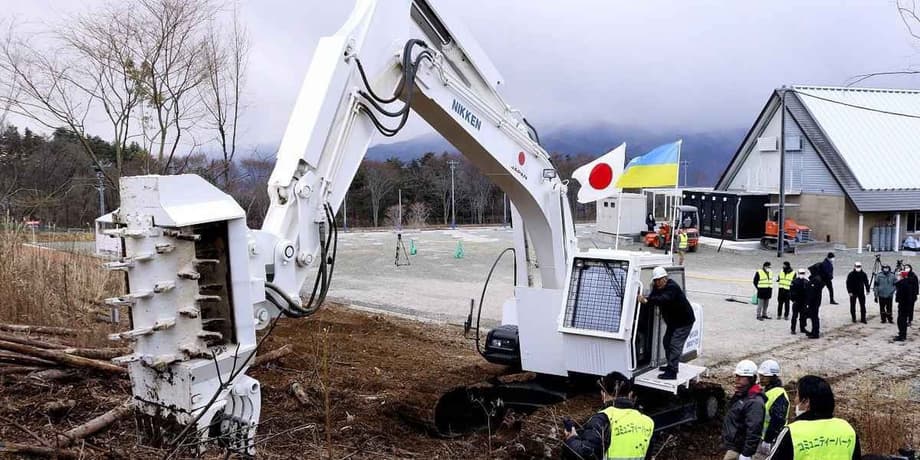
Mechanized demining machines delivered with Japanese grant aid help grind up surface vegetation, till shallow soil layers and expose or detonate buried threats at controlled speeds. Japanese companies have also provided armored excavators able to move earth and debris while protecting operators. These machines do not replace manual teams, but they speed clearance and reduce the hours people spend in hazardous zones. They are especially useful in farm fields, orchards and roadsides where large swaths must be processed.
New research is expanding detection from the air. Japanese engineers and researchers have trialed drones carrying infrared cameras and machine learning algorithms that can spot subtle temperature and shape anomalies linked to buried mines. In tests, models have achieved high detection rates for specific mine types, though the variety of devices and environmental conditions in Ukraine demand continuous refinement. These aerial tools can guide ground teams to promising targets or eliminate swaths where no signatures appear, improving efficiency and safety.
How a clearance day looks in the field
A typical clearance day starts with a safety briefing and equipment checks. Teams survey and mark a task area, then begin systematic lane work. Manual deminers advance slowly, prodding the soil at set angles and depths. Machinery prepares ground ahead of them or clears vegetation at the edges. If teams find a suspect item, a disposal specialist assesses it and either removes it for demolition or destroys it on site with a controlled charge. Medical support remains on standby, and operations stop if weather, visibility or ground conditions deteriorate. The aim is steady progress with zero accidents.
From safe ground to recovery, impacts on homes, farms and industry
Every hectare cleared makes a difference. Once teams certify a field as safe, farmers can return to plant and harvest. Transport and utility crews can repair lines and roads. Schools and clinics can reopen. Japan has linked mine action with recovery in its broader Ukraine support, backing debris removal and early livelihood projects. For example, assistance has helped restore agricultural production by distributing seeds and farm inputs in hard hit regions, with a focus on smaller growers and women farmers.
Winterization support, medical supplies and equipment for first responders have also been part of Japan’s package. The government has combined humanitarian relief and budget support with technical cooperation, working alongside international partners to keep essential services running and to set the stage for reconstruction in areas cleared of explosives.
International coordination and policy backdrop
Mine action in Ukraine is a multinational effort. Japan convened the Ukraine Mine Action Conference in Tokyo, where officials and technical experts mapped out near term needs, funding channels and research priorities. The event launched a Ukraine Mine Action Support Initiative to knit together equipment deliveries, training plans and victim assistance. Participants also discussed deeper cooperation with countries that have strong demining records, such as Cambodia, and explored trilateral projects that bring in additional partners for specific tasks.
Japan is a state party to the Anti Personnel Mine Ban Convention and has long treated mine clearance as a pillar of human security. That policy, combined with dialogue through the Group of Seven and other forums, has helped keep Ukraine’s urgent clearance needs on the global agenda. Coordination with UN agencies, the World Bank and regional organizations aims to ensure that demining plans, reconstruction projects and community services move in step.
Voices from the signing ceremony
At the signing in Kyiv, both sides placed demining at the heart of recovery and safety for civilians. The speakers emphasized that the program is practical and geared to immediate use, bringing equipment and training to those doing dangerous work every day.
Japan’s ambassador to Ukraine, Masashi Nakagome, called mine clearance essential for rebuilding roads, energy and daily life, and he stressed that Japan can help by drawing on its own experience.
Landmine removal is greatly important for infrastructural and other reasons. Demining is a field in which Japan can provide support by utilizing its expertise and experience.
Ukraine’s minister of internal affairs, Ihor Klymenko, framed the aid as an investment in people as much as in machinery.
Japan is not just providing technology and equipment, but also investing in the lives, safety and sustainability of the Ukrainian people.
Risks, timelines and the next steps
Clearing mines and unexploded ordnance across such a large territory will take years. Conditions in the field are demanding. Seasons change soil density and vegetation, flooding can move devices, and industrial sites can hide complex hazards. Teams must adapt methods and tools as they shift from open farmland to forest or urban rubble. That is why the current push couples machines, detection systems, protective gear and intensive training with risk education and survivor care.
The protective suits that Ukraine will begin using around February 2026 are one example of incremental improvements that reduce risk for crews. Continued deliveries of equipment, steady funding, and wider training pipelines will expand the number of teams working each day. As more communities receive clearance certificates and return to normal routines, local authorities can prioritize reconstruction projects with greater confidence. The new Japanese grant is designed to speed that cycle.
Key Points
- Japan signed a 4 billion yen (about 26 million dollars) grant in Kyiv to support humanitarian mine action and UXO clearance in Ukraine.
- The program funds equipment and materials for clearance, medical treatment and care for blast victims, and risk education for communities.
- Separate from the grant, Japan is supplying 15 anti landmine protective suits through UNDP, with field use expected from around February 2026.
- Ukraine faces vast contamination, with roughly 174,000 square kilometers suspected of mines and other explosives, affecting millions of people.
- Japan’s approach emphasizes capacity building, training Ukrainian personnel in Japan, Cambodia and Poland, and delivering advanced tools.
- Technology provided includes ALIS detectors with ground penetrating radar, mechanized demining machines, armored excavators and research on detection drones.
- Clearance enables farms, schools, roads and utilities to reopen, linking mine action directly to recovery and economic activity.
- Tokyo has convened international partners to coordinate support through the Ukraine Mine Action Conference and related initiatives.