Why a Grab and GoTo deal is back on the table
Indonesia is weighing one of the biggest shake ups in its digital economy as Grab and GoTo explore a combination that could redefine ride hailing, food delivery and ecommerce across Southeast Asia. Leadership changes at GoTo, open acknowledgment from senior officials that a deal is being discussed, and signs that the state investment fund Danantara could take a special stake have pushed a long rumored tie up back into focus. The talks arrive at a sensitive moment. GoTo’s finances remain under pressure after years of heavy losses, millions of driver partners worry about their income and job security, and regulators face the challenge of preserving competition while supporting a sector the government considers strategic for growth and employment.
- Why a Grab and GoTo deal is back on the table
- What changed inside GoTo and why it matters
- Where the government stands
- How antitrust rules could shape the deal
- The market math and why both sides see logic
- What it means for drivers, couriers and small businesses
- Deal structures on the table
- What happens next
- Key Points
The stakes are large. Analysts estimate a merged platform would control more than four fifths of Indonesia’s ride hailing market, which is valued at roughly 8 billion dollars. Some estimates put combined share above 90 percent, depending on how categories are defined. The companies overlap across mobility, delivery, digital payments and, through Tokopedia at GoTo, online retail. Efficiency gains could be substantial, yet concentration risks have sparked concerns among policymakers, small businesses and consumer groups.
The push and pull is familiar in Southeast Asia’s platform economy. Grab, listed on Nasdaq, has made progress toward profitability and sits on meaningful cash. GoTo, formed from the merger of Gojek and Tokopedia in 2021, has narrowed losses in 2024 after a deep red 2023, but its share price is still far below its 2022 listing. A deal could accelerate both firms’ path to sustainable margins. It could also test Indonesia’s ability to protect worker welfare, fair prices and open markets in a sector used by tens of millions every day.
What changed inside GoTo and why it matters
Internal momentum has shifted. Patrick Sugito Walujo stepped down as GoTo chief executive, a move that investors and market watchers see as clearing the way for new strategic options. Major shareholders have pushed for an extraordinary shareholders meeting to refresh the board and revisit the company’s direction. The pressure reflects a blunt reality. GoTo’s stock has lost more than 80 percent of its value since the 2022 IPO, the company reported a net loss of about 5.4 billion dollars in 2023, and although 2024 losses narrowed, the business still needs scale, lower customer acquisition costs and more pricing discipline to turn cash flow positive.
By contrast, Grab’s balance sheet and outlook appear steadier. The company has cut incentives, trimmed costs and guided the market toward profitability. That relative strength shapes bargaining power. Reports in financial circles have floated an indicative valuation for GoTo near 7 billion dollars in a potential transaction. There are also scenarios in which Grab would acquire GoTo’s international unit and most of its domestic business while leaving a finance arm separate. Neither company has announced a binding agreement, but leadership and investor moves at GoTo make a strategic review hard to ignore.
Where the government stands
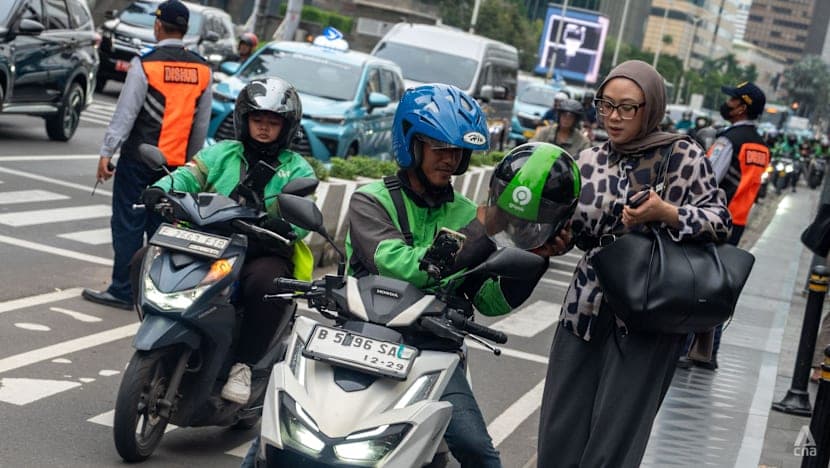
Jakarta’s position has evolved from skepticism to active interest. Senior officials now say the government is discussing a merger or acquisition involving Grab and GoTo. The industry is seen as vital for job creation and everyday mobility, with Gojek alone counting more than 3.1 million driver partners in Indonesia. Policymakers have also signaled that Danantara, the state investment fund, could hold a special minority stake, often called a golden share, that carries veto rights over key strategic decisions. That structure would give the state a seat at the table while keeping most ownership private.
Prasetyo Hadi, the presidential spokesperson, highlighted the public interest at stake and the central role of driver partners in the economy before urging a quick decision on the sector’s direction.
“Online riders are economic heroes, driving the economy.”
The administration is also drafting a presidential regulation to set tariff rules and expand protections for gig workers. Proposals under debate include minimum benefit guarantees, access to health insurance and a framework that recognizes highly active drivers as closer to formal employees. Supporters argue these steps would raise standards and curb unsafe driving, while critics fear less active drivers could be sidelined and bonuses cut if companies tighten platforms to meet new rules.
How antitrust rules could shape the deal
Indonesia’s Business Competition Supervisory Commission (KPPU) will be central to any outcome. The country uses a post merger notification regime, which requires companies to report a completed deal within 30 business days. Even under this system, KPPU can impose remedies, require divestments or, in extreme cases, unwind a combination if it finds monopolistic practices or unfair competition under the 1999 competition law. With a potential market share above 85 percent in ride hailing and strong positions in delivery and digital services, a combined Grab and GoTo would attract rigorous scrutiny.
Digital platforms present special challenges. Network effects, data advantages and consumer habits can make switching costly even when prices rise. A dominant platform can shape fees paid by merchants and restaurants, adjust bonuses for drivers and set service standards that competitors struggle to match. That is why past deals in the region drew conditions. After Grab absorbed Uber’s Southeast Asia business in 2018, authorities in Singapore required the removal of exclusivity clauses with drivers and monitored pricing practices. Indonesia could look to a similar toolbox tailored to local conditions.
Possible remedies range from clear price floors and ceilings to protect both driver earnings and consumer fares, to requirements that drivers and couriers can use multiple apps without penalty. Regulators could also insist on data safeguards that prevent cross platform favoritism, transparency in algorithmic matching, and protections for small merchants on Tokopedia if ecommerce and delivery are more tightly integrated. Foreign ownership sensitivities are another layer. Policymakers may balance an open investment posture with conditions that preserve national oversight, including a Danantara golden share with veto rights on key domestic decisions.
The market math and why both sides see logic
There is strategic logic behind the talks. In Indonesia’s ride hailing market, analysts estimate Grab controls around 63 percent and GoTo about 36 percent, figures that fluctuate by city and service type. Combining the two would create a giant in an 8 billion dollar market. Some independent research places the combined share above 90 percent when delivery and other services are included. Rival platforms exist, but they are much smaller. The result is an opportunity to end expensive subsidy battles and consolidate overlapping costs in engineering, customer service, incentives, promotions and fleet programs.
Cost savings could be material. Some investment banks have modeled operating cost reductions of up to half in certain line items if the companies integrate teams, unify back end systems and reduce overlapping marketing in Indonesia. A merged platform would also have stronger bargaining power when negotiating vehicle procurement with automakers. That could lower total cost of ownership for drivers. Japanese makers such as Toyota and Honda, and Malaysian brands like Perodua and Proton, may need sharper discounts and fleet programs to remain preferred partners. Electric vehicle players including VinFast and BYD would likely sharpen their offers on cars and two wheelers to capture share as platforms push toward cleaner fleets.
The businesses also complement each other. Grab is strongest in four wheeler services and has built lending and insurance products for drivers and merchants in markets like Singapore and Malaysia. GoTo has deep expertise in two wheeler services in Indonesia, including partnerships on electric motorcycles and battery swapping networks. Tokopedia’s ecommerce engine could be matched with Grab’s regional courier and merchant networks to improve delivery reliability and checkout conversion. In finance, there is scope to connect GoTo’s bank investments in Indonesia with Grab’s digital banks in Singapore and Malaysia to give small firms a more seamless way to manage payments, loans and cross border growth. These are the kinds of practical gains the companies hope to unlock without leaning on relentless price promotions.
What it means for drivers, couriers and small businesses
Driver partners and couriers sit at the heart of any decision. A single dominant platform can set incentives in ways that ripple across incomes. Drivers worry that a merger could mean fewer promotions, tighter acceptance rate rules and smaller bonuses. Restaurant owners and small merchants fear higher commissions or less bargaining power if there is only one realistic app that brings them customers. On the other hand, a merged platform with government oversight could standardize fair tariffs, expand benefits and invest in safety, training and vehicle programs that individual companies might struggle to fund on their own.
Noudhy Valdryno, deputy head of the presidential communication office, has tried to steer the public conversation toward outcomes that protect livelihoods while keeping the sector dynamic.
“Our focus is to serve the people, including the partner drivers of GoTo and Grab. Whatever the industry, we want everyone to be treated fairly, receive welfare and the economy grows.”
The draft presidential regulation takes aim at precisely these issues. Proposals include health insurance for active drivers, clearer rules on tariffs and greater accountability for platforms when accidents occur. There is also discussion of defining categories of drivers by activity level so benefits match contribution, a change that could lift standards for full timers while encouraging natural attrition among less active participants. In the medium term, scale could lower vehicle costs through bulk procurement and financing programs, especially if electric motorcycles and small electric cars become cheaper. Competition need not vanish. Smaller ride hailing apps still operate in the market, and regional experiments such as ride hailing roaming for visitors show that new models can emerge if regulators keep the door open to fresh entrants.
Deal structures on the table
There are several possible pathways. One option is a straightforward share based acquisition in which Grab issues stock to buy most of GoTo’s operations in Indonesia while leaving a finance arm separate. Another is a merger with separate brands in Indonesia, where Gojek and Grab would continue to exist publicly but share back end systems, driver networks and procurement. A third possibility is a broader regional integration where certain business lines are combined while others stay independent under local ownership. In any case, a Danantara golden share could give Indonesia veto power on decisions that affect jobs, pricing or national data policy.
Financing and valuation questions are sensitive. Grab’s shares have benefited from an improved outlook and a strong narrative around growth and cost control. Some independent analysts argue the stock trades ahead of fundamentals and would be attractive currency for an acquisition. That would reduce cash outlays and spread risk among a larger base of investors. For GoTo shareholders, a deal at a premium to current market value offers a chance to reset the story and participate in a stronger regional platform. The risks are clear. Integration is complex, cultural differences run deep, foreign ownership can provoke nationalist pushback, and regulators could impose conditions that dilute the benefits. All parties stress that no binding agreement exists and that any transaction must pass through formal corporate and regulatory processes.
What happens next
Several timelines are converging. The government is finalizing a new rule set for online transportation platforms that will define tariffs, data handling and driver protections. Danantara’s possible role suggests the state wants a direct lever over how the sector evolves. KPPU has already said any deal must follow competition rules. Under Indonesia’s system, the parties would need to report a completed transaction within the specified window, after which the watchdog can impose remedies if it sees harm to competition. This does not prevent informal engagement with the regulator before signing, a step advisers often favor to reduce uncertainty.
On the corporate side, GoTo’s board and shareholder dynamics are fluid after the leadership change. Both companies will weigh how much value they can create together compared with going it alone. If talks stall or a deal is blocked, Grab and GoTo could expand bilateral partnerships in areas such as logistics, financial services and EV adoption, or seek growth in underpenetrated cities and adjacent services. If talks advance, expect a structure that keeps Indonesian branding and leadership visible, embeds the state’s golden share and includes a list of commitments to protect driver income, merchant terms and consumer prices.
Key Points
- Indonesia is openly discussing a Grab and GoTo combination, with officials describing the sector as strategic for jobs and growth.
- GoTo’s leadership change and investor pressure have revived deal speculation after years of losses and a steep share price decline.
- Analysts estimate a merged platform would control at least 85 percent of Indonesia’s ride hailing market, with some estimates above 90 percent across services.
- Danantara may take a golden share, giving Indonesia veto rights on key decisions even with a minority stake.
- The government is drafting a presidential regulation to protect gig workers, set tariff rules and raise platform accountability.
- KPPU can review a completed deal under Indonesia’s post merger notification regime and impose remedies or unwind a transaction if it harms competition.
- Efficiency gains could be large in engineering, incentives, marketing and fleet procurement, but concentration raises risks for driver income and merchant fees.
- Possible structures include a share based acquisition, brand coexistence in Indonesia and data or pricing commitments to address antitrust concerns.
- If blocked, both firms can pursue partnerships, expand into new services and push EV programs to lift productivity and safety.
- No binding agreement has been announced. Any deal would require corporate approvals and regulatory clearance with conditions to protect workers and consumers.