A new wave of factory exports
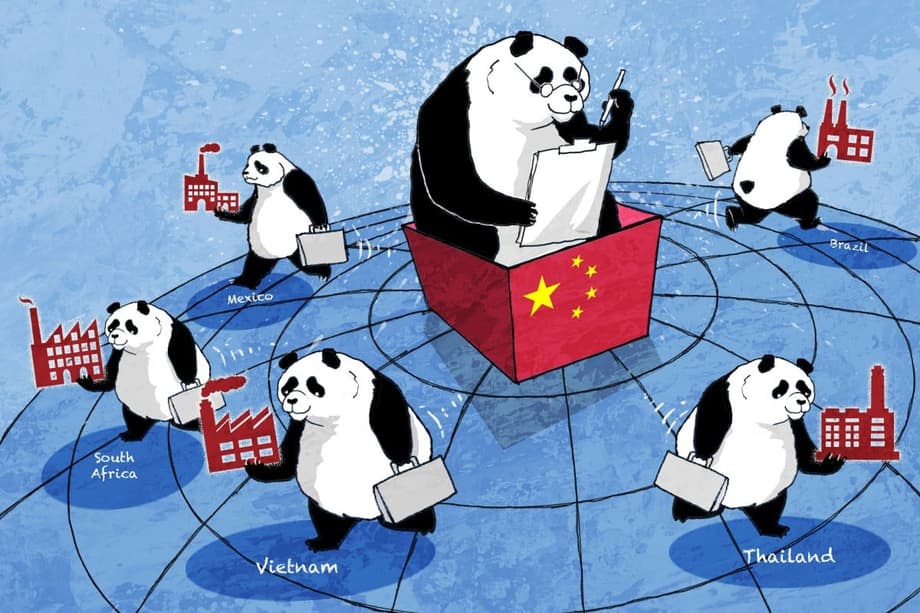
Chinese companies are pushing beyond exports and building production bases overseas at a pace not seen before. Years of rising capacity at home, thinner margins, and a patchy domestic recovery have converged with a tougher trade environment abroad. The result is a new phase in China’s globalization. Producers are not only shipping goods, they are exporting factories, supply chains, and management systems to be closer to customers and to hedge policy risk.
- A new wave of factory exports
- Why manufacturers are moving now
- From world factory to local players abroad
- Where the new plants are being built
- Sectors leading the charge
- What makes overseas plants attractive
- The risks companies must navigate
- How firms are financing and organizing the push
- Impact on host countries and the global south
- What this means for global competition
- Key Points
For many executives, the calculation has flipped. Keeping everything inside China once made sense when domestic orders were abundant and global logistics were predictable. Now the priority is resilience and access. Vietnam, Thailand, Malaysia, Mexico, Hungary, Spain, Morocco, Turkey, the United Arab Emirates, Brazil, and Indonesia are emerging as key nodes in a distributed network that ties Chinese engineering and sourcing with local labor, incentives, and market access.
The shift is visible on the ground. Vince Li, an entrepreneur in Guangdong who supplies chemicals for auto and furniture coatings, opened his first overseas plant near Ho Chi Minh City this year after a decade of selling from China. He described a simple chain reaction: customers moved, orders followed, and suppliers had to keep up to stay in the game.
Li said the new site, Thuan Thai Hardware, already has its first phase running and covers more than 3,000 square metres (32,292 sq ft). The rest completes next year. The most telling detail is that bookings arrived even before the ribbon cutting, driven by clients that had already shifted to Vietnam.
Before announcing the move, Li watched long time buyers relocate assembly to Southeast Asia to lower tariff exposure and speed delivery to regional markets. He feared losing them if he stayed put. After weighing costs, land availability, and permitting, he joined a widening wave of manufacturers who now see overseas build outs as essential to growth.
Introducing his rationale, Li put it bluntly.
“If we do not expand overseas now, we may miss our last chance. Many of our domestic clients have set up production overseas, and if I do not follow suit, they will choose other suppliers.”
Why manufacturers are moving now
Domestic indicators explain part of the rush. Factory surveys have swung in and out of contraction in recent months, with smaller and export focused firms reporting pressure on pricing and staffing. Weak housing activity has cooled demand for materials and household goods. Competition at home has intensified in sectors that added capacity during the pandemic and in the years that followed. Profit margins have narrowed, and inventory management has grown harder.
External forces add urgency. More countries are scrutinizing supply chains and applying tariffs or local content rules to strategic goods. Auto makers face extra duties in parts of Europe. Renewable energy equipment is under review in several markets. Some governments are offering subsidies if producers build locally and hire locally. To protect sales and avoid sudden trade shocks, many Chinese firms now see operating inside a destination market as the safer route.
Capital has followed strategy. Estimates show that greenfield projects by Chinese companies rose sharply in the past two years compared with the prior period, reflecting a switch from export led growth to overseas capacity building. Outbound direct investment has increased as firms buy land, lease industrial parks, and assemble local teams. The push is strongest where supply chains are forming for electric vehicles, batteries, solar components, and wind equipment.
From world factory to local players abroad
For decades China was known as the world factory, an export base that fed shelves worldwide. The new model is more distributed. Companies are spreading production across multiple countries to be near customers, qualify for incentives, trim logistics time, and reduce the risk that a single policy change derails sales.
This is not simply a duplication of Chinese plants. Many companies are redesigning product lines for local rules, shifting to regional suppliers, and creating mixed teams of Chinese engineers and local managers. Some are starting with assembly and gradually adding higher value steps, such as component machining or software integration, once they establish a foothold. Others are investing at full scale from day one to serve regional demand across several countries.
Where the new plants are being built
Southeast Asia is the first stop for many smaller and mid sized manufacturers. Vietnam offers a young workforce, improving infrastructure, and participation in trade pacts that lower tariffs with major markets. Thailand and Malaysia attract auto and electronics suppliers with established industrial clusters and experienced logistics providers. Indonesia is drawing investors in food processing and in the minerals to batteries chain.
Mexico provides proximity to the US market and land routes that shorten shipping times for heavy goods. It has become a magnet for makers of auto parts, appliances, and industrial equipment. While meeting trade agreement rules on local content can be complex, an onshore presence reduces uncertainty and eases service and warranty work for North America.
Europe is seeing a wave of investment in batteries and auto production. Plans include battery plants in Hungary, Turkey, and Morocco that feed European lines, as well as vehicle assembly in Spain, Hungary, Turkey, and the Balkans. The aim is to produce inside or near the market, reduce freight costs, and respond faster to model updates and regulatory changes.
Middle East and Latin America are gaining attention for both energy projects and consumer goods. The Gulf states offer capital and industrial parks for new energy and logistics hubs. Brazil and Mexico are seeing new auto and appliance capacity. Across these regions, special economic zones, tax incentives, and improved port infrastructure are drawing investment.
In renewable energy, Chinese wind turbine manufacturers are localizing production from India to Brazil. New sites allow faster delivery, local certification, and after sales service, which are key for grid scale projects. The same logic is guiding parts of the solar supply chain, where building close to customers can ease compliance in sensitive markets.
Sectors leading the charge
Several industries stand out for the speed and scale of their international build out. Each has its own strategic driver, from trade rules to technology cycles.
Electric vehicles and batteries
Chinese auto makers and suppliers are expanding rapidly outside their home base. China produced close to 30 percent of the world’s vehicles in 2024 and became the largest exporter of cars. At the same time, new energy vehicles surged at home, creating a deep pool of battery and software expertise. Companies are now transplanting that ecosystem to Europe, Southeast Asia, and the Americas. Battery leaders control a large share of critical materials processing and cell manufacturing. New battery plants in Hungary, Turkey, and Morocco feed vehicle assembly across Europe and North Africa. Vehicle factories in Spain, Hungary, Brazil, and Thailand are designed to serve regional buyers, while reducing tariff exposure on imports.
Renewable energy and grid tech
Wind and solar firms are embedding closer to project sites. Turbine makers are opening factories from India to Brazil to meet local content rules and to shorten installation timelines. Solar equipment makers are adding module and component capacity in markets that prefer local certification. These moves help manage policy shifts and smooth cash flow in project execution.
Consumer goods and e-commerce logistics
Appliances, apparel, and home goods producers are adding assembly near fast growing markets. E-commerce has helped many brands reach customers abroad without building large retail networks. Now those brands are pairing online channels with regional warehouses, light assembly, and service centers to speed delivery and returns. That reduces logistics cost and improves the customer experience.
Industrial inputs and equipment
Companies that sell coatings, chemicals, and machine parts are following their buyers into new production hubs. Suppliers like Vince Li’s firm must be near customers that have shifted to Southeast Asia, which ensures on time delivery and consistent quality. Many are starting with blending or assembly and adding more steps as demand grows.
What makes overseas plants attractive
Tariffs and rules. Producing inside a market can lower or avoid duties that apply to imports. Local content rules in autos and energy often favor parts made within the region. By meeting those thresholds, firms protect pricing and reduce the risk of sudden policy changes.
Supply chain resilience. Disruptions over the past few years raised the cost of relying on a single location. Spreading production across countries helps keep orders moving when shipping lanes are congested or when specific ports face delays. It also gives managers options if one country tightens controls on sensitive products.
Customer proximity. Being close to buyers improves service, quality control, and response times. For autos and heavy equipment, local assembly simplifies maintenance and warranty work. For consumer brands, regional warehouses and finishing lines shorten delivery windows and keep shelves stocked during promotions.
Local incentives. Many governments offer tax holidays, land grants, or training support to build industrial clusters. Companies weigh these benefits against added compliance and the cost of building local supplier networks.
The risks companies must navigate
Global expansion is rarely smooth. Companies face a mix of policy, financial, and operational risks. Trade rules can shift with elections. New anti dumping cases can lift duty rates with little warning. Some sectors face export controls and stricter screening of investments. Compliance requirements on data, labor, and the environment are rising in many jurisdictions.
Operational risks run from unreliable partners to uneven payment practices. Firms need better credit checks on local buyers and service providers, and more robust contracts to protect cash flow. Requirements on environmental and social performance are stricter in many markets, which calls for upgrades in materials tracking, emissions reporting, and workplace standards. Boards are paying more attention to these topics as part of global brand building.
Cultural distance can slow execution. Managers must adapt to business norms that differ from China’s fast paced model. Recruiting and retaining local talent, empowering country managers, and balancing headquarters control with local autonomy are recurring challenges. Companies that invest early in training and compliance systems tend to scale faster and with fewer setbacks.
How firms are financing and organizing the push
Funding an overseas plant requires a broader financial toolkit. Many firms are tapping offshore capital markets to raise debt and equity, while others use bank partners to unlock local credit backed by guarantees from the China parent. Hong Kong remains a key venue for listings and secondary offerings. Global depositary receipt programs have opened additional channels for cross border listings in Europe. Each option carries new disclosure, governance, and investor relations demands that companies must meet to maintain access.
Banks have stepped in with services tailored to expansion. Cross border payment platforms help companies collect and pay in multiple currencies with automated compliance checks. Treasury solutions allow headquarters to monitor liquidity across countries and optimize use of cash. Partnerships between international banks and Chinese enterprise software providers are closing gaps between corporate resource planning and bank infrastructure, which gives finance teams better control over daily operations.
Project financing often hinges on structuring. One approach pairs a corporate guarantee in China with a local loan in the host country, which brings down the cost of capital for a new subsidiary that lacks a track record. Green loans are gaining traction for battery and renewable projects. These tools align financing costs with environmental goals and can unlock government support in the host market.
Small and medium sized suppliers are leaning on digital platforms to find buyers and manage cross border sales. Mobile first marketplaces with integrated translation, video factory tours, and automated matching are becoming a bridge from online lead generation to offline fulfillment. These services reduce the cost of reaching new customers and help SMEs build credibility in markets where they are little known.
Impact on host countries and the global south
Overseas investment by Chinese firms brings jobs, training, and new supply routes. In many locations, fresh capital for factories feeds demand for local contractors in construction, logistics, and services. Companies often source more parts locally over time, which deepens the footprint and raises the skill base. Researchers tracking outbound investment estimate that Chinese companies have created millions of jobs worldwide, directly and through suppliers.
Governments in emerging markets have encouraged projects that align with their development goals. Battery and auto investments are prized for technology transfer and export potential. Energy equipment manufacturing supports grid upgrades and renewable targets. In food processing and consumer goods, joint ventures can lift quality standards and open new channels for local producers to sell abroad.
Tensions do arise. Communities want assurances on environmental practices, labor rights, and fair competition. Local industry groups sometimes call for safeguards if they fear being crowded out. The most successful projects tend to be those that commit early to transparency, local sourcing plans, and workforce training that benefits the broader economy.
What this means for global competition
The map of global manufacturing is shifting. In autos, Chinese brands are challenging incumbents in price, software, and speed of product refresh. Battery know how built at scale in China is now moving closer to foreign assembly lines, which narrows cost gaps and shortens development cycles. In renewable energy, the ability to deliver full projects, from parts to installation, gives Chinese firms an edge in markets that need rapid build out.
Western, Japanese, and Korean multinationals are responding in kind. Many are accelerating product cycles in China and applying those methods at home. Some are adding capacity in Southeast Asia and Mexico to rebalance supply risk. Policy makers in the US and Europe are reshaping incentives and tariff regimes to shield domestic producers while attracting foreign investment that fits their goals. The competitive field is widening, and that competition is increasingly local in nature within each region.
Consumers are likely to see more choice and faster innovation, especially in electric vehicles and smart appliances. For suppliers, success will depend on being present in the right places with the right partners, while meeting rising standards on quality, safety, and sustainability. The firms that pair engineering strength with local insight will have the best chance to turn overseas footprints into durable franchises.
Key Points
- Chinese companies are shifting from export only models to building factories overseas to protect sales and improve access to key markets.
- Domestic pressures include narrower margins, overcapacity in several sectors, and uneven demand at home.
- Southeast Asia, Mexico, Europe, the Middle East, and Latin America are primary destinations for new plants and assembly lines.
- EVs, batteries, wind and solar equipment, appliances, and industrial inputs are leading sectors in the expansion.
- Motivations include tariff management, supply chain resilience, customer proximity, and host country incentives.
- Risks span policy shifts, trade actions, compliance, partner reliability, and cultural and talent challenges.
- Financing relies on offshore capital markets, bank guarantees, cross border payment systems, and green loans.
- Host countries gain jobs, training, and local sourcing, but demand high standards on environment and labor.
- Global competition is intensifying as firms from multiple regions localize production and shorten product cycles.