Why export controls in China are reshaping European supply chains
European companies that build cars, turbines, electronics and industrial equipment are rethinking how and where they source critical inputs from China. A flash survey of 131 members of the European Union Chamber of Commerce in China found that roughly one in three affected firms plan to shift sourcing away from the country, reflecting mounting worries over supply disruptions, long delivery times and higher costs tied to Beijing’s expanding export control regime.
More than half of respondents expect to be touched by current or pending controls. Nearly 70 percent said their overseas plants depend on Chinese components that are already covered or are likely to be covered by export restrictions. Half of exporting firms reported that their suppliers or customers make goods that fall under the rules. Those figures help explain why boardrooms are weighing new capacity outside China, even as their China operations remain important to sales and procurement.
The stress intensified after a series of rare earth measures this year. In April, curbs on shipments of key materials and magnets rippled through European manufacturing. Several automakers halted production lines when supplies dried up. In October, Beijing threatened to expand controls again, including limits on products that contain even trace amounts of Chinese rare earth content. After a summit between President Xi Jinping and US President Donald Trump in Busan, China suspended the introduction of the new measures for one year. Companies welcomed the pause but say uncertainty persists while licensing and scope are still being negotiated.
Licences are central to operations. Forty percent of surveyed firms said the commerce ministry is processing export approvals more slowly than the promised 45 days, adding weeks or months to delivery schedules. Eleven percent raised concerns about disclosure requirements that could touch sensitive intellectual property. The financial toll is already visible. One respondent estimated extra costs exceeding 250 million euros. Another projected an increase equal to 20 percent of global revenue in 2025. Not every sector is exposed in the same way, however. Fifty six of the 131 companies said they expect no impact from the controls.
What changed in China export rules
China’s export control framework has grown wider and more detailed, especially around critical minerals and technologies. Rare earths are a focal point. China dominates mining and refining capacity, and it moved this year to require licences for a broad set of ores, oxides, metals and finished magnet products. Companies must apply to the Ministry of Commerce and other agencies, document end uses and users, and satisfy data and compliance checks. Firms report that approvals can take longer than published timelines and that information requests are extensive, which complicates planning and inventory management.
Rare earths and strategic materials explained
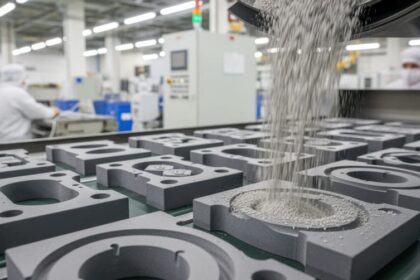
Rare earth elements are a group of 17 metals used in permanent magnets, catalysts, batteries, sensors and advanced glass. Magnets made from neodymium, praseodymium and dysprosium help power electric vehicle motors and wind turbines. They are also found in aircraft and defense systems, smartphones, audio equipment and medical scanners. The metals are not geologically scarce, but processing is technically complex and environmentally challenging. China invested for decades in extraction and refining, and today controls a large share of global processing capacity. Europe has limited domestic supply and relies heavily on imports. Germany is the largest single buyer of China’s exports of rare earth magnets, and changes in shipment patterns feed quickly into the European industrial cycle.
Who is most exposed
Automotive, electronics, renewable energy and aerospace manufacturers are the most sensitive to curbs on rare earths and other controlled goods. Many of these companies assemble final products in Europe but rely on specialized inputs or sub assemblies from China. The survey indicates that 24 percent of affected firms manufacture goods in China that are or will be subject to export controls, which creates an unusual risk: parts made inside the country for use in overseas plants can be blocked from leaving China without a licence.
This year delivered several stress tests. The spring curbs disrupted magnet supply and forced temporary stoppages at European auto plants. Later, a dispute over chipmaker Nexperia, whose Dutch operations came under government control in the Netherlands, was followed by Chinese restrictions on shipments from the company’s factories in China, according to industry groups. The episode underscored the link between geopolitics and logistics, with knock on effects on semiconductors, sensors and power management components that feed into vehicles and industrial systems.
Telecommunications and industrial automation are also at risk. High performance servos, medical devices and grid equipment often require magnets and alloys that sit squarely within the control lists. At the same time, exposure is uneven. Many consumer goods suppliers and service providers face little to no direct effect. The chamber also counts large multinationals among its members, from BMW and Volkswagen to Nokia and TotalEnergies, but the intensity of risk varies by product mix and the depth of reliance on Chinese upstream inputs.
Matthias Zink, chief executive of CLEPA, the main association for European automotive suppliers, said car makers and their tier one partners are reassessing procurement in light of political risk and recent bottlenecks.
“The car industry is thinking about bigger changes to how it gets parts to deal with changing political situations,”
How European companies are responding
Firms are spreading risk across suppliers, redesigning products to reduce controlled inputs and building buffers in inventory. According to the chamber survey, around 36 percent of affected companies plan to work with suppliers to develop capacity outside China. About 32 percent are seeking to source impacted goods from other markets. Many are running dual qualification programs so that components from different regions can substitute for one another with minimal engineering changes. Some are exploring magnet recycling and substitution in applications where performance trade offs are acceptable.
Building capacity outside China is complex, because refining and magnet production are still concentrated there. New projects in Australia, the United States, Japan and parts of Africa are growing, but they will take time to scale. European manufacturers are also pushing for clearer rules to speed compliance work. A general licensing mechanism that covers routine shipments of standard parts to vetted end users is one idea gaining traction with business groups.
Jens Eskelund, president of the European Union Chamber of Commerce in China, said the current environment strains planning and operations for many members.
“China’s export controls have increased the uncertainty felt by European businesses operating in the country, with companies facing risks of production slowdowns or even stoppages,”
The cost of continuity
Shifting suppliers and requalifying materials is expensive. Several companies highlighted large cost increases tied to the controls. One reported that the measures would drive extra spending of more than 250 million euros. Another said the controls could push its expenses up by an amount equal to about 20 percent of global revenue in 2025. Slower licence approvals are compounding the burden. Four in ten respondents said applications take longer than the 45 days promised by authorities, and companies describe delivery schedules slipping by up to two months. These delays ripple through assembly lines, after sales service and spare parts delivery, and they force managers to carry higher stocks or accept longer lead times to customers.
Policy backdrop in Brussels and Beijing
EU China trade is deep and complicated. China is the EU’s second largest partner for goods trade after the United States, with goods trade of about 732 billion euros in 2024 and a sizeable EU deficit. Brussels views China at once as a partner, a competitor and a systemic rival. European policy now focuses on de risking, not decoupling. That means reducing critical dependencies and creating alternative supply paths while preserving trade where it makes sense. The EU Critical Raw Materials Act, adopted in 2023, aims to expand domestic mining, refining and recycling, and to secure reliable imports from countries beyond China. The Commission also operates a portal where companies can register licence requests, track customs clearance and report issues they encounter during export processing.
Business leaders are pressing for steps that improve predictability. One recurring proposal is a general licence that covers transactions for standard parts and returning goods for repair, paired with clear criteria and timelines. This would reduce case by case frictions, lower compliance costs and help stabilize planning for both European buyers and Chinese suppliers.
Stefan Bernhart, vice president of the European Chamber, said a general instrument would help restore business confidence.
“Introducing a general licensing mechanism in the near future would provide much needed stability and predictability, and could put a floor under the deterioration of business confidence caused by these export controls,”
Will the pause calm markets
China paused the rollout of the newest rare earth restrictions for one year after the Busan summit, but companies still face existing controls and administrative complexity. Negotiators from Beijing and Washington are still working out details on scope and general licences, and the European Union seeks inclusion in those arrangements. Alfredo Montufar Helu, a managing director at Ankura Consulting who tracks supply chain risk, said the gap between political signals and on the ground implementation has kept risk elevated.
“The reality is that the deal was not signed in ink. Implementation is taking time, and in that gap, global supply chains are paying the price,”
What companies should watch next
Procurement and compliance teams will watch three moving parts. First, the scope and definitions inside control lists, especially for magnets, alloys and intermediate products that include even small amounts of rare earth content. Second, the licence process, including processing times, information requests and the treatment of sensitive data. Third, the outcome of talks on general licences and whether European firms gain access to any streamlined mechanisms.
Supply diversification plans will continue. Some firms are qualifying suppliers in Southeast Asia, India and North America for components outside the rare earth segment, such as harnesses, castings and mechanical parts. For magnets and specialty chemicals, companies are exploring projects with producers in Australia, the United States and allied countries, along with pilot lines in Europe. Recycling of end of life motors and electronics is another path, and several European consortia are testing processes that can recover neodymium and dysprosium at scale. Engineers are also revisiting designs that use ferrite magnets or alternative motor types in lower performance applications to reduce exposure to controlled inputs.
Even with these moves, China will remain a key supplier. Many European manufacturers will keep buying from Chinese partners while strengthening resilience. That trade off reflects a broader policy shift in Europe: building redundancy into supply networks, improving transparency through digital traceability tools, and using targeted support to grow domestic capacity in areas where dependence carries strategic risk.
Key Points
- One in three European companies in China plan to shift sourcing away from the country due to export controls.
- Forty percent of respondents report licence processing that exceeds the 45 day timeline, with delays that can add two months to deliveries.
- Nearly 70 percent say overseas facilities rely on Chinese inputs covered by controls, and half of exporting firms have suppliers or customers affected.
- April curbs on rare earths disrupted magnet supply and forced temporary shutdowns at some EU auto plants.
- Beijing threatened expanded controls in October, then paused rollout for one year after a Trump Xi summit in Busan, leaving uncertainty over scope and licensing.
- Costs are climbing for some companies, including one estimate above 250 million euros and another equal to 20 percent of global revenue in 2025.
- Thirty six percent of affected firms plan to build capacity with suppliers outside China, and 32 percent are sourcing from other markets.
- EU policy targets de risking, with measures like the Critical Raw Materials Act and a Commission portal for export licence tracking.
- A general licensing mechanism, backed by business groups, is seen as a key step to restore predictability.
- Fifty six of the 131 companies said they expect no impact, showing exposure varies widely by sector and product mix.