Why green space now matters as a right
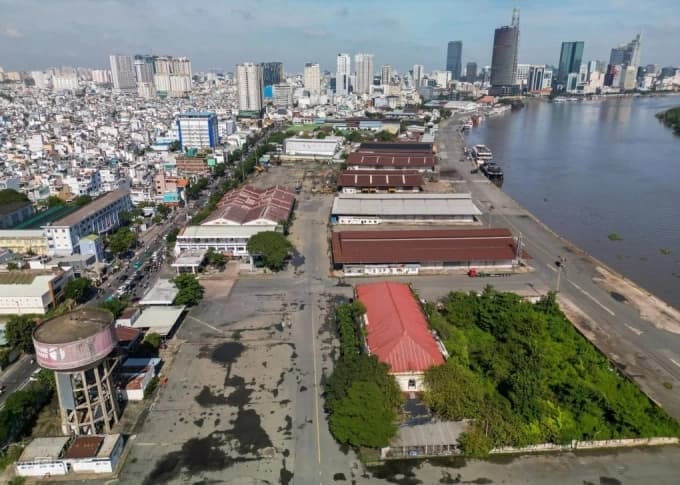
Vietnam’s two biggest cities are making visible moves to bring nature back into dense urban cores. In Ho Chi Minh City, plans now reserve 60 percent of the 20 hectare Ben Nha Rong–Khanh Hoi port site for a public park, a dramatic increase on the initial allocation. Another 3.7 hectares of public land at 1 Ly Thai To is also set to become green space. Hanoi, the capital, is clearing more than two hectares previously used for offices and housing to build a central plaza and is upgrading Dong Kinh Nghia Thuc Square. These are not simple cosmetic changes. They reflect a new understanding that parks, plazas, sidewalks, water bodies, and tree cover are civic infrastructure that help people breathe, move, cool down, and gather.
- Why green space now matters as a right
- HCMC and Hanoi signal a shift
- How Vietnam compares on green space
- Law and governance shape parks on the ground
- Green space is climate defense and health care
- Design that works for people, not just plans on paper
- Turning state land into shared assets
- Money, incentives, and the value case
- How cities can deliver now
- Tracking progress and earning trust
- What to Know
This shift aligns with a wider principle many activists and planners call the right to breathe. The United Nations Human Rights Council recognized the right to a clean, healthy, and sustainable environment in 2021, and the UN General Assembly affirmed it in 2022 (UNGA 2022). Treating clean air and access to nature as a right signals that public spaces are not optional benefits. They are essential to basic health, social life, and climate resilience.
The question is how to turn that principle into built reality. Vietnam’s current park provision falls short of national goals and far below international practice. Projects that reduce green space sometimes move forward, which weakens public trust. A stronger legal and planning framework can anchor a new approach, one that converts public land into community assets and requires private projects to deliver accessible, durable public space. The country is starting to test that approach, but the scale of the task is large and the timelines are tight.
HCMC and Hanoi signal a shift
For years the Ben Nha Rong–Khanh Hoi port site sat idle, cutting a key traffic route and fueling congestion between outer districts and the city center. The new plan to place a majority of the site into a park reopens circulation and delivers a much needed waterfront space. The city has also identified dormant public plots for parks, including the 1 Ly Thai To site, and is reviewing land reserves to accelerate park construction.
Targets are now more explicit. Ho Chi Minh City aims to reach at least one square meter of public green space per resident by 2030. The current figure is about 0.55 square meter per capita, and green space is concentrated in inner districts. Several suburban districts still lack any public parks. In some cases, park land has been absorbed for road widening or turned into parking lots. The city has planted tens of thousands of trees and added park hectares in recent years, but officials acknowledge that results have not matched expectations.
Hanoi is reshaping central spaces as well, with a new plaza and upgrades to historic squares. These projects answer a persistent public demand for places to walk, rest, and gather safely. The capital’s older neighborhoods lost many ponds and green plots during past waves of construction. Reversing that trend will require firm protection for remaining water bodies and the creative reuse of state land to create a network of linked parks and promenades.
How Vietnam compares on green space
Vietnam’s national standard for major cities seeks 7 to 9 square meters of park land per resident. The gap is wide. Hanoi has around 2 square meters per person. Ho Chi Minh City has about 0.55 square meter per person. Implementation is uneven, and some approved projects have reduced open space. Those outcomes are not only technical failures. They affect equity, public health, and climate readiness.
International practice shows what a strong baseline can deliver. In Japan, zoning rules and land use standards define the public realm before developers break ground. Neighborhoods are planned so that most residents are within 250 meters of a 0.25 hectare neighborhood park and within 500 meters of a two hectare community park. Pocket parks fill gaps in older areas, while large regional parks, sport forests, and disaster safety open zones serve wider catchments. National greening guidelines call for 10 to 15 square meters of park space per resident. A 2024 green space law links parks to climate goals, biodiversity, and incentives for greening rooftops, parking lots, and public buildings. Tokyo may look like a concrete city at first glance, yet it has three iconic parks, Ueno, Yoyogi, and Shinjuku Gyoen, each about 54 hectares, and the metropolitan area includes Showa Kinen Park, roughly 150 hectares in size.
Hanoi’s own green planning history reflects shifting influences and stop start implementation. Research tracing the French colonial era, the Soviet period, and the globalization decades finds that plans repeatedly aimed to ease crowding, improve air, and provide leisure space. Delivery lagged due to land use constraints, mixed perceptions of what parks are for, and a lack of long term vision. The lesson is straightforward. Without clear rules, incentives, and institutional capacity, good plans struggle to reach the ground.
Law and governance shape parks on the ground
Law is the lever that fixes the baseline. Vietnam has a Planning Law, but it does not function as a dedicated urban redevelopment law. Urban planning is partly guided by a government decree, which gives limited certainty to public space requirements. That leaves cities room to negotiate from project to project, which often favors short horizons.
Several countries embed public space obligations directly into development approvals. The United Kingdom’s Planning Act, through Section 106 agreements, requires contributions to public infrastructure from developers of former industrial land, either in money or in built assets. In HafenCity, a major redevelopment on Hamburg’s port, projects must include a set share of public space and guarantee public access to ground floors. In New York City, waterfront developers must build public esplanades to get permits. The Netherlands’ Environment and Planning Act allows land exchanges to keep riverbanks open to the public even when ownership shifts. Where these rules apply, parks and promenades are placed at the water’s edge, with buildings set back, which increases access and safety during floods. Property values around well designed parks often rise, which helps developers recover costs. Public space is not a give up. It can generate durable value.
Emerging signals from national policy
Vietnam is taking steps that point toward a greener legal toolkit. The Ministry of Construction has announced work on the country’s first national green building standards. Officials describe green buildings and clean transport as core to a green economy, and they highlight the need for financing, worker training, and standards for low carbon materials. The construction sector has already tallied hundreds of certified green projects nationwide, and major cities are piloting electric buses and charging infrastructure.
In November, a national forum on sustainable urban development explored ways to link planning, climate adaptation, and financing. Experts urged mandatory hydrological and hydraulic simulations in plans, updates to construction standards to reflect new climate data, and closer coordination across ministries through shared data. Climate finance specialists called for more concessional funding and routine disaster risk checks in public investment decisions. Hanoi is preparing low emission zones that will phase out high polluting vehicles in key rings of the city by 2030. Ho Chi Minh City aims for all buses to run on electricity or other green energy by 2030, paired with new charging networks. These measures focus on cleaner air and safer streets, and they will reach full value if they also support a connected web of parks and public corridors.
Green space is climate defense and health care
Heat and flood risk are rising. Vietnam’s cities sit on river deltas that once absorbed seasonal rains through wetlands and ponds. As concrete spread over those sponges, sudden storms began to pool in streets and basements. A string of severe storms in 2025 left cities flooded for days, with water sliding off paved surfaces faster than drainage systems could handle. Several provinces are now investing in early warning systems, expanded drains, and softer waterfronts that slow and store stormwater before releasing it.
Green space is a working part of this system. Trees and grass reduce the urban heat island effect. Ponds, basins, and planted riverbanks store water during downpours and double as recreation space during fair weather. Sidewalks with shade and permeable surfaces connect those elements so residents can walk without overheating. Ho Chi Minh City’s revised master plan through 2040 tries to lock in that logic. The city is divided into six functional zones, with a web of ecological corridors, new public transit lines, and flood defenses that combine tidal barriers with green infrastructure. The plan sets out dozens of 15 to 20 minute living and working clusters around transit nodes to reduce long commutes and car use. Delivery will take years, but the direction is clear.
Researchers and practitioners warn against relying on concrete alone. Hong Ngoc Nguyen, an environmental engineer who has studied flooding in Hanoi, said the capital needs to accept that heavy rainfall will come more often and design streets and rivers to live with water. As Nguyen put it:
We cannot control the water.
That view is consistent with international climate science. Benjamin Horton, a professor of earth science at City University of Hong Kong, has described the region’s exposure in blunt terms:
Vietnam and its neighbors are on the front lines of climate disruption.
Designing to those realities means preserving waterways, reopening culverted streams, and banning construction that blocks natural drainage. It also means cleaner air. Parks absorb some pollutants and give people space away from traffic plumes. Emission rules, low emission zones, and electric buses are necessary to cut PM2.5 and nitrogen dioxide. Parks and cleaner transport reinforce each other under the same right to breathe.
Design that works for people, not just plans on paper
New parks must feel safe, useful, and welcoming. Interviews with planners, designers, and managers in Hue indicate that ecological design faces real hurdles. Several stakeholders focus on quick gains in square meters per capita, rather than on ecosystem services such as cooling, biodiversity, and flood attenuation. There is limited supply of native plants and a lack of experience with naturalistic landscapes. Teams across departments do not always share the same incentives or timelines. Many practitioners and residents prefer conventional aesthetics and easy maintenance. They worry that wilder designs might look messy or attract pests.
A practical solution is a hybrid approach. Cities can combine meadows, wetlands, and shade trees with mowed lawns, clear sightlines, and paths that accommodate strollers and wheelchairs. Education and demonstration projects can build comfort with more natural forms. Budgets can include training for maintenance crews and contracts for native plant growers. Over time, public expectations shift when residents see that naturalistic parks stay usable, safe, and beautiful.
Keep access at the center and avoid green gentrification
Policymakers in subtropical Asian cities caution that parks linked to climate adaptation can raise nearby property values, which risks pricing out the very communities that need cooling and flood relief. Research on Hanoi, Taipei, and Fukuoka points to the importance of institutions that connect departments, developers, and civil society. Inclusive design, early community engagement, and a focus on justice reduce the risk of parks becoming isolated enclaves. In Hanoi, many young people report that true public spaces are shrinking, pushing them into malls and cafes that function like private semi public zones. Transparent planning and open access can restore trust and broaden the user base of parks.
Turning state land into shared assets
Vietnam controls large areas of state owned land, including former ports, factories, and rail yards inside growing cities. These sites can become urban lungs and connectors. Clear rules can turn that potential into a pipeline of parks. Cities can set minimum public space ratios for state land disposals and require continuous waterfront access. Plans can specify the width of riverfront promenades, tree canopy targets, and locations for playgrounds and sports fields. Developers can receive extra floor area or expedited approvals in exchange for delivering public assets to specified standards. Where land readjustment is possible, agencies can use land swaps to create continuous park corridors and open plazas without forcing out residents.
Japan’s redevelopment model requires each project to list the public facilities it will deliver, where they will sit, and how they fit into the broader network. A similar approach can work in Vietnam. Contracts can ring fence funds for park maintenance for the first years of operation, with performance bonds to ensure delivery on time. Ground floors along key routes can be kept open to the public during daytime hours to knit private buildings into the public realm. Many global examples show that these conditions do not scare investment away. They shape it.
Money, incentives, and the value case
Well located parks can raise nearby land values and boost local commerce. That is one reason many cities require waterfront esplanades and plazas in private projects. Vietnam can tap the same dynamics. Section 106 style contributions, transparent land value capture, and impact fees can fund a portion of green networks. Public investment can focus on anchor spaces that trigger private improvements. Climate finance can support sponge city projects that pair basins, wetlands, and tree canopy with curb and drain upgrades. Private developers across Vietnam are already branding projects around energy efficiency, healthy streets, and community amenities. Clear rules give those ambitions a common floor and help avoid greenwashing.
National policy is moving. Ministries are building a legal framework for green buildings and materials. Cities are investing in bus electrification and emission controls. The gains for public health and productivity are large. The World Bank and other partners point to the need for billions of dollars in climate investment. The right to breathe frames that spending in human terms. Parks reduce hospital visits during heat waves. Clean air reduces lost workdays and supports healthy child development. A city that protects green lungs protects its people.
How cities can deliver now
Several steps can convert momentum into measurable change. These actions focus on clear rules, public trust, and delivery capacity.
- Set binding public space ratios for state land disposals and large private projects, including minimum widths for waterfront promenades and linked green corridors across districts.
- Adopt park access standards that mirror distance based norms, for example a small park within a short walk of every home and a larger community park within a longer but still walkable distance.
- Make hydrological and heat simulations mandatory for major plans, then require designs that slow and store stormwater and reduce heat stress.
- Publish open data on public land, park projects, and maintenance budgets. Create online park maps with timelines, budgets, and contractors to strengthen accountability.
- Create a dedicated urban redevelopment law that defines public facilities, standardizes contributions, and clarifies the use of land readjustment and land value capture.
- Use performance based incentives for developers, such as extra floor area for delivering shaded sidewalks, ground floor public access, and tree canopy targets.
- Invest in workforce training for ecological maintenance, native plant supply chains, and tree care. Budget for long term upkeep, not just construction.
- Engage communities early with design options, and build demonstration projects that show how naturalistic landscapes stay tidy, safe, and useful.
Tracking progress and earning trust
Success depends on steady, visible delivery. Cities can publish annual scorecards covering park hectares added, distance to parks by neighborhood, tree canopy, kilometers of shaded sidewalk, and the share of residents within a walk of a playground. Independent audits can verify that completed parks are open, accessible, and well maintained. Where park land is threatened by road projects or temporary uses, a replacement policy can require equal or better public space nearby before any loss happens. Local youth and seniors can be invited to monitor parks and report issues through simple channels.
The public sector is not a property developer. It is a steward of shared value and memory. Old ports, factories, and rail yards helped build Vietnam’s industrial economy. They can become places where residents walk, play, cool down, and remember that the city belongs to them. That is the work of law, design, and consistent delivery. Getting it right from the start will save money and years of repair.
What to Know
- Ho Chi Minh City and Hanoi are converting major state land into parks and plazas, signaling a turn toward public space as essential infrastructure.
- Vietnam’s big cities provide far less park space per resident than national goals and international practice, with Ho Chi Minh City at about 0.55 square meter per person and Hanoi near 2 square meters.
- Japan’s standards and laws show how distance based access rules, zoning, and redevelopment requirements can secure parks before buildings rise.
- Other countries require developers to fund or build public space through agreements and permits, especially along waterfronts.
- National steps in Vietnam include work on green building standards, low emission zones, and bus electrification, which support the broader right to breathe.
- Green space is a frontline defense against heat and floods. Sponge city design stores water during storms and cools neighborhoods during heat waves.
- Stakeholder research in Hue highlights barriers to ecological design. A hybrid approach that blends naturalistic and conventional elements can build acceptance.
- To avoid green gentrification, cities need inclusive access, early engagement, and rules that keep open space truly public.
- Binding public space ratios, clear redevelopment laws, and transparent data can turn state land into lasting community assets.
- Annual scorecards, performance based incentives, and maintenance funding are practical tools to deliver parks that work for people.