The Quiet Transformation
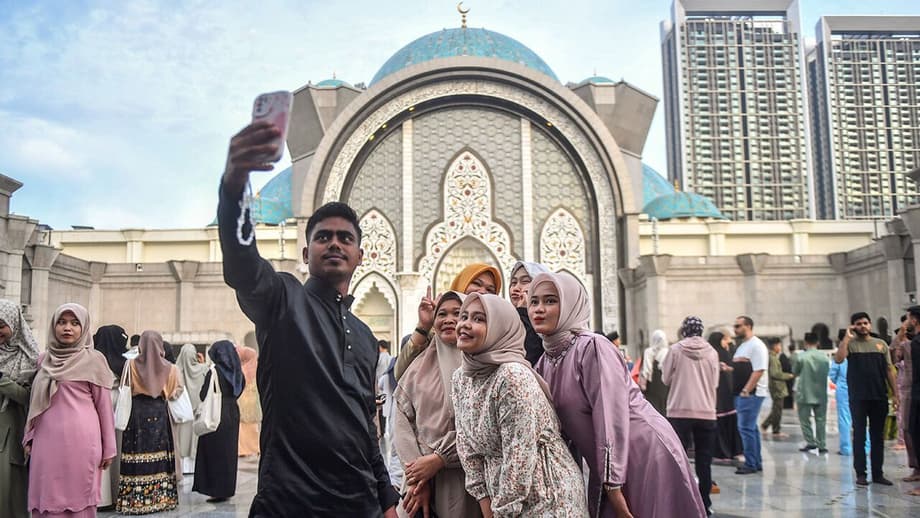
For decades, governments across Southeast Asia viewed the rise of Islam primarily through the lens of security concerns. The specter of terrorist networks and violent extremism dominated policy discussions, prompting forceful counter terrorism measures that successfully suppressed militant groups. Today, a fundamentally different shift is reshaping the region’s religious landscape. In Malaysia and Indonesia, the two largest Muslim majority nations in Southeast Asia, Islam is asserting itself not through violence but through the machinery of modern life itself. The religion is increasingly visible in political campaigns, legal codes, consumer preferences, and social norms, creating a new form of Islamic expression that thrives alongside economic development and technological advancement. This peaceful but profound transformation suggests that modernization is not secularizing the region as classical sociological theories might predict. Instead, economic growth, digital connectivity, and institutional reform are providing new channels for religious assertion, embedding Islamic values ever deeper into public and private life across a region that is home to approximately 242 million Muslims, representing roughly 42 percent of Southeast Asia’s total population.
Historical Foundations and Contemporary Reach
Islam’s presence in Southeast Asia stretches back more than a millennium, carried across the Indian Ocean by Arab, Persian, and Indian traders who established footholds in port cities from Sumatra to Malacca long before European colonial powers arrived. Unlike the conquest driven expansion seen in other parts of the world, Islam spread through the archipelago primarily through commerce and the teachings of Sufi missionaries who skillfully adapted Islamic principles to local contexts. This historical pattern of peaceful integration stands in contrast to the region’s recent past, where militant groups threatened stability through bombings and insurgency. Eric Tagliacozzo, Professor of Modern Southeast Asian History at Cornell University, notes that the connections between Southeast Asia and the Middle East have always been varied, extending beyond religion to encompass trade, pilgrimage, and cultural exchange. In his research on the Hajj, Tagliacozzo documents how Indonesian pilgrims have traveled to Mecca since the 17th century, with the steamship revolution of the 19th century transforming the pilgrimage from an elite endeavor into a mass phenomenon. Today, Indonesia sends over 200,000 pilgrims annually to Saudi Arabia, more than any other nation, reinforcing spiritual bonds that continue to shape religious orientation. The Sufi orders that originally facilitated Islam’s spread emphasized mysticism and tolerance, creating what scholars now call Nusantara Islam, a tradition that historically accommodated local customs alongside orthodox practice.
The Halal Economy and Consumer Piety
Recent surveys reveal the extent to which religious observance has become intertwined with consumer behavior and economic decision making across Southeast Asia. Research conducted by Wunderman Thompson Intelligence and the Muslim Intel Lab found that 91 percent of Muslim respondents in the region describe a strong relationship with Allah as very important, while only 34 percent prioritize wealth. The data shows that 84 percent of Muslims in Malaysia and Indonesia pray five times daily, with 33 percent describing themselves as more observant than their parents. This religious revival is creating lucrative markets that blend faith with modern commerce. Malaysia and Indonesia rank among the top four global halal markets alongside Saudi Arabia and the United Arab Emirates, according to the Global Islamic Economy Indicator. The sector encompasses food, Islamic finance, Muslim friendly travel, and religious media, with Malaysia maintaining its top position through a 20 percent jump in investment in Shariah compliant funds and the success of Islamic educational content for children. The economic implications extend beyond traditional sectors. Sixty one percent of Southeast Asian Muslims factor halal certification into banking and investment preferences, while 77 percent consider the availability of halal facilities when choosing travel destinations. Perhaps most strikingly, 85 percent of respondents expressed interest in a metaverse specifically designed for Muslims, and 53 percent regularly use prayer and Qur’an applications on their smartphones. These figures indicate that digital modernization is serving as a vehicle for religious expression rather than a replacement for it.
Artificial Intelligence and Religious Values
The intersection of cutting edge technology and Islamic ethics has entered public discourse in unexpected ways. Malaysian Prime Minister Anwar Ibrahim recently urged software developers to infuse artificial intelligence systems with Islamic values, arguing that such integration would ensure technology serves humanity ethically. Since taking office in late 2022, Anwar has prioritized AI development as part of Malaysia’s economic agenda, suggesting that religious frameworks can guide algorithmic decision making. This proposal raises complex questions about the programming of moral absolutes into machine learning systems. Critics note that Islamic law, like all religious traditions, contains interpretive variations across different schools of thought and cultural contexts. Embedding any single theological framework into AI could potentially encode specific doctrinal perspectives that not all Muslims share, or that non Muslim minorities might find exclusionary. The suggestion highlights a broader tension within the region’s modernization process. As governments promote technological advancement to compete globally, conservative religious constituencies demand that development maintain compatibility with Islamic principles. This dynamic creates pressure to Islamize modern institutions ranging from finance to education to digital infrastructure, ensuring that progress does not come at the expense of religious identity.
Legal Assertions and Cultural Tensions
The push toward greater Islamic alignment manifests differently across national contexts, sometimes creating friction between religious orthodoxy and local traditions. In Aceh, Indonesia’s only province governed by Sharia law, recent events illustrated these tensions when authorities expelled a rain shaman hired by state construction firms to prevent rainfall during the National Sport Games. Religious figures condemned the shaman’s Javanese folk rituals as shirk (polytheism), yet remained silent about similar mystical practices like ruqyah (Islamic exorcism) that use Arabic terminology. The incident reflects the ongoing contestation between abangan Muslims who incorporate local mysticism into their faith and santri puritans who seek to cleanse Islam of non Arabic influences. Brunei presents a contrasting model of state driven Islamization. The absolute monarchy has implemented the Syariah Penal Code Order 2013, which expanded Islamic criminal law to include non Muslims and introduced corporal punishments for offenses ranging from robbery to adultery. Unlike neighboring Malaysia, where Islamic legal assertions generate public debate, Brunei’s Melayu Islam Beraja (Malay Muslim Monarchy) ideology suppresses dissent by criminalizing criticism of religious authorities or the Sultan’s religious decrees. The code mandates up to five years imprisonment for contradicting official Islamic interpretations, creating a monolithic religious environment where no internal discourse challenges the state’s religious policies.
Nusantara Islam as a Moderate Countercurrent
Against the backdrop of increasing religious traditionalism, Indonesia’s largest Islamic organization, Nahdlatul Ulama (NU), has promoted Nusantara Islam as a distinctive theological framework that emphasizes moderation, pluralism, and compatibility with democratic values. With approximately 60 million members, NU argues that Indonesian Islam developed through peaceful dialogue with local cultures rather than conquest, creating a tradition that values tolerance and rejects extremism. The concept rests on six pillars: promoting peace over violence, adapting to local traditions without syncretism, relying on civil society rather than state power, reconciling Islam with nationalism, affirming citizen equality regardless of religion, and rejecting radicalism. NU leaders contend that this approach represents an alternative to both Middle Eastern fundamentalism and Western secularism, offering a model where love for the homeland constitutes part of faith itself. President Joko Widodo endorsed this philosophy, declaring a vision that distinguishes Indonesian religious practice from more rigid interpretations.
Our Islam is Nusantara Islam.
The organization has taken this message international, hosting summits of moderate Islamic leaders and proposing that Southeast Asia, rather than the Middle East, could become the cradle of religious reform in the Muslim world. This vision directly challenges groups like the Islamic Defender Front and Hizbut Tahrir Indonesia, which oppose Nusantara Islam for accepting national identity and local customs as compatible with religious practice.
International Solidarity and the Palestinian Cause
The religious revival in Southeast Asia carries significant foreign policy implications, particularly regarding solidarity with Muslim communities facing conflict abroad. Indonesia, Malaysia, and Brunei maintain no formal diplomatic relations with Israel, prohibiting Israeli citizens and companies from entering under normal circumstances. This stance reflects both Islamic religious solidarity and anti colonial sentiment rooted in the region’s own history of Western domination. Leaders like Malaysia’s Mahathir Mohamad have consistently denounced Israeli policies, describing Israel as the root cause of world instability during his recent tenure. The countries support Palestinian statehood and host Palestinian diplomatic missions, while providing educational and work opportunities for Palestinians. This foreign policy orientation demonstrates how Islamic identity in Southeast Asia translates into concrete political positions that diverge from Western allies. The solidarity extends beyond government policy into popular sentiment, where the Palestinian cause serves as a unifying issue across ethnic and national boundaries. Religious organizations frame the conflict in theological terms as the defense of Islamic holy sites, while political leaders emphasize shared experiences of colonial subjugation. The consistency of this position across different administrations and varying domestic political landscapes suggests that pro Palestinian solidarity has become a permanent feature of Southeast Asian Islamic political identity, constraining efforts to normalize relations with Israel even when such normalization might offer economic or strategic benefits.
What to Know
- Islam is asserting itself across Southeast Asia through peaceful political, legal, and consumer channels rather than violent extremism, with Malaysia and Indonesia leading this transformation.
- The region contains approximately 242 million Muslims, representing 42 percent of Southeast Asia’s population, with Indonesia hosting the world’s largest Muslim population at 230 million.
- Survey data indicates increasing piety among younger Muslims, with 84 percent in Malaysia and Indonesia performing daily prayers and 33 percent reporting greater observance than their parents.
- The halal economy has become a major economic force, with Malaysia and Indonesia ranking among the world’s top four Islamic markets encompassing finance, food, travel, and digital services.
- Technological modernization is accommodating religious practice, with 53 percent of Muslims using prayer apps and 85 percent interested in Muslim specific metaverse platforms.
- Tensions persist between strict Sharia implementation and local traditions, as seen in Aceh’s rejection of Javanese mysticism and Brunei’s expansion of Islamic criminal law to non Muslims.
- Indonesia’s Nahdlatul Ulama promotes Nusantara Islam as a moderate alternative emphasizing tolerance, democracy, and compatibility with local cultures, contrasting with more conservative interpretations.
- Southeast Asian Muslim majority countries maintain consistent foreign policy solidarity with Palestine, refusing diplomatic relations with Israel based on religious and anti colonial principles.