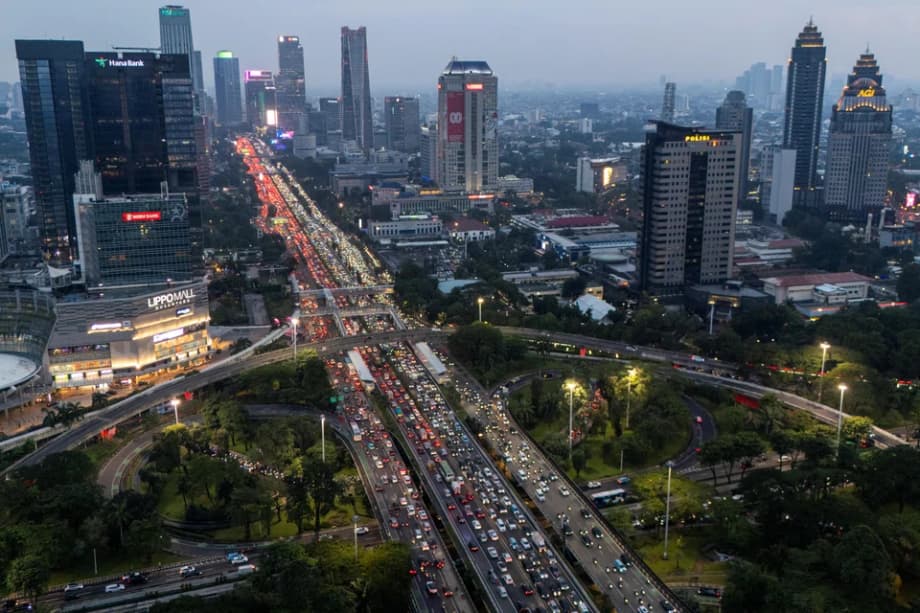
The $120 Billion Erosion of Trust
Indonesia’s financial markets have suffered their most severe credibility shock in decades, wiping out approximately $120 billion in equity market value since late January 2026. The crisis erupted when global index provider MSCI warned that Southeast Asia’s largest economy risked being reclassified as a frontier market, citing fundamental concerns over data transparency and ownership structures in Indonesian stocks. The Jakarta Composite Index (JCI) plummeted 4.73% during the first week of February alone, erasing roughly Rp 705 trillion ($41.6 billion) in market capitalization and triggering trading halts not seen since the 1998 Asian Financial Crisis.
The sell-off represents more than a temporary market correction. It signals a breakdown in institutional trust between global investors and Indonesian regulators. MSCI’s interim measures, implemented immediately, froze all foreign inclusion factor increases and suspended new stock additions to the MSCI Investable Market Index. FTSE Russell followed suit, postponing its March 2026 index rebalancing until May 22, 2026, effectively halting any upward trajectory for Indonesian equities in global passive investment portfolios.
Compounding the equity crisis, Moody’s Ratings revised Indonesia’s sovereign credit outlook to negative on February 5, 2026, citing reduced predictability in policymaking and governance concerns. The rupiah has weakened to historic lows near 16,825 per US dollar, with analysts warning that breaching the 17,000 threshold would signal uncharted territory for the currency. Foreign investors, who had already pulled $1 billion from Indonesian equities in 2025, accelerated their exodus as the crisis unfolded. Finance Minister Purbaya Yudhi Sadewa has attempted to characterize the volatility as temporary market shock rather than fundamental weakness, though his reassurances have failed to stem capital flight.
When Indices Freeze: Understanding the Technical Crisis
At the heart of the market turbulence lies a technical but critical concept: free float transparency. Free float refers to the percentage of a company’s shares actually available for public trading, as opposed to those held by strategic investors, governments, or company insiders. Global index providers like MSCI and FTSE Russell rely on accurate free float data to determine how much of a stock should be included in their indices, which in turn dictates how billions of dollars in passive investment funds allocate capital.
MSCI’s consultation with international investors revealed declining confidence in data maintained by the Indonesian Central Securities Depository (KSEI) and the Indonesia Stock Exchange (IDX). Investors highlighted persistent concerns regarding shareholder categorization, with suspicions of coordinated trading behavior that could distort price formation. The ownership structures of many Indonesian companies remain opaque, making it difficult for foreign investors to determine true market liquidity and assess genuine investment value.
The potential consequences of a frontier market downgrade extend far beyond prestige. Analysts estimate that reclassification could trigger foreign fund outflows ranging from $25 billion to $50 billion. Indonesia currently maintains a 7.5% minimum free float requirement for listed companies, significantly lower than Malaysia’s 25% threshold, which rivals developed markets like Hong Kong. This structural deficiency has allowed concentrated ownership to persist, creating vulnerabilities that global investors no longer tolerate.
In response, Indonesian authorities have pledged to raise minimum free float requirements to 15% and tighten ownership disclosure thresholds to 1%, measures expected to be fully implemented by March 2026. The IDX has begun publishing monthly free-float reports and enhanced investor classification categories to improve data granularity. However, markets remain skeptical about whether these reforms represent lasting structural change or temporary crisis management.
Central Bank Independence and Policy Predictability
While technical market reforms dominate headlines, underlying governance concerns have driven the broader loss of confidence. President Prabowo Subianto’s administration has unsettled investors through a series of decisions that suggest ad-hoc policymaking rather than structured economic management. The appointment of Thomas Djiwandono, the president’s nephew, as deputy governor of Bank Indonesia last month crystallized fears about central bank independence and institutional nepotism.
The rupiah fell to a record low of 16,985 per US dollar immediately following Djiwandono’s nomination, which he defended as merit-based despite his familial connection to the president. The appointment coincided with Moody’s downgrade, creating a compound crisis of confidence in monetary and fiscal institutions. Fauzan Luthsa, an advisor at Ormit Kelola Nusantara in Jakarta, characterized the policy environment as increasingly difficult to price:
“Ad-hoc policy doesn’t protect the market, it makes the impossible to price. The biggest risk is a pattern of policy that is reactive and constantly changing.”
Prabowo’s expansive fiscal agenda has further alarmed creditors and equity investors. The administration’s $20 billion free school meals program, while politically popular, risks undermining decades of deficit control. Authorities raised the budget deficit ceiling to 3% of gross domestic product, and January 2026 saw a rare budget shortfall as the government accelerated spending. Muhammad Rizal Taufikurahman, head of the Center for Macroeconomics and Finance at Indonesia’s Institute for Development of Economics and Finance, noted that markets require predictability above all else:
“Markets are not asking for pro-growth policies in the short term, what they need is predictability so risks can be calculated. Proof points of recovery are not policy statements, but track record: Two to three quarters with no regulatory surprises.”
Regional Capital Flight: The Malaysia Alternative
As Indonesian markets convulse, neighboring Malaysia has emerged as the primary beneficiary of regional capital reallocation. Hong Leong Investment Bank Research identifies Malaysia as ASEAN’s “safe harbour,” citing political stability, market depth, and regulatory transparency that contrast sharply with Indonesia’s current volatility. The research house notes that Malaysia’s structural advantages position it between low-yield, low-risk markets like Singapore and higher-risk environments like Indonesia.
Malaysia’s appeal rests on concrete governance metrics. The country maintains a 25% minimum free float requirement, comparable to developed markets, providing investors with confidence in liquidity and genuine price discovery. While ASEAN-4 markets (Malaysia, Indonesia, Thailand, Philippines) recorded $10.3 billion in foreign equity outflows during 2025, Malaysia accounted for 50% of these withdrawals despite having the region’s most stable political climate.
The Malaysian equity market has responded to the regional shift with robust performance. Average daily trading values reached RM3.4 billion in January 2026, surpassing all monthly levels seen in 2025, while foreign inflows into ringgit-denominated bonds hit RM3 billion in December 2025. As Indonesia struggles with MSCI scrutiny, Malaysia’s status as the largest ASEAN constituent in the MSCI Emerging Markets index provides global funds with a ready alternative for regional exposure without the transparency risks plaguing Jakarta.
Enforcement and Leadership Overhaul
Faced with existential threats to market status, Indonesian authorities have launched an aggressive response combining regulatory reform with unusual criminal enforcement. Five senior officials from the stock exchange and Financial Services Authority (OJK) resigned in a single afternoon following the MSCI warning, including IDX President Director Iman Rachman, who cited personal responsibility for the market events. The speed of these departures, while demonstrating accountability, also raised concerns about institutional continuity during a crisis.
Chief Economic Minister Airlangga Hartarto has vowed firm action against market manipulation, with police arresting several brokerage executives suspected of price rigging. These enforcement actions, while welcomed by some investors, occurred alongside sudden fines for alleged stock manipulators, feeding concerns about abrupt regulatory shifts. The temporary replacements for departed officials have proposed reforms to free float and ownership disclosure rules, but the manner of their implementation, rapid and reactive rather than consultative, has not fully reassured international observers.
Danantara, Indonesia’s sovereign wealth fund, has positioned itself as a market stabilizer, with Chief Investment Officer Pandu Sjahrir announcing daily investments in fundamentally strong, liquid stocks. The fund currently conducts trading worth billions of US dollars daily, targeting a long-term trading value of $8-10 billion. However, foreign fund managers remain cautious. James Athey, fixed income fund manager at Marlborough, described recent policy steps as concerning:
“I do feel like each of these steps is a little nick, a little cut that could add up into something bigger. What we’ve had recently I think is going to keep me sidelined for a bit longer. Because it’s a hard one to price.”
Fiscal Innovation Amid Constrained Options
With traditional funding channels facing pressure from Moody’s negative outlook, Indonesia has turned to alternative financing mechanisms. The government began marketing its second offshore yuan bond in four months on February 25, 2026, targeting a benchmark-sized, three-part offering maturing in three, five, and ten years. This dim sum bond issuance, following a six billion yuan debut in October 2025, takes advantage of record low offshore yuan interest rates while diversifying funding sources away from dollar and local currency markets.
The yuan bond offering coincides with efforts to refinance maturing notes totaling an estimated $3 billion to $4 billion this year. However, the timing reveals fiscal strain: authorities must raise capital amid deteriorating credit conditions and market volatility. Alessia Berardi, head of global macroeconomics at Amundi Investment Institute, warned that if leadership signals tolerance for higher inflation or frequent central bank intervention to smooth fiscal operations, then investor perceptions would harden and risk premiums would rise. The bond market’s reaction serves as the primary indicator of macroeconomic stability, with 10-year government bond yields already gaining 34 basis points this year to reach 6.458%.
The Popularity Paradox
The market crisis presents a striking disconnect between investor confidence and public opinion. A survey conducted by Indikator Politik Indonesia from January 15-21, 2026, showed President Prabowo’s approval rating climbing to 79.9%, up from 78% in November 2025. The poll, completed just before the MSCI warning triggered the market collapse, revealed that Prabowo remains most popular among Gen Z voters and rural populations, with 72.8% expressing satisfaction with his free meals program.
This political resilience, while strengthening Prabowo’s domestic mandate, may actually exacerbate market concerns. Sustained public support reinforces the president’s tendency toward expansive social spending and state intervention, policies that directly conflict with investor demands for fiscal discipline and regulatory transparency. The administration’s dismissal of Moody’s criticism, choosing instead to double down on the 8% growth target by 2029, suggests that political popularity may override market signals in policy calculations.
The tension between democratic legitimacy and market credibility creates a complex policy environment. While Prabowo’s centralization of control and military expansion into civilian governance worry international investors, these same tendencies appeal to domestic constituencies seeking strong leadership and immediate economic relief. The result is a governance model that prioritizes short-term political deliverables over the long-term institutional predictability that global finance requires.
What to Know
- MSCI has warned that Indonesia risks downgrade from Emerging Market to Frontier Market status by May 2026 if transparency issues persist, potentially triggering $25-50 billion in capital outflows
- Moody’s revised Indonesia’s sovereign credit outlook to negative, citing policy unpredictability and governance concerns, compounding pressure on the rupiah which remains near historic lows above 16,800 per US dollar
- President Prabowo’s appointment of his nephew as Bank Indonesia deputy governor and the $20 billion free meals program have intensified investor concerns about central bank independence and fiscal discipline
- Indonesian authorities have responded by raising free float requirements from 7.5% to 15%, tightening ownership disclosure to 1% thresholds, and arresting suspected market manipulators, though markets question the durability of these reforms
- Malaysia has emerged as the primary beneficiary of capital flight from Indonesia, with its 25% free float requirement and political stability positioning it as ASEAN’s “safe harbour” for foreign investors
- The Jakarta Composite Index suffered its worst decline since the 1998 Asian Financial Crisis in late January 2026, with approximately $120 billion in market value erased since MSCI issued its warning