Japan Establishes Defensive Timeline for Taiwan-Adjacent Island
Japan has established a definitive timeline for deploying advanced surface-to-air missiles to its westernmost territory, a small island located just 110 kilometers from Taiwan, marking a significant escalation in Tokyo’s military posture amid simmering regional tensions. Defense Minister Shinjiro Koizumi announced on Tuesday that the Type-03 medium-range missile systems will be operational on Yonaguni Island by March 2031, providing the first concrete schedule for a defense upgrade initially proposed three years ago.
- Japan Establishes Defensive Timeline for Taiwan-Adjacent Island
- Technical Capabilities of the Chu-SAM Missile Systems
- The Diplomatic Crisis Triggering Military Action
- Yonaguni’s Decade-Long Military Transformation
- China’s Economic Warfare and Export Restrictions
- Global Security Implications and Alliance Dynamics
- Japan’s Broader Strategic Realignment
- The Essentials
The announcement arrives during a period of heightened friction between Tokyo and Beijing, triggered by controversial remarks from Japanese Prime Minister Sanae Takaichi regarding Taiwan’s security. The deployment represents more than a routine military adjustment; it signals Japan’s willingness to position itself as an active deterrent against potential Chinese aggression toward the self-governing democratic island that Beijing claims as its own territory.
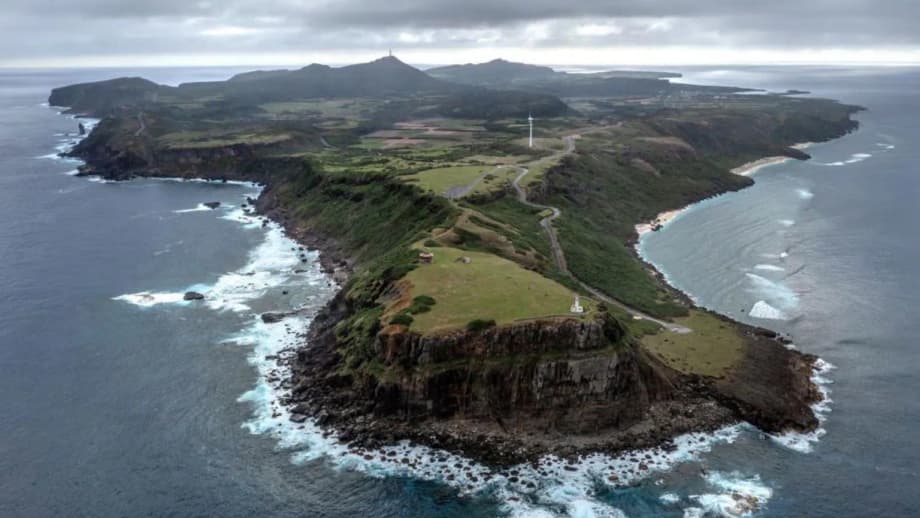
Located approximately 1,900 kilometers southwest of Tokyo but only 110 kilometers east of Taiwan, Yonaguni sits closer to Taipei than to the Japanese capital. On clear days, observers can visibly discern Taiwan’s eastern coastline from the island’s shores, underscoring its position as a potential front line in any regional conflict. The proximity has long fueled concerns that any military confrontation over Taiwan could rapidly engulf this sleepy outpost, transforming it from a tourist destination known for miniature horses into a strategic military bastion.
The missile unit destined for Yonaguni will be equipped with Type-03 medium-range surface-to-air guided missiles, known domestically as Chu-SAM. These Japanese-made systems, developed by Mitsubishi Electric and manufactured by Mitsubishi Heavy Industries, possess substantial defensive capabilities designed to counter both aerial and ballistic threats. The ministry plans to station approximately 100 additional personnel at Camp Yonaguni to operate these systems, supplementing the existing garrison of roughly 160 Self-Defense Force members currently conducting round-the-clock coastal surveillance operations.
Technical Capabilities of the Chu-SAM Missile Systems
Each Type-03 missile boasts an operational range exceeding 50 kilometers and can reach speeds of Mach 2.5, making it capable of intercepting both hostile aircraft and incoming ballistic missiles. The system features 360-degree surveillance coverage through advanced AESA (Active Electronically Scanned Array) radar technology, allowing operators to track up to 100 targets simultaneously while engaging up to 12 threats at once. The missiles employ active radar homing during terminal phases, supported by inertial guidance systems and mid-flight command links.
Defense Minister Koizumi stressed that these weapons would provide a protective umbrella over the strategically vital waters separating Japan from Taiwan. The Chu-SAM batteries will include enhancements designed to counter hypersonic glide vehicles, advanced warheads capable of traveling at speeds exceeding Mach 5, according to Defense Ministry specifications released in December 2022. These upgrades reflect Japan’s preparation for next-generation threats rather than merely addressing current capabilities.
The deployment timeline, while currently set for fiscal year 2030 (ending March 2031), remains subject to adjustment based on facility construction progress. Koizumi indicated that the ministry is conducting basic studies concerning infrastructure improvements on the eastern side of Camp Yonaguni to accommodate the expanded troop presence and missile infrastructure. The unit will not conduct live-fire training exercises on the island, according to documentation previously released to municipal authorities.
Japan has already stationed similar Type-03 systems and Type-12 surface-to-ship missiles on Ishigaki Island, located further north in the Nansei island chain. This distributed defense network creates overlapping coverage zones designed to monitor and potentially interdict Chinese naval movements through the Miyako Strait and other critical chokepoints in the first island chain. Chinese military planners view these passages as essential for projecting power beyond the East China Sea.
The Diplomatic Crisis Triggering Military Action
The missile deployment timeline crystallizes a dramatic shift in Japanese defense policy that began in November 2025, when Prime Minister Takaichi addressed parliament regarding potential responses to a Chinese attack on Taiwan. During that session, Takaichi suggested that Japan would activate its Self-Defense Forces if conflict posed an existential threat to Japanese security, effectively abandoning decades of strategic ambiguity regarding Taiwan’s defense.
China, which considers Taiwan a breakaway province and has refused to renounce the use of force for what it terms reunification, reacted with immediate diplomatic and economic retaliation. Beijing discouraged Chinese citizens from visiting Japan, dealing a significant blow to the tourism sector that serves as a pillar of the Japanese economy. Chinese authorities also restricted exports of rare earth minerals critical to Japanese high-tech manufacturing and imposed sweeping curbs on dual-use technologies destined for Japanese defense contractors.
Beijing’s top diplomat, Wang Yi, accused forces within Japan of attempting to revive militarism during remarks at the Munich Security Conference earlier this month. Takaichi countered these accusations by telling parliament that China was intensifying attempts to change the status quo by force or coercion in both the East and South China Seas, necessitating enhanced Japanese defense capabilities. She described the current environment as the most severe and complex security situation since the end of World War II.
The Defense Ministry announced its intention to brief Yonaguni’s approximately 1,500 residents next week regarding the missile deployment plans. Local sentiment remains divided; while islanders voted narrowly in favor of hosting the initial SDF base in 2015, many now fear that continued militarization could transform their home into a target rather than a shield. Some residents argue that the growing presence of soldiers and weapons systems will make them a greater threat in Beijing’s eyes, while others maintain that the technology serves as a critical deterrent against Chinese expansion.
Yonaguni’s Decade-Long Military Transformation
Yonaguni Island, previously renowned for its indigenous miniature horses and seasonal hammerhead shark migrations, has undergone a remarkable militarization over the past decade. Japan established a Ground Self-Defense Force camp on the island in 2016, initially positioning coastal surveillance units and radar installations atop mountain peaks to monitor Chinese naval movements around the clock. This surveillance capability provides early warning of Chinese naval activity traversing the Miyako Strait, a narrow air and maritime route across Japan’s exclusive economic zone.
Beyond the missile systems planned for 2031, Japan will establish an electronic warfare unit on Yonaguni during fiscal year 2026. This specialized force will possess capabilities to disrupt enemy communications and radar systems, further hardening the island’s defensive posture. The sequential deployment of coastal surveillance, electronic warfare, and missile defense capabilities illustrates Tokyo’s methodical approach to fortifying its southwestern flank.
The island’s strategic importance extends beyond its proximity to Taiwan. The uninhabited Senkaku Islands, located approximately 150 kilometers from Yonaguni, remain a persistent flashpoint in Sino-Japanese relations. These islets, known as the Diaoyu in China, are administered by Tokyo but claimed by Beijing. Repeated intrusions by Chinese vessels into Japanese waters around the Senkakus have necessitated constant vigilance from the Yonaguni garrison.
Defense Minister Koizumi visited Yonaguni in November to affirm the deployment plans, prompting Beijing to accuse Japan of creating regional tension and provoking military confrontation. Within days of his visit, Chinese drones flew near the island, forcing Japan to scramble fighter jets in response. This pattern of tit-for-tat military signaling has continued into 2026, with both sides escalating their presence in the contested airspace and waters surrounding the island chain.
China’s Economic Warfare and Export Restrictions
The missile announcement came just one day after China imposed export restrictions on 20 Japanese companies and entities, including subsidiaries of Mitsubishi Heavy Industries and Japan’s space agency. Beijing cited national security concerns and accused these firms of participating in Japan’s remilitarization and alleged nuclear ambitions. Chinese commerce ministry officials described the measures as completely legitimate, reasonable and lawful, while insisting that honest Japanese businesses had nothing to fear.
Tokyo strongly opposed these actions, with Deputy Chief Cabinet Secretary Kei Sato calling Beijing’s move absolutely intolerable and extremely regrettable. The sanctions represent merely the latest salvo in China’s asymmetric economic warfare strategy designed to pressure Japan into moderating its defense posture. Beijing has weaponized its massive market leverage through rare earth export throttling, tourism boycotts, and cultural exchange cancellations.
Despite these pressures, Japan approved a record defense budget of nine trillion yen (approximately $58 billion) for the coming fiscal year, signaling Tokyo’s determination to proceed with its military modernization regardless of Beijing’s economic retaliation. This financial commitment supports Japan’s broader shift toward obtaining counterstrike capabilities and easing restrictions on the export of lethal defense equipment, marking a definitive departure from post-war pacifist constraints.
China has additionally arranged for the return of pandas from Japanese zoos and canceled planned concerts and cultural events, actions widely interpreted as symbolic expressions of diplomatic displeasure. One Chinese diplomat in Japan reportedly suggested extreme consequences for Takaichi’s continued defiance, though official channels have focused primarily on economic coercion rather than overt military threats beyond the drone incursions and naval maneuvers already documented.
Global Security Implications and Alliance Dynamics
The militarization of Yonaguni carries profound implications for regional security architecture and global stability. Military analysts warn that any Chinese attack on Taiwan could trigger direct military confrontation between Washington and Beijing, potentially drawing Japan into the conflict through its mutual defense treaty obligations with the United States. By stationing advanced missile defense systems within visual range of Taiwan, Japan is effectively positioning itself as a tripwire against Chinese expansion.
The strategic positioning on Yonaguni practically guarantees that Tokyo would be drawn into any kinetic conflict over Taiwan. The transformation of this small island from a coastal surveillance post into a heavily armed missile battery equipped with electronic warfare capabilities illustrates that Japan is actively preparing for worst-case scenarios rather than merely conducting theoretical defense planning.
Defense Minister Koizumi defended the deployment as a purely defensive measure designed to reduce the possibility of armed attacks on Japan. He stated that strengthening defense capabilities remains essential to protect the lives and peaceful livelihoods of Japanese citizens facing unprecedented security challenges. This rhetoric aligns with Prime Minister Takaichi’s recent electoral victory, which provided her administration with political space to double down on boosting Japan’s defense capabilities.
The international community, including strategic partners in Southeast Asia and East Africa, watches these developments closely due to potential disruptions to global shipping lanes and supply chains. A military blockade or open conflict in the Taiwan Strait would instantly sever the supply of advanced semiconductors and manufactured goods, crippling global tech and automotive manufacturing while threatening the maritime supply chains that sustain economies worldwide.
Japan’s Broader Strategic Realignment
The Yonaguni deployment forms part of a comprehensive realignment of Japanese defense priorities from traditional northern threats posed by Russia toward emerging challenges in the East China Sea. This shift began in 2022 when the Defense Ministry announced plans to bolster defenses on remote western islands, reallocating resources to counter Chinese maritime assertiveness.
The Nansei island chain strategy creates a distributed defense network capable of monitoring Chinese naval movements through critical waterways. By layering surveillance, electronic warfare, and missile defense capabilities across multiple islands including Ishigaki and Yonaguni, Tokyo complicates Beijing’s strategic calculations and raises the potential cost of any military adventure in the region.
Analysts view the Yonaguni missile deployment not merely as a tactical move, but as a broader statement of Japan’s front-line strategy in the face of rising regional instability. The illusion of perpetual peace has evaporated; Japan is rapidly acquiring the means to defend its territory through active deterrence rather than relying solely on the security umbrella provided by the United States.
The Essentials
- Japan will deploy Type-03 (Chu-SAM) medium-range surface-to-air missiles on Yonaguni Island by March 2031, marking the first definitive timeline for the 2022 announcement
- The missile systems can track 100 targets simultaneously while engaging 12 at once, with a range of approximately 50 kilometers and 360-degree coverage
- Yonaguni sits just 110 kilometers from Taiwan, making it Japan’s westernmost territory and a potential front line in any regional conflict
- The deployment follows months of diplomatic tension after Prime Minister Sanae Takaichi suggested Japan could intervene militarily if China attacked Taiwan
- China has retaliated through economic measures including export curbs on 20 Japanese companies, rare earth restrictions, and tourism limitations
- Japan approved a record nine trillion yen defense budget and plans to establish an electronic warfare unit on Yonaguni by fiscal year 2026
- The announcement signals Japan’s departure from post-war pacifism toward active deterrence capabilities in response to what it describes as the most severe security environment since World War II