A Historic Departure from Tradition
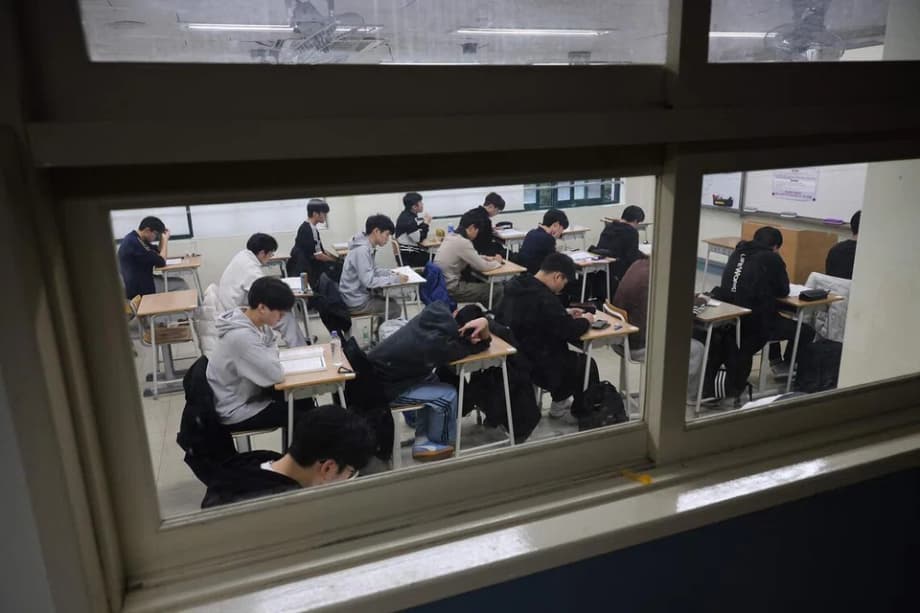
For decades, the path to success in South Korea was paved with a singular, intense focus. Students aimed for acceptance into a prestigious university in Seoul, preferably within a science, technology, engineering, and mathematics (STEM) field or medical school. This formula was viewed as the guaranteed gateway to social mobility and financial security. However, recent analyses of high school seniors who took the 2025 College Scholastic Ability Test, known as Suneung, suggest a significant disruption to this long-standing pattern. Data indicates a possible shift away from medicine and STEM fields, as well as a waning obsession with universities located in the capital.
On January 4, Jongno Hagwon, a major college entrance preparatory academy, released an analysis revealing that only 7,125 students had applied to medical school. This figure represents the lowest number in the past five years and marks a sharp 32.3 per cent decline compared to the previous year. While experts caution against declaring a permanent trend, the data has sparked a national conversation about the future of education and career aspirations in one of the world’s most competitive academic environments.
“While it appears that enthusiasm for medical school has cooled, it will be difficult to draw conclusions until next year’s admissions cycle unfolds,” Jongno Hagwon stated in its report.
This change is not merely about numbers. It reflects a deeper transformation in how South Korean students and their families evaluate the return on investment for higher education. The relentless pressure to secure a spot in a Seoul-based institution, often referred to as “In-Seoul-dae,” appears to be loosening its grip as economic realities and demographic shifts begin to reshape the landscape.
The Legacy of the 1997 Financial Crisis
To understand the magnitude of this potential shift, one must look back at the historical factors that solidified the current hierarchy. The intense preference for STEM and medical fields has its roots in the aftermath of the 1997 Asian financial crisis. This economic disaster triggered a severe liquidity crunch, rapid currency devaluation, and the near depletion of foreign reserves, forcing South Korea to accept a bailout from the International Monetary Fund.
For many South Koreans, this period translated into sudden job losses and long-term employment insecurity. According to Uway Apply, the centralised university application platform, the crisis fundamentally altered the national psyche regarding career stability. The late 1990s saw a surge in applications to STEM majors as South Korea’s information technology boom began to take hold. By 2000, three medical schools and one Korean medicine department topped the list for the most applications nationwide.
Simultaneously, the term “In-Seoul-dae” entered popular usage. This trend reflected heavier government funding for universities in the capital and stronger employment prospects for graduates of these institutions. The belief became ingrained that a degree from a university in Seoul was the prerequisite for entry into the upper echelons of society. This mindset created an “educational arms race” where households devoted vast resources to private tutoring, known as hagwons, to ensure their children could pass the grueling Suneung exam.
The competition for admission into top universities, particularly the “SKY” universities (Seoul National University, Korea University, and Yonsei University), became notoriously fierce. Graduates of these institutions dominate the country, occupying the majority of high-ranking government posts and management positions in powerful business conglomerates. This hierarchy has persisted for years, but the recent data suggests the foundation of this belief system may be eroding.
Unpacking the Medical School Decline
The sharp drop in medical school applications for the 2025 academic year is the most striking indicator of changing attitudes. For years, medical school was considered the ultimate safe haven, offering high income, social status, and job security that was immune to economic fluctuations. The 32.3 per cent decline therefore requires a nuanced explanation.
Kim Ju-ha, a college entrance expert and director of the IDA Admissions Academy, suggests that the decrease is largely structural rather than a complete loss of interest in the profession. “Medical school applicants decreased this year because quotas fell again,” Ms. Kim explained. “As quotas decreased, the number of Suneung retakers also declined, leading to fewer applicants overall.”
Government policy played a significant role in this fluctuation. President Yoon Suk Yeol had increased medical school quotas in 2024, but they were returned to previous levels in 2025. This policy whiplash likely deterred students who were unsure of the admission landscape. Furthermore, the overall difficulty of the 2025 Suneung prompted students to apply more conservatively. “Even top-scoring students lost certainty and hesitated to apply to medical school, opting for other majors,” Ms. Kim observed.
She added that it would be inaccurate to say the social value of medical schools has decreased. “I think it would be more accurate to say this phenomenon reflects a temporary structural change, combined with a competitive mindset.” Despite the dip, a survey conducted in May by Jongno Hagwon showed that 66.8 per cent of students from elementary to high school still hoped to pursue medicine, indicating the long-term allure of the profession remains strong among younger generations.
The STEM Dilemma and Workforce Fears
While medical school numbers saw a temporary dip, the situation regarding STEM fields presents a different set of challenges for the nation. Reports indicate that the number of applicants to science and technology institutes, including the prestigious Korea Advanced Institute of Science and Technology (KAIST), fell by 28 per cent for the 2025 academic year. This decline raises concerns about South Korea’s future competitiveness in science and technology.
Traditionally, engineering departments at universities in Seoul were highly sought after. A junior majoring in computer science at a university in Seoul, named Kim, described the previous enthusiasm. “When I first enrolled, it was very difficult to get into my department,” Kim said. “There was an AI artificial intelligence boom, and many believed studying computer engineering would guarantee jobs at large firms.”
However, the reality of the current job market has begun to temper these expectations. As the technology sector matures and competition for positions at major conglomerates intensifies, students are realizing that a STEM degree no longer serves as an automatic ticket to employment. This realization is contributing to a broader diversification of major choices, with students increasingly looking toward fields with clearer, more immediate pathways to employment.
This shift away from STEM comes at a time when the government is actively trying to combat a shortage of doctors by increasing medical school seats. The tension between individual student choices for stability and national economic needs for technological innovation creates a complex policy challenge. Critics argue that if the trend of avoiding STEM continues, it could threaten South Korea’s position as a science superpower, further necessitating reforms to make research and engineering careers more attractive to young people.
Pragmatism Over Prestige
Perhaps the most enduring change highlighted by the recent data is the weakening preference for universities in Seoul. For the first time in years, the competition rate for universities in the Seoul metropolitan area (6.01 to one) is only marginally higher than that of universities in other regions (5.61 to one). This narrowing gap suggests that students are becoming more pragmatic in their decision-making.
A university student surnamed Park illustrated this new mindset. “I had enrolled at a university in Seoul, but decided to retake the Suneung this year to study education at a university in Gangwon province,” Park said. “I believe studying education outside of Seoul offers better job prospects.”
Lim Seong-ho, chief executive of Jongno Hagwon, echoed this sentiment, noting that the trend reflects the current economic slowdown. “Unless it is a top-tier university in Seoul, students are showing a clear tendency to choose competitive regional universities,” Mr. Lim said. “With employment difficult both in Seoul and the provinces, applicants are prioritising practical outcomes.”
This marks a departure from the past where the location of the university often trumped the quality of the specific program. Ms. Kim Ju-ha highlighted this evolution in student strategy. “Before, students prioritised which university they went to,” she said. “Now, the standard is what do I learn and what are my prospects after graduation?” As students and parents gain more access to information about employment rates and starting salaries, they are increasingly focused on life after college when making their applications.
The Demographic Cliff Reshaping Education
These shifts in student preference are occurring against a backdrop of a profound demographic crisis. South Korea is one of the fastest-aging societies in the world, with a fertility rate in rapid decline. The Ministry of Education projects that the total number of elementary, middle, and high school students will drop from roughly 5 million in 2024 to 3.8 million by 2031. This decline is forcing universities to compete aggressively for a shrinking pool of applicants.
The dwindling student population has already led to the closure of thousands of schools, particularly in rural regions. As the college-age population shrinks, the demand and supply gap in higher education narrows. This demographic reality gives students more leverage. Regional universities, facing potential closure due to low enrollment, are increasingly offering scholarships, better facilities, and stronger links to local industries to attract students.
External factors, such as the rising cost of living in Seoul compared to regional areas, are also influencing decisions. Similar trends are being observed across Asia, where students from countries like China and Japan are increasingly looking to regional hubs like Malaysia, Taiwan, and South Korea’s own provincial cities for affordable, high-quality education. The high cost of living in major capitals is becoming a deciding factor for families calculating the return on their educational investment.
Furthermore, the polarization in college entrance strategies is becoming more pronounced. Top-scoring students are preparing earlier for admission to elite universities in Seoul, while others strategically choose regional universities offering scholarships and clearer career pathways. Ms. Kim noted that ultimately, success comes down to the opportunities students choose, not just how they prepare. “Students need to find strategies and admissions routes that highlight their strengths,” she advised.
Calls for Systemic Reform
As student behavior changes, the education system itself is facing calls for a major overhaul. The Suneung exam, which dictates the futures of hundreds of thousands of students, has come under intense scrutiny. Following uproar over the difficulty and alleged flaws in recent exams, educators have questioned the relevance of the test in the age of artificial intelligence.
Fifteen senior educators, including a CSAT architect, sent an open letter to the President advocating for the abolition of the current system. They argue that reliance on 20th-century rote learning and multiple-choice drills hinders the development of critical thinking. Seoul Metropolitan Office of Education Superintendent Jung Keun-sik has proposed a phased exit from the CSAT, aiming for its complete abolition by the 2040 academic year. The proposal includes a shift to absolute evaluation for school tests and the expansion of written and essay-style assessments.
In line with this, the Ministry of Education is exploring the use of artificial intelligence to grade written-response assessments. The ministry plans to apply AI grading technology to written answers in school settings first, with the long-term goal of using it to standardize scores on subjective responses in the national exam. This shift aims to strengthen students critical thinking and creativity without increasing teachers workloads. These reforms represent a significant departure from the standardized testing culture that has defined South Korean education for decades.
Key Points
- Applications to medical school dropped 32.3 per cent for the 2025 academic year, marking the lowest figure in five years.
- The preference for universities in Seoul is weakening, with the competition rate gap between Seoul and regional universities narrowing to just 0.4.
- Students are prioritizing practical employment outcomes and specific majors over the general prestige of attending a university in the capital.
- The decline in medical school applications is attributed to reduced admission quotas and a difficult Suneung exam rather than a loss of interest in the profession.
- STEM fields are seeing a decline in applicants, raising concerns about South Korea’s future competitiveness in science and technology.
- A shrinking student population due to demographic decline is giving applicants more leverage and forcing regional universities to compete more aggressively.
- There are growing calls to reform or abolish the Suneung exam by 2040 in favor of assessments that foster critical thinking over rote memorization.