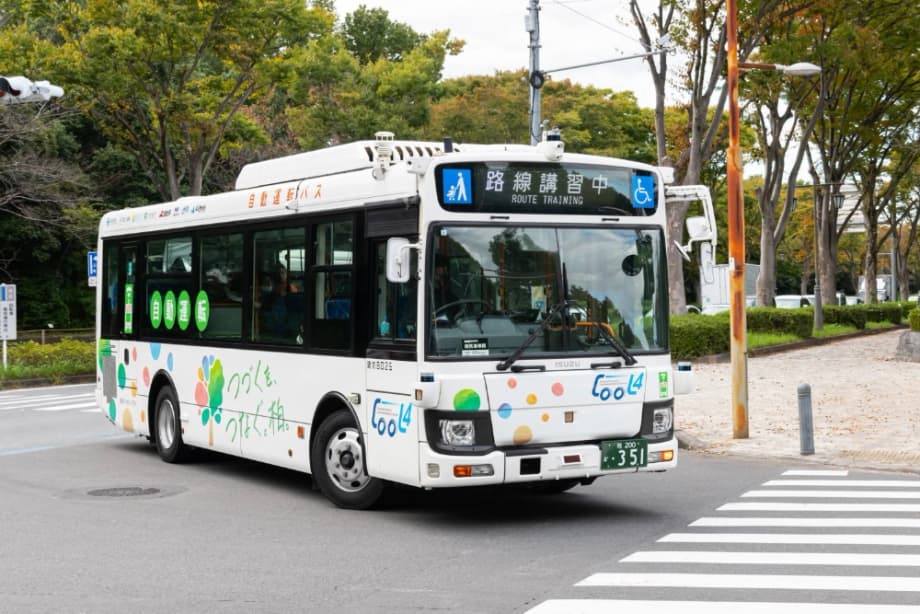
Tokyo’s First Level 4 Autonomous Bus Trial on Public Roads
A research team at the University of Tokyo began testing a Level 4 autonomous driving bus on public roads in the Tokyo metropolitan area for the first time on Tuesday. This marks a significant milestone in Japan’s autonomous transportation development, as the country seeks innovative solutions to address its driver shortage and demographic challenges.
- Tokyo’s First Level 4 Autonomous Bus Trial on Public Roads
- Understanding Autonomous Driving Levels
- The Evolution of the Kashiwa Autonomous Bus Project
- Technology Behind the Autonomous Bus
- Addressing Japan’s Transportation Challenges
- Broader Autonomous Vehicle Research at the University of Tokyo
- Partners and Collaborators in the Project
- The Future of Autonomous Public Transportation in Japan
- What to Know
The trial represents an advancement from previous tests on the same route, where a Level 2 autonomous bus—partially automated driving—has been operating since late 2019. The route connects the university’s Kashiwa campus to Kashiwanoha-campus station, covering approximately 2.6 kilometers (2.3 km on public roads and 0.3 km on campus).
Professor Yoshihiro Suda of the Institute of Industrial Science at the University of Tokyo, who chairs the Kashiwa ITS Promotion Committee, explained the significance of this progression:
“The transition from Level 2 to Level 4 autonomy represents a fundamental shift in how we approach transportation. At Level 4, the vehicle can handle all aspects of driving within its designated operational domain, including responding to unexpected situations. This creates new possibilities for public transportation that doesn’t rely on human drivers, addressing Japan’s critical driver shortage.”
The project has been developed through extensive collaboration between the University of Tokyo, government bodies, private companies, and various organizations, positioning it as part of the Kashiwanoha Smart City Consortium selected by Japan’s Ministry of Land, Infrastructure, Transport and Tourism as a smart city project and advanced model project.
Understanding Autonomous Driving Levels
The levels of automation are measured between 1 to 5, with each level representing increasing degrees of vehicle autonomy. Level 1 refers to technologies that assist a driver, such as adaptive cruise control, while Level 5 represents complete automation under all conditions.
Level 2 automation, which the previous bus utilized, means the system performs both vertical (acceleration/braking) and horizontal (steering) vehicle motion control subtasks in a limited area, but still requires human supervision. In contrast, Level 4 automation—the focus of this new trial—represents a significant technological leap. At this level, the system performs all driving tasks and responds to difficulties arising during operation within a limited area, without any human intervention.
The Kashiwa ITS Promotion Council, which has been coordinating the project since December 2009, defines the levels clearly: Level 1 systems perform subtasks of vehicle motion control in either the longitudinal or lateral direction in a limited area. Level 2 systems perform both longitudinal and lateral vehicle dynamics control subtasks. Level 3 systems perform all dynamic driving tasks in the restricted domain but request intervention if difficulties arise. Level 4 systems perform all dynamic operation tasks and respond to difficulties in a restricted domain. Finally, Level 5 systems perform all dynamic driving tasks without any limitations.
The Evolution of the Kashiwa Autonomous Bus Project
The Kashiwa autonomous bus project has evolved significantly since its inception. The first phase began in November 2019 with Level 2 autonomous bus trials that continued until March 2020. These initial trials used a commercial vehicle bus equipped with an autonomous driving system developed by Advanced Smart Mobility Co., Ltd. and operated by TOBU BUS EAST CO., LTD. The vehicle was based on a Hino Motors Liesse model with a passenger capacity of 17 people.
These early trials were positioned as critical research efforts to understand the practical challenges of operating autonomous buses over extended periods. Most previous autonomous driving trials had been conducted over short terms, so this five-month project aimed to verify operation methods involving practical routes, operations, inspections, and maintenance carried out over the long term.
In January 2021, a new vehicle was introduced to the demonstrations. This autonomous bus was based on an Isuzu Elgamio model with an increased passenger capacity of 56 people (28 seated). However, due to COVID-19 precautions, the actual passenger capacity was limited to 15 for safety reasons. This updated vehicle featured improved autonomous driving systems, enhanced sensing capabilities, and better ride comfort during acceleration and deceleration.
Based on knowledge gained from the demonstration tests starting in 2019, Advanced Mobility Corporation improved the automated driving system by increasing sensing capabilities, improving ride comfort during acceleration and deceleration, and increasing the size of the vehicle. The bus will run at Level 2 autonomy during this phase, with plans to eventually transition to Level 4 based on the results of ongoing evaluations.
Technology Behind the Autonomous Bus
The Level 4 autonomous bus incorporates advanced technologies that enable it to navigate safely without human intervention. These systems include lane keeping control, GNSS (GPS) positioning, magnetic marker sensors for precise localization, and speed maintenance control through accelerator and brake automation.
The vehicle is equipped with specialized safety features, including the SRA function (distance control at all speeds) and traffic light coordination capability, where cameras recognize traffic light colors to respond appropriately. Additionally, the bus has automated bus stop arrival and departure control systems.
For the new Level 4 trial, the bus is connected to an automated vehicle operation management platform called Dispatcher, developed by BOLDLY Corporation. This platform provides remote status monitoring functionality, driving instruction capabilities, emergency response functions, driving availability decision-making, and comprehensive driving record and error logging.
These technologies work together to create a comprehensive safety and operational management system that allows the bus to operate autonomously while maintaining constant communication with a remote control center that can intervene if necessary. The Dispatcher platform adds functions that can be performed remotely, including driving recording, error recording, status monitoring, driving instruction, emergency response, and traveling advisable or unavoidable decision functions.
The vehicle uses a combination of sensors and recognition systems to navigate safely through its designated route. The lane keeping control system helps maintain the bus’s position on the road, while the magnetic marker sensor provides precise localization along the route. The speed maintenance control system manages acceleration and braking, ensuring smooth operation.
Addressing Japan’s Transportation Challenges
This autonomous bus trial is part of Japan’s broader strategy to address pressing transportation challenges. Japan faces significant demographic shifts, including an aging population, declining birthrate, and severe shortage of drivers. These factors have led to contraction of rail and bus services in outlying areas, creating mobility issues for residents.
Municipalities across Japan are increasingly looking to autonomous driving technologies as a solution to these challenges. Since April 2023, Level 4 autonomous driving vehicles can operate without drivers on Japan’s public roads under specified conditions, creating regulatory framework for wider implementation.
Yuki Saji, President and CEO of BOLDLY Inc., noted the importance of these developments:
“In light of demographic shifts such as an aging population, a declining birthrate and a shortage of drivers, Japan’s transportation infrastructure is facing challenges as rail and bus services contract in outlying areas. To address these mobility challenges, municipalities in Japan are increasingly looking to autonomous driving technologies as a solution.”
The Kashiwa project specifically aims to evaluate road performance and safety with Level 4 autonomy in mind, with plans to continue developing new autonomous bus vehicles and expanding operations based on the results. The ultimate goal is to collaborate with Kashiwanoha neighborhood development to create a safe, comfortable and convenient service for residents.
The project has been positioned as an initiative related to the Kashiwanoha Smart City Consortium, which the Ministry of Land, Infrastructure, Transport and Tourism has selected as a smart city project and advanced model project. Based on the results of the trial, road performance and safety of the bus will be evaluated with Level 4 autonomy or higher in mind, a new autonomous driving bus will be developed and trial operations will continue with new vehicles introduced following this trial.
Broader Autonomous Vehicle Research at the University of Tokyo
The University of Tokyo has been at the forefront of autonomous vehicle research, with projects extending beyond just the driving mechanics. One innovative study explored how autonomous vehicles could communicate with pedestrians to improve safety.
Professor Takeo Igarashi from the Graduate School of Information Science and Technology led research on fitting self-driving vehicles with robotic eyes that could look at pedestrians to register their presence or look away if not detecting them. The study found that these visual cues significantly affected pedestrian behavior, helping them make safer and more efficient crossing decisions.
As Professor Igarashi explained:
“There is not enough investigation into the interaction between self-driving cars and the people around them such as pedestrians. So we need more investigation and effort into such interaction to bring safety and assurance to society regarding self-driving cars.”
The research revealed interesting gender differences in how pedestrians responded to the robotic eyes. Male participants made fewer dangerous crossing decisions when the vehicle’s eyes looked at them, while female participants made fewer inefficient decisions (choosing not to cross when it was safe) under the same conditions.
Ultimately, the experiment showed that the eyes resulted in a smoother or safer crossing for everyone. The team recognizes that this study is limited by the small number of participants playing out just one scenario, but the results are promising. Moving from manual driving to auto driving is a huge change, and if eyes can actually contribute to safety and reduce traffic accidents, the researchers believe they should seriously consider adding them.
In future developments, the team would like to develop automatic control of the robotic eyes connected to the self-driving AI instead of being manually controlled, which could accommodate different situations and improve pedestrian-vehicle communication.
Partners and Collaborators in the Project
The success of the autonomous bus project relies on extensive collaboration between academic institutions, government bodies, and private companies. The Kashiwa ITS Promotion Council includes numerous organizations working together to bring this technology to reality.
Participating organizations in the automated bus demonstrations include the University of Tokyo Mobility Innovation Collaborative Research Organization, the University of Tokyo Institute of Industrial Science, the University of Tokyo Graduate School of Frontier Sciences, the City of Kashiwa, Advanced Smart Mobility Co., Ltd., TOBU BUS EAST CO., LTD., Mitsui Fudosan Co., Ltd., SB Drive Corp., Urban Design Center Kashiwanoha (UDCK), Pacific Consultants Co., Ltd., Sompo Japan Nipponkoa Insurance Inc., and Mitsubishi Auto Leasing Corporation.
This diverse partnership brings together expertise in transportation technology, urban planning, insurance, and real estate development, creating a comprehensive approach to implementing autonomous transportation in a real-world urban environment. The council was established in December 2009 as a forum for cooperation and coordination between the University of Tokyo, administrative bodies, private companies, various organisations and individuals, with the aim of promoting various research and development activities and contributing to the commercialisation and practical application of these activities.
The Kashiwa ITS Promotion Council has been conducting a commercial operation demonstration experiment using automated buses on the 2.6 km section between Kashiwanoha Campus Station on the Tsukuba Express and the University of Tokyo Kashiwa Campus since November 1, 2019. Throughout this period, the council has been verifying operation methods, operation, inspection and maintenance in anticipation of practical operation over a long period, and carrying out studies in conjunction with the development of new automated bus vehicles and the urban development of Kashiwanoha.
The Future of Autonomous Public Transportation in Japan
The Level 4 autonomous bus trial in Kashiwa represents just one element of Japan’s ambitious plans for autonomous public transportation. Other initiatives include BOLDLY Inc.’s introduction of the “MiCa” autonomous shuttle, developed by Estonia-based Auve Tech, which is scheduled to begin testing on Japanese roads in 2023.
BOLDLY is the first company in the world to purchase “MiCa,” a Level 4 autonomous shuttle developed by Auve Tech. To operate MiCa in Japan, BOLDLY is working to arrange demonstration runs, obtain the necessary permits from relevant government agencies, and lay the groundwork for public road testing starting in the summer of 2023. The Japanese version of MiCa has been adapted with devices and cameras that are compatible with BOLDLY’s operation management platform called “Dispatcher.” Furthermore, to accommodate Japanese roads, this version has its doors installed on the left, unlike the Estonian version where they are located on the right.
The Town of Sakai in Ibaraki Prefecture, which was the first municipality to implement BOLDLY’s autonomous driving systems in 2020, has already signed an agreement with BOLDLY to purchase MiCa autonomous shuttles. The municipality plans to have them driving on its roads within the year. Nationwide, BOLDLY aims to introduce approximately 10 MiCa vehicles to Japan this fiscal year.
As Japan continues to develop its autonomous transportation infrastructure, these projects provide valuable data on operational methods, maintenance requirements, and passenger acceptance. The Kashiwa trial specifically aims to evaluate road performance and safety with Level 4 autonomy in mind, with plans to continue developing new autonomous bus vehicles and expanding operations based on the results.
Going forward, the aim is to collaborate with Kashiwanoha neighborhood development to create a safe, comfortable and convenient service for residents. This approach aligns with Japan’s broader vision of creating smart cities that integrate advanced transportation systems with sustainable urban development.
What to Know
- The University of Tokyo began testing a Level 4 autonomous bus on public roads in Tokyo on Tuesday
- The trial takes place on a 2.6 km route between Kashiwanoha-campus station and the university’s Kashiwa campus
- Level 4 automation means the vehicle performs all driving tasks without human intervention within a limited area
- Previous tests with Level 2 autonomous buses have been running on the same route since late 2019
- The project addresses Japan’s driver shortage and demographic challenges
- The autonomous bus uses advanced technologies including lane keeping, GPS positioning, and traffic light recognition
- Japan has allowed Level 4 autonomous vehicles on public roads under specified conditions since April 2023
- The project is part of the Kashiwanoha Smart City Consortium selected by Japan’s Ministry of Land, Infrastructure, Transport and Tourism
- Multiple organizations collaborate on the project, including university departments, government bodies, and private companies
- Future plans include developing new autonomous bus vehicles and expanding operations based on trial results