The Visible Rise of Chinese Brands
A few years ago it would have been hard to imagine Chinese brands making it big in America. Yet today shoppers in Manhattan can pop by the 2,800-square-metre store of Urban Revivo to pick up one of the Chinese retailer’s trendy outfits, which are all the rage on TikTok, a short-video app owned by ByteDance, another Chinese company. They can follow that up with a latte from Luckin Coffee, which began opening outlets on the island last year, or an ice cream from Mixue, another Chinese retailer that has recently set up shop. This scene in New York is not an isolated event but a signal of a profound transformation in the global business landscape. A new generation of Chinese companies is expanding internationally, moving beyond the traditional role of low-cost manufacturers to become recognized consumer brands and technology leaders.
This shift represents a significant evolution in corporate strategy. For decades, China served as the factory for the world, producing goods designed and branded by foreign companies. Now, firms are leveraging their domestic expertise, supply chain dominance, and government support to build their own global presence. From high-street fashion to artificial intelligence, Chinese enterprises are aggressively seeking market share in rich and poor countries alike. The expansion is driven by a combination of maturing domestic markets, intense internal competition that forces companies to innovate, and a deliberate government policy encouraging technology-led growth.
The ambition of these companies extends far beyond simply selling products overseas. They are reshaping industries, setting new standards for digital engagement, and embedding themselves into the infrastructure of developing nations. The success of these firms demonstrates a sophisticated understanding of global markets, blending cost advantages with marketing savvy and, increasingly, cutting-edge technology. As this wave of expansion gathers momentum, it is challenging established multinational corporations and prompting a reevaluation of the global economic order.
From Manufacturing to Emotional Connection
The visible arrival of Chinese retailers in Western cities is the most tangible sign of this global expansion. Urban Revivo and Luckin Coffee are just two examples of a broader trend where Chinese brands are successfully targeting international consumers. Perhaps the most striking example of this phenomenon is Pop Mart, a Shanghai-based toy company that has turned collectible figurines into a global craze. While traditional “Made in China” goods were often associated with mass production and low quality, Pop Mart has positioned itself at the premium end of the market, selling “blind box” toys that have captivated a younger generation worldwide.
Pop Mart generated $1.8 billion in revenue last year, with nearly 40% coming from outside mainland China. Its non-mainland revenue grew by 375% in 2024. The company’s success relies on a deep understanding of consumer psychology and the power of social media. The blind box model, where the specific toy inside is a mystery until opened, creates a sense of anticipation and gamifies the shopping experience. This strategy has proven incredibly effective on platforms like TikTok, where unboxing videos generate millions of views.
Ashley Dudarenok, a consumer research consultant, notes that China’s highly competitive domestic market has forged companies that understand what modern consumers want.
“China is the world’s most competitive digital market, with maybe the most spoiled consumer in the world that wants things fast, cheap, and good. Pop Mart understands those consumer needs, and the Chinese domestic market lets companies ‘fail fast and succeed fast’ to figure out what consumers really want.”
This rigorous testing ground in China allows companies to refine their products and business models before launching them globally. When they do expand, they bring with them a level of digital integration and customer engagement that often surprises established competitors.
Strategic Support: New Quality Productive Forces
While individual corporate strategies drive this expansion, the momentum is supported by a fundamental shift in China’s national economic policy. President Xi Jinping has championed the concept of “new quality productive forces,” a strategy that prioritizes technological advancement and innovation over the raw GDP growth targets of previous decades. This approach marks a decisive move away from the market-oriented reforms of the past toward a more state-led model focused on achieving dominance in high-tech sectors.
The policy aims to mobilize national resources through a “new national system” of centralized coordination. This system directs capital and talent toward specific “future industries” identified as critical for long-term competitiveness. These sectors include humanoid robots, quantum computing, nuclear fusion, and hydrogen energy. By focusing on these areas, the leadership hopes to generate disruptive technological breakthroughs that will allow Chinese firms to leapfrog established competitors in the United States and Europe.
This strategic pivot has deep historical roots but has accelerated sharply in recent years. It reflects a belief that future economic growth and national security depend on controlling key technologies. For companies, this translates into substantial government support in the form of research grants, favorable financing, and diplomatic assistance when entering foreign markets. The state effectively acts as a backer, reducing the risks associated with expensive overseas expansion and heavy investment in research and development.
The goal is not just to catch up with Western technology but to set the global standard. By achieving leadership in these emerging fields, Chinese companies aim to dictate the technical standards and protocols that will govern future industries. This structural support creates a formidable advantage for Chinese firms operating internationally, as they can leverage state-backed resources to undercut competitors or sustain losses longer while building market share.
Building the Belt and Road
Beyond consumer goods and digital apps, Chinese companies are expanding their global footprint through massive infrastructure projects. The Belt and Road Initiative, launched in 2013, has facilitated the construction of power plants, railways, and ports across more than 150 countries. In 2024, Chinese companies installed a record 24 GW of power generation projects overseas. Since the initiative began, they have completed 369 overseas power projects totaling 156 GW of capacity.
A significant shift is occurring within these infrastructure projects. While early efforts focused heavily on coal and thermal power, there is now a rapid transition toward renewable energy. In 2024, renewable energy technologies accounted for 52% of newly installed capacity in Belt and Road markets. This included 8 GW of solar installations and 5 GW of hydro power. In the top five markets—Pakistan, Indonesia, Vietnam, Saudi Arabia, and Malaysia—solar and wind installations by Chinese firms rose from 33% in 2021 to 64% in 2024.
This pivot aligns with China’s domestic “No new overseas coal power” policy and positions Chinese companies as leaders in the global green energy transition. Chinese firms have become dominant manufacturers of solar panels, wind turbines, and batteries, giving them a competitive edge in international markets. As developing nations seek to meet growing electricity demand while reducing carbon emissions, they increasingly turn to Chinese companies for affordable, scalable renewable energy solutions.
However, this expansion faces hurdles. Security issues in Pakistan pose a serious risk to Chinese workers and project continuity. Policy volatility in markets like Vietnam, where feed-in tariffs for renewables are being retroactively adjusted, creates financial uncertainty. Additionally, competition from regional and international developers is intensifying, forcing Chinese companies to compete not just on price but on technology and financing terms.
The Digital Silk Road and AI Leadership
Parallel to physical infrastructure, Chinese companies are aggressively expanding their digital reach through the Digital Silk Road. This initiative involves building fiber optic cables, telecommunications networks, and data centers across Eurasia, Africa, and Oceania. By establishing this digital backbone, Chinese technology firms like Huawei and ZTE are embedding their equipment and standards into the critical communications infrastructure of dozens of nations. This presence creates long-term commercial relationships and leverages China’s strength in 5G and network equipment.
The most dynamic frontier of this digital expansion is artificial intelligence. The release of the DeepSeek-R1 model in early 2025 signaled a breakthrough for Chinese AI capabilities, demonstrating performance that rivals the best American models. This achievement has profound implications for the global AI landscape. The development of AI in China has followed a cyclical pattern of permissiveness followed by regulation, often described as eras of “Go-Go,” “Crackdown,” and “Catch-Up.”
According to analysis by the Carnegie Endowment for International Peace, China currently finds itself in a “Crossroads Era.” Technological confidence in AI capabilities is high following DeepSeek’s success, but the broader economy remains sluggish. This creates a tension between the impulse to impose strict control over the technology and the need to foster growth and innovation. Despite regulatory challenges, Chinese AI companies continue to advance rapidly, offering open-source models that reduce barriers to entry for users worldwide.
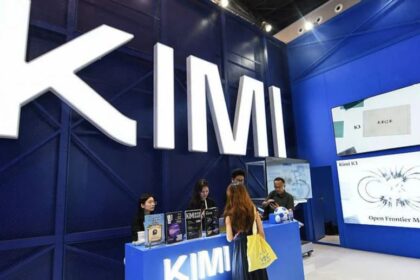
The success of ByteDance, the parent company of TikTok, illustrates the potential of Chinese digital firms to achieve global dominance. TikTok has become a cultural phenomenon and a powerful marketing channel for other Chinese brands looking to reach international audiences. However, it also faces intense scrutiny from regulators concerned about data privacy and national security. Navigating this geopolitical minefield is becoming a core competency for Chinese tech companies seeking to expand globally.
Market Entry and Cultural Adaptation
To succeed in diverse international markets, Chinese companies are adopting sophisticated entry strategies that go beyond simple exports. Many are utilizing a multi-domestic approach, similar to the strategy used by global giants like Starbucks. This involves treating each market as unique and adapting products, marketing, and operations to local tastes and regulations.
For example, Pop Mart customizes its store designs and character offerings based on regional preferences. The “Labubu” character, designed by a Netherlands-based artist, became a global best-seller partly due to its appeal in Southeast Asia and the West, even though it differs from the “Molly” character that dominates the Chinese market. This ability to curate a portfolio of Intellectual Property (IP) with global appeal is a key differentiator.
Strategic partnerships play a crucial role in this adaptation. Joint ventures with local firms provide Chinese companies with market intelligence, supply chain access, and political cover. These alliances help navigate complex regulatory environments and build trust with local consumers who might be skeptical of foreign brands. By combining their technological and manufacturing prowess with local expertise, Chinese companies can rapidly scale their operations while mitigating risk.
Digital integration remains a hallmark of their strategy. Chinese firms often bring advanced digital marketing tools, such as algorithm-driven social media campaigns and livestreaming e-commerce, to markets that are less digitized. This gives them a first-mover advantage in engaging with younger demographics who consume media primarily through mobile devices. The seamless integration of online platforms with physical retail experiences creates a sticky customer ecosystem that competitors struggle to replicate.
Challenges and the Road Ahead
Despite the impressive momentum, Chinese companies face significant headwinds in their global expansion. Geopolitical rivalry, particularly with the United States, has led to tariffs, investment restrictions, and bans on certain technologies. American export controls on advanced semiconductors threaten to slow down progress in AI and other high-tech fields by restricting access to critical hardware.
Reputational challenges also persist. Overcoming the stereotype of “Made in China” as synonymous with low quality requires sustained investment in branding and product excellence. Furthermore, security concerns regarding data privacy and surveillance continue to dog Chinese digital firms, limiting their access to government contracts and sensitive sectors in many Western countries.
Internally, the Chinese economy is grappling with a property crisis, high youth unemployment, and slowing growth. These economic pressures could force the government to prioritize domestic stability over aggressive overseas expansion, potentially reducing the financial support available to state-backed enterprises. However, the drive to secure foreign markets and resources remains a strategic imperative, suggesting that the expansion will continue even if the pace fluctuates.
The rise of Chinese global companies represents a structural shift in the world economy. They are no longer just suppliers but are becoming direct competitors to established multinational corporations. Their ability to combine state support with agile market strategies creates a unique competitive dynamic. As they continue to expand, they will likely reshape industries, influence global standards, and force a recalibration of trade relationships worldwide. The emergence of brands like Urban Revivo, Luckin, and Pop Mart on the streets of New York and Singapore is just the beginning of this new chapter in global business.
The Bottom Line
- Chinese companies like Urban Revivo and Luckin Coffee are establishing a physical retail presence in major Western cities, marking a shift from manufacturing to branding.
- The toy company Pop Mart has achieved global success with “blind box” collectibles, generating $1.8 billion in revenue by leveraging social media trends and consumer psychology.
- China’s “new quality productive forces” policy directs state support toward high-tech sectors and innovation, providing a strategic backbone for corporate expansion.
- Under the Belt and Road Initiative, Chinese firms have installed 156 GW of overseas power capacity, with a rapid transition toward renewable energy sources like solar and wind.
- The Digital Silk Road extends China’s influence through telecommunications infrastructure, while breakthroughs in AI like DeepSeek-R1 challenge Western technological dominance.
- Chinese firms utilize multi-domestic strategies, forming joint ventures and adapting products to local cultures to succeed in diverse international markets.
- Geopolitical tensions, regulatory scrutiny, and US export controls on semiconductors present significant challenges to continued growth.
- The expansion signifies a structural change in the global economy, with Chinese firms evolving from suppliers into competitors for global market leadership.