A Vision for Safer Nighttime Driving
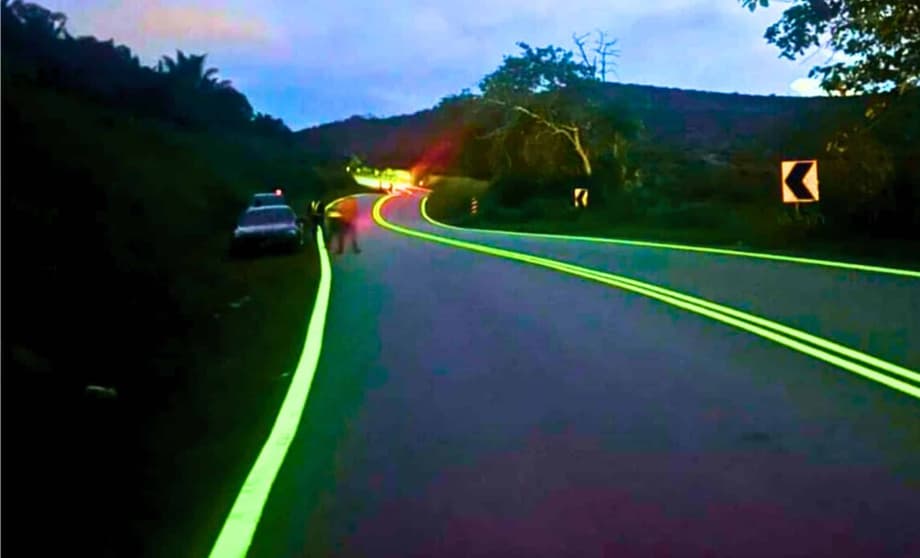
In October 2023, a two-lane stretch near Semenyih became the site of a bold experiment in Malaysian infrastructure. The Public Works Department coated the road with a special photoluminescent paint designed to absorb sunlight during the day and emit a soft glow for up to ten hours at night. The goal was to improve safety on rural roads where streetlights are often scarce and power outages are common. With over 6,000 road fatalities annually in Malaysia, many occurring on unlit highways, the project seemed like a timely and necessary innovation.
The concept promised a greener, smarter way to light the way without relying on electricity. For drivers used to navigating pitch-black roads, the glowing lines appeared to be a revolutionary step forward. Initial reports indicated that the markings held up well in rain and fog, remaining visible for hours after dark where traditional markings often vanish. The Public Works Department launched the pilot as part of a broader effort to modernize road safety, especially in underdeveloped areas.
The Science Behind the Glow
Photoluminescent paint works by using compounds, typically strontium aluminate, that absorb ultraviolet and visible light energy. These materials store the energy and release it slowly over time as visible light. Unlike reflective paint, which requires an external light source like car headlights to be seen, photoluminescent markings generate their own illumination. This autonomous capability makes them attractive for remote locations where installing electrical infrastructure is expensive or impractical.
The technology is not entirely new. The Netherlands and Japan tested similar materials more than a decade ago, mostly on bike lanes or short highway stretches. However, Malaysia’s pilot was more ambitious. Officials hoped it could replace streetlights altogether in remote areas, cutting maintenance costs and improving safety. The idea was to create a self-sustaining system that would charge every day and provide guidance throughout the night without any power grid connection.
Initial Public Acclaim
When photos of the glowing road first appeared online, the public reaction was overwhelmingly positive. Images of the luminous lanes cutting through the dark landscape went viral on social media. Drivers praised the enhanced visibility, noting that the glow remained distinct even in wet conditions. This was a significant advantage, as water usually washes out standard reflective paint.
“Malaysian roads are really going to be lit, no pun intended,” joked one Instagram user, capturing the excitement of a public eager for innovation.
Many citizens urged the government to expand the program to other rural highways and village roads. For a brief period, the project was seen as a triumph of modern engineering and a symbol of progress. The visibility in foggy conditions was particularly highlighted as a potential lifesaver. The glowing lines offered a glimmer of hope for reducing accidents in areas where poor lighting is a daily hazard.
The Challenge of Tropical Weather
Despite the initial enthusiasm, the Malaysian climate posed a formidable challenge. The country’s hot, humid weather and torrential rains created a harsh environment for the experimental coating. Researchers from the Malaysian Institute of Road Safety Research (MIROS) and international studies found that photoluminescent coatings degrade rapidly in tropical climates. The intense ultraviolet radiation, constant humidity, and physical wear from traffic caused the paint to lose its luminosity much faster than anticipated.
The glowing effect began to fade within months. What started as a bright, continuous line soon became patchy and dull. The paint required reapplication much sooner than expected, often within 18 months. This rapid degradation undermined the project’s core promise of a low-maintenance, cost-effective solution. Similar issues had been observed elsewhere. In the Netherlands, a pilot project on the N329 highway faced problems when heavy rain caused the light output to become inconsistent, forcing engineers to temporarily suspend the trial.
The Prohibitive Cost Factor
As the technical difficulties mounted, the financial reality became impossible to ignore. The specialized photoluminescent paint came with a staggering price tag. It cost RM749 per square meter, nearly twenty times more than standard white road paint, which costs approximately RM40 per square meter. This enormous cost disparity made large-scale implementation financially unfeasible from the start.
The situation was exacerbated by the need for frequent maintenance. Because the paint wore out so quickly in the tropical climate, the recurring expense of repainting would have been astronomical. The initial hope of saving money on streetlights was quickly overshadowed by the exorbitant cost of the paint itself. The economic model simply did not add up, turning what was meant to be a budget-friendly innovation into a potential financial burden.
Official Cancellation and Public Reaction
By November 2024, the government officially acknowledged that the experiment had failed. Deputy Works Minister Ahmad Maslan announced that the pilot project had not met the expectations of experts from the ministry. Consequently, the government decided not to proceed with the wider rollout. All proposed expansions to the states of Selangor and Johor were discarded.
“We tested it, but it didn’t meet our experts’ standards,” Maslan admitted during a parliamentary session.
The decision marked the end of the road for the glowing highway near Semenyih. Public sentiment, which had initially been supportive, quickly shifted to frustration. Citizens and commentators argued that the government should prioritize fixing basic infrastructure problems over expensive, high-tech experiments. Social media users complained that potholes, uneven roads, and poor drainage posed more immediate dangers than the lack of glowing paint.
“Tell your officers to drive at night or in the rain,” one commenter wrote. “You’ll see the real danger, bad visibility and potholes.”
The criticism reflected a broader desire for practical, reliable improvements. For many, a well-maintained road with standard lighting was preferable to a glowing path that might vanish after a few months.
Global Context and Future Research
Malaysia’s experience is not an isolated case. Attempts to implement photoluminescent road markings around the world have encountered similar hurdles. The Netherlands’ Glowing Lines project, developed by Heijmans and artist Daan Roosegaarde, was put on hold indefinitely due to weather degradation. In the United Kingdom, the Highways Agency had previously determined that luminescent road paint would likely be unsuitable due to concerns about skid resistance and winter performance.
Despite these setbacks, research into the technology continues. Scientists at Delft University of Technology and Japan’s National Institute for Land and Infrastructure Management are working to refine photoluminescent materials. They aim to develop compounds that are more weather-resistant, cheaper to produce, and longer-lasting. Some companies, like the French manufacturer OliKrom, have found success by focusing on cycle paths and pedestrian areas, where the wear and tear is less severe than on heavy traffic highways.
For Malaysia, the immediate focus is shifting toward more traditional solutions. The Ministry of Works plans to install LED lights in accident-prone areas and improve existing infrastructure. These methods offer better reliability and cost-effectiveness for the country’s current needs. The glow-in-the-dark road experiment may have faded, but it serves as a valuable lesson in the complexities of implementing innovative infrastructure solutions in challenging real-world conditions.
The Bottom Line
- Malaysia initiated a glow-in-the-dark road pilot in October 2023 near Semenyih to improve nighttime safety.
- The photoluminescent paint cost RM749 per square meter, roughly 20 times the price of standard paint.
- Tropical weather conditions caused the paint to degrade rapidly, requiring reapplication within 18 months.
- Deputy Works Minister Ahmad Maslan announced the project’s cancellation in November 2024.
- Planned expansions to Selangor and Johor were cancelled due to high costs and durability issues.
- Similar projects in the Netherlands and the UK failed due to weather sensitivity and inconsistent light.
- Public opinion shifted from excitement to calls for fixing basic infrastructure like potholes and drainage.
- Global research continues, with a focus on improving materials for non-highway applications like bike lanes.