What went wrong with Pakistan Railways
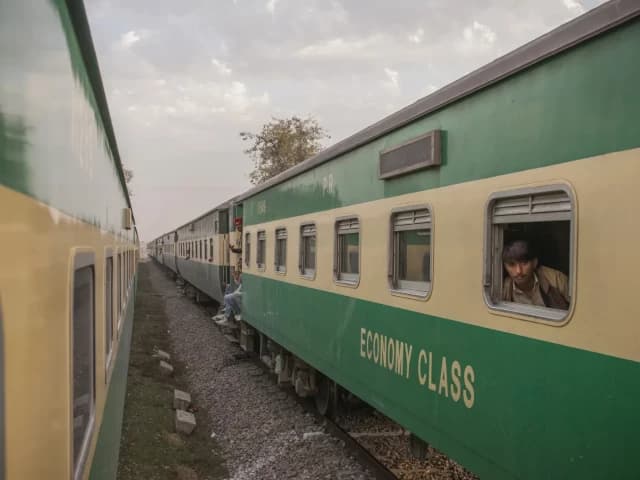
Pakistan Railways is struggling to perform even basic functions. The organization runs an annual deficit of roughly 55 billion rupees. Between 45 percent and 90 percent of the network’s infrastructure is outdated or unusable. Bridges date back nearly a century, wooden sleepers have failed in many places, and nationwide suspensions of service have occurred when the system could not function. Freight, once the backbone of railway finances, has withered.
At independence in 1947, Pakistan inherited an integrated web of road, rail, and port links. British era railways connected Karachi and Lahore with the wider region, including links westward through Quetta and Nokkundi to Zahedan. Roads and passes connected Peshawar to Kabul and Quetta to Kandahar. Many of these routes are now dormant or degraded. What was once a robust network has been allowed to fray for decades.
The macroeconomic backdrop complicates any recovery. Growth has averaged 3 to 4 percent over the last two decades. Inflation sits near 11 percent. The current account deficit has hovered around 2.3 percent of GDP. Pakistan has borrowed frequently to cover routine expenses. Skilled workers have emigrated in large numbers. Climate shocks have added heavy costs, with floods submerging tracks and damaging embankments. Fiscal space is tight, so maintenance gets deferred again and again.
Pakistan’s location is strategic, bridging South Asia, Central Asia, and the Middle East. Geography alone does not move freight. Without reliable railways, modern ports, and efficient roads, location is a map, not an advantage.
What is ML-1 and why it matters
Main Line 1, often called ML-1, is the country’s core rail artery. It runs from Karachi to Peshawar with a branch to Havelian. The planned project would upgrade and double about 1,730 kilometers of track, raise operating speeds to 120 to 160 km per hour, modernize signaling and telecom systems, convert dangerous level crossings into underpasses or flyovers, fence the right of way, and add a dry port near Havelian. The plan also includes an upgrade of the Walton Training Academy so that crews and maintainers are ready for new systems. According to the official brief, the cost is around 6.7 to 6.8 billion US dollars and construction would support roughly 24,000 jobs. An overview is available on the official project page.
Capacity, speed and safety targets
ML-1 is designed to expand the number of trains the line can safely handle, while shortening travel times and improving safety. Pakistan Railways has outlined goals to lift line capacity from about 34 trains a day to near 100, and to increase annual freight moved from roughly 8.5 million tonnes to about 30 million tonnes. Converting level crossings to grade separated structures would reduce collisions. Fencing the corridor would limit trespass and theft. Faster, more reliable trains would cut hours from key journeys and restore confidence in the service.
The project is split into three packages. It has been declared a strategic scheme at the highest bilateral level. Framework and commercial contracts were signed in 2017. Pakistan’s Executive Committee of the National Economic Council approved a key planning document in 2020. A joint financing committee exists to conclude a concessional loan structure.
Pakistan Railways presents ML-1 as essential to recovery. The ministry has warned that continued losses, safety risks, and declining assets will cost more than investment would save. It also highlights the collapse of rail’s freight share from about 70 percent in the 1960s to only 2 to 3 percent today, a change that hurt both the railway and the wider economy.
As the ministry put it:
ML-1 is not a luxury but a critical requirement for Pakistan’s progress.
So why is ML-1 still stuck
Cost, design, and finance have all been moving targets. The scheme was initially costed above 9 billion dollars, then rationalized to around 6.7 billion. Several redesigns followed. Each change created knock-on effects for speeds, axle loads, line capacity, and rolling stock needs. Internal assessments flagged that some cost cuts could undermine performance if not handled carefully.
Financing is the binding constraint. China pressed for cost control and showed interest in a limited first phase near Karachi, but the comprehensive package remained unresolved. Pakistan sought external loans for as much as 85 percent of the cost. Cabinet level committees asked the Railways Division to return with firm funding paths, tighter phasing, and clearer packaging before moving ahead.
Security challenges and arrears to Chinese power producers complicated negotiations. Repeated fiscal strains and bailout cycles raised questions about debt service capacity. Beijing, reassessing risk on overseas projects, has slowed big ticket lending in countries facing instability or repayment pressure. The pace of major CPEC schemes has been slower since 2019.
With bilateral progress uncertain, Islamabad opened the door to multilateral partners. An Asian Development Bank fact finding team inspected the Karachi to Rohri section and began its own appraisal. If the bank finances that segment, project delivery would follow multilateral rules, including international competitive bidding and tighter safeguards. That would mark a change from the government to government awards that characterized early CPEC projects.
A shift from a single partner to multilateral financing
Bringing a multilateral lender into a core segment of ML-1 would be a break from its origin story as the centerpiece of a bilateral corridor. Pakistani officials say the aim is to diversify partners and reduce concentration risk while keeping China engaged. Chinese officials have also signaled more openness to third party participation in select projects. The policy posture is consistent with a wider effort to stabilize financing at a time of tight budgets and complex geopolitics.
What that means for costs and delivery
Chinese concessional loans typically came with softer terms. Multilateral financing can be more expensive on the interest line, but it often brings in technical assistance, environmental and social safeguards, and procurement transparency that reduce lifecycle costs. Competitive bidding can sharpen prices and designs. Preparation takes time, so early phases may appear to move slowly. Over the medium term, higher quality execution and better cost discipline can outweigh the slower start.
Politics cannot paper over execution gaps
Segmenting ML-1 is prudent, yet segment choice will decide early gains. The Karachi to Rohri stretch connects ports, industry, and dense cities. Fixing level crossings, fencing high risk zones, and modernizing signaling there would cut delays and accidents while boosting line throughput. Decisions on axle loads and train control systems should match the needs of heavy freight markets and container flows to avoid future rework.
What better rail could unlock for the economy
Rail moves bulk goods at lower cost per tonne kilometre than road trucking. Shifting a slice of freight back to rail would lower logistics costs for exporters and manufacturers, reduce pressure on highways, cut oil imports, and shrink emissions. Pakistan Railways’ share of freight has collapsed to single digits. Winning back even a modest portion would generate cash that can sustain maintenance and fund further improvements.
A reliable ML-1 spine would link ports to the industrial heartland and the northwest. It would move coal from Thar more efficiently, carry containers to and from Karachi and Port Qasim, and serve agriculture shipments. New mineral exports will depend on dependable heavy haul paths. The Reko Diq copper and gold project in Balochistan is expected to be a major export earner, and the current network lacks the capacity and reliability for its projected volumes.
Better cross border links would compound those gains. Upgrading the Taftan to Zahedan line toward Iran, improving connections to Chabahar and Gwadar, and advancing the Pakistan Afghanistan Uzbekistan railway would position Pakistan on a viable North South route. Reopening established crossings such as Wagah Attari and Khokhrapar Munabao would multiply trade. Infrastructure does not resolve every political problem, yet without it, trade cannot scale when diplomacy makes space for commerce.
Fixing a broken system while building new
Even a successful ML-1 will fail to deliver if the rest of the network remains neglected. Hundreds of unmanned or unsafe level crossings are a safety and reliability problem. Signaling on many sections is obsolete. Bridge condition data is patchy, and track geometry is inconsistent. Passenger discomfort and schedule unreliability erode trust. A modern backbone must be matched with a maintenance culture and stable funding.
The starting point is a national transport policy backed by transparent data and measurable targets. Pakistan needs to set clear priorities across rail, road, ports, and aviation, then stick to them. The Ministry of Railways, the transport ministry, and the planning ministry should stand up a joint delivery unit that tracks milestones, assigns responsibilities, and reports to the prime minister on progress. Dedicated maintenance funding and a service based performance framework would reward reliability and safety.
Structural reform can sharpen focus. Separating infrastructure management from train operations, with an independent safety regulator, would clarify roles and accountability. Allowing vetted private freight operators on open access terms can bring new traffic while Pakistan Railways concentrates on core services. Dry ports and terminals can attract private investment under transparent, competitive concessions that include clear performance standards and penalties.
Quick wins in the next 24 months
- Eliminate the most dangerous level crossings on ML-1 corridors with underpasses or flyovers, starting near major cities
- Complete fencing and intrusion protection on high risk sections to cut accidents and theft
- Prioritize track renewal and bridge rehabilitation on Karachi to Rohri and Rohri to Khanewal, where returns are highest
- Modernize signaling and telecoms on priority segments to stabilize schedules and raise throughput
- Refit freight wagons for higher axle loads and launch targeted services for cement, grain, and containers
- Upgrade the Walton Training Academy to retrain drivers, dispatchers, and maintenance staff for new systems
- Publish quarterly performance dashboards on punctuality, accidents, asset condition, and freight moved
Risks to watch
Debt and currency risk are front and center. ML-1 will generate rupee revenues, yet much of the financing will be in foreign currency. Sharp devaluations can squeeze finances and force fare or freight hikes. A mix of hedging, a gradual shift to domestic currency financing for later packages, and stronger operating cash from freight would reduce exposure.
Security and climate are practical constraints. Attacks on workers or infrastructure delay projects and raise costs. Protecting sites and routes, and engaging communities along the line, needs to be part of the engineering plan. Floods have inundated tracks and washed out embankments. Designs should include higher embankments, better drainage, and materials resilient to heat and water.
Operational readiness is often underestimated. New track, bridges, and signals deliver value only if crews and equipment can use them to their potential. Training programs, new maintenance regimes, and the right rolling stock must be in place before each segment opens. The academy upgrade within ML-1 is as important as concrete and steel, because people run railways.
Key Points
- Pakistan Railways faces a large annual deficit and widespread asset decay, with frequent service disruptions
- ML-1 would upgrade and double the Karachi to Peshawar spine, target speeds up to 160 km per hour, remove level crossings, and add a Havelian dry port
- Official plans envision three packages, a cost near 6.7 to 6.8 billion dollars, and strong capacity and safety gains
- Delays stem from design changes, cost rationalization, and unresolved financing terms
- China has slowed new lending and pushed for cost control, while an Asian Development Bank team has inspected the Karachi to Rohri section
- Multilateral financing would bring stricter procurement and safeguards, possibly higher interest costs, and more transparency
- A stronger railway would lower logistics costs, support projects such as Reko Diq, and improve port and regional connectivity
- Reform and maintenance are essential: eliminate dangerous crossings, modernize signaling, rehabilitate bridges, and fund upkeep
- Governance steps include a national transport policy with measurable targets, a joint delivery unit, and clearer roles for infrastructure and operations
- Key risks include currency exposure on foreign loans, security threats, climate resilience, and readiness of crews and rolling stock