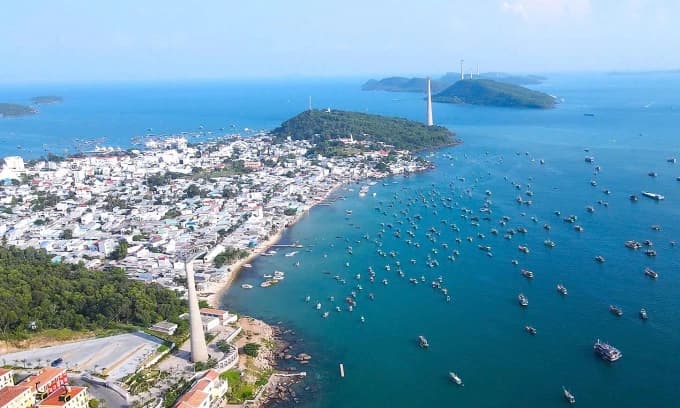
A sudden blackout as peak season begins
A severed undersea power cable plunged Vietnam’s resort island of Phu Quoc into a sweeping blackout on Saturday afternoon, underscoring how a single fault can still disrupt life and business across a fast growing destination. The 110 kV Ha Tien to Phu Quoc submarine line failed near the mainland end at about 1:15 pm, according to An Giang Power Company, after a coastal road contractor reportedly drove piles into the electricity safety corridor. The cut severed one of the island’s two main supply routes and left tens of thousands of residents and visitors without electricity.
- A sudden blackout as peak season begins
- What caused the break near Ha Tien?
- How power was restored and who remains affected
- Why can one fault darken so much of Phu Quoc?
- An undersea lifeline built in 2014, reliable but still exposed
- The repair challenge and what it takes to fix a broken undersea cable
- Tourism, daily life and the business hit
- What will change to reduce the risk next time?
- Why safety corridors matter near high voltage cables
- What to Know
Engineers quickly rerouted power from the Nam Phu Quoc 110/22 kV substation to keep hospitals, water plants, telecommunications and essential services running. By Sunday, electricity had been restored for about 17,400 customers, but more than 12,000 households, many in the island’s north, remained in the dark.
The outage arrived as Phu Quoc, home to nearly 160,000 people, moves into its busiest stretch of the year. The island welcomed about 6.5 million visitors in the first nine months of the year, generating more than 31 trillion dong in tourism revenue (about 1.17 billion dollars). The sudden loss of power is a fresh stress test for a grid that has expanded quickly to match tourism growth but still depends on a small number of critical links.
What caused the break near Ha Tien?
Initial assessments point to human error on the mainland. Power officials said a contractor building a coastal road near Ha Tien drove piles in violation of the high voltage safety corridor, a protected buffer that keeps heavy equipment away from buried infrastructure. The impact tore the three core 110 kV cable that carries power under shallow waters before it drops into deeper seabed on the run to the island. The utility is working with local authorities to confirm the exact cause and speed repairs.
Nearshore segments are usually the most vulnerable stretches of a submarine power link. Cables are often buried and armored, and they are mapped so that dredgers, pile drivers and anchor drops avoid them. Work that strays into the safety corridor can still defeat those protections during construction, especially in soft seabeds where piles can reach greater depths.
How power was restored and who remains affected
To stabilize the island grid, crews prioritized supply to critical facilities. The Nam Phu Quoc 110/22 kV substation fed key loads through the 22 kV network to keep Party and government offices, military units, hospitals, water supply systems, major telecom nodes and selected neighborhoods powered. Some resorts and businesses switched to their own generators to bridge the gap.
Large swaths of the northern half of the island, including parts of Duong Dong, Cua Can, Cua Duong and Ham Ninh, experienced extended outages. An Giang Power Company said roughly 12,000 customers in the north remained without grid power on Sunday. Rotating supply is being used in limited zones, but demand far outstrips temporary generation.
Why can one fault darken so much of Phu Quoc?
Phu Quoc is fed by two high voltage links, the 110 kV undersea cable from Ha Tien and the 220 kV Kien Binh to Phu Quoc transmission line. The lines are not yet tied into a full ring that allows electricity to flow around a failed segment. When a network is radial rather than looped, a single break can isolate neighborhoods and entire districts until crews reconfigure the system or complete repairs.
A closed loop design, sometimes called a ring, gives operators more options during a failure. Power can flow the other way around the loop and reach areas cut off by a fault. Without that redundancy, engineers can still restore pockets of service by switching feeders and tapping substations, but the recovery remains partial. The current outage highlights how valuable a ringed topology would be for a large island with a spread out population and tourist infrastructure.
An undersea lifeline built in 2014, reliable but still exposed
The Ha Tien to Phu Quoc submarine link entered service in early 2014 after one of Vietnam’s most complex power projects. The 110 kV alternating current cable stretches nearly 58 kilometers across the Gulf of Thailand. It cost more than 2.3 trillion dong to build and was installed by an experienced international contractor under the supervision of Vietnam’s Southern Power Corporation. The project ended years of reliance on island diesel plants and delivered mainland power at scale.
Engineers selected a seamless, three core copper design to boost reliability and capacity. Ocean surveys mapped the route, and builders buried and armored sections to protect against anchors, currents and sand migration near the shore. The approach reduced the risk of mechanical damage in most conditions. No design can fully remove hazards from heavy civil works near landfall points, which is why strict enforcement of safety corridors is essential. Technical background on the project remains available from the Vietnamese consultant involved, PECC2, which outlined the engineering choices and installation methods on its website at pecc2.com.
The repair challenge and what it takes to fix a broken undersea cable
Restoring a damaged high voltage submarine cable is a specialized job. Crews must pinpoint the fault, usually by electrical testing and time domain reflectometry, then survey the seabed to confirm the exact location. A cable vessel or barge mobilizes with jointing equipment, and divers or remotely operated tools expose the line. The damaged section is cut out, new cable is pulled in, and highly controlled joints are made to reconnect the three cores and the protective sheathing. Each step requires calm seas and careful quality checks.
Power officials said the repair time depends on the extent of the damage and the technical solution chosen. Weather windows, vessel availability and permitting near the shoreline can all stretch the timeline. During the outage, Southern Power units are deploying diesel generators to supply rotating power where the local grid can accept it. Given the island’s long distribution radius, more than 40 kilometers in some directions, and strong tourist season demand, full coverage from temporary generation is not possible.
Tourism, daily life and the business hit
Phu Quoc’s economy runs on reliable power. Resorts, villas and restaurants depend on electricity for air conditioning, cold storage and water pumps. Telecom networks need stable supply to keep data and mobile service running. The timing adds strain. The island is entering its peak holiday period, when occupancy climbs and visitors expect seamless service. Many larger hotels maintain backup generators, but fuel, noise and load limits bring tradeoffs. Smaller properties and street businesses face harder choices about hours and service.
Residents report that water supply and mobile signals held up in many central areas thanks to the priority routing from the Nam Phu Quoc substation. Hospitals and clinics stayed open. Northern neighborhoods coped with longer blackouts and intermittent service. Families charged phones in public offices, and some communities pooled generators to power pumps and shared freezers. Local officials asked for patience as engineers worked through the fault diagnostics and marine logistics.
What will change to reduce the risk next time?
Southern Power Corporation has been building several projects to strengthen Phu Quoc’s backbone. New 110 kV lines are planned to connect North Phu Quoc and South Phu Quoc, along with a 220 kV substation on the island. When completed and tied together, these assets would allow operators to route power around a failed segment and isolate smaller areas during incidents. Progress has slowed because of land clearance and compensation hurdles, which has delayed energizing the projects.
There is also a policy side. Clear maps of buried utilities, stronger coordination between builders and grid operators, and enforcement of safety corridors can prevent a repeat near landfall zones. Contractors that work near critical infrastructure are typically required to survey, mark and monitor protected areas and to notify utilities before pile driving. Liability rules and penalties help align incentives, while insurance can cover damages without slowing restoration.
Why safety corridors matter near high voltage cables
Electricity safety corridors define stand off distances around lines, substations and submarine cables. They exist to reduce fire risk, shock hazards and mechanical damage. In nearshore environments, the corridor usually covers both land and a defined strip of seabed that contains the buried cable and its expected migration zone. Staying outside that buffer keeps heavy piles and anchors from transferring force into the cable jacket and copper cores.
For a fast growing coastal city like Ha Tien, strict adherence to these rules protects both workers and public services. Most countries require permits, on site supervision and a temporary work plan when construction takes place near energized infrastructure. Vietnam’s power sector has expanded these requirements as the network has grown. Incidents like the Phu Quoc cut tend to trigger fresh audits, refresher training and closer coordination on upcoming road projects.
What to Know
- A 110 kV submarine power cable between Ha Tien and Phu Quoc was severed on Saturday at about 1:15 pm near the mainland.
- The suspected cause is pile driving by a coastal road contractor inside the electricity safety corridor.
- Power was restored for about 17,400 customers via the Nam Phu Quoc 110/22 kV substation; about 12,000 households, mainly in the north, remained without electricity Sunday.
- Affected areas include parts of Duong Dong, Cua Can, Cua Duong and Ham Ninh.
- Phu Quoc’s grid lacks a closed loop connection; the island relies on the 110 kV undersea cable and the 220 kV Kien Binh to Phu Quoc line.
- Southern Power is advancing new 110 kV lines and a 220 kV substation on the island, though land clearance delays slowed progress.
- Diesel generators are in use for rotating supply, but high demand and long distribution distances limit coverage.
- The undersea cable entered service in 2014, runs nearly 58 kilometers and cost more than 2.3 trillion dong to build.