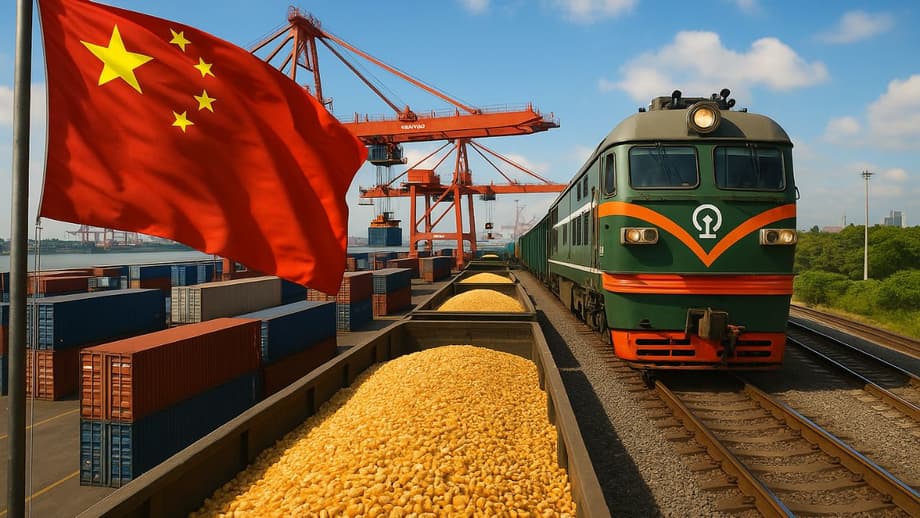
A new defensive turn in European infrastructure
European governments are rewriting the rulebook for who can build, own, and operate critical infrastructure. Ports, railways, power grids, telecom networks, data centers, and the software that runs them are now treated as strategic assets. A recent ruling by an EU court reinforced that suppliers from countries without a free trade agreement with the EU do not enjoy the same access rights as European bidders. Sweden has moved first with a plan to give local and regional authorities the power to block bids from suppliers tied to hostile states when national security is at stake. The proposal is due to take effect in 2027 and officials say China is a prime concern.
- A new defensive turn in European infrastructure
- Why ports and railways have become a security issue
- Sweden moves first with broad exclusion powers
- Poland debates tighter control of ports
- Austria’s trains and the procurement debate
- EU level tools grow sharper
- The Belt and Road context and Europe’s strategic answer
- Economic tradeoffs for Europe and industry
- What to watch next
- Key Points
Other countries are shifting as well. Poland is debating a draft law that would tighten control over who can own and run facilities in its ports. Austria has sparked a broader debate after Chinese built trains entered service, with lawmakers and regulators calling for stronger procurement and digital security rules. At the EU level, fresh tools and packages are being rolled out to tighten scrutiny, manage risk, and align practice across member states. The changes reflect a turn toward economic security, prompted by lessons from Russia’s war in Ukraine and the realization that supply chains and infrastructure can be used for pressure.
The movement is not a blanket ban on Chinese companies, nor a rush to sever trade. The EU’s approach is to de risk. It mixes more selective market access with tighter national security checks and reciprocity in public tenders. That stance is now filtering into procurement decisions for ports, railways, and other strategic networks, where control and data access matter as much as price and speed.
Why ports and railways have become a security issue
Ports and railways carry more than cargo. They carry data that reveals trade flows, supply chain configurations, and the activity of military and emergency services. Modern terminals run on interconnected operational technology, sensors, and software that can be accessed remotely. Ownership and vendor relationships can give foreign entities visibility into movements and systems that governments would prefer to keep secure. When suppliers are state owned or products of a strategic rival, those risks are seen as higher.
From cranes and data to energy and logistics
Automated cranes, scheduling platforms, and digital twins are now common in ports. Remote maintenance and software updates are routine. If a supplier can access that stack, it may learn who ships what and when, how contingency plans work, or even how to disrupt operations. Railways face similar issues. Trains, signaling, ticketing, and maintenance platforms are increasingly connected. The vendor that services the system often holds the keys.
State owned companies and influence
Control matters most when a supplier is state owned or must follow the strategic directives of its home government. European officials worry that infrastructure contracts can translate into political leverage, especially when paired with financing. The concern is not limited to espionage. It includes data access that could assist targeted economic pressure, supply chain bottlenecks that create leverage during a crisis, or long term dependencies that limit policy choices. These are the risks EU capitals now weigh in tender decisions.
Sweden moves first with broad exclusion powers
Sweden intends to give local authorities an explicit basis to consider the nationality and ownership structure of bidders on critical projects. If a supplier is linked to a hostile state, authorities could exclude it when reasonable security concerns exist. The government frames this as a practical way to safeguard ports, rail, IT systems, energy networks, and other essential services without closing the market to friendly partners.
Officials say the legislative push was accelerated by a court decision that clarified rights for third country suppliers in public tenders. National prosecutors and investigators have also urged stronger tools to keep high risk suppliers out of sensitive contracts. The Swedish rules are slated to enter into force in 2027, giving agencies time to update procurement processes, security assessments, and vendor vetting methods. Companies will still be able to contest decisions, but security criteria will be clearer and more decisive in procurements that affect national resilience.
Poland debates tighter control of ports
Polish leaders have voiced concern about who owns and operates facilities in the country’s ports, which are vital to grain exports, energy imports, and defense logistics. A draft bill seeks tighter control over ownership and operational concessions in strategic terminals. The current model relies on state owned port authorities that lease land to private terminal operators. Policymakers argue that this may need revision to ensure the state retains leverage in areas that are essential for the economy and security.
Passage is not certain. Poland’s coalition politics and sensitivity around foreign investment could slow the process. The debate is broader than any single bidder. Poland is a central hub for China Europe rail flows at border crossings like Malaszewicze, yet Chinese investment in Polish transport remains modest. Warsaw has long balanced commercial interest with caution, influenced by close ties with the United States and concerns that some infrastructure projects serve mainly as extensions of Chinese export routes. The port of Gdansk is growing into a major gateway for Asia Europe trade, and lawmakers want to ensure that growth does not dilute control over critical assets.
Austria’s trains and the procurement debate
Chinese built passenger trains entering service in Austria triggered debate about the balance between cost, innovation, and security. The episode highlighted two recurring themes in Europe. First, access to source code, remote diagnostics, and data can create security considerations in transport systems. Second, European companies argue that foreign state support distorts competition and that reciprocity is lacking when European bidders face barriers in China.
Policymakers and industry groups are now pressing for tighter rules on digital security, stricter vendor transparency, and a clearer basis to exclude suppliers where national security is at risk. The goal is not to shut the door to competition. It is to ensure that competition does not come at the expense of resilience, data protection, and fair access for European companies abroad.
EU level tools grow sharper
A recent EU court ruling has shaped the legal environment for public procurement. It confirmed that companies from countries without a free trade agreement with the EU cannot claim the same treatment as EU or agreement country bidders. Contracting authorities retain wide discretion to exclude such suppliers where justified, especially in sensitive sectors. This has emboldened capitals to incorporate national security assessments directly into tender design and vendor selection.
Brussels already has several instruments on the books. The International Procurement Instrument allows the Commission to restrict access to EU public tenders for companies from countries that keep their markets closed to European bidders. The Foreign Subsidies Regulation lets the Commission investigate and, if needed, remedy distortions in public tenders caused by subsidies granted by non EU governments. The EU investment screening framework coordinates national reviews of foreign direct investment into critical assets. Many member states have strengthened their own screening rules and expanded the sectors covered.
The EU is also looking specifically at infrastructure that matters for defense and crisis response. The military mobility package calls for stricter checks on the ownership and control of roads, rail, bridges, tunnels, ports, and airports that would be needed to move troops and equipment. An upcoming ports strategy is expected to address ownership, remote access to operational systems, and minimum security standards across terminals. These changes align with Europe’s economic security strategy, which is designed to target a narrow set of critical risks while keeping trade open.
European Commission President Ursula von der Leyen captured the approach in a 2023 speech that defined the balance between openness and caution.
We need to de risk, not decouple.
The message is that Europe will continue to trade with China and welcome investment in many areas. The difference is that critical infrastructure, sensitive technology, and strategic supply chains will now be treated with a security lens and tighter controls on who can participate.
The Belt and Road context and Europe’s strategic answer
China’s Belt and Road Initiative has reshaped infrastructure investment across Eurasia since 2013. It aims to connect factories, ports, and markets through railways, highways, pipelines, and shipping lanes. In Europe, two projects loom large in the debate. China Ocean Shipping Company’s majority stake in Greece’s port of Piraeus turned it into one of the busiest terminals in the Mediterranean. The Budapest to Belgrade rail line, backed by Chinese financing, is intended to create a faster route between Central Europe and Piraeus. Both are often cited by European policymakers as examples of how infrastructure links can expand commercial reach and political leverage at the same time.
Rail has become the fastest growing middle option between sea and air for China Europe trade. Even with growth, rail still carries a small share of the total by volume. Sea remains dominant for low value bulk, while air serves the highest value cargo. Studies point to heavy Chinese subsidies behind the expansion of rail routes, persistent trade imbalances, and bottlenecks at border crossings inside Europe’s older networks. That mix keeps rail important, but niche, in the grand picture of China Europe trade.
Geopolitics have reshaped routes. The middle corridor that runs through Kazakhstan, across the Caspian Sea, through the Caucasus, and into the EU via Türkiye has gained prominence. This route is now receiving new investment and attention as shippers seek alternatives and as governments try to diversify away from routes that depend on Russia. Kazakhstan’s role as a transit hub has expanded, with plans to add border crossings, railway capacity, and a container hub at Aktau to ease flows.
The EU’s answer is to provide credible alternatives and higher standards. Global Gateway, the EU’s infrastructure plan, is intended to combine public funds and private capital for trusted projects with environmental and social safeguards. The Lobito Corridor linking Angola, the Democratic Republic of Congo, and Zambia to the Atlantic is an example of how the EU and partners are trying to support rail and port investments that develop local value chains, not just extract raw materials. The idea is to compete on quality, transparency, and long term benefits that do not create unsustainable debt or lock in a single vendor.
Economic tradeoffs for Europe and industry
Tougher scrutiny brings tradeoffs. Excluding certain suppliers from critical projects can raise near term costs or reduce options in tenders. Transitioning away from legacy vendors takes time and money, especially when spare parts, software support, and training are tied to existing contracts. Policymakers argue that the cost of a disruption or loss of control is higher and that a measured shift to trusted suppliers will pay off in resilience and recovery speed during crises.
What procurement officers and investors should expect
Expect more national security clauses in tenders for ports, rail, telecom, and energy. Data access, remote maintenance, and supply chain transparency will draw closer scrutiny. Authorities will look at beneficial ownership, board control, and ties to foreign state programs. There will be greater use of exclusion grounds tied to economic security and a push to structure contracts so that core systems remain under EU jurisdiction and governance.
How companies can prepare
Companies can build compliance programs that track ownership and subsidy exposure through their supply chains. They can segment sensitive data, ensure access controls that do not depend on foreign support, and plan alternatives if a supplier is restricted. Bidders should be ready to demonstrate reciprocity. Authorities will ask whether European firms can win comparable contracts in the bidder’s home market. Preparing that case in advance can speed reviews and reduce uncertainty.
What to watch next
Sweden’s exclusion powers will be finalized and staged for implementation in 2027. Poland’s port legislation will test how far a member state goes to assert control over strategic assets while staying open to investment. The Commission’s ports strategy will set a baseline for ownership oversight, data protection, and remote access in terminals. Expect more use of the International Procurement Instrument and the Foreign Subsidies Regulation in rail, ports, and energy tenders.
Rail corridors will keep diversifying. The middle corridor through Central Asia and the Caucasus is receiving extra capacity. Sea routes will remain the anchor for trade, yet rail and road links that bypass single choke points will get policy support. Across these changes, the EU will try to hold its balance. Trade with China will continue, while guardrails around critical infrastructure will get sharper and enforcement more frequent.
Key Points
- Sweden plans new powers from 2027 to exclude suppliers linked to hostile states from sensitive infrastructure tenders.
- An EU court ruling reinforced that suppliers from countries without an EU free trade deal do not have the same public procurement rights as EU bidders.
- Poland is debating tighter control over port ownership and operations, though political opposition may slow the bill.
- Austria’s use of Chinese built trains spurred calls to tighten procurement and digital security in state backed rail purchases.
- EU level tools include the International Procurement Instrument, the Foreign Subsidies Regulation, and coordinated investment screening.
- The military mobility package and an upcoming EU ports strategy focus on ownership, control, and data access in strategic infrastructure.
- Chinese involvement in Piraeus and the Budapest to Belgrade rail line inform EU debates on security and leverage.
- China Europe rail is growing but remains a small share by volume, with subsidies and bottlenecks limiting scale.
- The middle corridor via Kazakhstan and the Caucasus is gaining importance as shippers diversify routes.
- Global Gateway is the EU’s answer to provide trusted infrastructure alternatives with higher standards and local value creation.