A clean energy workhorse with a dirty footprint
Rare earth elements sit inside the motors, screens, and sensors that define modern life. They help electric vehicles accelerate and wind turbines spin. They guide missiles and stabilize medical imaging equipment. Behind that progress lies a simple fact: about 90 percent of processed rare earth products come from China. Less visible is where much of the raw material begins. A large share of the heavy rare earths that flow into Chinese refineries is dug out of the mountains in northern Myanmar, often in areas controlled by armed groups, and often without meaningful oversight or protection for people or nature.
- A clean energy workhorse with a dirty footprint
- How rare earths power modern life
- Why China dominates processing, and why Myanmar fills the mining gap
- Inside Myanmar’s boom: who runs the mines and how extraction works
- The toll on people and landscapes
- Pollution without borders: rivers and neighbors at risk
- War economy and power politics
- Supply chain exposure for global tech and energy companies
- What could change the picture
- At a Glance
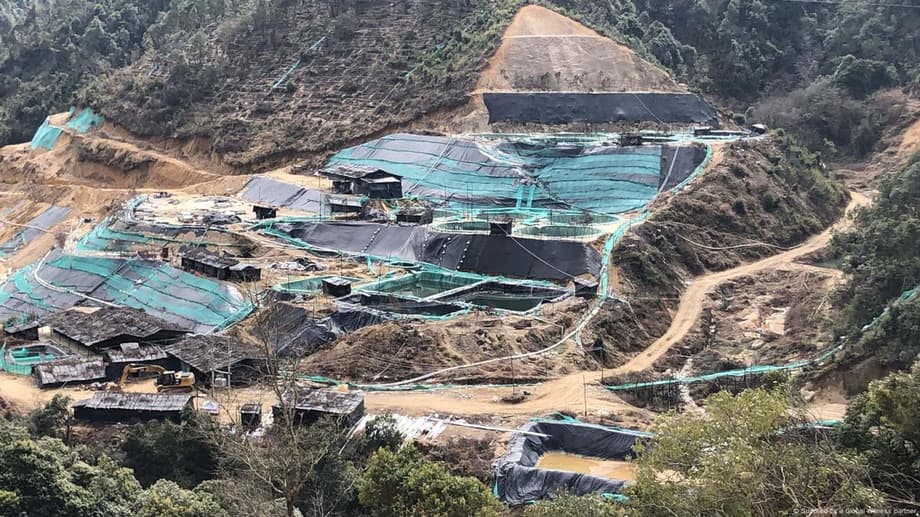
This shift has accelerated since Myanmar’s 2021 military coup. As China tightened rules on its own miners in the 2010s after severe pollution, extraction spilled across the border. Chinese customs data indicate that roughly two thirds of China’s rare earth imports came from Myanmar between 2017 and 2024, and Myanmar supplied more than half of China’s rare earth imports in 2023. The rush for heavy rare earths such as dysprosium and terbium, which strengthen permanent magnets in high heat, has turned parts of Kachin and Shan States into a vast maze of access roads, acid pools, and leaching pits.
The environmental and human costs are now spilling beyond Myanmar’s borders. Waterways that begin in the mining hills feed rivers in Thailand and flow toward the Mekong. Tests in northern Thailand have detected arsenic and other metals at dangerous levels, just as protests grow downstream and pressure builds on governments. The clean energy transition depends on the same minerals that, today, are poisoning watersheds and fueling a civil war economy. Decisions in border enclaves where the rule of law is thin are shaping the future of global supply chains.
How rare earths power modern life
Rare earths are a group of 17 metallic elements. They do not usually occur in high concentrations, so they must be separated through chemistry and intense heat. A small number of these elements, including neodymium and praseodymium, form the heart of strong permanent magnets. Engineers add small amounts of heavy rare earths, especially dysprosium and terbium, to stabilize those magnets in hot environments, such as inside traction motors in electric vehicles (EVs) and in generators within wind turbines. These elements also appear in smartphones, laptops, hard drives, lasers, and guidance systems.
Refining rare earths into oxides and metals is chemically intensive. It requires acids and organic solvents that generate waste streams that are expensive to treat safely. China built a full chain from mine to magnet over three decades, supported by industrial policy and a large domestic market. As the health and environmental damage from mining mounted, Chinese authorities tightened controls on extraction at home. Processing capacity largely remained in China, while a growing share of the most polluting extraction moved beyond its borders into Myanmar’s mountainous frontier.
Why China dominates processing, and why Myanmar fills the mining gap
China’s lead rests on scale, know-how, and an integrated industry that runs from ore to magnets. The country has a network of refineries, metallization plants, and magnet makers that most other nations lack. That concentration gives Beijing influence over pricing and supply. It also means disruptions at the raw material stage can ripple through global factories even if final processing occurs in China.
Myanmar emerged as a supplier of heavy rare earths as mining inside China came under stricter control. The border regions of Kachin and Shan are close to Yunnan’s refining hubs, labor is cheap, and armed groups or militias have carved out zones where oversight is limited. Imports of heavy rare earths from Myanmar to China more than doubled from 2021 to 2023. In 2023, Myanmar provided about 57 percent of China’s rare earth imports by volume. Analysts estimate that 84 percent of Myanmar’s rare earth exports go to China. Events on the ground underline the fragility of this arrangement. In October 2024, the Kachin Independence Army (KIA) seized key mining towns such as Chipwi and Pangwa. China temporarily closed nearby border gates, then negotiated a reopening. By early 2025, the KIA imposed a 20 percent levy on exported concentrates and agreed with traders on fixed prices, turning the group into a de facto regulator of a supply corridor that feeds Chinese processors.
Inside Myanmar’s boom: who runs the mines and how extraction works
Several armed actors control territory and tax rare earth operations. In Kachin, the Kachin Independence Organisation and its armed wing, the KIA, have gained ground since 2024. In Shan, the United Wa State Army administers areas adjacent to China. Other militias aligned with the military also profit. Formal licensing is rare and corporate records are opaque. Satellite analysis shows the scale of activity: hundreds of mining sites along Myanmar’s borders with China and Thailand, with dozens more added in recent years. One study mapped 451 mines in the Irrawaddy Basin alone over the past decade. In Chipwi, observers counted thousands of leaching pits cut into hillsides.
In situ leaching and why it is so damaging
The dominant method is in situ leaching. Workers drill boreholes into the hills and inject acidic solutions, then pump out liquid that now carries dissolved rare earths along with many other substances. The liquid is routed into plastic lined ponds. Solids containing rare earths settle and are later burned to produce dry oxides for export. This approach is cheap and fast. It is also destructive. Acid dissolves more than the target elements, mobilizing cadmium, lead, arsenic, and even traces of radioactive thorium and uranium from rock and soil. When containment fails, the fluids spill into streams. Heavy rains wash over open pits, sending pulses of contaminated water downhill.
Workers describe unstable ground, sinkholes, and landslides. The water injection weakens slopes and the removal of forest cover eliminates roots that hold soils together. Truck accidents are frequent. Mines often require firewood to heat furnaces, which drives more tree cutting. The cycle of clearing, leaching, and dumping strips hillsides and leaves scars that are visible from space. In areas where operations have ended, pits and ponds are sometimes abandoned without remediation.
The toll on people and landscapes
Residents near the mines report a steady decline in health and livelihoods. Workers often breathe dust and fumes without proper protection. Many develop chronic coughs, skin rashes, and chemical burns from contact with acidic fluids. Families living downstream speak of headaches, respiratory problems, and skin conditions that appeared as mining intensified. Farmers point to dead fish, reduced rice yields, and sick livestock as water quality deteriorated.
Science backs those accounts. Researchers sampling water and soil in northern Myanmar have found extremely acidic pH levels and elevated concentrations of ammonia, chloride, and toxic metals near and downstream of mine sites. At some locations, the water is unfit for drinking, irrigation, or fish culture without significant treatment. These results align with how in situ leaching works. Acidic solutions dissolve metals from host rocks and, if poorly contained, carry them into surface and groundwater. The harm is long lasting because metals can bind to sediments and move slowly through ecosystems.
Working conditions are hazardous. Landslides have buried crews. The rainy season routinely brings floods and mountain collapses. Wages lure large numbers of workers, many from poor communities where the formal economy has collapsed since the coup. Men and women take day labor jobs for a fraction of what middlemen and operators earn. Social strains rise with a rush of cash and outsiders. Local leaders describe more drug abuse, crime, and exploitation in settlements that have sprung up near mining zones.
Pollution without borders: rivers and neighbors at risk
The Kok and Sai rivers originate in Myanmar’s mining hills and cross into northern Thailand before joining the Mekong. In 2025, Thai authorities detected arsenic levels in parts of the Kok River nearly four times the World Health Organization guideline, with other metals also elevated. Residents noticed an unusual orange yellow tint in the water before the monsoon. Officials advised people not to touch the river. Communities in Chiang Rai and Chiang Mai reported losses as irrigation canals and fish ponds became contaminated. Economists estimate damage to farming, fishing, and tourism in northern Thailand at roughly 40 million dollars. Protesters in Chiang Rai urged stronger action and demanded that China and Myanmar pressure operators to stop polluting upstream.
The Mekong supports tens of millions of people. In Cambodia, about 60 percent of protein comes from wild caught fish, much of it from the Mekong system. If heavy metal contamination spreads through the river network, the harm could be severe and persistent. Metals accumulate in sediments and fish tissue. Floodplains that feed agriculture could become unsafe. Thai agencies have discussed sediment barriers or small dams to trap polluted deposits in the Kok. River specialists question whether such structures can handle flows and diffuse contamination at basin scale. Many agree that cutting pollution at the source is the only durable solution.
War economy and power politics
Rare earths have become a revenue lifeline for armed groups. Control of mine sites and border crossings translates into cash and influence. The KIA’s seizure of Chipwi and Pangwa in October 2024 shifted leverage. China responded by closing border gates, then reopened them after talks with Kachin authorities. A levy on concentrates now flows to Kachin coffers, and traders operate under new terms agreed in early 2025. This mirrors arrangements in other frontier industries where local power brokers manage exports that feed Chinese factories across the line.
China remains exposed to supply disruption from Myanmar while continuing to dominate processing and magnet making. Beijing has tightened export controls on some technologies and raw materials, which adds to the stakes in any disruption. India has shown interest in partnerships that could reduce reliance on Chinese supplies. The United States and its allies have launched critical mineral initiatives and passed laws to diversify sources and improve recycling. Engagement with actors inside Myanmar is complicated by conflict and human rights concerns. Deals struck with armed groups carry legal and moral hazards and can reinforce wartime economies.
Supply chain exposure for global tech and energy companies
Heavy rare earths mined in Myanmar are typically exported as concentrates to China, where they are refined into oxides and metals, then turned into magnets. Those magnets are embedded in EV motors, wind turbines, drones, and consumer devices sold worldwide. Many companies struggle to trace the origin of the rare earth content in their products. The chain involves many steps and blending is common. Traders mix material from multiple regions to meet volume and price targets. Documentation is inconsistent in conflict zones and many mines are informal.
Recycling is growing, but it has limits today. Most recycled rare earths come from manufacturing scrap rather than products at end of life. Collection systems for used magnets are still in their infancy, and the magnets are often glued or buried inside devices, which raises costs. Companies can still reduce risk. Buyers can require batch level segregation from refineries, third party audits that include site access, and testing of isotopic and trace element fingerprints to check origin claims. Procurement policies can exclude material linked to conflict or severe environmental harm. Import controls can set clear benchmarks for environmental management and community protection before material is allowed to enter a market.
What could change the picture
Technology choices can cut demand for heavy rare earths at the margin. Motor designs that use fewer dysprosium additions are spreading. Some wind turbines use drive trains that rely on different materials. In other appliances, ferrite magnets can substitute for rare earth magnets. None of these pathways eliminates demand. They can moderate growth and buy time for better governance.
Governments and industry have several levers to reduce harm. One option is to pause new extraction in Myanmar until enforceable safeguards are in place. China can tighten import controls on concentrates that lack proof of safe production and strengthen oversight of Chinese contractors operating across the border. Thailand, Laos, and Cambodia can expand river monitoring and share open data so that residents see what is in their water. International bodies can support independent sampling of waterways and soils. Enforcement can focus on chemical supply chains, since mining depends on steady flows of acids and reagents. If extraction continues, baseline requirements should include lined containment with leak detection, acid neutralization before discharge, stormwater controls sized for heavy rain, replanting plans, worker safety standards, and consent processes with communities that include a share of revenues and grievance mechanisms. The alternative is more contaminated rivers, deeper distrust among neighbors, and supply risks that eventually reach factory floors far from Myanmar.
At a Glance
- About 90 percent of processed rare earth products are made in China, while a large share of heavy rare earth feedstock now comes from Myanmar.
- Chinese customs data show roughly two thirds of rare earth imports came from Myanmar between 2017 and 2024, with Myanmar supplying about 57 percent in 2023.
- Mining surged in Kachin and Shan States after Myanmar’s 2021 coup, with hundreds of sites mapped and thousands of leaching pits reported.
- In situ leaching uses acidic solutions that mobilize toxic metals and can contaminate rivers and soils when containment fails.
- Thai authorities detected arsenic in parts of the Kok River nearly four times the World Health Organization guideline, with protests and reported losses of roughly 40 million dollars in northern Thailand.
- The Kachin Independence Army seized key mining hubs in October 2024, then negotiated to reopen trade, imposing a 20 percent levy on exports.
- Revenue from rare earths strengthens armed actors, complicates conflict dynamics, and exposes China to disruptions even as it dominates processing and magnets.
- Global brands are exposed through complex supply chains that make traceability difficult; most recycling still comes from manufacturing scrap.
- Policy options include stricter import controls, independent river monitoring, enforcement on chemical supply to mines, and clear environmental and community standards at extraction sites.
- Design choices and recycling can lower demand growth for heavy rare earths, but safer governance of mining remains the decisive factor for health and river protection.