The Cold Truth in Harbin
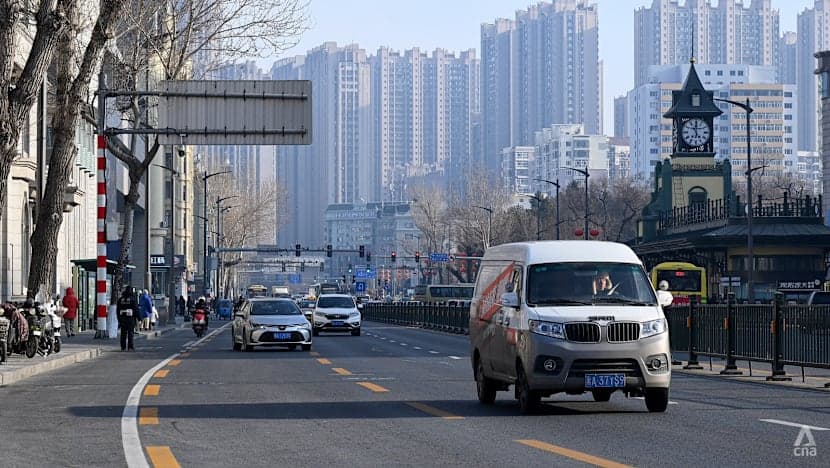
Snug inside his electric vehicle as snow and minus 15 degrees Celsius cold grip the streets of Harbin in northeast China, Zhao Li waits as the minutes tick by. He is not stuck in traffic. He is tethered to a roadside charging station, watching the battery meter crawl upward. “I bought this electric car thinking I would save on petrol,” said the 45 year old office worker. Charging Zhao’s EV costs under 100 yuan (US$14.40), compared with about 350 yuan to fill the 50 litre tank of his previous petrol car. “Who knew I’d end up spending so much more time charging instead. Time is money. I think I’ve lost more than I’ve gained,” he told CNA, adding that a typical charging session at a rapid charging station takes him around 30 minutes.
What frustrates Zhao most is the growing gap between what his dashboard promises and the reality on the road. When he bought the brand new car two years ago, it was advertised with a range of about 450km on a full charge, enough to cover his daily commute for an entire work week. “In cold weather, I’m getting barely half of what was promised,” Zhao said. He now has to charge the vehicle about twice a week, compared with roughly once weekly under normal conditions. The limitations have reshaped how he uses the car. “Now I mostly use it for short trips on weekends, running errands or going to the mall,” he said. “For longer distances, I rely on a hybrid car at home. It doesn’t have these problems.”
Zhao’s experience reflects a reality confronting China’s early EV adopters after more than a decade of rapid adoption. As vehicles age, the long term costs in time, money and convenience increasingly fall on owners. Climate proves an unforgiving stress test, particularly for batteries, while ageing hardware and discontinued software updates affect everything from navigation to driver assistance features. These growing pains in the world’s largest and most mature EV market are testing the promise of cleaner, cheaper mobility and offering a case study for regions such as Southeast Asia, where EV adoption is gathering pace.
When Startups Fail and Software Fades
China’s electric vehicle fleet has grown from just 13,000 units in 2012 to over 20 million today, supported by more than 3 million charging stations. This unprecedented expansion, driven by government subsidies that once reached 55,000 yuan per vehicle and license plate policies that made EVs the only viable option in congested cities like Beijing and Shanghai, is now entering a new phase. The first wave of mass market EVs, purchased between 2016 and 2019, is reaching the critical eight year mark when battery warranties expire.
Most EV batteries in China carry warranties of eight years or 150,000 kilometers, promising replacements if capacity falls below 70 percent. But the fine print varies across manufacturers, and enforcement is inconsistent. When warranties expire, replacement costs often rival the price of the vehicle itself. Industry estimates suggest that replacing an entire battery pack ranges from 50,000 yuan to more than 100,000 yuan. With new mass market EVs typically selling for 100,000 to 150,000 yuan, battery replacement can approach or even exceed the residual value of an older vehicle.
The risks extend beyond mechanical failure. In recent years, several EV startups including HiPhi, WM Motor and Neta have collapsed or scaled back operations. Media reports have documented cases where owners faced uncertainty over software updates, spare parts and after sales services after companies ran into financial trouble. In such situations, features that depend on ongoing software support, including infotainment, navigation and battery management systems, can be left without updates. This increases the risk that owners bear the long term consequences even if the vehicle remains mechanically usable. For buyers, the distinction between established manufacturers and struggling startups has become increasingly important.
Science of Battery Decline
Understanding why these batteries fail requires examining the chemistry within. Lithium ion batteries, which power nearly all modern EVs, degrade through two primary mechanisms, explained Mei Ao, founder of Guangzhou based battery technology firm LEADINX and a veteran of EV battery development at Chinese automaker GAC. “One is capacity loss, the battery can store less energy,” Mei told CNA. “The other is an increase in internal resistance over time, which affects power output.” For drivers, that translates into shorter range and weaker acceleration.
Cold weather compounds these issues. At minus 10 or minus 20 degrees Celsius, battery capacity might only drop by 10 to 20 percent, but users often feel like the range has been cut in half. This perception gap arises because heating the cabin and battery management systems consumes significant energy, leaving less power for propulsion. Hung Dinh Nguyen, an associate professor at Singapore’s Nanyang Technological University, explained that charging in frigid conditions carries additional risks.
“This permanently reduces capacity,” he said, adding that in severe cases it can raise safety concerns.
At the other extreme, hot and humid climates accelerate long term degradation. Research shows that at temperatures around 55 degrees Celsius, battery capacity loss can be an order of magnitude higher than at moderate temperatures. Prolonged heat causes internal damage, while humidity reduces heat dissipation efficiency, raising internal temperatures and the risk of battery failure. Modern EVs employ thermal management systems to mitigate these risks, but sustained exposure to extreme temperatures places strain on batteries and supporting systems.
The Financial Reality for Owners
Sean Peng, a 30 year old public sector officer in Beijing who bought his EV in August 2020, has noticed signs of aging. The car’s operating system responds more slowly, while its driving range has fallen by about 10 percent. Charging performance has also deteriorated. Peng said the vehicle now charges significantly slower at standard charging points. When he flagged the issue with the manufacturer, he was told it could be fixed by replacing the wiring, a repair costing “several thousand yuan” that he must bear himself since the vehicle no longer carries warranty coverage.
Stories of extreme repair bills have flooded social media. One domestic EV owner reportedly spent 80,000 yuan to replace a damaged battery, nearly half the car’s original price. Another Polestar 2 owner received a staggering 540,000 yuan bill, far exceeding the vehicle’s original cost. Fang Yi, a Beijing medical professional who bought a Tesla Model X for around 1 million yuan in 2015, faced a similar dilemma when her eight year battery warranty expired in early 2024. At the official Tesla service center, she was told repairs would involve dismantling the car, sending the battery to a factory in Shanghai, and incurring staggering costs at every step.
“The staff seemed confused that I even wanted to repair it,” recalls Fang. “But I love this car. Does a dead battery mean I have to throw the whole thing away?”
Faced with prohibitive official repair costs, many owners turn to unauthorized workshops. Fang estimates that over 60 percent of Tesla owners she knows now rely on third party services. “Something that costs 4,000 to 5,000 yuan at an official center might only cost 1,000 to 2,000 yuan at these smaller workshops,” she said. Since that repair, Fang has not returned to an official Tesla service center. However, these shadow repair networks operate with limited oversight, raising safety concerns about handling high voltage battery systems without manufacturer protocols.
Regulatory Crackdown and Recycling Challenges
Beijing is moving to impose order on this chaotic landscape. Effective April 1, 2026, Chinese regulators will mandate that EV batteries remain with vehicles during the scrapping process, establishing a centralized national information platform to track batteries from manufacture through final disposal. The regulation requires manufacturers to accept battery transfers from swap operators, leasing services, and repair enterprises, preventing processing bottlenecks while ensuring accountability. This framework creates mechanisms for enforcing producer responsibilities, tracking carbon footprints, and standardizing technical guidelines.
Yet the recycling infrastructure remains inadequate. Between 2018 and 2023, China’s Ministry of Industry and Information Technology certified only 156 firms to process decommissioned EV batteries, while over 40,000 companies hold business licenses for this activity. Fewer than four in 1,000 used EV batteries are processed by certified recyclers. In 2023 alone, retired EV batteries amounted to an estimated 580,000 tons. By 2027, that figure is expected to surge to 1.14 million tons, creating an environmental hazard if processed improperly.
Current recycling methods present their own challenges. Pyrometallurgy, which involves heating shredded batteries to 800-1200 degrees Celsius, consumes enormous energy and loses critical elements like lithium to slag. Hydrometallurgy uses strong acids to dissolve components, generating large volumes of toxic liquid waste. Both methods were designed for cobalt rich batteries, but as manufacturers shift toward cobalt free lithium iron phosphate chemistry, economic viability declines. According to a report by the Development Research Center of the State Council, over 75 percent of retired batteries were still being handled by unqualified workshops as of late 2023, raising concerns about environmental hazards.
Swapping and Second Life Solutions
Some manufacturers are betting on battery swapping as an alternative to ownership. NIO, one of China’s major EV makers, operates over 2,700 swapping stations where customers exchange depleted batteries for fully charged ones in minutes. CATL, the country’s leading battery maker, aims to operate over 1,000 stations across 30 cities by 2025, with a long term goal of 30,000 stations nationwide. These models separate the battery from the vehicle purchase, reducing upfront costs and eliminating owner liability for battery degradation.
For batteries that can no longer power vehicles, second life applications offer interim value. Retired EV batteries typically retain 70-80 percent of their capacity, making them suitable for stationary energy storage. The global second life EV battery market is projected to reach 330-350 GWh by 2030. However, challenges persist, including the absence of standardized health assessment protocols and uncertain remaining lifespans. Carla Tavares, head of renewables at energy group Galp, noted that deployment raises safety issues because end users cannot look inside the batteries they are reusing.
“We don’t know yet how many years I can consider in my Excel spreadsheet when I’m buying second life batteries. It could be five, it could be seven, it could be 10. And it makes a lot of difference.”
Emerging technologies may eventually improve recycling. Direct recycling approaches aim to preserve and refurbish active materials without fully decomposing them into elemental constituents, avoiding high temperature or acid intensive processes. Bioleaching uses microorganisms to solubilize metal ions from battery waste under ambient conditions. However, these technologies remain largely experimental, with scalability unproven and investment in pilot projects still limited.
Lessons for Neighboring Markets
Across Southeast Asia, China’s experience offers a glimpse of what comes next as EV markets mature. In Thailand, battery EV registrations rose 59 percent in the first nine months of 2025 to more than 87,000. In Malaysia, sales jumped nearly 80 percent year on year in 2024 to over 28,000 units, driven by tax incentives. Singapore saw EVs account for 45 percent of all new car registrations in 2025, with Chinese automaker BYD topping sales charts.
Hung Dinh Nguyen from NTU emphasized that battery aging is a consumer problem not simply because of technological limits, but when infrastructure and policy fail to keep pace with adoption. “Dense and reliable charging infrastructure reduces reliance on fast charging,” he said, describing this shift as beneficial for battery health and helping to ease range anxiety. Where everyday charging options are limited, fast charging becomes the default, placing greater stress on batteries and shifting long term costs onto owners.
A study published in Resources, Environment and Sustainability found that a uniform 20 percent reduction in non energy costs could raise EV market share from roughly 25-50 percent to as high as 70-85 percent globally after 2035. However, the authors warned that without cleaner power generation, emissions from the electricity sector could offset gains from electrification. “EVs can be a powerful tool for climate mitigation, but their success depends on timing, ambitious policy adoption, and the parallel decarbonization of the broader energy system,” said study co author Shuai Pan.
The lesson from China is that EV adoption succeeds when battery performance is treated as a system level challenge, supported by infrastructure investment, regulation, and long term planning, rather than leaving individual owners to absorb the consequences of aging batteries. Battery ageing is not a failure of electric vehicle manufacturing but a predictable outcome of physics and chemistry. The real question is how well markets are designed to manage expectations and support owners over a vehicle’s full lifespan.
The Bottom Line
- China’s early EV adopters are facing battery degradation, reduced range, and high replacement costs as the first wave of vehicles ages beyond warranty coverage.
- Extreme weather accelerates battery decline, with cold temperatures reducing usable range by up to 50 percent due to heating demands, while heat causes permanent chemical damage.
- Replacement costs ranging from 50,000 to over 100,000 yuan often approach or exceed the residual value of older vehicles, pushing owners toward unauthorized repair shops.
- Regulatory frameworks are tightening, with new 2026 mandates requiring centralized tracking of batteries from manufacture to disposal, though certified recycling capacity remains limited.
- Southeast Asian markets watching China’s experience should prioritize charging infrastructure density and long term policy frameworks over rapid adoption incentives alone.