A Beijing Meeting With Taiwan's Security at Stake
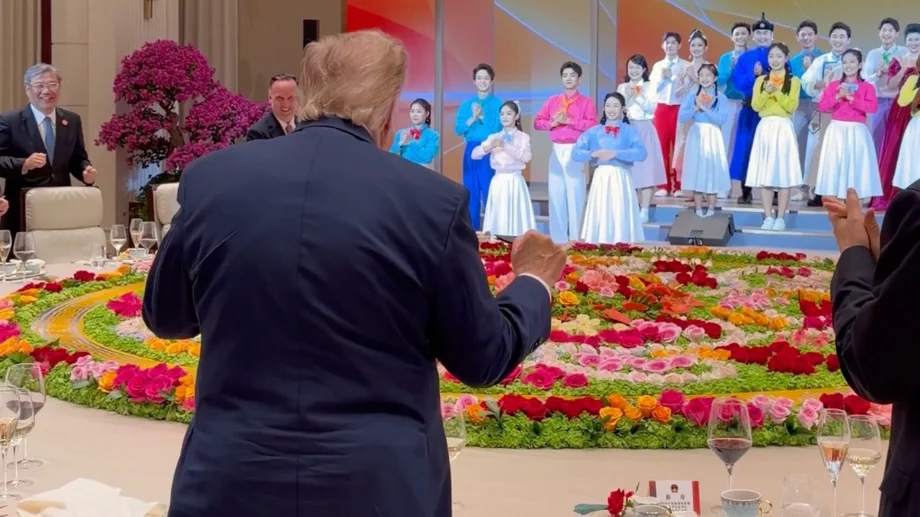
Chinese President Xi Jinping met Cheng Li-wun, chairwoman of Taiwan's opposition Kuomintang (KMT), at Beijing's Great Hall of the People on Friday, bringing a dispute over Taiwan's $40 billion special defense budget into the middle of a closely watched political encounter. Cheng became the first sitting KMT leader to visit mainland China in nearly a decade, just weeks before Xi's scheduled May meeting with U.S. President Donald Trump in Beijing.
Contents
- A Beijing Meeting With Taiwan's Security at Stake
- How Cheng Reached the Great Hall
- What Xi and Cheng Said About Peace
- The Meaning of the 1992 Consensus
- A $40 Billion Dispute With Washington Watching
- What Beijing Offered After the Visit
- Military Pressure Continues Beside the Outreach
- Taiwan's Government Challenges the Party Channel
- Identity and Elections Complicate Cheng's Message
- The Choice Cheng Has Put Before Taiwan
- Key Points
Cheng, who took charge of the conservative leaning KMT last year, called her six days in Shanghai, Nanjing and Beijing a "peace trip." Her central argument is that contact with Beijing can help prevent war. Her opponents argue that the terms of that contact could weaken Taiwan's defenses and give China greater influence over its political choices.
Xi presented the encounter as a reunion between people with a common heritage. He declared that "people on both sides of the Taiwan Strait are Chinese" and share a desire for peace and development. Cheng's embrace of that identity stood alongside her opposition to Taiwanese independence and her criticism of large purchases of American weapons.
Beijing followed the visit with ten measures covering flights, food imports, television programming and possible arrangements for regular contact between the Communist Party and the KMT. China also continued its military pressure near Taiwan. The combination puts two approaches to preventing conflict in direct competition: Cheng's emphasis on political accommodation and the argument that Taiwan needs stronger defenses as well as dialogue.
The meeting reopened contact at the top of the KMT and Communist Party, but Taiwan's elected government remained outside the encounter. Beijing severed high level communications with Taipei in 2016 after the election of Democratic Progressive Party (DPP) President Tsai Ing-wen. That break remains central to the disagreement over whom Beijing chooses to engage.
How Cheng Reached the Great Hall
Cheng's appearance beside Xi capped a striking political transformation. Born in 1969, she began her public life as a leftist activist associated with the "Wild Lily" generation, the student movement that helped push Taiwan toward full democracy.
Cheng once advocated Taiwanese independence and denounced the KMT as "the most detestable ruling force." In 2005, after a controversial departure from the DPP, she joined the party she had previously opposed. She has since moved toward its "deep Blue" faction, which favors closer integration with China.
Cheng now calls herself a "Fighting-Blue" leader. Her politics combine a confrontational approach toward the ruling DPP with an effort to cultivate what she describes as "civilizational" ties with mainland China. She explains her change of allegiance as "seeing through the fraud of the DPP," while critics accuse her of opportunism.
Polls suggest limited public confidence in her leadership. Her readiness to meet Beijing nevertheless gives her a visible point of contrast with President Lai Ching-te, whose DPP government has been unable to restore engagement with Chinese leaders. Chinese state media has derisively described Lai as a "warmonger" and "separatist."
Cheng's trip therefore served both an external and a domestic purpose. She sought to present herself as someone who could reopen exchanges across the strait, while challenging the ruling party's approach to security and relations with China.
What Xi and Cheng Said About Peace
Xi and Cheng publicly opposed Taiwanese independence and described peace through the language of shared Chinese identity. Xi said that "all sons and daughters of China share the same Chinese roots and the same Chinese spirit," portraying that connection as rooted in blood ties and history.
Xi expressed "full confidence" that people on both sides would "get closer and get together." He described that outcome as an inevitable historical trend. His remarks connected present day exchanges with Beijing's preferred political direction for the relationship.
Cheng, the visiting KMT chairwoman, described her ambition for the strait in terms of family connections and cooperation between the two parties:
Through the unremitting efforts of our two parties, we hope the Taiwan Strait will no longer become a potential flashpoint of conflict, nor a chessboard for external powers. Instead, it should become a strait that connects family ties, civilisation and hope.
Cheng also praised China's success in eradicating poverty and referred to the "great rejuvenation of the Chinese nation" as a shared aspiration. Her language brought her close to Xi's account of a common identity, while placing outside powers within her warning about the strait becoming a site of confrontation.
The Meaning of the 1992 Consensus
Cheng explicitly endorsed the "1992 Consensus," a tacit understanding between the KMT and Beijing acknowledging "one China" while allowing each side to define what that means differently. In simple terms, the formula allows agreement on a phrase while leaving room for disagreement about its meaning.
The KMT has traditionally included "respective interpretations" in its description of that understanding. Cheng instead described the consensus as adherence to "one China" without stressing that qualification. Her wording attracted scrutiny because the qualification has provided the KMT with room to maintain its own interpretation.
Cheng also proposed institutional arrangements for "war prevention." Those arrangements were presented as part of her effort to reduce the risk of conflict, but her remarks prompted concern about the role she envisages for Taiwan's armed forces and American weapons.
Wen-ti Sung, a political scientist at the Australian National University's Taiwan Centre, interpreted her remarks as pointing away from military preparation. He said they implied that "under her leadership, the KMT would not be seeking a defence and deterrence-oriented approach to war prevention."
Sung's interpretation was that Cheng was signaling a slower military buildup and fewer purchases of U.S. arms. Deterrence means making an attack costly enough that an opponent decides against it. The disagreement is therefore about how peace should be protected: through stronger military resistance, political agreements with Beijing, or the balance between the two.
A $40 Billion Dispute With Washington Watching
The KMT has blocked Lai's proposed $40 billion special defense budget in Taiwan's parliament and offered a $12 billion alternative focused on specific items. The competing proposals put sharply different amounts behind Taiwan's military modernization.
The KMT alternative is $28 billion smaller than Lai's package and amounts to 30 percent of the proposed $40 billion total. Those figures show the size of the spending dispute, although the argument also concerns which purchases should receive approval.
Cheng has described the larger package as turning Taiwan into a "powder keg." She has also said that "Taiwan is not an ATM" for American arms purchases. Her language places the cost and risks of weapons purchases at the center of the KMT's opposition.
U.S. Senator Jim Banks, during a recent visit to Taipei, urged lawmakers to approve the full package. He warned that delays could affect Washington's willingness to sell weapons to Taiwan. The parliamentary deadlock consequently reaches beyond Taiwan's domestic budget debate into its relationship with its principal security partner.
Trump's planned May summit with Xi adds another layer of concern. Analysts suggest Beijing wants Cheng's visit to show that its preferred Taiwanese partners are "in lockstep" with it on key policies. Such a display could influence Trump's approach to arms sales and security commitments when he meets Xi.
William Yang, North East Asia analyst at the International Crisis Group, said Cheng sees an opening to present herself as the leader who can maintain exchanges across the strait while highlighting Lai's inability to resume engagement. Yang connected that opportunity to uncertainty about Washington:
Growing scepticism about the U.S. in Taiwan, largely stemming from Trump's mixed signals on his Taiwan policy, creates space for her argument.
Washington's concern and Cheng's political opportunity arise from the same uncertainty. Questions about American support give Cheng room to argue for closer contact with Beijing, while the defense dispute creates concern about whether Taiwan will commit the resources Washington is urging it to provide.
What Beijing Offered After the Visit
Beijing announced ten measures after Cheng's departure, presenting economic and cultural access as signs of goodwill. They included restoring direct flights between Taiwan and additional mainland cities, including Urumqi, Xi'an and Harbin.
Chinese authorities also promised to permit imports of previously banned Taiwanese products, including grouper, squid and tuna. Taiwan's television dramas and documentaries would be allowed onto mainland broadcasting platforms provided they meet content guidelines.
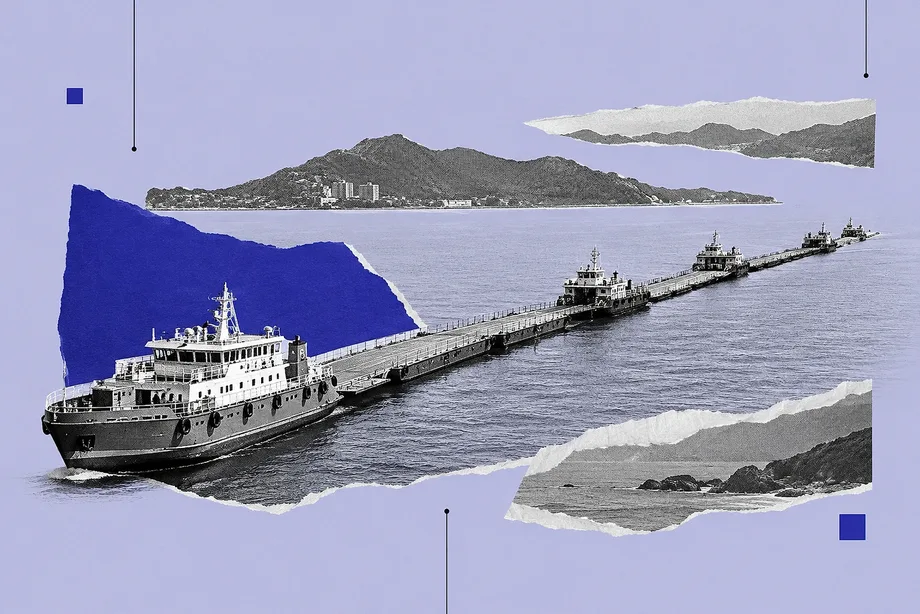
China pledged to explore a regular communication mechanism between the Communist Party and the KMT. It also renewed proposals for infrastructure projects linking mainland China with Taiwan's offshore islands of Kinmen and Matsu.
The measures give Cheng tangible announcements to bring home from her visit. Flights would expand connections, resumed imports would reopen access for affected products, and broadcasting permissions would create opportunities for Taiwanese programs. The proposed party mechanism would make political contact more regular.
No implementation dates were given for the announced measures. The next scheduled diplomatic event identified is Trump's May meeting with Xi. Taiwan also faces local elections later this year and a presidential contest in 2028, giving the debate over Cheng's approach a continuing electoral setting.
Military Pressure Continues Beside the Outreach
China's promises of economic access came alongside continuing deployments of fighter jets and naval vessels near Taiwan. Beijing also conducts exercises involving live ammunition in the strait that resemble rehearsals for a possible blockade, an operation intended to restrict movement to and from the island.
Analysts describe this combination as a "dual-track strategy": Beijing engages with the opposition while maintaining military pressure on the ruling DPP. The two activities serve different parts of China's approach to Taiwan.
James Chen, an assistant professor at Taiwan's Tamkang University, said Beijing's military sorties "serve China's national security interests and deter closer US intervention." His assessment connects the pressure near Taiwan with China's effort to limit Washington's involvement.
Cheng's visit fits into that combination of contact and coercion. Beijing offered cooperation to a party willing to endorse its preferred language about Chinese identity, while continuing military activity around an island governed by a party it condemns.
Taiwan's Government Challenges the Party Channel
The DPP accused Cheng of being "subservient" to Beijing and warned that her trip would be "completely controlled" by the Communist Party. Its criticism focused on whether the visit allowed Beijing to set both the terms and the political message of the exchange.
Lai, Taiwan's president, argued on Facebook that concessions to authoritarian governments endanger the freedoms Cheng says she wants to protect:
compromising with authoritarian regimes only sacrifices sovereignty and democracy; it will not bring freedom, nor will it bring peace.
The Taiwan Affairs Council, which sets policy toward China, described Beijing's announced measures as "political transactions" that bypass Taiwan's elected government. The council insisted that matters involving government authority require negotiation between governments:
All Cross-Strait affairs involving public power must be negotiated by both governments on an equal and dignified basis.
The council's objection concerns who can make decisions for Taiwan. A meeting between party leaders can establish contact, but the government argues that such exchanges cannot replace official channels for matters involving public authority. That dispute sits at the center of the reaction to both Cheng's meeting and Beijing's promised measures.
Identity and Elections Complicate Cheng's Message
Most Taiwanese favor maintaining the "status quo," meaning neither formal independence nor unification. Surveys also show that identification as Taiwanese has grown while identification as Chinese has declined, creating a difficult political setting for Cheng's explicit description of herself as Chinese.
A 2025 National Chengchi University study found that 62 percent of respondents identified solely as Taiwanese, compared with 17.6 percent in 1992. That is an increase of 44.4 percentage points. The share identifying as Chinese fell to 2.5 percent.
Cheng's emphasis on Chinese identity and civilizational connections appears increasingly distant from mainstream sentiment, particularly among younger voters. Her argument about peace must therefore compete with concerns about identity and Taiwan's democratic political choices.
Differences are also emerging inside the KMT. Taichung Mayor Lu Shiow-yen, often mentioned as a possible presidential candidate, has argued that peace must rest on strength and internal unity. Her position presents a more balanced approach than Cheng's focus on engagement with Beijing.
Some KMT candidates in competitive districts have reportedly distanced themselves from their chairwoman's rhetoric because they fear a backlash in the coming local elections. The party must weigh the appeal of renewed contact against the risk that voters will view the visit as excessive accommodation.
The Choice Cheng Has Put Before Taiwan
Cheng's political gamble rests on the belief that dialogue reduces the danger of conflict more effectively than military deterrence. She has presented herself as a "bridge for peace," arguing that opposition to Taiwanese independence and acceptance of the 1992 Consensus provide the only viable route to avoiding war.
Cheng explained that position to reporters after meeting Xi:
By opposing Taiwan independence, we can avoid war.
Critics argue that her approach accepts Beijing's portrayal of Taiwan as an unresolved civil war rather than a sovereign state with its own democratically elected government. In their view, the format of two party leaders meeting, instead of two heads of state, helps promote a historical account that weakens Taiwan's contemporary sovereignty.
Cheng secured economic concessions and renewed contact at the top of the two parties after nearly a decade without a visit by a sitting KMT leader. She also risks alienating moderate voters and unsettling Washington. The dispute now concerns whether her diplomacy reduces the risk of conflict or advances Beijing's preferred political outcome under the language of peace.
Taiwan's local elections later this year and the presidential contest in 2028 will give voters opportunities to judge that approach. The immediate tests are more concrete: the deadlock over defense spending, the delivery of Beijing's promised measures and the diplomatic discussions surrounding the Trump and Xi summit.
The sequence leading to those tests spans several years:
- 1992: The understanding known as the 1992 Consensus provided a formula acknowledging one China with different interpretations.
- 2005: Cheng joined the KMT after leaving the DPP.
- 2016: Beijing severed high level communications with Taipei following Tsai Ing-wen's election.
- 2025: Cheng assumed the KMT leadership, and a National Chengchi University study recorded 62 percent identifying solely as Taiwanese.
- Friday, before April 12, 2026: Cheng met Xi at the Great Hall of the People during her six days in mainland China.
- After Cheng's departure: Beijing announced ten measures involving transport, trade, media and political contact.
- May 2026: Trump is scheduled to meet Xi in Beijing.
- Later in 2026 and in 2028: Taiwan faces local elections and then a presidential contest.
Key Points
- Cheng Li-wun became the first sitting KMT leader to visit mainland China in nearly a decade and met Xi Jinping in Beijing.
- Both leaders opposed Taiwanese independence and promoted a shared Chinese identity.
- The KMT has blocked Lai's $40 billion special defense budget and proposed a $12 billion alternative.
- Beijing announced ten measures covering flights, imports, broadcasting, party contact and proposed infrastructure links.
- China continued military deployments and exercises near Taiwan alongside its outreach to the KMT.
- Taiwan's government said matters involving public authority must be negotiated between governments, rather than political parties.
- A 2025 study found 62 percent identified solely as Taiwanese, up from 17.6 percent in 1992; 2.5 percent identified as Chinese.
- Trump's scheduled May meeting with Xi and Taiwan's coming elections will keep Cheng's diplomacy and the defense dispute under scrutiny.