A Dream Takes Flight Across Continents
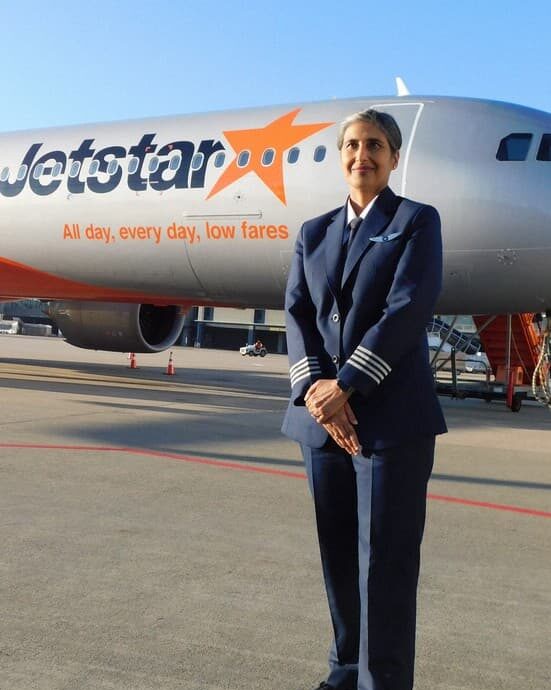
For Simren Ghumman, the cockpit has always been more than just a workplace. It is a second home, a place where precision meets passion, and where the view from 35,000 feet offers a perspective on life that few ever experience. At 53 years old, this Indian national now calls Narita, Japan home, piloting aircraft for low-cost carrier Jetstar Japan Co. after a global pandemic turned her carefully laid plans upside down.
Operating primarily from Narita Airport in Chiba Prefecture, east of Tokyo, Ghumman connects various domestic and international destinations. She pilots 18 domestic routes and five international routes, including flights to Taipei and Manila. Each flight demands her complete focus, requiring constant monitoring of instruments and weather conditions while prioritizing safety, fuel economy, punctuality, and passenger comfort.
The work is filled with continuous tension, yet Ghumman finds motivation in the small moments. Hearing feedback from passengers through the cabin crew provides her with encouragement. Comments like “It was a good flight” and “The landing was great” serve as reminders of why she chose this career path decades ago.
Her journey to Japan was neither planned nor anticipated. The COVID-19 pandemic disrupted the entire aviation industry, creating personal devastation that eventually led to an unexpected opportunity nearly 10,000 kilometers from where she started.
Early Dreams in Northern India
Born in Chandigarh, a city in northern India, Ghumman grew up in a family where aviation was part of daily life. Her father, Jagjit, served as an Air Force fighter pilot, while her mother worked as a teacher. The family moved frequently due to her father’s base transfers, exposing young Simren to various regions with different etiquette, discipline, climates, and cultures.
This constant movement taught her valuable lessons about adaptability. She recalls learning to enjoy meeting local people and embracing new environments, an experience that would have a lasting impact on her later in life when she faced the prospect of moving to Japan.
From an early age, Ghumman aspired to follow in her father’s footsteps and become a fighter pilot. However, the Indian Air Force, one of the largest in the world, did not recruit women at the time. This systemic barrier forced her to pivot toward civilian aviation.
After graduating from a university’s commerce department, she committed herself to intense study at a training institute for two years. Her perseverance paid off in 1994 when she obtained her pilot’s license. The moment her proud father hugged her and said, “Well done, daughter,” at the venue where the results were announced remains etched in her memory.
That achievement marked the beginning of a career that would span decades and multiple countries, setting the stage for resilience that would serve her well during future challenges.
Building an Aviation Career
With her license in hand, Ghumman began building her career with airlines in India and Sri Lanka. The work provided her with experience and professional growth, allowing her to develop the skills that would eventually make her an attractive candidate for international positions.
As her experience accumulated, so did her ambitions. She had concrete plans for her future, including buying a house and obtaining qualifications to fly the A330 large aircraft. Her goal was to operate on prestigious routes to Paris and London, representing a significant milestone in her professional journey.
These aspirations were not mere dreams but realistic targets based on her career trajectory and the growth of aviation in her home region. The industry was expanding, and experienced pilots were in demand. Everything seemed to be proceeding according to plan until the world changed in early 2020.
Then the COVID-19 pandemic struck with unprecedented force. Aviation demand plummeted as borders closed and travel restrictions were implemented worldwide. Airlines faced financial collapse, leading to massive layoffs and a complete transformation of the industry landscape.
Ghumman’s carefully constructed future evaporated almost overnight. Her plans to purchase a home, upgrade her aircraft rating, and fly international routes to Europe were all dashed.
The Pandemic’s Devastating Impact
The aviation industry experienced one of its most severe crises in history during the pandemic. According to industry reports, airlines worldwide grounded thousands of aircraft and cut tens of thousands of jobs as passenger numbers dropped to levels not seen in decades.
Ghumman reflected on this period with candor. “All the plans I had in mind ended up being just dreams.” The devastation was real and personal. Yet despite the setback, she never considered giving up on flying. Aviation was not just a job but her calling.
The pandemic created a unique paradox in the aviation job market. While many pilots lost their positions, certain regions and carriers began recruiting experienced aviators to prepare for the eventual recovery. Japan emerged as one such opportunity.
According to aviation recruitment sources, before COVID-19, the main expat employers in Japan were Air Japan, Peach, Skymark, Jetstar Japan, and Nippon Cargo Airlines. Notably, both major carriers ANA and Japan Airlines do not typically hire expatriate pilots for their main operations, creating openings at subsidiary carriers and low-cost airlines.
This landscape set the stage for Ghumman’s next chapter. When she decided to take on a new challenge in a country unfamiliar to her, her skills and diligence, based on her extensive experience, were recognized by Jetstar Japan.
Starting Anew in Japan
In March 2023, Ghumman moved to Narita to begin her new role with Jetstar Japan. The transition represented a complete change of scenery, culture, and work environment. Japan was an unknown country to her at the time, and she arrived with minimal knowledge of the language or customs.
Jetstar Japan, part of the broader Jetstar Group which includes Jetstar Airways, operates as one of the largest low-cost carrier groups in the region. The airline is a joint venture between the Qantas Group, Japan Airlines, and Tokyo Century Corporation. Since launching domestic flying in July 2012 and international operations in February 2015, the carrier has served more than 50 million customers.
For Ghumman, adapting to Japan meant adjusting to significant cultural differences. She was immediately struck by the contrast in color perception between India and Japan. In India, people’s clothing tends to feature vibrant colors such as red, yellow, and blue. In Japan, she observed that clothing tends to be mostly subdued and understated.
The social dynamics also differed notably from what she was accustomed to. While Japanese people differ from the outgoing, sociable nature typical of many Indians, Ghumman came to appreciate their distinct qualities. She found that Japanese people are “hardworking, meticulous, polite and kind.” She particularly admires that they are “considerate enough to avoid causing trouble to those around them,” a cultural value known as “meiwaku” in Japanese.
The transportation infrastructure also impressed her. Ghumman was struck by the punctuality of trains, which run with remarkable precision compared to rail systems in many other countries. This reliability and attention to schedule would align well with the demands of her profession.
Life as an Expat Pilot
The experience of foreign pilots working in Japan comes with specific challenges and benefits. According to aviation recruitment experts, the application process for airlines in Japan is generally slower than in other countries, requiring patience and careful documentation of flying hours and qualifications.
Medical requirements are rigorous but generally passable for healthy pilots. The Japanese aviation authorities maintain strict standards, particularly regarding certain medications and mental health history. For day-to-day life, while English proficiency in aviation contexts is high, learning basic Japanese proves invaluable for living outside the cockpit.
Tax considerations are also significant for expatriate pilots. Residents can expect to pay approximately 35 to 40 percent of their total salary in taxes, including income tax, annuity contributions, and national healthcare. However, residents also gain access to Japan’s excellent healthcare system and may recover annuity contributions when leaving the country, capped at 36 months worth.
For pilots based at Narita, most choose to live in Narita city itself rather than commuting from central Tokyo. The commute to Tokyo takes over an hour each way and can be expensive. Narita city offers a charming small-city atmosphere with good amenities for expatriates, including options for families with children.
Ghumman gradually adapted to this new rhythm of life. Her Japanese language skills progressed from knowing only five basic words like “thank you” to understanding more than 1,000 words. She continues to study, demonstrating the same commitment to learning that helped her earn her pilot’s license decades earlier.
Finding Beauty in New Surroundings
Beyond work, Ghumman discovered ways to find joy and connection in her new environment. Strolling through Naritasan Park became her favorite method of refreshment. The park, located near the famous Naritasan Shinshoji Temple, offers peaceful walking paths away from the bustle of the airport.
Her husband visits from India, and together they travel across Japan, capturing numerous photos on her smartphone. These excursions allow them to explore the country’s diverse landscapes, from the bustling streets of Tokyo to the tranquil temples of Kyoto.
Particular moments have come to symbolize her growing sense of belonging. On return flights, seeing the Choshi Peninsula jutting into the Pacific Ocean makes her feel a sense of joy, realizing she is back home. This geographical marker, visible from the air, represents more than just navigation points—it signals her connection to this new place.
The contrast between her initial expectations and her current reality is profound. The pandemic disrupted her envisioned future and unexpectedly brought her to Japan, but she now appreciates what she describes as the “wonderful surprise” of this serendipity.
Ghumman has developed a philosophical approach to life’s unpredictability. She has come to believe that “sometimes the unexpected happens in life, and things don’t go as planned. At times like that, I’ve come to think that it’s OK to just go with the flow, rather than getting too hung up on goals and objectives.”
The Reality of Low-Cost Carrier Operations
Working for a low-cost carrier like Jetstar Japan comes with specific demands and pressures. The budget airline industry operates on wafer-thin margins, requiring efficiency in every aspect of operations. This business model affects everything from aircraft turnaround times to pilot scheduling.
Recent challenges in the aviation sector have highlighted the fragility of this model. In late 2025, for instance, a global recall of Airbus A320 planes for urgent software repairs caused significant disruptions across the industry. About 90 Jetstar flights were cancelled in Australia alone, with thousands of customers affected worldwide.
Airbus ordered immediate repairs to 6,000 of its A320 family of jets, more than half the global fleet, after solar flares were found to potentially corrupt data critical to flight controls. The issue affected the Elevator and Aileron Computer, which sends commands from the pilot’s side-stick to elevators that control the aircraft’s pitch.
Tyrone Simes, Jetstar’s chief pilot, explained the situation during the disruption, noting that safety remained the priority despite the operational challenges. The incident demonstrated how technical issues can ripple through airline schedules, affecting both crew and passengers.
For pilots like Ghumman, such events underscore the importance of adaptability and professional discipline. The aviation industry constantly presents new challenges, from technical updates to weather disruptions, requiring pilots to maintain focus and composure regardless of circumstances.
Broader Industry Context
The challenges facing Jetstar and other carriers exist within a larger framework of aviation sector volatility. In June 2025, the Qantas Group announced it would shut down its Singapore-based budget airline, Jetstar Asia, citing rising supplier costs, airport fees, and regional competition. The carrier had been projected to incur an operating loss of A$35 million for the financial year.
The closure affected about 500 employees, though the airline offered an attractive severance package including four weeks’ salary for each year of service, a bonus for the current financial year, and continued access to staff travel perks. Jetstar also worked to help employees secure new roles across the aviation sector.
Such developments illustrate the cyclical nature of the aviation industry and the importance of resilience for aviation professionals. The same pandemic that created opportunities for pilots in Japan also led to consolidation and restructuring elsewhere in the sector.
Despite these challenges, the Jetstar Group continues to invest in its operations. The airline recently unveiled new uniforms designed by Australian fashion designer Genevieve Smart, marking the beginning of what CEO Stephanie Tully called “a new era for the airline, its people and its customers.” The new pilot uniforms switched from traditional black to blue, featuring stylish cuts and modern elements.
Embracing the Present Moment
Ghumman’s story reflects broader themes of adaptation and finding opportunity amid adversity. Her journey from Chandigarh to Sri Lanka to Japan demonstrates the international nature of modern aviation careers and the importance of remaining open to unexpected paths.
She recognizes that her time in Japan may not be permanent. Aviation careers often involve mobility, and there may come a day when she lives in another country. This awareness has shaped her perspective on the present.
“That’s why I want to enjoy the time I have, the present moment I’m in Japan,” she says. This mindfulness represents a shift from her earlier focus on specific goals and milestones. Rather than fixating on the next achievement or career move, she has learned to value her current experience and environment.
The cockpit remains her domain, a place where her decades of experience and training merge with the challenges of flying in a new country’s airspace. Each takeoff and landing represents not just technical proficiency but the culmination of a journey that began with a young girl in northern India watching her father fly fighter jets.
What to Know
- Simren Ghumman is a 53-year-old Indian pilot working for Jetstar Japan based at Narita Airport.
- She operates 18 domestic routes and five international routes including Taipei and Manila.
- Ghumman obtained her pilot’s license in 1994 after two years of intense study.
- Her father was an Indian Air Force fighter pilot, influencing her career choice.
- The COVID-19 pandemic disrupted her plans to fly A330 aircraft to Paris and London.
- She moved to Japan in March 2023 after being hired by Jetstar Japan.
- Jetstar Japan is a joint venture between Qantas Group, Japan Airlines, and Tokyo Century Corporation.
- Her Japanese language skills have grown from five words to over 1,000 words.
- She finds joy in seeing the Choshi Peninsula on return flights, signaling she is home.
- The aviation industry faces ongoing challenges including technical recalls and market volatility.