A Historic Fracture in the Making
For nearly two centuries, the United States and Thailand maintained a diplomatic relationship that stood as a cornerstone of American foreign policy in Asia. Dating back to the Treaty of Amity and Commerce in 1833, when Thailand was still known as Siam, the alliance was solidified in the Cold War era through the 1954 Manila Pact. Thailand served as a critical frontline state and a staging ground for U.S. operations during the Vietnam War, eventually earning the designation of a Major Non-NATO Ally in 2003. Today, however, analysts warn that this once ironclad partnership is deteriorating, transforming from a robust security anchor into what some describe as a “paper tiger” amidst Bangkok’s accelerating drift toward Beijing.
- A Historic Fracture in the Making
- The 2014 Coup and the Strategic Vacuum
- Divergent Threat Perceptions
- The Military Hardware Shift and the F-35 Snub
- The Critical Question of Access and Basing Rights
- Washington’s Shifting Strategic Focus
- Thailand’s Balancing Act and Regional Hedging
- The Future of the Alliance
- The Bottom Line
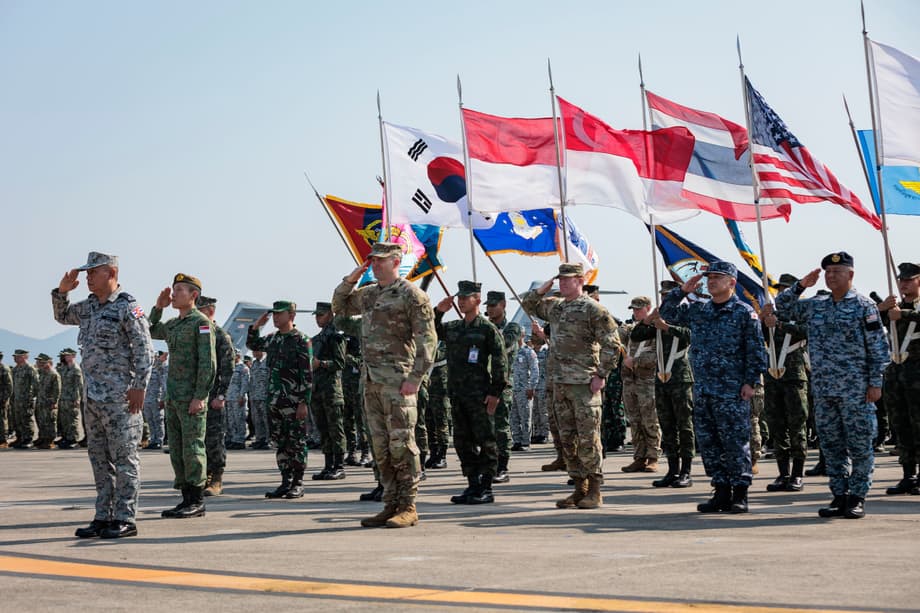
The roots of this strategic realignment are complex, driven by a combination of U.S. policy decisions, Thailand’s domestic political shifts, and China’s aggressive economic and military courtship. While the annual Cobra Gold military exercises continue to symbolize institutional ties, the underlying strategic cohesion between Washington and Bangkok has frayed. The United States can no longer count on the access it once enjoyed, and the mutual trust that defined the alliance during the Cold War has given way to a pragmatic, transactional relationship where Thailand increasingly looks to China for its security and economic future.
Emma Chanlett-Avery, director of political-security affairs at the Asia Society Policy Institute in Washington, highlighted the severity of this shift. She noted that Thailand’s center of gravity has long been leaning toward the People’s Republic of China. This drift is not merely a temporary fluctuation but represents a fundamental change in the geopolitical landscape of Southeast Asia. As the U.S. competes for influence in the region, the loss of Thailand as a reliable partner has significant military and strategic consequences.
The 2014 Coup and the Strategic Vacuum
The pivotal moment in the modern history of the U.S.-Thailand alliance can be traced back to the military coup of 2014, which toppled Thailand’s democratically elected government. In response to the seizure of power by General Prayut Chan-o-cha, the United States pulled back sharply, imposing sanctions and downgrading military engagement. This withdrawal, intended to punish the junta and promote a return to democracy, inadvertently created a power vacuum that Beijing was quick to fill.
Unlike the United States, China does not attach conditions of political reform or human rights to its security cooperation. Beijing stepped in with arms sales and economic incentives, offering the Thai military a partnership free from the lectures and constraints that often accompanied U.S. dealings. According to the Lowy Institute, China sold Thailand nearly $400 million worth of arms between 2016 and 2022, roughly twice as much as the United States during the same period. This hardware included surface-to-air missiles, radars, and tanks, signaling a deepening defense relationship that would have been unthinkable a decade prior.
The contrast in U.S. and Chinese approaches was stark. Washington sought to leverage its influence to encourage democratic restoration, while Beijing prioritized securing a strategic foothold. For the Thai military elite, who were primarily concerned with regime survival and internal stability rather than external threats, the Chinese offer proved far more attractive. The U.S. withdrawal was not just a diplomatic snub; it was a strategic error that pushed a long-standing ally into the arms of its primary competitor.
Zach Cooper, a senior fellow at the American Enterprise Institute, noted that this period marked a high risk of “decoupling” between the two nations. The interests of Washington and Bangkok were no longer aligned, and the trajectory was set for a reduction in joint-training exercises, fewer arms deals, and restricted access to Thai bases.
Divergent Threat Perceptions
The core of the strain between the United States and Thailand lies in their fundamentally different views of China. Washington views Beijing as a revisionist power and the primary long-term challenge to its interests in the Indo-Pacific. The U.S. National Security Strategy explicitly identifies China as a competitor seeking to undermine the rules-based international order. Thailand, however, does not share this threat perception.
Geography plays a crucial role in this divergence. Unlike the Philippines or Vietnam, Thailand has no territorial disputes with China in the South China Sea. Bangkok does not view Chinese expansionism as an existential threat to its sovereignty. Instead, Thailand sees China as its largest trading partner and a benign hegemon that can support its economic development. This lack of shared threat perception undermines the very foundation of the alliance, which was historically built on mutual security concerns.
In a 2024 report, the International Institute for Strategic Studies (IISS) highlighted that Thailand’s tilt toward China hobbles U.S. missile basing options in the region. The report concluded that Thailand would be “highly unlikely” to approve the deployment of U.S. missiles intended to counter the growing ballistic and cruise missile threat from China and North Korea. This reluctance stems from Bangkok’s desire to avoid provoking its giant neighbor and its belief that maintaining good relations with Beijing is more conducive to its national security than antagonizing it.
This strategic divergence is compounded by domestic politics. The Thai military and monarchy-aligned elites view the United States with suspicion, fearing that Washington’s emphasis on democracy and human rights poses a threat to their internal political dominance. China, on the other hand, is seen as a reliable partner that respects regime security and offers tools, such as surveillance technology, to maintain internal control. Consequently, the Thai military has grown increasingly comfortable aligning with Beijing, further alienating Washington.
The Military Hardware Shift and the F-35 Snub
The tangible evidence of Thailand’s realignment is most visible in its defense procurement choices. Historically, the United States was the largest arms supplier to Thailand. The Royal Thai Armed Forces were equipped with American hardware, from F-16 fighter jets to M-41 tanks. Since the 2014 coup, this trend has reversed dramatically. China has become Thailand’s top source of arms, supplying a range of major weapons systems including the VT-4 main battle tanks, VN-1 armored personnel vehicles, and the controversial purchase of a Yuan-class submarine.
The submarine deal, worth over $1 billion, was particularly significant as it marked Thailand’s first foray into submarine warfare. The deal included crew training and a 10-year payment plan, along with the construction of submarine facilities at the Sattahip naval base. This facility now hosts visits from the People’s Liberation Army Navy, allowing China to establish a strategic intelligence and surveillance foothold at a location that was previously a port of call for the U.S. Navy.
A defining moment in the erosion of defense ties came in 2023 when the United States denied Thailand’s request to purchase up to eight F-35 Lightning II fighter jets. As one of the world’s most advanced stealth aircraft, the F-35 represents the pinnacle of U.S. aerospace technology. The rejection sent a clear signal about the declining level of trust between the two nations. At the time, a Thai air force official acknowledged to local media that Thailand’s relationship with China likely played a part in the decision.
Cooper explained the logic behind the denial. He noted that U.S. intelligence officials would be nervous about sharing sensitive details of such advanced technology with Thai leaders who see their interests as more aligned with China. There is a genuine fear that sophisticated American technology could end up in Chinese hands, either through transfer or reverse engineering. This lack of confidence severely restricts the depth of future military cooperation and the sale of high-end capabilities.
The Critical Question of Access and Basing Rights
One of the most strategic consequences of the strained relationship is the loss of potential access to Thai military bases, specifically U-Tapao Royal Thai Navy Airfield. Located on the Gulf of Thailand, U-Tapao is a vital logistics hub for the U.S. military in Southeast Asia. Its location allows for operations further north in the region and serves as a critical transit point between the Middle East and the Pacific.
During the wars in Afghanistan and Iraq, Thailand granted the U.S. access to U-Tapao for logistical support. However, analysts are now convinced that in the event of a conflict in the Taiwan Straits, Thailand would refuse similar access. Chanlett-Avery stated that Bangkok’s tilt has solidified the U.S. conviction that Thailand would not allow U.S. access to its bases during such a contingency.
“With the intensified strategic competition between the U.S. and China, Thailand has leaned heavily toward Beijing… It means the United States can no longer count on the access it once could for its own military,” Chanlett-Avery said.
Cooper emphasized the logistical challenges this creates for the U.S. military. The United States simply does not have many operating locations in the Southeast Asian region. Losing the potential to use U-Tapao complicates the logistical aspects of maintaining a global military presence, particularly as the U.S. seeks to project power into the South China Sea or the Taiwan Strait. While the U.S. can rely on other partners like Singapore, Thailand’s geographic location farther north offers unique advantages that are now effectively off the table.
Washington’s Shifting Strategic Focus
As Thailand has drifted toward China, the United States has also shifted its own strategic priorities in the region. When the Obama administration announced the “Pivot to Asia” in 2011, Southeast Asia was central to the strategy. However, the focus has since migrated eastward toward what is known as the “first island chain”. This maritime boundary runs from Japan to Taiwan and the Philippines, areas where the threat from China is perceived as most acute.
Cooper observed that the U.S. government’s latest National Security Strategy outlines a much more limited set of objectives, one in which mainland Southeast Asia plays a smaller role than it used to. The United States is prioritizing “minilateral” and trilateral security pacts with partners like Australia, Japan, South Korea, and India. These groupings, such as the Quad and AUKUS, largely exclude mainland Southeast Asia, with the Philippines being the primary exception due to its confrontations with Beijing in the South China Sea.
This partial pullback from the mainland has created a feedback loop. As the U.S. focuses on the maritime disputes of the first island chain, Thailand feels less engaged and less compelled to align with U.S. priorities. Conversely, as Thailand moves closer to China, the U.S. sees less value in investing heavily in the alliance. The result is a relationship that is stagnating, lacking the strategic momentum it once possessed.
Thailand’s Balancing Act and Regional Hedging
Despite the deepening ties with China, Thailand has not completely severed its relationship with the United States. Bangkok continues to engage in what observers call “bamboo diplomacy,” a policy of bending with the wind to survive. Thailand guards its ability to maintain multiple alignments, seeking to reap the benefits of economic ties with China while retaining security links with the U.S.
The Carnegie Endowment for International Peace notes that Thailand’s security ties with Washington remain robust and well-established compared to those with Beijing. The two countries still co-host Cobra Gold, the largest multilateral military exercises in the region. The U.S. also remains Thailand’s largest export market. However, Bangkok adheres to a strict policy of equidistance, refusing to lean too heavily toward any one power that might restrict its freedom of action.
This balancing act is becoming increasingly difficult to maintain. China’s economic dominance in the region is overwhelming. Beijing is Thailand’s largest trading partner and a major investor through the Belt and Road Initiative. High-profile projects, such as the high-speed rail link connecting Bangkok to China and the rollout of Huawei’s 5G network, bind Thailand’s economic future to China. Even recent tensions, such as disputes over the damming of the Mekong River or trade deficits, have not deterred Bangkok from seeking closer integration.
Furthermore, China is expanding its security role beyond arms sales. Beijing has attempted to position itself as a security mediator in regional disputes, such as the recent border conflict between Thailand and Cambodia. By offering to mediate and projecting an image of a responsible great power, China is challenging the traditional U.S. role as the region’s security guarantor.
The Future of the Alliance
The trajectory of the U.S.-Thailand alliance suggests a continued cooling of relations. While neither side is interested in a messy public divorce, the strategic substance of the partnership has hollowed out. The U.S. is likely to continue managing the relationship at a minimal level to maintain a presence, but it will lower its expectations regarding Thailand’s willingness to counter Chinese aggression.
For Thailand, the path forward involves navigating a complex relationship with an increasingly assertive China. Bangkok will continue to hedge, perhaps seeking to diversify its security partners by engaging with middle powers like India, Japan, and South Korea. However, the gravitational pull of China’s economy and the lack of U.S. economic statecraft in the region make it difficult for Thailand to resist Beijing’s orbit.
The United States faces a hard choice. It can either accept the alliance as a limited, tactical partnership useful for low-level engagements like disaster relief and counter-terrorism, or it can invest significantly more diplomatic and economic capital to try and win Thailand back. Given the current U.S. focus on the first island chain and the constraints of great power competition, the former seems more likely. The alliance may survive in name, but its function as a bulwark of American power in mainland Southeast Asia has effectively ended.
The Bottom Line
- The U.S.-Thailand alliance, dating back to 1833 and 1954, is deteriorating due to strategic misalignment and Thailand’s drift toward China.
- The 2014 military coup in Thailand prompted U.S. sanctions, creating a vacuum that China filled with arms sales and unconditional support.
- China has become Thailand’s largest arms supplier, selling nearly $400 million in weapons between 2016 and 2022, including tanks and submarines.
- The U.S. denied Thailand’s request to buy F-35 fighter jets in 2023, citing concerns about technology transfer and Thailand’s close ties to Beijing.
- Thailand is unlikely to grant the U.S. access to strategic bases like U-Tapao in the event of a Taiwan conflict, limiting U.S. logistical options.
- U.S. strategic focus has shifted to the “first island chain” (Japan, Taiwan, Philippines), leaving mainland Southeast Asia with lower priority.
- Thailand practices “bamboo diplomacy,” attempting to balance relations between the U.S. and China while maintaining strategic autonomy.