A Decades-Long Practice Comes to an End
South Korea has announced it will formally end its bear bile farming industry, marking a significant milestone in the country’s animal welfare history. The Ministry of Climate, Energy and Environment declared that breeding, possession of bears, and extraction of their bile will be banned beginning January 1. This decision comes as part of a revised animal rights protection law that imposes prison sentences of up to two to five years for violators, signaling the government’s commitment to enforcing the ban.
- A Decades-Long Practice Comes to an End
- Understanding Bear Bile Farming
- The Road to Prohibition
- The Challenge of Rescuing Captive Bears
- A Sanctuary Crisis
- Farmer Perspectives and Economic Impact
- Global Context and International Comparisons
- Traditional Medicine vs. Animal Welfare
- Looking Forward: Implementation Challenges
- The Bottom Line
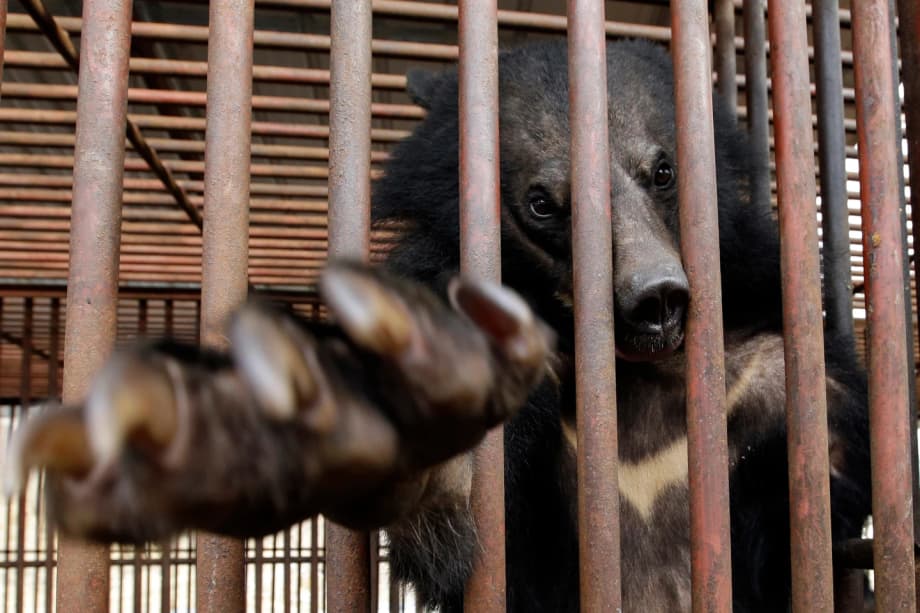
The move addresses a practice that has drawn international criticism for decades. South Korea was one of the few remaining countries that allowed farming to extract bile from bears, primarily Asiatic black bears known as moon bears. These animals were kept in captivity to harvest their bile, a digestive fluid produced by the liver and stored in the gallbladder, which was used in traditional medicine or food believed to promote vitality and stamina.
While the ban represents a major victory for animal rights advocates, significant challenges remain. Approximately 200 bears are still kept in pens across the country, raised specifically for their gall bladders. The transition from a legal industry to a complete prohibition requires careful planning, substantial financial resources, and cooperation between government officials, farmers, and animal welfare organizations.
Understanding Bear Bile Farming
Bear bile farming began in South Korea in the early 1980s, when farmers imported bears from Malaysia and other Southeast Asian countries to establish operations. The practice was initially promoted as a way to meet demand for bear bile while reducing pressure on wild bear populations. At its peak in 2014, approximately 1,000 bears were raised on farms throughout South Korea.
The bile extraction process typically involved keeping bears in small cages where they had limited room to move. Farmers would extract the bile through various methods, including syringes or catheters inserted into the gallbladder. This process often caused significant pain and distress to the animals, many of which suffered from physical and psychological trauma due to their confinement.
Activist Kim Su-jin of the Korean Animal Welfare Association described the conditions on these farms, noting, “Many bears lose their body parts or even die because they attack each other in those small cages. And injured bears never get adequate care.” The cramped living conditions led to fights between bears, resulting in injuries and deaths that could have been prevented with proper management.
The moon bears, also known as Asiatic black bears, were designated as an endangered species in South Korea in 1982. Despite this protected status, the government allowed preexisting farms to continue operating, even permitting the killing of caged bears at age ten or older for bile extraction. This contradictory policy created a tension between conservation efforts and the bear bile industry that persisted for decades.
The Road to Prohibition
The path to banning bear bile farming was neither straight nor short. It represented nearly 30 years of policy deadlock over the fate of captive bears in South Korea. Several factors contributed to the eventual decision to prohibit the practice.
Public opinion shifted dramatically over the past two decades. Questions about the medicinal effectiveness of bear bile, combined with the introduction of cheaper medical alternatives and growing awareness of animal cruelty issues, caused the popularity of the practice to nosedive. Younger generations in particular showed less interest in traditional remedies derived from animal suffering.
International pressure also played a role. South Korea faced ongoing criticism from animal welfare organizations worldwide, with groups like World Animal Protection producing reports and campaigns highlighting the inhumane conditions on bear farms. The country’s continued allowance of the practice stood in stark contrast to its modern, developed image and its stated commitment to environmental protection.
A Tripartite Agreement
A breakthrough came in 2022 when officials, farmers, and animal rights campaigners reached a landmark agreement to prohibit bear bile farming beginning in 2026. This joint declaration represented a significant compromise after years of negotiations. Under the agreement, animal rights groups assumed responsibility for purchasing bears from farmers, while the government committed to establishing facilities to house the rescued animals.
Environment Minister Kim Sungwhan emphasized the significance of this policy shift in a formal statement. “Our plan to end bear farming business is an implementation of our country’s resolve to improve welfare of wild animals and fulfill our related international responsibility,” he said. “We will strive to help bears protected until the last one.” This statement reflected the government’s recognition of both its domestic obligations and its international reputation regarding animal welfare.
The Challenge of Rescuing Captive Bears
While the legislative ban marks progress, the practical challenge of rescuing hundreds of captive bears looms large. As of recent counts, approximately 240 bears remain on farms across South Korea, though numbers fluctuate as some die naturally or are rescued. These animals have spent their entire lives in captivity and cannot simply be released into the wild.
Joshua Powell, a PhD researcher at UCL Geography who has studied South Korea’s bear farms, explained why release is not an option. “These bears could never be released into the wild, as they are too used to being fed by humans,” he noted. “Some may not even be the native Asiatic black bear, given that a number of different species were originally imported to stock South Korea’s bear farms.” This genetic mixing and human habituation means that sanctuary placement is the only viable future for these animals.
The psychological and physical toll of captivity presents additional challenges for rescue efforts. Bears that have spent years in small cages often exhibit abnormal repetitive behaviors, signs of long-term stress known as stereotypies. They may also suffer from various health issues resulting from inadequate diet, lack of exercise, and the trauma of bile extraction procedures.
Slow Rescue Progress
Despite the ban announcement, rescue operations have proceeded slowly. According to recent reports, only 21 bears have been purchased and relocated to a government-run sanctuary in the southern Jeolla province this year. The slow pace is attributed to ongoing disputes over the amount of money to be paid to farmers for giving up their animals.
In a more recent development, four civic organizations including the Korean Animal Welfare Association signed a purchase agreement in August to take in 12 farmed bears from a facility in Yeoncheon, Gyeonggi Province. This marked the first such action since Korea’s bear farming ban took effect, demonstrating both the possibility of progress and the scale of the challenge. With roughly half of the 240 bears still on farms having nowhere to go, animal welfare advocates have called for urgent measures to accelerate rescues.
A Sanctuary Crisis
Perhaps the most pressing challenge facing South Korea’s bear bile farming ban is the lack of adequate facilities to house rescued animals. The government’s current sanctuary infrastructure falls significantly short of what is needed to accommodate all the bears that will require placement.
The Environment Ministry has stated that its Jeolla province sanctuary can hold up to 49 bears. However, Kang Jae-won, an activist at the Korea Animal Welfare Association, argued that the number of bears should not exceed 30 to ensure proper welfare. This discrepancy highlights the tension between maximizing capacity and providing adequate space and care for each animal.
A second government facility was originally scheduled to open in April but has been delayed until 2027 due to flooding issues. This setback leaves rescue operations with even fewer options in the short term. Even after the new shelters in Seocheon, South Chungcheong Province, and Gurye, South Jeolla Province are completed, experts estimate that approximately 120 bears will still have no rescue facilities to receive them.
Kang noted that activists are now exploring alternative solutions, including discussions with foreign zoos to potentially send some rescued bears abroad. “It’s really good (for the government) to reflect on bear bile industry and push to end it but it’s regrettable that there aren’t sufficient measures to protect bears,” said Cheon JinKyung, head of Korea Animal Rights Advocates in Seoul. “There aren’t place where these bears can stay.” Her statement encapsulates the frustration felt by many animal welfare advocates who see the ban as incomplete without adequate housing solutions.
Farmer Perspectives and Economic Impact
The transition away from bear bile farming has not been without controversy or economic hardship for those involved in the industry. Many farmers have invested significant resources into their operations over decades and now face substantial losses as their businesses are effectively outlawed.
Kim KwangSoo, a farmer who raises 78 bears in the southern city of Dangjin, voiced strong criticism of the new policy. “This is a very bad policy,” he said, though acknowledging that he would still observe the law to avoid disadvantages. Kim’s situation illustrates the financial pressures facing many farmers. He once had about 270 bears on his Dangjin farm in 2014 but has accumulated debts of several hundred thousand dollars due to upkeep costs for his remaining animals.
According to Kim, other farmers sold their bears at extremely cheap prices because of economic difficulties. Many had previously accepted government compensation to sterilize their bears, expecting the industry to continue indefinitely. The sudden shift in policy has left them with animals they can no longer breed or exploit and limited options for recouping their investments.
The Environment Ministry has attempted to ease the transition by offering a six-month grace period for farmers raising bears and providing financial incentives for those who keep their animals until they are sold and moved. However, disputes over compensation amounts continue to stall negotiations between farmers and animal rights groups responsible for purchasing the animals.
A 2007 study found that many South Korean bear farmers actually wanted to see an end to bear farming, suggesting that the industry’s decline had created economic difficulties long before the official ban was announced. The legislative prohibition may ultimately provide closure and financial exit for farmers trapped in a dwindling and increasingly controversial business.
Global Context and International Comparisons
South Korea’s decision to ban bear bile farming places it among a growing list of countries taking action against the practice. Vietnam banned bile extraction in 2005, though approximately 300 bears remain in captivity there as enforcement continues. China maintains the largest bear bile industry, with an estimated 20,000 bears in legal operations alone and a market worth around $1 billion according to some reports.
The differences in approach between countries highlight varying cultural attitudes toward traditional medicine and animal welfare. While South Korea has opted for a complete ban, other nations are pursuing different strategies. Dr. Tuan Bendixsen, Vietnam Director for Animals Asia, noted the importance of working within cultural contexts, saying that by “offering solutions and not criticisms,” his organization has been able to drive wider support for ending bear farming beyond just the activist community.
Vietnam’s Alternative Approach
Vietnam’s experience offers valuable lessons for South Korea’s transition. After banning extraction in 2005, Vietnam has been working to move its remaining captive bears to sanctuaries. In 2017, the Vietnamese government signed an agreement with Animals Asia pledging to ensure the nation’s remaining bile bears would be moved to appropriate facilities.
A key aspect of Vietnam’s strategy has been promoting herbal alternatives to bear bile. Animals Asia reports that there are more than 32 herbal alternatives available, and they have been working with schools and communities in bear farming hotspots to grow and promote these alternatives. In some villages, over one-third of remaining bears have been rescued as community support for alternatives has grown.
The organization operates sanctuaries in both Vietnam and China, directly or indirectly employing hundreds of local people in their operations. This model demonstrates how ending bear farming can create rather than eliminate economic opportunities, potentially a useful approach for South Korea to consider as it develops its sanctuary infrastructure.
Traditional Medicine vs. Animal Welfare
The tension between traditional medicine practices and modern animal welfare standards lies at the heart of the bear bile debate. Bear bile has been used in traditional Eastern medicine for centuries, with its first reference appearing in an eighth-century Chinese medical text. The active ingredient, ursodeoxycholic acid, has been shown in research to be effective in treating some liver diseases, gallstones, and improving liver function.
However, the availability of synthetic alternatives has rendered bear bile largely unnecessary from a medical perspective. First synthesized in the 1950s, ursodeoxycholic acid or ursodiol is used around the world for treating gallstones and liver conditions. This synthetic alternative, along with numerous herbal options, provides effective treatments without requiring animal suffering.
Despite the medical alternatives, cultural beliefs about the efficacy and potency of naturally harvested bile persist. Some traditional practitioners and consumers maintain that bear bile possesses qualities that synthetic versions cannot replicate. This belief system has helped sustain demand despite the availability of alternatives and growing awareness of the animal welfare concerns.
The decline in bear bile’s popularity over the past two decades suggests that these attitudes are changing. Questions about medicinal effectiveness, particularly when compared to cheaper and more convenient alternatives, have led many consumers to abandon the product. Combined with increased public awareness of animal cruelty, these shifting attitudes created the social and political space necessary for South Korea’s ban.
Looking Forward: Implementation Challenges
As South Korea moves toward implementing its bear bile farming ban, several significant challenges remain. The legislative framework is in place, but the practical work of rescuing hundreds of bears and providing them with appropriate long-term care requires substantial resources, expertise, and coordination.
Joshua Powell’s research highlighted both progress and ongoing concerns. He visited a farm in Gangwon province where volunteers from Project Moon Bear and Korea Animal Rights Advocates had constructed a new outside enclosure featuring a pool and enrichment items like hollow logs lined with honey and nuts. Specialist animal trainers had even taught the bears to accept hand vaccinations from veterinarians, reducing stress during medical treatments.
These improvements demonstrate the expertise in captive bear management that will be needed to successfully rehouse hundreds of bears from farms across the country. However, Powell also noted that legislative and budgetary hurdles remain, and questions persist about whether planned public sanctuaries will have sufficient capacity.
With 322 captive bears spread across 20 farms in South Korea according to some counts, and a current public sanctuary target of only 120 animals, a significant gap exists. Project Moon Bear and Korea Animal Rights Advocates plan to build a private sanctuary to help address the shortfall, estimated to cost as much as $2.25 million. This is on top of the government’s current expectation that NGOs will help buy animals from bear farms.
A Complex Transition
The transition away from bear farming requires balancing multiple competing interests and addressing complex logistical challenges. Farmers need fair compensation to surrender their animals, bears need appropriate housing and care, and the public needs assurance that tax money is being used effectively. Additionally, the timeline must balance urgency with practicality.
Animal rights groups have praised the government for pressing ahead with the 2022 agreement but continue to urge establishment of bigger protection facilities. The delayed opening of the second government facility until 2027 creates additional pressure on the existing sanctuary system. Private initiatives and international partnerships may be necessary to bridge the gap.
Despite these challenges, the outlook for captive bears in South Korea now looks much brighter than it did just a few years ago. The combination of legislative prohibition, sanctuary development, and shifting public opinion has created momentum that suggests bear bile farming will indeed become a thing of the past in South Korea.
The Bottom Line
- South Korea has officially banned bear bile farming, with prohibitions on breeding, possession, and bile extraction taking effect January 1
- Violators of the new law face prison sentences of two to five years
- Approximately 200-240 bears remain on farms across the country and cannot be released into the wild due to long-term captivity
- Current government sanctuary capacity is insufficient, with space for only 49-120 bears against a need to house hundreds
- A second government sanctuary has been delayed until 2027 due to flooding
- Bear farming began in South Korea in the early 1980s and once involved approximately 1,000 bears across the country
- The ban results from a 2022 agreement between government officials, farmers, and animal rights campaigners
- Animal rights groups are responsible for purchasing bears from farmers while the government builds shelters
- Only 21-33 bears have been rescued so far, with negotiations stalled over compensation amounts
- Bear bile has synthetic and herbal alternatives that are medically effective and do not require animal suffering