Seventeen Manufacturers Shorten the Wait for Payment
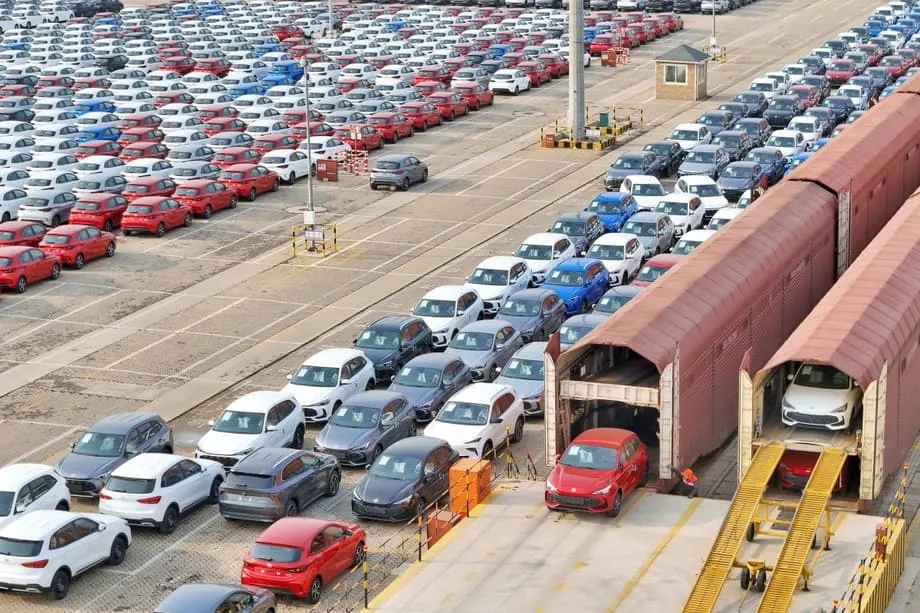
China's leading carmakers are paying suppliers in an average of 54 days, according to a February 2026 study by the China Association of Automobile Manufacturers (CAAM). The survey of 17 major vehicle manufacturers, including BYD, Chery, SAIC and Xiaomi, found that four had brought payment times below 50 days. During the previous three years, major assemblers routinely stretched payment periods to approximately 300 days, leaving component makers waiting close to a year for money they were owed.
Contents
- Seventeen Manufacturers Shorten the Wait for Payment
- How the Price War Squeezed Suppliers
- The Steps Behind Beijing's Intervention
- Pricing Rules Reach Beyond Factory Costs
- Suppliers Gain Cash and Earlier Payment Options
- When Does the Payment Clock Start?
- A Debt Warning Draws an Evergrande Comparison
- Consolidation Is Already Reaching Suppliers
- Falling Sales Complicate the Shakeout
- Exports Offer an Outlet, With Growing Restrictions
- The Essentials
The change follows rules that took effect on June 1, 2025, requiring large companies to settle most supplier payments within 60 days. Beijing's revised Regulations on Ensuring Payments to Small and Medium-sized Enterprises form part of a wider campaign against what officials call disorderly competition, including the price wars that have squeezed profits across China's automotive industry.
The difference between approximately 300 days and the surveyed average of 54 days is about 246 days. For suppliers that must pay workers and buy materials while waiting for customers to settle bills, receiving money that much sooner changes how much cash they need to keep operating. Previously, delayed payments effectively allowed manufacturers to borrow from suppliers without paying interest.
Chen Jinzhu, chief executive officer of consultancy Shanghai Mingliang Auto Service, said government intervention had succeeded where market forces had failed. Automotive groups faced severe punishment for failing to comply with the authorities' requirements, he said. He also argued that losing access to cash retained through delayed payments would leave manufacturers with less money to sustain aggressive discount campaigns.
As of February 13, 2026, the payment improvements are arriving alongside tighter pricing rules, weakening domestic sales and an expected industry shakeout. Suppliers are getting relief, while manufacturers face pressure to finance their own operations without passing so much of the burden to smaller businesses.
How the Price War Squeezed Suppliers
More than 100 domestic car companies have been fighting for survival in a market with far more production capacity than it needs. Factory utilization has fallen to 49.5%, meaning that factories are using roughly half their capacity, while 3.5 million unsold vehicles sit in inventory. Those conditions give manufacturers a strong reason to cut prices to move cars.
Industry participants describe the competition as neijuan, or involution. In this setting, the term means an exhausting cycle in which companies compete ever harder without making much collective progress. A strategy that began as a way to encourage electric vehicle adoption has become a struggle that erodes the money available to manufacturers and their suppliers.
BYD, the world's largest electric vehicle manufacturer, escalated the price conflict in May 2024 by cutting prices by as much as 34% across 22 models. Geely, Chery and SAIC-GM followed with reductions of their own. Average automotive company profit margins fell from nearly 8% in 2017 to 4.3% in 2024, then to 3.9% in the first quarter of 2025.
A profit margin measures the share of revenue left as profit. At 3.9%, a company would keep 3.9 yuan in profit for every 100 yuan of revenue. With margins already narrow, manufacturers sought savings from component makers, demanding annual price reductions of at least 10% while also delaying payments for months.
The China Iron and Steel Association warned that steel companies faced minimal margins and mounting pressure on their cash as carmakers requested price cuts exceeding 10% and delayed payments indefinitely. Financial analysis put BYD's average time to pay vendors at 275 days in 2023. Suppliers were effectively financing their customers while also accepting lower prices for what they sold.
The Steps Behind Beijing's Intervention
President Xi Jinping called for a crackdown on chaotic, cutthroat price wars among companies in an article published in a Communist Party magazine. The automotive campaign links that concern about competition to the treatment of suppliers and the financial health of the industry.
The Ministry of Industry and Information Technology summoned the chief executives of more than a dozen major automakers, including BYD, Geely and Xiaomi, to Beijing in mid-2025. Its message was that manufacturers should avoid sales below cost and inappropriate price cuts, and treat suppliers fairly.
The main events show how pressure on manufacturers developed from discounting into a broader regulatory response:
- In 2017, average automotive company profit margins were nearly 8%.
- In 2023, financial analysis put BYD's average supplier payment period at 275 days.
- In May 2024, BYD cut prices by up to 34% across 22 models. Average industry profit margins reached 4.3% that year.
- In the first quarter of 2025, average profit margins fell to 3.9%.
- On June 1, 2025, revised payment regulations took effect, requiring large companies to settle most supplier bills within 60 days.
- In mid-2025, the industry ministry summoned major automakers to discuss pricing and supplier treatment.
- In January 2026, passenger car sales fell 19.5% and new energy vehicle sales dropped 20%.
- In February 2026, CAAM reported an average payment period of 54 days, while the market regulator issued final pricing guidelines.
The payment rule addresses how quickly money reaches smaller businesses. The pricing measures address how manufacturers sell cars and distribute the losses associated with discounting. Together, they reach beyond the price displayed to a buyer and into the commercial relationships that support each sale.
Pricing Rules Reach Beyond Factory Costs
The State Administration for Market Regulation issued final guidelines in February 2026 that effectively ban automakers from selling vehicles below their total production cost. The definition includes administrative, financial and sales overheads, as well as the costs associated with producing a vehicle.
That broader calculation closes loopholes under which a company could describe an individual vehicle sale as profitable while the business was losing money after its other expenses were counted. A manufacturer must consider those wider costs when judging whether its selling price falls below cost.
The guidelines also outlaw price fixing between automakers and suppliers. They prohibit brands from forcing dealerships into sales that lose money through punitive rebate programs. A rebate is money returned under a sales arrangement; the rules target programs that pressure dealers to accept losses.
Beijing's response therefore covers several points where financial pressure can move through the industry. Manufacturers face limits on pricing, suppliers receive payment protections, and dealers receive protection against rebate arrangements that force them into unprofitable transactions.
Suppliers Gain Cash and Earlier Payment Options
Fourteen of the 17 companies surveyed by CAAM introduced additional preferential measures for small and medium-sized enterprise suppliers. Two now pay entirely in cash instead of commercial paper, while five allow suppliers facing financial constraints to apply for early payment.
Several manufacturers have also set aside special funds totaling more than 10 billion yuan to improve supplier payment arrangements. For the thousands of smaller businesses in the automotive supply chain, these measures address an immediate problem: having enough money available to continue operating while waiting for customers to pay.
The surveyed average of 54 days is six days shorter than the 60 day requirement for most payments covered by the new rules. Four manufacturers have gone further by achieving payment terms below 50 days. The additional support measures show that some companies are also changing the form of payment or allowing faster settlement when suppliers need it.
When Does the Payment Clock Start?
Yang Hongze, chairman of Autolink, a supplier of intelligent vehicle technologies, welcomed the payment pledges but sought clarity on two practical details: whether manufacturers would pay in cash or commercial paper, and which event would start the payment period.
Some carmakers count from the date they accept a delivery. Others wait for centralized reconciliation or invoice confirmation. Reconciliation means checking that the buyer's and supplier's records agree. A supplier can therefore face a longer wait after delivering goods if the payment clock begins only after those later administrative steps.
Commercial paper is a promise to pay on a fixed future date. It has been widely used in China's property sector because it is not categorized as debt that carries interest. A supplier receiving such paper may still need cash before the promised payment date.
Suppliers sometimes sell the paper in a secondary market before it matures, accepting a discount in exchange for getting money sooner. That reduces the amount they ultimately receive. Payment speed and payment form therefore both matter to a business trying to meet its own bills.
BAIC and SAIC specifically pledged not to pay suppliers with commercial paper. The extent of their previous use remains unclear, as does the precise starting point for payment periods across manufacturers. Those details will determine how closely the headline payment terms match the time suppliers actually spend waiting for usable money.
A Debt Warning Draws an Evergrande Comparison
Wei Jianjun, founder and chairman of Great Wall Motor, publicly warned that the automotive industry already had its own version of Evergrande. He did not identify a particular company. Evergrande, the bankrupt property giant, crashed in 2021 with $300 billion in debt.
The comparison put the financial condition of carmakers alongside the collapse of a major property business. It also brought attention to how borrowing and unpaid obligations can build while companies continue to compete for sales.
BYD responded by threatening legal action against anyone comparing it with Evergrande. The company defended its 70% debt ratio as comparable with global manufacturers such as Ford and Toyota. A debt ratio describes the size of a company's debts relative to its assets.
Consolidation Is Already Reaching Suppliers
China has roughly 169 automakers, and more than half hold less than 0.1% of the market each. Such small market shares leave many companies in an unsustainable position. Analysts describe the industry as entering the knockout rounds of consolidation, when businesses close or the market becomes concentrated among fewer competitors.
Bank of America analysts expect a severe shakeout in 2026. CAAM predicts that only five to seven dominant brands will survive. Those expectations place the improved payment arrangements within a market where many suppliers may also have to manage the failure of customers.
Ji Yue, an electric vehicle startup founded in 2021 as a joint venture between internet giant Baidu and automaker Geely, collapsed within six months of appearing successful. Its failure shows how quickly trouble at a car company can reach businesses outside vehicle manufacturing.
Li Hongxing, who runs a social media advertising agency, borrowed money to cover advertising costs for Ji Yue because of its apparent efficiency and wealthy backers. When the company failed, he was left with 40 million yuan in debt.
Li described the experience as sheer despair. He said the sudden collapse of a large company backed by two major shareholders had been unforeseeable. His experience captures the financial exposure of service providers as well as component suppliers when an automaker stops operating.
Falling Sales Complicate the Shakeout
Passenger car sales fell 19.5% in January 2026, their fastest decline in almost two years. New energy vehicle sales dropped 20%. The reduction in tax exemptions for electric vehicle purchases and uncertainty over trade-in subsidies added to the pressure from weakening domestic demand.
Manufacturers are consequently facing several demands at once: moving unsold cars, coping with lower sales, meeting tighter pricing standards and paying suppliers faster. The cash previously retained by delaying bills is less available to support discounts while the government is also seeking to curb destructive competition.
More than 4.8 million people work in the automotive industry. Policymakers want to reduce excess production capacity without causing mass unemployment and social instability. That makes the pace and shape of consolidation a concern extending well beyond the survival of individual brands.
Exports Offer an Outlet, With Growing Restrictions
Chinese automakers are accelerating their expansion abroad as domestic competition becomes harder to sustain. Some 20% of vehicles manufactured in China are now destined for export, with exports up 11% from the previous year.
The flow of inexpensive vehicles has prompted defensive measures in other markets. Canada has imposed tariffs of 100%, the European Union has introduced duties to counter subsidies, and other markets have adopted restrictions.
The price gap can remain large even after tariffs. In the comparison given, a BYD Seal priced at 12,500 euros in China would cost approximately 18,125 euros after a tariff of 45%, roughly half the price of a comparable Tesla Model 3. The calculation shows why tariff barriers and the underlying price advantage both matter to overseas competition.
Chinese officials are also concerned that the price war is damaging the global reputation of Made in China products. State media has warned that cheap cars could hurt exports. Excessive cost cutting can lead to compromises in quality, adding another concern to the drive for overseas sales.
China tightened electric vehicle export rules by requiring carmakers to obtain licenses to ship overseas starting in 2026. The aim is to rein in the practice of flooding foreign markets with cheap vehicles, including those whose quality may have suffered under pressure to reduce costs.
He Xiaopeng, founder and chief executive officer of Xpeng, expects industry turmoil to continue for another five years, leaving perhaps only five major players. Chetan Ahya, chief Asia economist at Morgan Stanley, said tackling oversupply would be harder in automotive manufacturing than in industries dominated by the state because private companies have a larger presence. That makes consolidation more complex.
The faster payment cycle relieves one immediate burden on suppliers. Structural reforms are still needed to address the excess capacity behind the pricing and payment crises. Beijing is attempting to improve commercial discipline while managing a contraction that affects manufacturers, smaller businesses, workers and overseas markets.
The Essentials
- CAAM's February 2026 survey found that 17 major carmakers paid suppliers in an average of 54 days, compared with payment periods of approximately 300 days during the previous three years.
- Four surveyed manufacturers achieved terms below 50 days, and 14 introduced additional support for smaller suppliers.
- Rules effective from June 1, 2025, require large companies to settle most supplier payments within 60 days.
- February 2026 pricing guidelines effectively ban vehicle sales below total production cost, outlaw price fixing with suppliers and protect dealers against punitive rebate programs.
- Average automotive profit margins fell from nearly 8% in 2017 to 3.9% in the first quarter of 2025.
- China has roughly 169 automakers. CAAM expects five to seven dominant brands to survive consolidation.
- January 2026 passenger car sales fell 19.5%, while new energy vehicle sales dropped 20%.
- About 20% of vehicles manufactured in China are destined for export, as tariffs abroad and new Chinese export licensing requirements reshape overseas sales.