A trade milestone ahead of the APEC meeting
Shenzhen has become the first city in mainland China to record more than 5 trillion yuan in imports and exports, its commerce bureau director, Zhang Feimeng, announced at a November 14, 2026, briefing during APEC leaders' meeting week. The milestone follows a sharp rise in purchases from overseas, alongside continued growth in exports of electronics and other manufactured goods.
Contents
- A trade milestone ahead of the APEC meeting
- Imports are growing faster than exports
- Electronics keep exports growing
- Asia-Pacific partners account for most trade
- Ports and routes carry the expansion
- Qianhai combines trade growth with customs changes
- Private companies lead as investment grows
- Research links extend beyond the movement of goods
- How the milestone developed
- Key Points
Shenzhen Customs recorded 4.65 trillion yuan in trade during January through September, up 38.8% from the same period in 2025 and already above the city's total for that entire year. Imports reached 2.24 trillion yuan, increasing 70.1%, while exports rose 18.5% to 2.41 trillion yuan. Shenzhen accounted for 11.6% of China's foreign trade during those nine months.
Zhang announced the higher cumulative total at a briefing for Chinese and international media at the APEC press centre. He did not specify the statistical cutoff date for the figure exceeding 5 trillion yuan. The detailed September figures and the later milestone describe successive stages of the city's expansion.
The growth reaches from semiconductor components and computers to fruit arriving from Southeast Asia. It also connects Shenzhen more closely with other members of the Asia-Pacific Economic Cooperation forum, which accounted for nearly seven tenths of its trade during the first nine months.
For manufacturers, the changes mean more imported components and wider overseas markets. For fruit suppliers, shipping companies and logistics businesses, they mean more goods moving through Shenzhen's ports and distribution networks.
Imports are growing faster than exports
Shenzhen's import growth of 70.1% was almost four times its export growth rate of 18.5%. Calculated from the customs totals, imports represented about 48.2% of trade during the first nine months, leaving a gap of 170 billion yuan between exports and imports.
Manufacturing inputs account for much of that buying. Imports of machinery and electrical products reached 1.77 trillion yuan, up 64.3%, and represented 79% of imports. Integrated circuit imports grew by more than 60%, while imports of computer components rose 130%.
Integrated circuits are the chips that process or store information inside electronic equipment. Computer components and chips support the production of devices and the computing systems used for artificial intelligence, making overseas purchases part of Shenzhen's manufacturing activity as well as its consumer economy.
Food imports are expanding too. The volume of durians arriving through Shenzhen ports from Malaysia and Vietnam increased 25.9% during the first nine months. Shenzhen also held 10 events under its campaign to connect overseas suppliers with China's market and introduced a package of 10 import measures intended to open sales channels and reduce trading costs.
Electronics keep exports growing
Shenzhen's export value has ranked first nationally for 33 consecutive years, beginning in 1993. During the first nine months of 2026, machinery and electrical product exports reached 1.87 trillion yuan, up 21.4%, accounting for 77.7% of the city's exports.
Electronic component exports increased 47.7% to 390 billion yuan. Exports of computers and their components rose 32.6% to 313.33 billion yuan. Electric vehicles, lithium batteries and solar products, often grouped together in Chinese trade statistics, generated 107.3 billion yuan in exports, up 25%.
Exports of a group including 3D printers, digital cameras and smartphones increased a combined 15.5%. A narrower grouping of 3D printers, digital cameras and related products increased 46.5%, illustrating the faster growth of some specialised devices within the broader electronics sector.
Companies are finding customers for products that serve specific industrial needs. Seeed Technology's sales network covers more than 160 countries and regions, with products ranging from basic computing hardware to equipment for industrial applications. Robot maker LimX Dynamics secured orders from Germany and Australia after participating in overseas exhibitions.
Bambu Lab's overseas revenue accounts for more than 70% of its total, and its products reach more than 100 countries and regions. Its desktop 3D printers build objects layer by layer from digital designs, allowing users to produce customised items without first making a conventional mould.
Asia-Pacific partners account for most trade
Shenzhen traded 3.23 trillion yuan in goods with other APEC economies during January through September, up 40%. Against the city's total of 4.65 trillion yuan, that amounts to about 69.5%, making the regional relationship central to its trading activity.
APEC uses the term economies for its members because participation includes trading jurisdictions as well as countries. Shenzhen's trade with other APEC members ranks first among mainland Chinese cities.
Hong Kong, the Association of Southeast Asian Nations and Taiwan were Shenzhen's three largest trading partners in the customs breakdown. Trade with them reached 933.33 billion yuan, 697.17 billion yuan and 457.17 billion yuan respectively. Together, they accounted for 44.9% of the city's trade.
Hong Kong recorded the fastest growth among those three, at 67.8%, followed by ASEAN at 31.1% and Taiwan at 23.1%. Trade with other members of the Regional Comprehensive Economic Partnership, a regional trade agreement known as RCEP, reached 1.31 trillion yuan, increasing 41.7%.
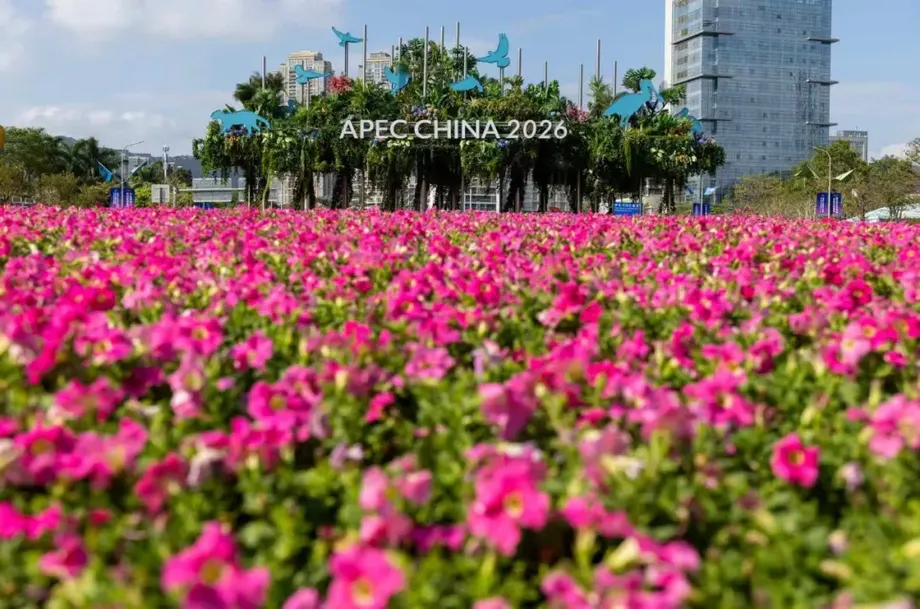
Shenzhen's hosting of the 33rd APEC Economic Leaders' Meeting places these commercial links at the centre of its international role. The gathering follows President Xi Jinping's invitation on November 1, 2025, for participants to meet in Shenzhen in 2026.
Ports and routes carry the expansion
Yantian port area handled more than 12 million standard container units during the first nine months, approximately 10% more than a year earlier. Dachan Bay handled more than 2 million, increasing 18.29%. A standard container unit measures capacity using the equivalent of a container 20 feet long.
Shenzhen's western port area has 205 international shipping routes, including 165 serving Asia, or roughly four fifths of its international network. The eastern port area has 79 international routes, with a greater focus on Europe and the Americas.
Rail provides another route to overseas buyers. Shenzhen's China-Europe freight train network has 29 routes reaching 41 cities in 17 countries and regions. More than 2,600 foreign trade businesses use the service, which also carries goods sold through online platforms and goods moving under customs supervision.
Passenger movements show growing connections alongside cargo activity. During the first 10 months, foreign nationals made 1.559 million departures through Shenzhen's airport border checkpoint, up 27.7%. Travellers from other APEC economies accounted for 1.25 million departures, an increase of 29.6%.
Qianhai combines trade growth with customs changes
Qianhai, the cooperation zone beside Hong Kong and the Pearl River estuary, recorded almost 1 trillion yuan in foreign trade by the end of September. Its growth exceeded 70%, placing the zone at roughly one fifth of Shenzhen's trade, using the rounded totals.
The General Administration of Customs introduced 18 measures supporting Qianhai's reform and opening in November 2025. Shenzhen Customs subsequently developed 40 specific actions. A Qianhai supervision model combining direct cargo movement with digital monitoring has expanded to land and air entry points, reducing logistics time by more than 30%.
Customs procedures also affect smaller shipments. A pilot arrangement allows goods sold through cross border online platforms to be inspected before loading. This addresses a problem in which an entire container can wait because one consignment requires examination.
Shenzhen Customs introduced 16 local measures under the 2026 campaign to make international trade easier. Other measures include smarter inspection of imported production components and coordinated clearance for complete sets of equipment used in major projects.
Businesses can also use certificates of origin to claim tariff reductions under applicable trade agreements. Authorised Economic Operator certification, known as AEO, recognises businesses that meet customs standards and can provide access to simpler procedures and fewer inspections. Shenzhen has introduced 23 incentives for enterprises with advanced certification.
Private companies lead as investment grows
Private enterprises generated 3.46 trillion yuan in Shenzhen's trade during the first nine months, up 49.9%, and accounted for 74.3% of the total. Enterprises with foreign investment recorded 1.14 trillion yuan, increasing 22.8%, with a share of 24.5%.
Shenzhen also received more than 44 billion yuan in foreign investment actually put to use, an increase exceeding 60%. About 40 billion yuan came from other APEC economies, accounting for roughly nine tenths of the total. More than 8,000 enterprises with foreign investment were established in the city during the same period.
International companies are using Shenzhen for production and research. Automotive supplier Valeo's Shenzhen operation has expanded from one building to nine and become its largest single production base. AMD has established an ecosystem innovation centre, while Singapore transport operator ComfortDelGro has set up a wholly owned subsidiary and plans to locate its autonomous mobility headquarters in Shenzhen by the end of 2026.
Investment also flows outward. Shenzhen fluid technology company Keyto established a factory in Penang, Malaysia, reaching break even in its first year of production. Battery materials producer BTR has built an Indonesian plant capable of producing 160,000 tonnes of anode materials annually. Anodes are one of the two main electrodes inside a battery.
Research links extend beyond the movement of goods
Shenzhen's commercial connections increasingly include shared research and technology services. In May 2026, researchers from China, Japan, South Korea, Singapore, Malaysia and Thailand jointly published an Asian technology roadmap for synthetic cells in Nature Biotechnology.
Liu Chenli, director of the Shenzhen Institute of Advanced Technology at the Chinese Academy of Sciences, initiated and led the effort. Synthetic cell research seeks to build simplified systems that reproduce functions of living cells, bringing together biology and engineering.
Companies are extending related cooperation into commercial applications. Tencent is working with major businesses in Indonesia and Malaysia using cloud computing and artificial intelligence. Industrial AI company SmartMore serves more than 730 enterprises worldwide.
Whirlpool's Shenzhen research operation has secured more than 100 technology patents in fields including intelligent controls, structural design and energy efficiency. Its temperature control, variable frequency and integrated structural technologies are used in Asia-Pacific and North American markets. These activities give Shenzhen a role in designing products used overseas as well as manufacturing them.
How the milestone developed
Shenzhen's latest total follows a sequence of customs reforms, expanding trade and preparations to host APEC. The key dates show how the city moved from a record nine months to the announcement that trade had passed 5 trillion yuan.
- November 1, 2025: Xi Jinping invited APEC participants to Shenzhen for the 2026 gathering.
- November 2025: The General Administration of Customs introduced 18 measures supporting reform and opening in Qianhai.
- January through September 2026: Shenzhen recorded 4.65 trillion yuan in trade, already exceeding its full 2025 total.
- October 20, 2026: Shenzhen Customs released the detailed figures for the first nine months.
- November 14, 2026: Commerce bureau director Zhang Feimeng announced that the cumulative total had exceeded 5 trillion yuan.
Trade figures measure the value of goods crossing borders, while port figures measure the amount of container handling. Shenzhen's results show growth in both, supported by larger imports, rising exports and expanding transport connections. For businesses, the practical benefits depend on getting components into factories and finished goods to customers with less waiting and lower costs.
Key Points
- Shenzhen announced on November 14 that imports and exports had exceeded 5 trillion yuan, a first for a mainland Chinese city.
- Trade reached 4.65 trillion yuan during January through September, increasing 38.8% from a year earlier.
- Imports grew 70.1% to 2.24 trillion yuan, while exports rose 18.5% to 2.41 trillion yuan.
- Other APEC economies accounted for 3.23 trillion yuan, or about 69.5%, of trade during those nine months.
- Private enterprises generated 74.3% of trade, while Qianhai recorded almost 1 trillion yuan.
- Electronics, production components, fruit imports and wider shipping connections all contributed to the expansion.