Seoul records the sharpest fall in foreign purchases
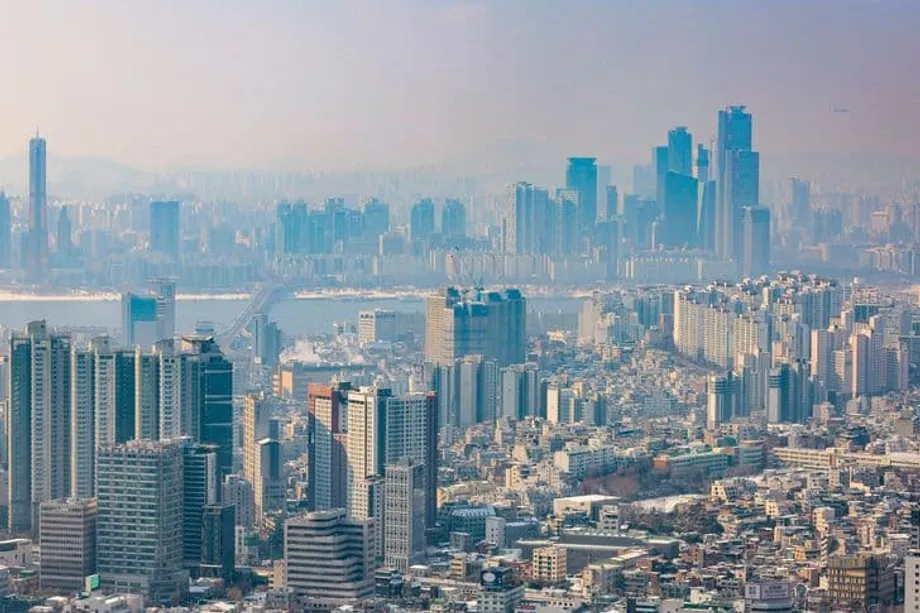
Foreign nationals bought 243 homes in Seoul between September and December 2024, down from 496 during the same four months a year earlier, according to government figures announced on February 12, 2026. The 51 percent decline was the capital's steepest since comprehensive tracking of foreign property purchases began. In Seocho District, purchases fell from 92 to 11, a drop of 88 percent.
Contents
- Seoul records the sharpest fall in foreign purchases
- What foreign buyers must do before purchasing
- The dates behind the restrictions and review
- Luxury districts experience the largest declines
- Bucheon and Incheon show the wider reach
- Chinese and American buyers follow different patterns
- Homes above 1.2 billion won lose more demand
- How authorities check whether owners live in their homes
- Business loans and property auctions face scrutiny
- Tax changes bring domestic property dealings into focus
- What to Know
The Office for Government Policy Coordination presented the figures at the seventh Real Estate Illegal Activities Response Council meeting at the Government Complex Seoul. Second Vice Minister Kim Yong-su chaired the session, which brought together senior officials from the Ministry of Land, Infrastructure and Transport, the Financial Services Commission, the National Tax Service and the National Police Agency.
Across the greater Seoul metropolitan area, foreign housing transactions fell 35 percent, from 2,279 to 1,481. Gyeonggi Province recorded a 30 percent decline, while Incheon recorded a 33 percent fall. Officials reviewed the figures to assess measures intended to cool the property market and coordinate further enforcement.
The decline followed the August 26, 2024 designation of all Seoul and major parts of the surrounding capital region as property transaction permit zones for foreign nationals. Buyers covered by the rules must obtain government approval before purchasing a home and must live in it for two years.
The government framed the restrictions as a response to sustained public criticism that overseas capital was pushing up housing prices in already expensive markets, especially districts popular with international investors. The policy represents one of South Korea's most restrictive recent approaches to foreign property ownership, combining permission to buy with an obligation to occupy the property.
What foreign buyers must do before purchasing
Foreign nationals seeking apartments, villas or other residential properties within the designated areas must secure permission from the relevant authorities before entering into purchase contracts. The approval process adds paperwork and uncertainty over timing to transactions that previously operated under less restrictive conditions.
The government considers that extra scrutiny a way to filter out speculative demand. Speculation means buying mainly in the hope that a property will rise in value, rather than because the buyer needs somewhere to live. Requiring approval makes it harder to make a quick investment decision without first satisfying the authorities.
Purchasers must also physically occupy their homes as their primary residence for two years. Holding a property empty, renting it out or using it only for seasonal accommodation would conflict with that requirement. Officials intend the rule to direct purchases toward people who will actually live in the homes.
The stated expiry date for the designation is August 25, 2026. Its duration is described as one year, although the stated implementation date, August 26, 2024, and expiry date span two years. Those dates leave the length of the designation unclear.
The policy changes the government's relationship with foreign owners after a purchase. Earlier registration arrangements largely tracked ownership. The permit system adds conditions governing how a property must be used, so a buyer's responsibilities continue after the title has been registered.
The dates behind the restrictions and review
The transaction comparison covers September through December 2024 against the same period in 2023. The council reviewed those figures in February 2026, alongside compliance inspections and other measures aimed at illegal property activity.
- August 26, 2024: Seoul and major parts of the capital region were designated as permit zones for foreign residential purchases.
- September to December 2024: Foreign purchases fell to 1,481 across the capital region, including 243 in Seoul.
- January 2025: The land ministry and municipal governments began inspections of compliance with the residence requirement.
- February 12, 2026: The seventh Real Estate Illegal Activities Response Council reviewed the transaction figures and enforcement plans.
- August 25, 2026: The stated expiry date for the permit designation.
The council's agenda extended beyond foreign purchases. Officials also examined business borrowing used in property auctions and possible tax avoidance as domestic owners of multiple homes approach a change in capital gains tax treatment.
Luxury districts experience the largest declines
Gangnam, Seocho, Songpa and Yongsan collectively recorded a 65 percent fall in foreign purchases. These four districts had previously been designated as speculative overheating zones and areas subject to market adjustment measures, placing them at the centre of government concern about expensive housing.
Seocho recorded the largest decline among Seoul's 25 autonomous districts. Its fall from 92 transactions to 11 meant 81 fewer purchases during the four months being compared. The scale of the reduction suggests that foreign demand there was particularly sensitive to the new approval and residence requirements.
The near disappearance of foreign purchases in Seocho also points toward an investment component in earlier demand, including buyers seeking to spread their money across different assets. A home bought for that purpose can become less attractive when its owner must live there rather than simply hold it as an investment.
Gangnam, Seocho and Songpa, commonly grouped as the Gangnam Three Districts, have drawn overseas capital to some of South Korea's most exclusive housing markets. Their premium educational infrastructure has also been part of their appeal. Together with Yongsan, these affluent areas experienced a sharper contraction than Seoul as a whole.
The figures show where the change was most concentrated: a 65 percent decline across the four districts, compared with 51 percent across the capital. Officials see this concentration as evidence that the restrictions are having a strong effect in expensive markets where they considered speculation especially pronounced.
Bucheon and Incheon show the wider reach
Bucheon recorded the steepest decline within Gyeonggi Province. Foreign purchases fell 51 percent, from 208 to 102, suggesting that the city had attracted a substantial number of overseas buyers before the restrictions. Its transport connections to Seoul help explain its place within the capital region's housing market.
In Incheon's Seo District, transactions fell from 50 to 27, a decline of 46 percent. Other districts in the port city recorded more moderate contractions, contributing to Incheon's total decline of 33 percent.
The municipal figures show that foreign buying had extended beyond Seoul's best known luxury districts. Secondary cities offered relatively lower prices while keeping buyers near metropolitan employment centres and international transport infrastructure, including Incheon International Airport. The new rules affected those markets as well as the capital's most expensive neighbourhoods.
Chinese and American buyers follow different patterns
Chinese nationals remained the largest foreign buyer group by transaction volume. Their purchases across the capital region fell 32 percent, from 1,554 to 1,053. American purchases declined more sharply, falling 45 percent from 377 to 208.
The different rates of decline suggest that the two groups entered the restrictions with different mixes of properties and purchasing goals. Chinese buyers retained a larger presence in the middle of the market, while American buyers showed a stronger preference for more expensive homes.
Properties valued above 600 million won accounted for 48 percent of American purchases, compared with 10 percent of Chinese purchases. That price distribution helps explain why American transaction volumes fell more sharply when expensive housing experienced the largest decline.
American buyers may also have faced greater difficulty meeting the residence requirement because of distance or living arrangements. The policy requires an owner to make the purchased home a primary residence, which can complicate a purchase for someone whose work or family life remains elsewhere.
The figures suggest different investment strategies, sources of capital, residential needs and intended holding periods among foreign purchasers. They also show why the total decline conceals substantial variation: buyers concentrated in premium housing were exposed to a larger contraction than those purchasing less expensive properties.
Homes above 1.2 billion won lose more demand
Purchases of homes priced below 1.2 billion won declined 33 percent. Transactions involving homes above that threshold fell 53 percent, a gap of 20 percentage points. The sharper fall in the upper price bracket supports the government's view that the restrictions have especially affected expensive investment purchases.
Less expensive homes showed greater resilience, although their transaction volume also fell substantially. That pattern is consistent with a larger role for practical housing needs in the lower price segment, compared with purchases requiring a much larger capital commitment.
Kim Itak, first vice minister of the Ministry of Land, Infrastructure and Transport, said the government viewed the decline as a sign that demand contributing to an overheated market was weakening. He also set out the ministry's intention to enforce the residence obligation:
The decrease in foreign housing transactions is a signal that demand which had been fueling market overheating is declining. We will effectively monitor compliance with actual residence obligations and establish an order in the real estate market that is centered on genuine end-user demand.
The government's stated goal is to make the market more responsive to people buying homes to live in. Approval requirements address who can complete a purchase, while residence checks address what happens after that purchase.
How authorities check whether owners live in their homes
The Ministry of Land, Infrastructure and Transport and municipal governments began intensive compliance inspections in January 2025. Their task is to establish whether foreign purchasers actually occupy their homes, rather than relying on an ownership registration or an address used to receive mail.
Inspectors compare utility records, immigration information and physical address details. Evidence can include electricity consumption, addresses on residence cards, municipal tax filings and confirmations from neighbourhood administrative centres. These records help authorities assess physical occupancy and continued residence.
Owners found to have breached the requirement first receive formal administrative orders directing them to comply. Continued failure can lead to compulsory compliance charges, intended to offset gains from holding the property without meeting its conditions.
Authorities also retain the power to cancel the purchase permit. Revocation could ultimately force an owner to dispose of the property. The enforcement process therefore moves from an order to correct the violation, through financial penalties, to the possible loss of permission to hold the home.
The monitoring framework involves several public bodies and is intended to detect attempts to get around the rules through alternative transaction arrangements, shell companies or nominal owners. A nominal owner holds a property in their name for someone else, potentially concealing the person who actually controls it.
Business loans and property auctions face scrutiny
The Financial Services Commission and the Financial Supervisory Service have begun targeted monitoring of business loan money flowing into property auctions. Regulators are examining auction balance loans by region and business sector to identify concentrations that may warrant closer investigation.
An auction balance loan provides money to complete payment for a property bought at auction. Officials are concerned about entrepreneurs obtaining financing for a stated business purpose and then directing that money into residential purchases.
Such arrangements can provide a route around ordinary mortgage restrictions and requirements for a buyer's initial payment. Authorities are also watching for attempts to bypass foreign buyer permit requirements through auctions and corporate financing structures.
Regulators are prepared to conduct intensive inspections on site if lending becomes concentrated in categories considered risky or if particular neighbourhoods show unusual increases in auction activity. The aim is to prevent buyers from substituting another purchasing method to avoid the restrictions.
Tax changes bring domestic property dealings into focus
The February 12 council meeting also examined the approaching expiry of provisions deferring heavier capital gains tax treatment for domestic owners of multiple homes. Capital gains tax is a tax on the profit made when an asset, such as a property, is sold. A change in that treatment can affect when an owner decides to sell.
Authorities expect the expiry to encourage more selling by Korean investors holding several properties. No expiry date for the tax provisions was given. Officials anticipate that the transition could also prompt attempts to reduce tax bills through unlawful transaction arrangements.
One concern is the use of down-contracts, in which the price recorded in a contract is lower than the amount actually paid. Understating the price can reduce the apparent profit from a sale and therefore the capital gains tax due.
The council also discussed irregular gifts and title trusts. These arrangements can be used to disguise real ownership or move property to family members without the proper tax assessment. The National Tax Service and the National Police Agency are coordinating investigations through closer information sharing and joint enforcement.
The foreign buyer restrictions and domestic tax investigations are parts of the same effort to stabilise housing markets. Officials want to limit speculative overseas demand while preventing domestic owners from manipulating transactions during the tax transition.
Foreign capital and domestic tax decisions both influence buying, selling and prices. The government's coordinated response is intended to keep housing accessible to primary residents and reduce the role of speculative purchases, whether the money comes from abroad or within South Korea.
What to Know
- Foreign home purchases in Seoul fell 51 percent, from 496 to 243, in September through December 2024 compared with the same months of 2023.
- Capital region purchases declined 35 percent, from 2,279 to 1,481. Gyeonggi fell 30 percent and Incheon 33 percent.
- Foreign buyers in designated areas must obtain approval before purchasing and live in the property as their primary residence for two years.
- Gangnam, Seocho, Songpa and Yongsan collectively recorded a 65 percent decline. Seocho purchases fell 88 percent, from 92 to 11.
- Chinese purchases fell 32 percent and American purchases 45 percent. Transactions above 1.2 billion won declined 53 percent.
- Residence inspections began in January 2025. Violations can lead to compliance orders, financial charges and permit cancellation.
- The stated permit expiry is August 25, 2026, although the stated start date and description of a one year term are inconsistent.
- Officials are also monitoring business loans used in auctions and investigating possible tax avoidance involving domestic owners of multiple homes.