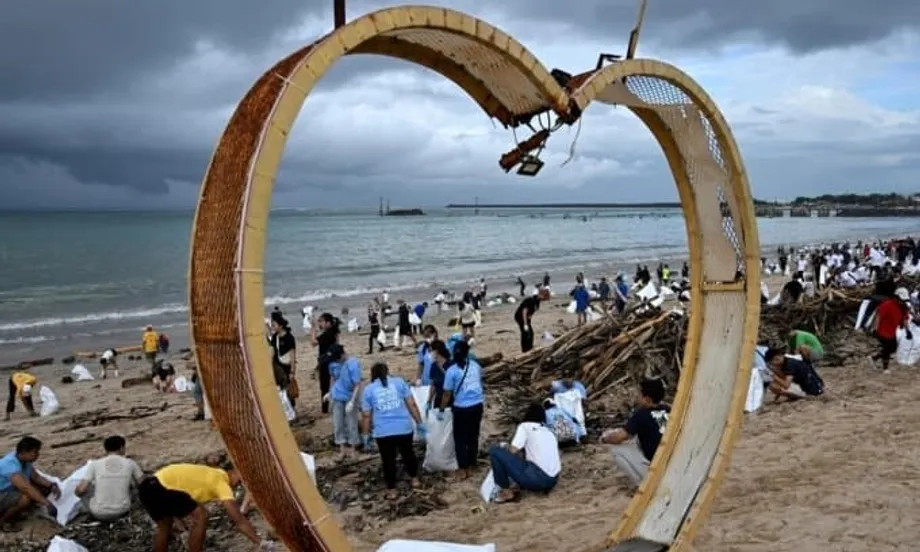
Seven Million Visitors and Beaches Filled With Waste
Bali welcomed 7.05 million foreign tourists in 2025, its highest total in the past decade, and took first place in Tripadvisor's Travelers' Choice Awards: Best of the Best Destinations in January 2026. Within weeks, Indonesian President Prabowo Subianto publicly challenged the island's leaders over beaches covered in rubbish and threatened to send troops to clean them.
Contents
- Seven Million Visitors and Beaches Filled With Waste
- Prabowo Challenges Bali's Leadership
- Why Rubbish Keeps Returning to the Shore
- A Disposal System Running Out of Space
- Police, Soldiers and Students Join the Cleanup
- ASRI Brings Cleaning Into the Government Workday
- Turning Rubbish Into Electricity
- Health Concerns Around Disposal
- Tourism Rules and Composting at the Source
- Key Points
As of February 11, 2026, Indonesia's leading tourism destination faces two connected problems: waste arriving on its shores with seasonal currents, and a disposal system struggling to handle about 3,500 tonnes of rubbish generated each day. Nearly all of Bali's landfill sites have reached their maximum capacity.
Prabowo brought the issue before the 2026 National Coordination Meeting of Central and Regional Governments in Bogor, West Java. He displayed photographs taken in December 2025 showing Kuta Beach and other tourist areas blanketed with debris. In the images, piles stretched for kilometres and covered the golden sand.
The president said ministers and generals he had met during a recent visit to South Korea had complained about Bali's cleanliness. Their remarks gave an international dimension to a problem already affecting the beaches, businesses and communities that sustain the island's tourism economy.
Tourist spending supports livelihoods from Ubud's rice terraces to Seminyak's beach clubs. Growing visitor numbers also add pressure to waste collection and disposal. Plastic bottles and food containers now wash onto beaches promoted to travellers around the world, placing the island's celebrated image alongside a very different physical reality.
The government's response combines immediate cleaning, a proposed electricity plant that burns rubbish, restrictions on disposable plastics and efforts to change the kind of tourism Bali attracts. Each addresses a different part of the journey from waste being produced to waste reaching the sea.
Prabowo Challenges Bali's Leadership
Prabowo singled out Bali Governor Wayan Koster and regional regents during the televised meeting, accusing them of responding too slowly despite having authority over an island with 4.5 million residents. He presented dirty beaches as a threat to tourism, Indonesia's economy and its international reputation.
The president said he accepted the criticism he had heard abroad and explained why he believed the condition of tourist destinations required urgent attention.
I accepted that as a criticism. Indonesia is beautiful. Tourists want to come, but they see slums. They want to go to Bali, but Bali's beaches are full of trash. How can tourists come if they see such garbage?
Prabowo also recounted what South Korean officials had told him about their visits to the island.
They told me, 'Your Excellency, I just came from Bali. Oh, Bali is so dirty now. Bali is not nice,'
He treated those remarks as criticism requiring action. His warning to local leaders was explicit: if they failed to mobilise people within a reasonable timeframe, he would order district and regional military commanders to deploy troops for cleaning operations, either daily or over several days.
Prabowo described the campaign as a war on waste. His intervention placed direct pressure on civilian authorities while making military personnel part of the proposed response to an environmental problem.
Why Rubbish Keeps Returning to the Shore
Koster attributed much of the beach debris to strong ocean currents between December and February. He said those currents carry waste from outside Bali, including Java and neighbouring islands, onto the island's main beaches.
The governor explained the seasonal pattern in his response to the president's criticism.
From December to February, ocean currents tend to be strong, bringing waste from outside Bali,
Heavy rainfall adds to the cleaning burden. Koster said operations can take up to three hours, while fresh debris may arrive within hours of a beach being cleared. Crews therefore face repeated work during the same period of rough weather and strong currents.
Koster pledged to establish a dedicated task force stationed at Kuta Beach, with a target of restoring cleanliness within one hour after marine debris arrives. The proposed team would involve the Environmental Agency, Regional Disaster Management Agency and Education Office, alongside military and police personnel.
The seasonal explanation and Bali's disposal problems describe different parts of the same crisis. Currents move rubbish between places, while collection, recycling and disposal determine how much waste can escape into waterways in the first place. Cleaning a beach removes what has arrived there; managing waste on land addresses another part of the problem.
A Disposal System Running Out of Space
Bali produces approximately 3,500 tonnes of waste every day, with plastic accounting for 17 percent. Applying that share to the daily total gives roughly 595 tonnes of plastic waste a day, a substantial burden for an island whose landfill capacity is already heavily strained.
The Suwung landfill stopped receiving waste in August 2025 after repeated fires and severe accumulation. Rubbish there had risen to more than 30 metres in height, forcing authorities to seek alternative disposal methods.
A study from 2019 found that only about 48 percent of Bali's waste received proper management through recycling or landfilling. That leaves roughly 52 percent outside those managed routes. The study's findings describe a longstanding gap, with an estimated 33,000 tonnes of plastic entering the island's waterways annually and eventually reaching beaches.
Indonesia faces a much larger version of the same challenge. The country generates about 140,000 tonnes of waste daily across its 17,000 islands. Responsibility for handling it is decentralised among more than 500 regional governments, many of which lack sufficient resources or coordination.
Bali's daily waste total is about 2.5 percent of that national figure, using the reported totals of 3,500 and 140,000 tonnes. Its prominence as a tourist destination makes the consequences especially visible, but the movement of debris from other islands connects its beaches to waste management beyond its borders.
The main developments span several months:
- August 2025: Suwung landfill stopped receiving waste after repeated fires and severe accumulation.
- December 2025: Photographs later shown by Prabowo captured rubbish covering Kuta Beach and other tourist areas.
- January 2026: Bali topped Tripadvisor's destination awards, and the provincial government proposed financial declarations for international visitors.
- By February 11, 2026: Prabowo had publicly demanded action, and coordinated beach cleaning operations had followed.
- March 2026: Construction of Bali's proposed plant to turn waste into electricity was scheduled to begin, with operations expected in 2027.
Police, Soldiers and Students Join the Cleanup
Hundreds of police and military personnel joined students and volunteers in beach cleaning operations within days of the presidential criticism. Work took place at Kuta Beach and Kedonganan in Badung Regency, Delod Berawah Beach in Jembrana, and Saba Beach in Gianyar.
The coordinated operations removed several tonnes of rubbish and provided a visible demonstration of the authorities' response. Bali Police spokesperson Senior Commissioner Ariasandy said the public had been invited to participate because community involvement matters for protecting marine ecosystems.
Ariasandy described the immediate purpose of the work.
Today's activity aims to raise awareness about environmental protection and to create clean, healthy and welcoming beaches for visitors,
He also said clean beaches benefit the environment, support economic activity and have a positive effect on tourism. Those connections explain why beach cleaning has become both an environmental task and an economic priority.
Prabowo specifically suggested involving students from elementary through senior high school in regular activities on Fridays or Saturdays, using regional governments' authority over educational institutions.
The president challenged local leaders to organise that participation.
What is so difficult about gathering all the students at the beach on either Saturday or Friday?
He followed that challenge with a call for shared responsibility.
This is our beach, let's clean it together.
Vice President Gibran Rakabuming Raka praised Bali's rapid response and urged other Indonesian regions to match its commitment to environmental cleanliness. Tourism Minister Widiyanti Putri Wardhani announced an expansion of the Clean Tourism Movement to popular destinations nationwide, building on programmes launched in 2025.
ASRI Brings Cleaning Into the Government Workday
Prabowo's wider response includes the ASRI Indonesia Movement, which requires leaders in ministries, agencies, state owned enterprises and regional governments to organise waste collection for at least half an hour before beginning their official workdays.
The president said the initiative would become a dedicated programme within his administration. He wanted practical work, rather than ceremonial activity or officials blaming one another.
Prabowo set out his expectations for government workplaces and state enterprises.
I do not want to see any plastic waste or trash around the offices of state-owned enterprises,
He also specified the time officials should devote to the task.
All officials in ministries and agencies should spend at least half an hour cleaning their surroundings before starting work.
The programme extends the response beyond tourist beaches to the surroundings of public institutions. Alongside the Clean Tourism Movement, it makes everyday cleanliness a responsibility shared across several levels of government.
Bali's proposed task force has a more immediate operational goal: responding quickly when rubbish washes ashore. The national workplace initiative addresses routine litter collection, while the planned infrastructure programme seeks to provide somewhere for much larger volumes of collected waste to go.
Turning Rubbish Into Electricity
Indonesia plans to build 34 incinerators that generate electricity from waste in 34 cities over the next two years. Bali's facility is scheduled to begin construction in March 2026 and start operating the following year.
Each plant is expected to cost between two trillion and three trillion rupiah, with an approximate dollar figure of $156 million cited for a facility. Each would be able to burn about 1,000 tonnes of solid waste a day while supplying electricity to local grids.
The process uses heat from burning rubbish to boil water. The resulting steam turns turbines, which generate electricity. It combines waste disposal and power production in one facility.
Daya Anagata Nusantara, known as Danantara, is the government's sovereign wealth fund launched in February 2025. The fund says each plant could reduce landfill needs by 90 percent over time and potentially provide power for cities of medium size.
Danantara is working with private partners on the programme. Potential participants include France's Veolia Environment and China's Zhejiang Weiming Environment Protection.
A plant processing 1,000 tonnes daily would handle an amount equal to about 29 percent of Bali's reported daily waste generation of 3,500 tonnes. That comparison shows the scale of the proposed facility alongside the island's total disposal burden. Recycling, composting and other waste handling would still have a large role.
The next scheduled milestone for Bali is the March construction start, followed by expected operations in 2027. The programme's remaining decisions include final partner participation, with Veolia and Zhejiang Weiming identified as potential participants.
Health Concerns Around Disposal
Incinerators also bring concerns about emissions and the health of people living nearby. Modern plants use scrubbers, equipment that treats pollutant gases and converts them into less harmful substances, within closed systems with air controls. Emissions cannot be contained completely.
Communities near existing landfills already face substantial health burdens. Government data cited in the account of the crisis associate those communities with a 40 percent increased risk of asthma, a sevenfold higher risk of dengue fever and a 72 percent increase in diarrhoea linked to polluted water.
Those figures give the waste debate a dimension beyond the appearance of tourist beaches. Disposal decisions affect the air people breathe, the water around their homes and the conditions in neighbourhoods receiving rubbish.
Bali therefore needs both an immediate response to exposed waste and a durable way to handle what is collected. The proposed incinerator offers large processing capacity, while its pollution controls and the health concerns surrounding disposal remain central to the plan.
The 90 percent reduction in landfill needs projected by Danantara would address pressure on disposal space over time. For residents, the practical priorities also include how waste is collected and how facilities manage pollutants during operation.
Tourism Rules and Composting at the Source
Bali's provincial government proposed rules in January 2026 that would require international visitors to declare their financial status over the preceding three months. The proposal is intended to curb tourism associated with low spending and encourage visitors who contribute more revenue.
The approach is described as a quality tourism model: earning more from each visitor while potentially reducing visitor numbers. It connects tourism policy with the island's ability to cope with the waste generated by millions of arrivals.
Bali's 7.05 million foreign arrivals in 2025 explain the scale of that challenge. The proposal seeks to change the balance between visitor numbers and spending, while waste measures address the rubbish produced by residents, businesses and tourism activity.
Koster's initiatives in 2025 also included bans on disposable plastic bags, cups, straws and Styrofoam in businesses, government offices, schools, hotels, restaurants, markets and places of worship. These restrictions aim to reduce particular waste materials before they enter collection systems or waterways.
Private businesses are developing another approach for organic waste. Shiva Industries, a manufacturer of rapid composters used where waste is produced, has deployed machines that process kitchen and organic waste into compost in approximately 24 hours.
The machines have appeared in hospitals, airports and hospitality venues across Bali. Composting turns organic material into a product that can be reused, helping reduce the amount sent into municipal disposal systems.
Shiva Industries' approach is intended to support a circular economy, meaning materials are returned to use rather than simply discarded. Its stated aims include lowering emissions and reducing disposal costs for businesses.
Bali's response now spans prevention, composting, public cleaning and planned industrial treatment. The immediate test is whether beaches can be kept clean during the December to February current season. The longer task is to reduce the volume escaping into waterways and provide sufficient capacity for the waste that is collected.
The island's international award and record visitor total underline what is at stake. Soldiers, police, students and volunteers can remove debris from Kuta and other beaches, while the disposal system, business practices and tourism policies determine how much rubbish follows them back onto the sand.
Key Points
- Bali received 7.05 million foreign tourists in 2025 and topped Tripadvisor's destination awards in January 2026.
- President Prabowo Subianto publicly challenged Governor Wayan Koster over beach rubbish and threatened military cleaning deployments if local action fell short.
- Bali generates about 3,500 tonnes of waste daily, 17 percent of it plastic, and nearly all its landfills have reached capacity.
- A 2019 study found about 48 percent of Bali's waste was properly managed, with an estimated 33,000 tonnes of plastic entering waterways annually.
- Koster linked beach debris to currents between December and February and pledged a Kuta task force targeting a response within one hour.
- Police, military personnel, students and volunteers removed several tonnes of rubbish from beaches in Badung, Jembrana and Gianyar.
- Indonesia plans 34 plants to generate electricity from waste; Bali's construction start is scheduled for March 2026, with operations expected in 2027.
- Proposed visitor financial declarations, disposable plastic restrictions and rapid composting form other parts of Bali's response.