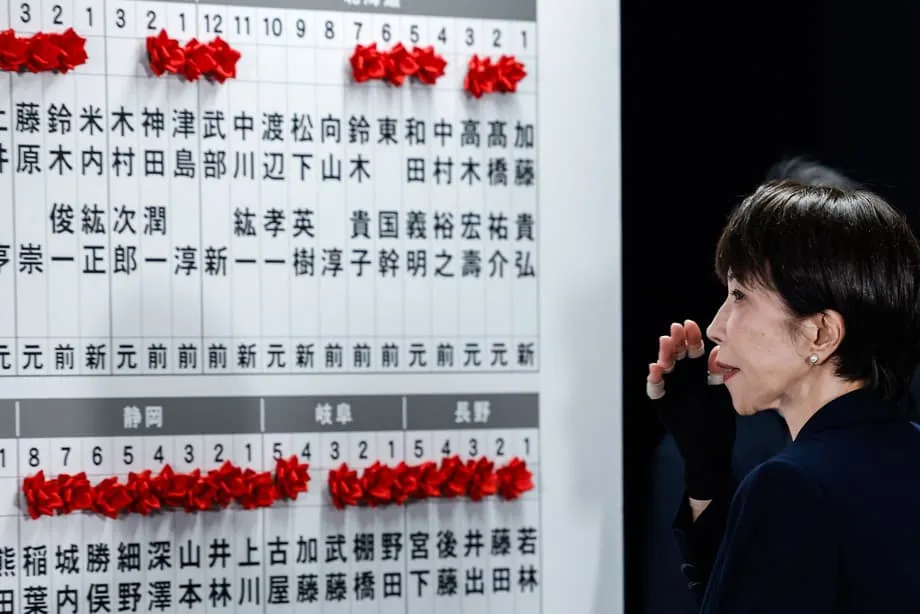
A 316 Seat Victory Reshapes Japan's Parliament
Sanae Takaichi's Liberal Democratic Party has won 316 of the 465 seats in Japan's lower house, giving the country's first female prime minister a historic two thirds supermajority. The result from Sunday's snap election is the strongest single party majority since World War II and the largest in the LDP's seven decade history.
Contents
- A 316 Seat Victory Reshapes Japan's Parliament
- Voters Turn Out Despite Heavy Snow
- What the Supermajority Allows
- The Personal Appeal Behind Sana Mania
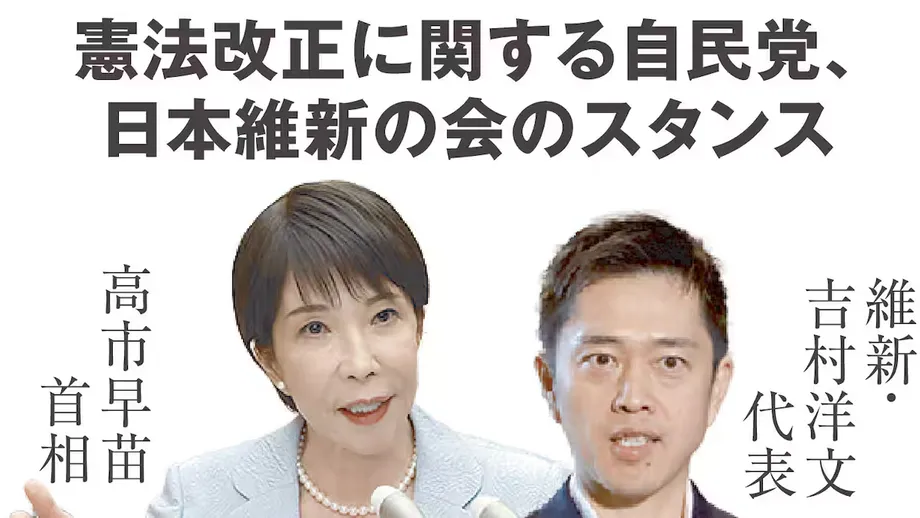
- Conservative Policies and Constitutional Change
- Food Tax Relief Meets Japan's Debt Burden
- Stocks Rise While Bond Investors Watch Spending
- Taiwan Remarks Deepen the Dispute With China
- Trump Backs Takaichi as Regional Concerns Persist
- A Strong Mandate Brings Pressure to Deliver
- The Bottom Line
Takaichi called the election just 110 days after becoming prime minister. Political observers had questioned whether such an early vote would put her fledgling leadership at risk. Instead, the 64 year old leader secured a result that surpassed the previous LDP record of 300 seats under former Prime Minister Yasuhiro Nakasone in 1986.
The Japan Innovation Party, her coalition partner, won another 36 seats. Together, the ruling parties now control 352 lawmakers, giving them the numbers to override the upper house on legislation, chair all lower house committees and potentially begin the process of constitutional change. The scale of the victory exceeded expectations even among seasoned analysts who had anticipated gains.
Takaichi had promised to resign if her coalition failed to win a simple majority. Her victory instead strengthens her personal authority and gives her time to pursue her agenda, with no election required until 2028.
Speaking to public broadcaster NHK after the result, Takaichi explained why she had asked voters for an early mandate:
I wanted the voters to give me a mandate because I advocated for responsible, proactive fiscal policy that would significantly shift economic and fiscal policy.
Her immediate challenge is to turn those parliamentary numbers into improvements people can feel in household budgets, wages and national security. The result gives her substantial power, while also making her government more directly responsible for what happens next.
Voters Turn Out Despite Heavy Snow
Voter turnout reached 55.6 percent, compared with 53.8 percent at the previous election, an increase of 1.8 percentage points. More than 27 million people voted early. Heavy snowfall disrupted transport across much of the country, making the election a test of voters' determination as well as their political preferences.
In Niigata prefecture, snow reached depths of more than two meters on election day. Kazushige Cho, a voter aged 54, described the sense of shared purpose he associated with Takaichi:
It feels like she's creating a sense of direction, like the whole country pulling together and moving forward,
Thousands of supporters also braved freezing temperatures at a Tokyo rally the previous week. Such enthusiasm for a Japanese political leader had not been seen for years, and it helped explain why a campaign initially viewed as a gamble became a decisive victory.
The election and the policy disputes surrounding it unfolded across several stages:
- In November, shortly after taking office, Takaichi said a Chinese attack on Taiwan could create a situation threatening Japan's survival.
- On February 2, she asked supporters to back constitutional revision recognizing the Self Defense Forces.
- On Sunday, her LDP won 316 seats and its coalition partner won 36.
- On Monday, Japanese stocks rose sharply and China renewed its warning about Japan's political direction.
- On March 19, Takaichi is scheduled to visit the White House, a visit announced by US President Donald Trump before the election.
What the Supermajority Allows
The ruling coalition's 352 seats amount to about 75.7 percent of the lower house. The LDP's 316 seats alone exceed the two thirds threshold of 310 seats in a chamber of 465. That gives Takaichi a stronger parliamentary position than a leader who must negotiate support for every major vote.
A simple majority allows a party or coalition to win ordinary votes in the chamber. A two thirds majority carries extra weight because it can be used to override the upper house on legislation. Control of lower house committees also gives the government greater influence over how proposals are examined and moved toward votes.
The opposition suffered a severe defeat. The new Centrist Reform Alliance fell to 49 seats from 167, a loss of 118 seats. Its reduced numbers leave it with much less capacity to resist Takaichi's agenda in the lower house.
Constitutional revision follows a different process. It requires two thirds support in the upper house as well as the lower house, followed by a national referendum. Voters would therefore have the final decision on a proposed amendment. That route remains difficult and uncertain despite the size of Sunday's victory.
The Personal Appeal Behind Sana Mania
Takaichi's public image differs sharply from that of many previous Japanese leaders. Japan's political establishment has long been dominated by elderly men, often from families with established political dynasties. Her father worked for a car company and her mother was a police officer, giving her a middle class background outside those familiar family networks.
Motorcycles, drumming and heavy metal music are part of her personal profile. Those interests contrast with the golf and traditional pastimes associated with earlier prime ministers. Her position as Japan's first female premier adds another departure from the country's usual pattern of leadership.
Young voters have been an important part of her appeal in a country where political participation among younger people has historically been low. Polls indicate support above 90 percent among people aged 18 to 19. The enthusiasm has developed into a cultural phenomenon described as "Sana mania."
Fans affectionately call her "Sana chan," using a suffix usually reserved for close friends. Some copy her choice of bags and pens. In her hometown of Nara, souvenir shops sell towels carrying her slogans, key chains, stationery and cookies showing her likeness alongside that of her political idol, former British Prime Minister Margaret Thatcher.
Takaichi also uses social media to reach people beyond traditional political channels. Her messages are short and suited to slogans, while videos offer a more informal view of her personality. One viral clip showed her jamming to Korean pop music with South Korean President Lee Jae Myung.
That approach contrasts with the formal and often inaccessible communication style typical of Japanese political leaders. Her election success combines this personal popularity with a wider movement toward conservative politics, including the departure of some longtime LDP supporters for newer parties on the right in recent years.
Conservative Policies and Constitutional Change
Takaichi's social policies distinguish her from previous Japanese leaders and from Western conservatives. She opposes marriage for couples of the same sex, supports patriotic education in schools and backs Japan's requirement that married couples share one surname.
The surname rule dates to the 19th century and puts pressure on most women to give up their maiden names. Takaichi has argued that allowing spouses to use separate surnames would harm the family structure. In explaining her position, she has said the change:
may destroy the social structure based on family units.
Article 9 of Japan's constitution is another central part of her agenda. It renounces war as a sovereign right and technically prohibits the country from maintaining land, sea or air forces. Takaichi wants the constitution to explicitly recognize the Self Defense Forces, making their place in the country's governing document clearer.
Addressing supporters on February 2, the prime minister asked them to support that change:
Why can't we write the Self Defense Forces into the Constitution? I want you to let us revise the Constitution to position them as an effective organization.
The election gives her the required lower house numbers, but the upper house and referendum requirements still stand. Her parliamentary victory strengthens her ability to press for revision without settling whether the amendment will ultimately pass.
Food Tax Relief Meets Japan's Debt Burden
Takaichi campaigned on substantial government intervention in the economy. She has already passed a record spending budget, and her election platform centered on a stimulus package worth 21 trillion yen. A stimulus package uses government spending or other support to encourage economic activity.
Her most immediate promise for households is to suspend the 8 percent consumption tax on food for two years. The proposal aims to help people facing persistent inflation, but it would reduce annual government revenue by approximately 5 trillion yen.
Japan already has public debt exceeding twice the size of its gross domestic product, the measure of the goods and services its economy produces. Its debt burden relative to GDP is the heaviest among advanced economies. Giving up tax revenue while increasing spending makes financing the government's promises a central issue.
Takaichi has also pledged partial tax deductions for babysitting expenses and incentives for companies that provide childcare on their premises. Those proposals could offer practical support for families even as she maintains traditional positions on gender and family rules.
After the election, Takaichi told reporters that investment and fiscal sustainability would both guide her economic policy:
We will prioritise the sustainability of fiscal policy. We will ensure necessary investments. Public and private sectors must invest. We will build a strong and resilient economy,
The temporary nature of the food tax suspension offers some reassurance to investors. The financing of both consumer relief and higher defense spending remains unresolved, including the pledge to bring defense spending to 2 percent of GDP by 2027.
Stocks Rise While Bond Investors Watch Spending
Japanese stocks surged on Monday as investors welcomed the prospect of stable leadership. The benchmark Nikkei 225 jumped 5 percent in early trading, reflecting optimism that the government would have the political strength to carry out its program.
Keidanren head Yoshinobu Tsutsui welcomed the restoration of political stability at what he described as a critical juncture for sustainable growth. For businesses, a government with a secure majority offers greater certainty about political leadership and the direction of policy.
Bond markets have reacted more cautiously to Takaichi's spending plans and tax proposals. Government bonds are a way for the state to borrow money from investors. Concerns about fiscal discipline can put pressure on interest rates and the currency, affecting the cost of borrowing and imported goods.
Analysts have warned about possible currency volatility and interest rate pressures if confidence in the government's handling of public finances weakens. A strong stock market response therefore sits alongside concerns about how Japan will pay for its economic and security commitments.
Japan's weak yen already increases import costs, adding to the strain from rising living expenses. Takaichi's government faces the task of providing immediate household relief while maintaining confidence in a country carrying a very large debt burden.
Taiwan Remarks Deepen the Dispute With China
China is Japan's largest trading partner and a regional rival. Takaichi's election victory strengthens a leader who has taken a firmer position on Taiwan, the democratic island lying just 60 miles from Japanese territory.
In November, shortly after taking office, she departed from Japan's longstanding strategic ambiguity by saying a Chinese attack on Taiwan could constitute a "survival threatening situation." Under collective self defense principles, that could trigger a military response from Tokyo. Collective self defense concerns responding to an attack involving a partner when Japan's own security is also at stake.
The remarks led to the most serious diplomatic dispute between Japan and China in more than a decade. Beijing demanded that Takaichi withdraw them and responded with economic pressure affecting travel, trade and supplies used by industry.
China canceled flights, restricted imports of Japanese seafood, limited access to critical minerals and technologies with both civilian and military uses, and warned tourists against visiting Japan, citing unspecified safety concerns. The measures brought the political dispute into sectors that depend on business between the two countries.
A Chinese Foreign Ministry spokesperson issued a renewed warning on Monday about the direction of Japanese politics:
if Japan's far right forces misjudge the situation and act recklessly, they will inevitably face resistance from the Japanese people and firm opposition from the international community.
Takaichi has refused to retract her position. She maintains that it is consistent with Japan's security policy and its alliance with the United States. Her larger parliamentary majority gives her greater domestic authority as she manages a dispute with an important economic partner.
Trump Backs Takaichi as Regional Concerns Persist
US President Donald Trump openly supported Takaichi before the vote. His endorsement and the early announcement of her March 19 White House visit gave her a visible expression of support from Japan's principal security ally during the campaign.
Before the election, Trump offered Takaichi:
Complete and Total Endorsement
After the result, the US president congratulated her on what he called:
LANDSLIDE Victory
Trump also praised her:
Peace Through Strength Agenda.
Takaichi thanked Trump for his words and responded with an enthusiastic description of the relationship. Referring to the president's message, she expressed appreciation for his:
warm words
The Japanese prime minister described the alliance's potential as:
LIMITLESS
She also said the partnership was:
built on deep trust and close, strong cooperation.
The alignment points toward greater Japanese defense spending and a larger regional security role. Seoul, however, remains cautious about constitutional revision or militarization because of historical tensions arising from Japan's wartime occupation of the Korean Peninsula.
Takaichi's informal musical exchange with President Lee Jae Myung illustrates one side of her regional diplomacy. South Korea's concerns about Japan's defense direction show the more difficult political issues that sit alongside those personal interactions.
A Strong Mandate Brings Pressure to Deliver
Japan's aging and shrinking population presents challenges that a parliamentary majority alone cannot resolve. Rising living costs and the weak yen affect households, while the movement of younger people into cities leaves rural communities with dwindling populations.
Takaichi has pointed to semiconductor investment as a model for economic security and regional development. TSMC's planned expansion in Kumamoto, worth $17 billion, would produce advanced chips measuring 3 nanometers. The project offers an example of the industrial investment she wants to support outside Japan's largest urban centers.
Energy supply complicates those ambitions. Japan's move away from nuclear power after Fukushima increased dependence on fossil fuels and limited its capacity to accommodate data centers serving artificial intelligence and advanced manufacturing. Industrial growth therefore depends on addressing energy constraints as well as attracting investment.
The LDP's internal factional dynamics remain another constraint on Takaichi's leadership. Even with the opposition greatly weakened, managing her own party and carrying out complicated economic and social policies will require more than winning votes in parliament.
Rintaro Nishimura of the Asia Group, a strategic advisory firm, said the election result reduces the government's ability to blame opposition resistance for a lack of progress:
There can be no excuses like in the past few years, where leaders could blame opposition parties for stalling,
Takaichi has time to implement her program before the next required election in 2028. Voters who delivered such a decisive mandate will expect measurable improvements in wages, prices and national security. Her victory has made those expectations larger, while placing responsibility for meeting them more firmly on her government.
The Bottom Line
- Takaichi, Japan's first female prime minister, won a historic postwar supermajority, with the LDP taking 316 of 465 lower house seats.
- The result is the largest single party majority since 1955 and exceeds the LDP's previous record of 300 seats under Nakasone in 1986.
- The Japan Innovation Party's 36 seats bring the coalition total to 352, giving it power to override the upper house on legislation and chair lower house committees.
- Constitutional revision still requires two thirds upper house support and approval in a national referendum.
- Takaichi's agenda includes a 21 trillion yen stimulus package and a two year suspension of the 8 percent food consumption tax, costing approximately 5 trillion yen in annual revenue.
- Turnout rose to 55.6 percent, with more than 27 million early votes despite heavy snow disrupting transport.
- Trump endorsed Takaichi and announced a March 19 White House visit, while China continued demanding that she retract her Taiwan remarks.
- Public debt, population decline, energy constraints and household costs will test a government with no election required until 2028.