November order sets deadlines for change
Japan's Ministry of Economy, Trade and Industry ordered Chubu Electric Power on November 6 to overhaul its operations after earthquake data manipulation at the Hamaoka nuclear power plant and a succession of other misconduct cases. The utility must submit an improvement plan by the end of November and report on its implementation by the end of March 2027.
Contents
- November order sets deadlines for change
- Why the earthquake data mattered
- Investigators found a culture of justification
- What the government wants changed
- Misconduct extended beyond restart applications
- A timeline from investigation to enforcement
- The financial damage is already substantial
- What the next submissions must deliver
- Key Points
The administrative improvement order, issued under Japan's Electricity Business Act, goes beyond correcting technical records. It calls for changes to the company's organization and personnel systems, greater use of outside expertise and stronger compliance with the law. The ministry concluded that misconduct in a business where safety must come first had damaged public trust.
Hamaoka, in Omaezaki, Shizuoka Prefecture, is central to the company's growing crisis. Chubu manipulated earthquake data used in restart reviews for reactors No. 3 and No. 4, then withdrew both applications. Other misconduct involved documents connected with decommissioning reactors No. 1 and No. 2, while the group's electricity sales subsidiary overcharged customers.
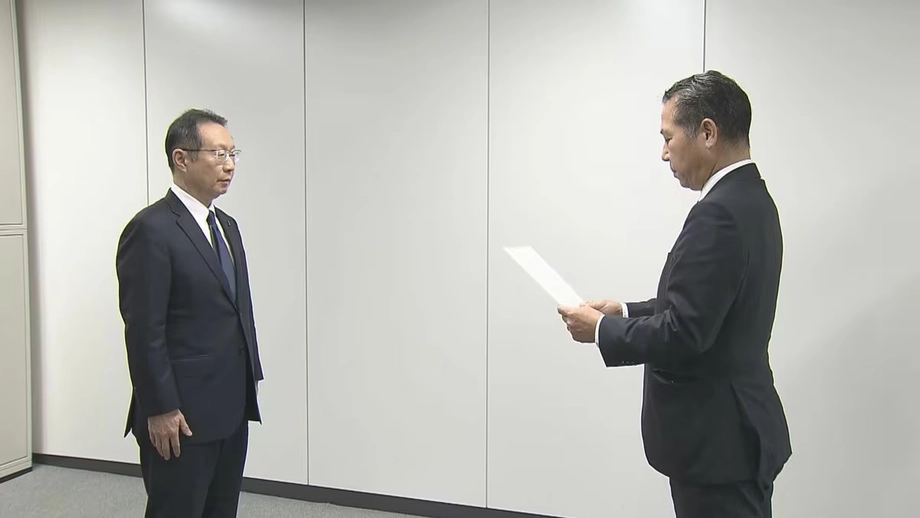
Chubu President Minoru Yasui received the order from Yoshifumi Murase, commissioner of the Agency for Natural Resources and Energy. Yasui said the company took the action very seriously and would respond sincerely to prevent a recurrence.
Why the earthquake data mattered
The disputed information concerned the earthquake shaking used as a basis for Hamaoka's safety design. Engineers use this benchmark, known as design basis ground motion, to assess whether buildings, machinery and safety equipment can withstand a major earthquake.
For a reactor seeking permission to restart, those calculations are part of the evidence supporting its safety case. Manipulating the underlying data undermines the assessment that regulators must examine. The problem therefore reaches beyond inaccurate paperwork to the technical foundation of the restart applications.
Chubu withdrew its applications for reactors No. 3 and No. 4 on September 25, 2026, after a review process lasting more than 12 years. Investigators found that the manipulation occurred amid pressure to avoid delays in securing a restart.
The withdrawal leaves the company facing renewed uncertainty over the future of those reactors, alongside higher expected costs for safety work. No date for renewed applications or a restart was given.
Investigators found a culture of justification
An investigation committee made up of outside lawyers examined the misconduct, and Chubu published its report in September. The committee found that the company had developed its own internal rationale for justifying improper conduct.
That finding helps explain why the ministry is demanding organizational reform as well as technical corrections. When employees come to regard an improper practice as acceptable within their own department, replacing a document or correcting a calculation leaves the decision process that allowed the problem unresolved.
Three successive presidents, including then president Shingo Hayashi, resigned to take responsibility. Yasui now faces the task of turning those leadership changes into concrete changes in how the company works, how staff raise concerns and how managers respond.
Economy, Trade and Industry Minister Ryosei Akazawa identified another failure: internal whistleblowing had occurred, but the information had not been put to use. Speaking after a Cabinet meeting on November 6, he said the situation revealed serious problems with legal compliance and the handling of warnings.
Akazawa pledged a strict response and stressed that safety is the essential condition for public acceptance of nuclear power policy. His comments placed the handling of employee concerns alongside the falsified data as a central issue in the government's response.
What the government wants changed
The ministry received a report from Chubu on October 29 and examined it before deciding that an improvement order was necessary. Its instructions focus on rebuilding the systems that govern decisions, staffing and accountability.
Chubu must consider using external personnel to reconstruct its organization around compliance with laws and other requirements. It must also review its personnel systems and bring outside perspectives into departments that concentrate highly specialized work, including the nuclear division.
Those requirements address the risk of a specialist department becoming too closed to challenge. Nuclear engineering requires deep technical knowledge, but the ministry wants people outside the immediate organization to have a role in examining how decisions are made and whether established practices are acceptable.
Murase, the Agency for Natural Resources and Energy commissioner who delivered the order, called for fundamental reform and the restoration of trust. The improvement plan must specify both the methods for carrying out individual measures and their timing.
The two deadlines create separate obligations. By the end of November, Chubu must explain what it will change and when. By the end of March 2027, it must report what it has actually implemented. The second submission will give the ministry a record of action against the promises in the first.
Misconduct extended beyond restart applications
Hamaoka's reactors No. 1 and No. 2 were involved in a different form of misconduct: falsified documents relating to claims for decommissioning costs. Decommissioning is the work of permanently closing and dismantling a nuclear facility, including managing equipment and materials that require special handling.
The cases therefore affect two different parts of the plant's work. Reactors No. 3 and No. 4 were seeking approval to return to operation, while reactors No. 1 and No. 2 were undergoing the process of permanent closure. Accurate records matter in both, whether they support safety assessments or financial claims for dismantling work.
Chubu Electric Power Miraiz, the group's electricity sales subsidiary, was also involved in overcharging. That brought the misconduct directly into the relationship between the group and its customers, widening the problem beyond the nuclear plant.
The ministry's response addresses this succession of cases through company governance and legal compliance. Chubu's plan must therefore deal with the way the business operates, alongside the specific failures at Hamaoka.
A timeline from investigation to enforcement
The November order followed several important developments within a few weeks. The investigation, withdrawal of the applications and financial disclosures show how a technical data scandal developed into a leadership, accounting and regulatory crisis.
- September 2026: Chubu published the outside lawyers' investigation report, which identified an internal rationale for justifying misconduct.
- September 25: Chubu withdrew the restart review applications for Hamaoka reactors No. 3 and No. 4.
- October 29: The company submitted a report to the economy ministry and announced substantial losses connected with Hamaoka.
- November 6: The ministry issued its administrative improvement order under the Electricity Business Act.
- End of November: Chubu must submit an improvement plan describing measures and their timetable.
- End of March 2027: Chubu must report on implementation.
The government reached its enforcement decision after reviewing the October submission. Chubu must now move from explaining what happened to setting out changes that can be checked against a schedule.
The financial damage is already substantial
Chubu's record annual loss forecast, announced on October 29, shows the scale of the damage already associated with Hamaoka. The utility booked an extraordinary loss of 370.3 billion yen in its accounts for the six months through September 2026, following the withdrawal of the restart applications.
The company reported a consolidated net loss of 280.4 billion yen for that period, compared with a net profit of 166.3 billion yen a year earlier. Revenue rose 11.3% to 1.9452 trillion yen, but the rise in sales was overwhelmed by the losses.
For the financial year ending in March 2027, Chubu forecast a net loss of 215 billion yen, replacing its previous expectation of a 160 billion yen profit. The difference between those forecasts is 375 billion yen. It would be the largest annual deficit in the company's history.
Much of the damage came from reducing the recorded value of assets connected with Hamaoka. This accounting process, called impairment, is required when expected future earnings no longer support an asset's value in the accounts. The withdrawal of the applications made those future business prospects uncertain.
Chubu expects extraordinary losses related to Hamaoka of about 380 billion yen for the full financial year. The interim charge of 370.3 billion yen is part of that annual picture. The company also expects greater spending on safety work, adding future costs to the reduction already recorded in asset values.
What the next submissions must deliver
Chubu's immediate task is to translate broad promises into a plan with named measures and clear timing. The ministry has already identified the areas it wants addressed: organizational structure, personnel systems, outside scrutiny and the priority given to legal compliance.
The failed response to internal warnings makes the route from employee concern to management action especially important. A reporting channel can bring a problem to the company, but managers still have to investigate it and act. Akazawa's comments make that failure part of the reform agenda.
For people living near Hamaoka, the central issue is whether the company can produce trustworthy safety information. For customers, the overcharging case adds a separate concern about accurate billing. For Chubu, both are now linked to a government demand for changes across its operations, with the first written commitments due at the end of November.
Key Points
- Japan issued Chubu Electric an improvement order on November 6 under the Electricity Business Act.
- The misconduct includes manipulated earthquake data for Hamaoka reactors No. 3 and No. 4 and falsified decommissioning documents for reactors No. 1 and No. 2.
- The ministry wants organizational reform, changes to personnel systems and greater outside scrutiny of specialist departments.
- Chubu must submit its plan by the end of November and report implementation by the end of March 2027.
- The company withdrew both restart applications and forecasts a record net loss of 215 billion yen for the financial year ending in March 2027.