A Fishing Inspection Becomes a Diplomatic Flashpoint
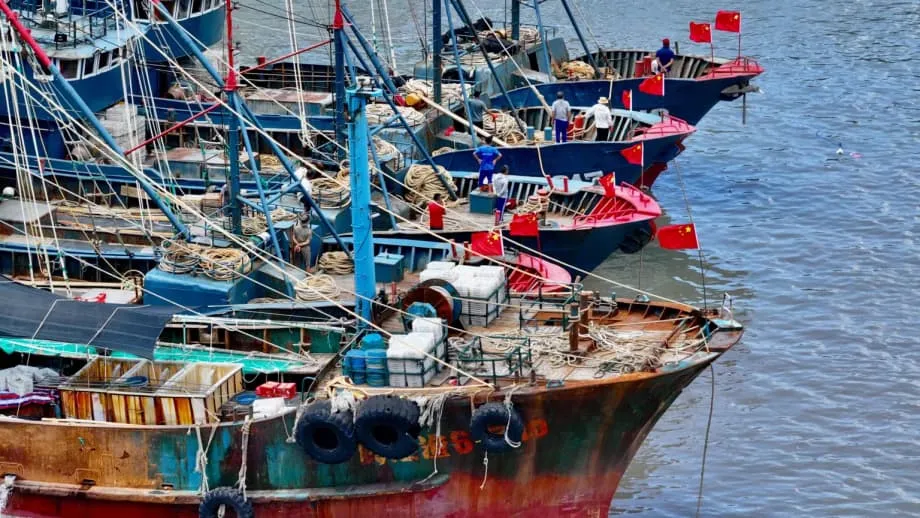
Japan has seized the Chinese fishing vessel Qiong Dong Yu 11998 and arrested its captain after authorities said he refused an order to stop for inspection and attempted to flee in Japan's exclusive economic zone off Nagasaki Prefecture. The interception on Thursday, February 12, 2026, took place approximately 89.4 nautical miles, or 165 kilometers, southwest of Meshima Island in the Goto archipelago.
Contents
- A Fishing Inspection Becomes a Diplomatic Flashpoint
- What Japanese Inspectors Say Happened
- Beijing Calls for Fair Treatment of the Crew
- Why the Maritime Zone Matters
- A Rare Chinese Seizure Within Wider Enforcement
- Taiwan Remarks Drive the Wider Crisis
- Travel, Trade and Cultural Exchanges Feel the Strain
- The 2010 Confrontation Still Provides a Reference Point
- Taiwan's President Warns of Wider Regional Risks
- How the Events Unfolded
- Key Points
The Fisheries Agency identified the captain as Zheng Nianli, a 47-year-old Chinese national. The vessel carried 11 crew members and was described by officials as a "tiger net fishing boat," equipped with fishing equipment capable of trawling on a large scale. Zheng faces charges related to attempting to evade an onboard inspection.
The detention was Japan's first seizure of a Chinese fishing boat since 2022 and its first seizure of any foreign vessel in 2026. It comes during a diplomatic crisis that began in November, when Prime Minister Sanae Takaichi suggested Japan could consider military intervention if China tried to take Taiwan by force.
As of February 13, the investigation remained ongoing. Tokyo was defending its right to enforce fishing rules, while Beijing was calling for fair treatment of the Chinese crew and respect for the fisheries agreement between the two countries. Although the incident has revived memories of earlier maritime confrontations, its location was off Nagasaki, in waters described as undisputed, rather than around the contested Senkaku Islands.
What Japanese Inspectors Say Happened
Japanese authorities said fisheries inspectors detected the vessel in Japan's maritime zone and ordered it to stop for a routine inspection. According to their account, the captain refused to comply and tried to escape before the boat was intercepted.
The allegation against Zheng concerns his response to that inspection order. Officials described the boat's powerful fishing equipment, but the investigation was still underway on Friday. The account centers on the captain's alleged attempt to flee and Japan's enforcement action against the vessel.
Chief Cabinet Secretary Minoru Kihara addressed the incident at a press conference on Friday. He said Japan would continue enforcing its fishing rules and explained that those measures apply equally to foreign vessels operating within Japanese maritime zones.
We will continue to take resolute action in our enforcement activities to prevent and deter illegal fishing operations by foreign vessels.
Beijing Calls for Fair Treatment of the Crew
China's Ministry of Foreign Affairs responded through spokesperson Lin Jian, who urged Japan to handle the seizure according to the fisheries agreement between the two countries. His response focused on how Japanese authorities enforce the law and how they treat the people aboard the boat.
Lin called on Tokyo to respect the agreement and protect the crew's safety and legitimate interests.
It is hoped Japan strictly respects the China-Japan fisheries agreement, fairly enforces the law and safeguards the safety and legitimate rights and interests of Chinese crew members.
Lin also said Beijing consistently requires Chinese fishermen to operate according to laws and regulations, while resolutely protecting their legitimate rights. As of February 13, China had not issued an official protest at the ambassadorial level over this specific incident.
Tokyo and Beijing were therefore presenting different priorities in their public responses. Japan stressed compliance with inspection orders and deterrence of illegal fishing. China stressed the bilateral agreement, fair enforcement and the treatment of Chinese nationals.
Why the Maritime Zone Matters
Japan's exclusive economic zone, commonly shortened to EEZ, extends up to 200 nautical miles, or about 370 kilometers, from its coastline. Within that zone, Japan has exclusive rights to regulate fishing, resource extraction and other economic activities. Foreign vessels retain freedom of navigation.
An EEZ gives a coastal country authority over economic resources at sea. In practical terms, a foreign vessel's ability to travel through the zone exists alongside Japan's authority to regulate fishing there. This is the legal setting Japanese authorities described for the interception southwest of Meshima Island.
Territorial waters have a different legal status. They extend only 12 nautical miles from the coast and carry sovereign rights, rather than the more limited economic jurisdiction associated with an EEZ. The two zones therefore involve different powers for the coastal state.
Initial descriptions of the incident included a reference to territorial waters, while the Japanese authorities' account placed the vessel in Japan's EEZ. The location given was approximately 89.4 nautical miles southwest of Meshima Island. The distinction matters because this case concerns fishing enforcement in an economic zone, with its own rules governing foreign vessels.
A Rare Chinese Seizure Within Wider Enforcement
The Fisheries Agency has intensified enforcement in recent years. It conducted seven onboard inspections in 2024 and has seized vessels from Taiwan and South Korea for illegal fishing operations. The detention of Qiong Dong Yu 11998 adds a Chinese vessel to that enforcement record.
Two dates give the latest action its immediate significance: Japan had not seized a Chinese fishing vessel since 2022, and it had not seized a foreign vessel in 2026 before this incident. Kihara's statement placed the action within a broader policy of preventing and deterring illegal fishing by foreign boats.
Japan regards maritime enforcement as a priority for protecting its domestic fishing industries and asserting sovereign rights in waters increasingly contested by larger neighbors. At the same time, Japanese officials have privately urged domestic fishers to avoid the Senkaku Islands area to prevent provocations.
Those approaches reflect the competing pressures on Tokyo: enforcing maritime rules while limiting opportunities for confrontation with Beijing. With Takaichi's government more firmly established after its election victory, Japan appears to be taking a more assertive approach to enforcement despite the diplomatic sensitivities.
Taiwan Remarks Drive the Wider Crisis
Takaichi took office in October and secured a landslide election victory in early February. She has maintained a hawkish stance toward China's regional ambitions. Her November comments about Taiwan represented a hardening of Japanese policy by suggesting that a hypothetical Chinese attack could create a "survival-threatening situation" for Japan.
Under Japan's constitutional interpretation, that designation would permit deployment of the Self-Defense Forces to protect national interests and fulfill alliance obligations with the United States. The United States maintains approximately 60,000 military personnel in Japan, making the alliance a major part of the security context surrounding her remarks.
China considers the self-governing island of Taiwan an inseparable part of its territory. Beijing reacted furiously to Takaichi's comments, describing them as "egregious" and accusing Japan of interfering in Chinese internal affairs.
Beijing summoned Japan's ambassador for a formal protest after the remarks. It has repeatedly demanded that Takaichi retract them and warned Japan to "stop playing with fire." The resulting confrontation has become one of the most serious diplomatic crises between the two Asian powers in recent years.
The fishing vessel seizure now sits within that wider dispute. Japan's immediate explanation concerns maritime enforcement, while the political relationship surrounding the case has already been strained for months.
Travel, Trade and Cultural Exchanges Feel the Strain
Chinese authorities issued travel advisories warning citizens against visiting Japan as tourists or students. Chinese visitor numbers fell sharply, affecting Japanese retail and tourism stocks. The diplomatic dispute has therefore reached businesses dependent on visitors as well as government relations.
Beijing also tightened export controls on items that could have military applications. Those measures raised concern about possible restrictions on rare-earth minerals, which are critical to Japanese manufacturing. Rare earths are a group of minerals used in manufacturing; the concern here is whether access to them could become more restricted.
China reportedly suspended certain seafood imports from Japan. Japanese films have faced postponed release dates in China, while Japanese musical artists scheduled to tour the country have experienced sudden cancellations.
Japan's last two giant pandas were returned from a Tokyo zoo to China in January. Their departure ended a goodwill gesture that had persisted since the two countries normalized diplomatic relations in 1972. Together, the travel warnings, trade measures and interrupted cultural exchanges show how widely the diplomatic crisis has spread.
The 2010 Confrontation Still Provides a Reference Point
Japanese authorities arrested the captain of a Chinese fishing boat in 2010 after a collision with Japanese Coast Guard vessels near the disputed Senkaku Islands, which China calls Diaoyu. That episode triggered a major diplomatic crisis.
China imposed sanctions and suspended exchanges at senior government levels. Tokyo eventually released the captain without charge, handing Beijing a significant diplomatic victory. The latest detention recalls that confrontation because it again involves a Chinese fishing captain held by Japanese authorities during a period of strained relations.
The geography is different. The 2010 incident took place near disputed islands; Thursday's interception occurred in undisputed waters off Nagasaki. The Senkaku Islands are uninhabited, but their surrounding waters contain rich fishing grounds and potential energy resources, keeping them a persistent point of confrontation.
China has increasingly used fishing fleets and maritime militia vessels to assert territorial claims and pressure neighboring states. Such activity is often described as "gray zone" tactics: pressure applied through measures that fall short of open military conflict. Fishing vessels therefore occupy a sensitive place in the region's maritime disputes, alongside their ordinary commercial role.
Taiwan's President Warns of Wider Regional Risks
Taiwanese President Lai Ching-te added another regional perspective this week, warning in an interview that a Chinese seizure of Taiwan would threaten countries beyond the island. He named Japan and the Philippines among those that could face pressure next.
Lai described a potential chain of consequences reaching across the Indo-Pacific and beyond.
The next countries under threat would be Japan, the Philippines, and others in the Indo-Pacific region, with repercussions eventually reaching the Americas and Europe.
Lai also said Beijing would become "more aggressive, undermining peace and stability in the Indo-Pacific and the rules-based international order" if it successfully annexed Taiwan. His warning places the dispute over the island within a wider debate about regional security.
Japan's alliance with the United States, Takaichi's comments about a possible threat to Japan's survival and Lai's warning all connect Taiwan's security to the wider region. That political setting helps explain why a fishing inspection off Nagasaki is attracting attention beyond the immediate case against the captain.
How the Events Unfolded
The latest seizure followed several months of deteriorating relations. The sequence runs from a change in Japan's leadership to the Taiwan dispute, economic and cultural consequences, and now a maritime enforcement case.
- October 2025: Sanae Takaichi took office as Japan's prime minister.
- November 2025: Takaichi suggested a Chinese attack on Taiwan could create a situation threatening Japan's survival. Beijing protested and demanded a retraction.
- January 2026: Japan's last two giant pandas returned to China from a Tokyo zoo.
- Early February 2026: Takaichi secured a landslide election victory.
- February 12, 2026: Japanese authorities intercepted Qiong Dong Yu 11998 southwest of Meshima Island and arrested its captain.
- February 13, 2026: Kihara defended Japan's enforcement policy, while Lin urged respect for the fisheries agreement and protection of the Chinese crew.
As of Friday, the investigation into the vessel incident remained ongoing. Japan had pledged continued enforcement, and China had called for fair handling of the case. The broader disagreement over Takaichi's Taiwan remarks also remained unresolved, with Beijing continuing to demand that she withdraw them.
Key Points
- Japan seized Qiong Dong Yu 11998 in its EEZ off Nagasaki on February 12 after an alleged attempt to evade inspection.
- Captain Zheng Nianli, 47, was arrested. The vessel carried 11 crew members.
- The interception took place approximately 89.4 nautical miles, or 165 kilometers, southwest of Meshima Island.
- This was Japan's first seizure of a Chinese fishing boat since 2022 and its first foreign vessel seizure of 2026.
- Japan pledged continued action against illegal fishing; China called for fair enforcement and protection of the crew's rights.
- The case comes amid a diplomatic crisis over Takaichi's Taiwan remarks, with consequences for travel, trade and cultural exchanges.
- The investigation was ongoing as of February 13, and China had not made an ambassadorial protest over this specific incident.