Island deployments could move Taiwan's missile reach closer to China
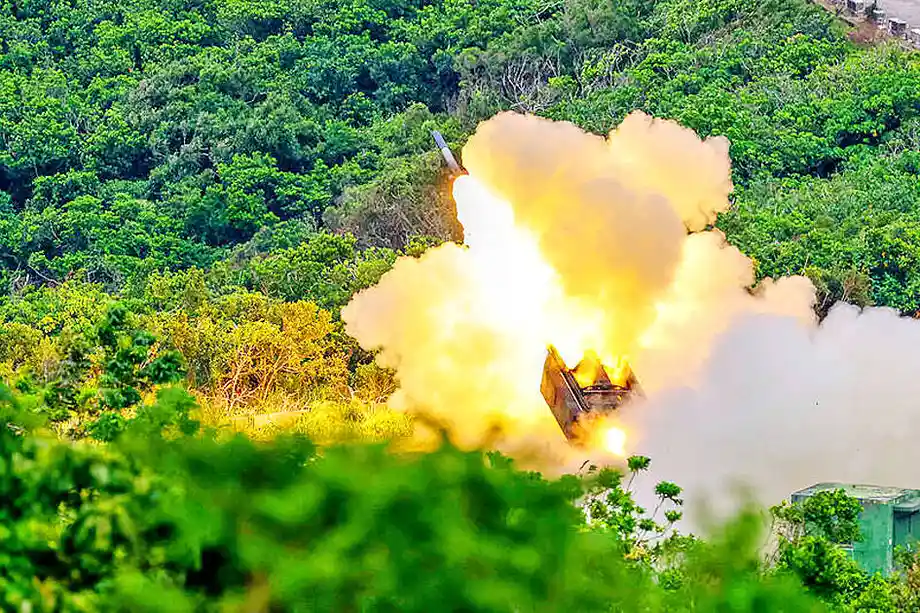
Taiwan plans to expand its M142 High Mobility Artillery Rocket System fleet to 111 launchers, with military planners considering deployments on Penghu and Dongyin that would bring more Chinese coastal military facilities within missile range. The planned inventory includes 504 Army Tactical Missile System missiles, known as ATACMS, with a range of 300 kilometers.
Contents
- Island deployments could move Taiwan's missile reach closer to China
- What the 111 launchers and 504 missiles include
- Why the delivery dates need careful reading
- Penghu would extend the reach across the strait
- Dongyin offers a different geographic advantage
- The aim is to delay an attack before it reaches Taiwan
- Thunderbolt-2000 would retain the closer defense role
- Contracts extend beyond the first expected deliveries
- A missile with greater range is also being considered
- Key Points
The delivery schedule is more extended than a simple target of having everything ready in 2030 suggests. The first 11 launchers have reportedly arrived, another 18 are scheduled for delivery by the end of 2027, and the largest purchase, covering 82 launchers, is expected to begin arriving in 2030. That final procurement runs from 2026 through 2032.
Penghu, in the Taiwan Strait, and Dongyin, in the Matsu island group near China's Fujian coast, would give the launchers positions closer to potential military targets than deployments on Taiwan's main island. Military accounts identify ports, airfields, supply centers and places where troops could assemble for an amphibious assault among the facilities potentially within reach.
The island deployments remain under consideration, with no final allocation of launchers or deployment date announced. Their intended purpose, according to military sources, is to make Chinese forces operate farther from the coast and give Taiwan more time to prepare for an attack.
The procurement also involves a practical question: where to place a much larger artillery fleet. Launchers are intended for army corps artillery commands, while island defense commands are being considered for systems beyond what those mainland formations could accommodate.
What the 111 launchers and 504 missiles include
Taiwan's planned fleet consists of three purchases: 11 launchers in the first batch, 18 in the second and 82 in the third. The newest batch accounts for about 74 percent of the planned 111 launchers, making it the main driver of the expansion.
The accompanying ATACMS quantities are 64 missiles in the first batch, 20 in the second and 420 in the third. Those figures total 504, giving a precise count behind descriptions of an inventory exceeding 500 tactical missiles. The second batch also includes 864 precision guided rockets, while the third includes a further quantity of precision rockets that has not been specified.
HIMARS is the launcher, rather than the name of a single missile. It carries and fires different ammunition, so its reach depends on what is loaded. The 300 kilometer figure applies to the ATACMS missiles discussed in the procurement, while the proposed island defense arrangement assigns HIMARS missions at distances of roughly 70 to 300 kilometers.
The first batch has reportedly been delivered in full, and its receiving unit has entered service. Military officials also say it completed Taiwan's first tactical missile live firing exercise on its own territory. Those developments give Taiwan an initial operational force while the much larger purchases move through production and delivery.
Why the delivery dates need careful reading
Taiwan's Ministry of National Defense provided an earlier official benchmark in its May 2023 statement. The ministry said an additional 18 HIMARS systems and associated equipment formed part of an ongoing military investment program, with a revised Letter of Offer and Acceptance signed on April 20, 2023.
The ministry said the main equipment in that purchase could be delivered in 2026, earlier than the previously planned 2027 schedule. More recent military reporting places completion of the second batch's deliveries by the end of 2027. These are different published schedules for the same additional 18 launchers, and the later account uses the later date.
The main procurement milestones are:
- April 20, 2023: Taiwan signed the revised purchase document for 18 additional HIMARS systems and associated equipment.
- May 10, 2023: The defense ministry announced that the main equipment could arrive in 2026 rather than 2027.
- 2024 to 2025: The original delivery window for the first 11 launchers and 64 ATACMS missiles, now reported fully delivered.
- End of 2027: The completion target in more recent reporting for the second batch of 18 launchers.
- From 2030: Expected start of deliveries for the third batch of 82 launchers, within a program running through 2032.
Penghu would extend the reach across the strait
Penghu's attraction to military planners is its position between Taiwan's main island and Fujian. Moving a launcher closer to the opposite coast allows a missile with the same range to reach farther inland, potentially bringing additional military facilities within striking distance.
Military estimates place Penghu roughly 120 to 140 kilometers from the Fujian coast in the initial account, while another military source gives a distance of about 150 to 160 kilometers. The precise starting point and destination matter when calculating how far a particular missile could reach beyond the shoreline.
Military sources identify landing assembly areas around Quanzhou, Xiamen and Zhangzhou among the potential targets. They also describe the possibility of reaching supply centers behind coastal forces. For readers unfamiliar with invasion preparations, an assembly area is a place where troops, vehicles and equipment gather before moving toward their departure points.
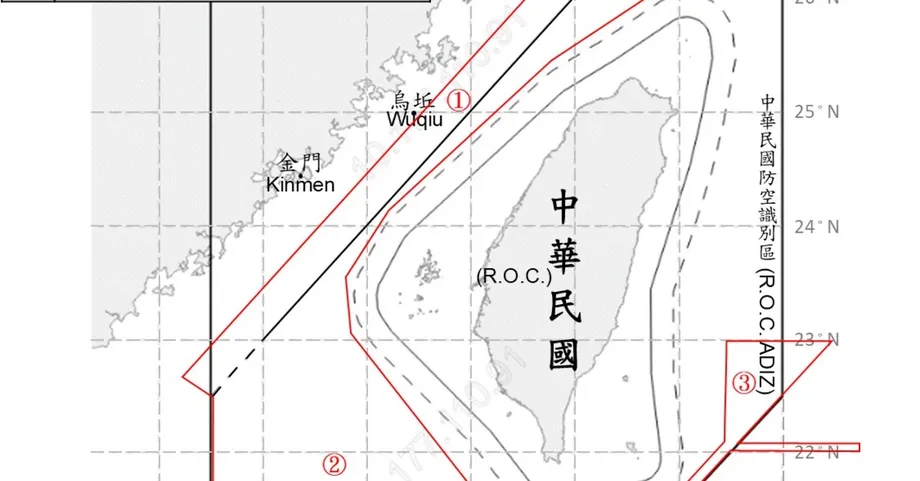
George Mason University's Taiwan Security Monitor presents an island deployment visualization showing possible launcher positions and the operating ranges of ammunition in Taiwan's inventory. Its accompanying explanation says the reported Penghu and Dongyin plans could bring coastal naval facilities and airfields in Fujian and Zhejiang within range.
The university's visualization describes possible deployments. Actual coverage would depend on the launch position, ammunition and location of the intended target.
Dongyin offers a different geographic advantage
Dongyin, Taiwan's northernmost territory, sits much closer to parts of China's coast. Military sources put it about 34 kilometers from the Sishuang Islands, 48 kilometers from the Dongchong Peninsula, 87 kilometers from Sanduao naval port and 113 kilometers from the mouth of the Min River.
Those distances help explain why a small island appears in a plan involving weapons with a range of hundreds of kilometers. A launcher there would start much nearer to several coastal military facilities than one operating from Taiwan's main island.
The military accounts identify the Fuzhou air force base, facilities around Xiapu and Sanduao, and the Wenzhou naval base among locations potentially covered by deployments on Dongyin. The initial account also identifies Taizhou in Zhejiang as within the assessed reach. Precise coverage would vary with the launch site and missile used.
Radar stations and air defense positions belonging to the People's Liberation Army's Eastern Theater Command are also mentioned as potential targets. That expands the proposed role beyond striking ports: planners are considering facilities that help Chinese forces detect aircraft, coordinate operations and protect other military assets.
The aim is to delay an attack before it reaches Taiwan
Military sources describe the proposed deployments as a way to push Chinese forces farther inland. One stated aim is to make them operate at least 100 kilometers from the coastline, increasing the distance between their bases and Taiwan.
A more expansive assessment in the same reporting suggests that some aircraft, rocket launchers and supply depots could need positions at least 300 kilometers inland to avoid attack. These distances describe military expectations about how China might respond, rather than an announced movement of Chinese forces.
The practical argument is about time. Aircraft based farther away would have farther to fly. Troops and supplies gathered inland would have farther to travel before reaching embarkation points. Taiwan's planners hope that added distance would slow preparations for a rapid assault and provide more warning for mobilization.
Huang Chung-yen, an advisory member of Taiwan's National Security Council, has argued that HIMARS mobility and precision strikes over long distances could disrupt Chinese invasion planning. He described the ability to fire and move quickly, combined with faster command decisions, as a challenge to an attack plan built around early, heavy bombardment of Taiwan.
The military value therefore involves both reach and movement. A launcher must receive a target, move into position, fire and relocate. Increasing the number of launchers gives commanders more equipment to distribute, while command systems help coordinate where and when they are used.
Thunderbolt-2000 would retain the closer defense role
Taiwan's domestically produced Thunderbolt-2000 rocket system is already deployed in Penghu, according to military sources. It is also used for tactical deployments in Kinmen and Lienchiang, the county that includes the Matsu islands, depending on the mission.
The proposed division of tasks gives Thunderbolt-2000 responsibility for nearby waters and beach approaches at distances of up to about 45 kilometers. HIMARS would handle more distant strikes, with the reported planning band extending from approximately 70 to 300 kilometers.
That arrangement connects two different needs. Island defenders must be able to engage forces approaching their own shores, while commanders also want to threaten military facilities across the strait. Using different systems for those jobs lets them assign ammunition and launchers according to the target's distance.
Military sources describe the systems as providing commanders with more operational flexibility. The final mix of weapons on each island would also shape the training, ammunition storage, maintenance and command arrangements needed to support them.
Contracts extend beyond the first expected deliveries
Procurement notices published on April 22, 2026, listed a long range precision fire system contract worth NT$123,503,717,741, or about NT$123.5 billion. The reported performance period began on March 24, 2026, and ends on December 15, 2032.
The notices covered six military procurement contracts with the United States, including self propelled artillery, missile stock replenishment, integrated air defense services, antiarmor missiles and cooperation on producing large caliber ammunition. Taiwan's military mission in the United States completed the agreements with the American Institute in Taiwan.
The legislature had authorized the executive branch on March 13 to sign specified weapons purchase documents before their deadlines if related budget reviews were still unfinished. At the time of the April notices, lawmakers were still negotiating key terms of a special defense procurement bill, including its spending ceiling and purchase categories.
A subsequent account says the special legislation passed in mid May and the Executive Yuan approved the special budget proposal on May 20. That account described an initial payment of more than NT$800 million as due before May 31 for the new HIMARS purchase.
The contract endpoint in 2032 and the expected start of the third batch's deliveries in 2030 give readers two useful dates: when the largest batch is expected to start arriving, and how long the procurement agreement runs.
A missile with greater range is also being considered
A military source says Taiwan has reserved room in a future procurement for Lockheed Martin's Precision Strike Missile, with a stated range of up to 500 kilometers. That would add 200 kilometers to the 300 kilometer reach of the ATACMS missiles described in the current plan.
The proposed missile would give commanders more geographic flexibility, including the ability to reach farther across the strait from Taiwan's main island. Its purchase is described as a future option, while the detailed quantities in the current expansion concern HIMARS launchers, ATACMS missiles and precision guided rockets.
Taiwan's immediate task is to receive and organize the fleet already planned. The strategic choice is how much of that force to keep with army corps on the main island and how much to assign to island defense commands closer to China. Penghu and Dongyin matter because their locations could change the reach of the same ammunition.
Key Points
- Taiwan plans a total of 111 HIMARS launchers and 504 ATACMS missiles across three purchases.
- The first 11 launchers are reportedly delivered; the second batch of 18 is now scheduled for completion by the end of 2027.
- Deliveries of the largest batch, 82 launchers, are expected to begin in 2030 within a program running through 2032.
- Penghu and Dongyin are being considered for deployments that could reach more Chinese coastal military facilities.
- Thunderbolt-2000 would cover closer maritime approaches, while HIMARS would undertake more distant strikes.
- A future Precision Strike Missile purchase could extend reach to 500 kilometers, according to a military source.