New cancer tests look beyond scans and scopes
A study of 507 people in South Korea and an international investigation involving nearly 1,800 patients are pointing toward simpler ways to look for cancer: analysing microbes collected from the mouth and measuring tiny biological signals in blood.
Contents
- New cancer tests look beyond scans and scopes
- What the Korean mouth sample study found
- From microbial overlap to a screening decision
- A blood test combines three pancreatic signals
- False alarms and precancerous changes matter
- Mouth microbes offered clues years before diagnosis
- Looking for changes before invasive cancer
- How the research fits together
- Key Points
The Korean research, published online in Cell Host & Microbe on August 21, 2026, examined microbial patterns associated with stomach and colorectal cancers. The international study, described by City of Hope on September 15, 2026, found that an experimental blood test called PANXEON identified 87% of pancreatic cancers at stages 1 and 2.
Both approaches could eventually help doctors decide who needs a closer examination. Their immediate challenge is to perform reliably in people being assessed before a diagnosis, including those whose other medical conditions can complicate results. Larger clinical trials are needed before PANXEON could enter routine practice, while the Korean approach needs further testing in people without symptoms.
A third investigation adds a longer view. Researchers analysing mouth samples collected before pancreatic cancer developed identified 27 microbial species associated with later disease. Meanwhile, work involving oesophageal cells and stored blood samples is exploring changes that can appear years before a cancer diagnosis.
For patients, the attraction is practical. A mouth rinse or blood draw could make an initial assessment less burdensome than an invasive examination. Doctors would still need imaging, endoscopy or other diagnostic procedures to investigate suspicious findings. The central task is to find the people who need those procedures while keeping unnecessary investigations to a minimum.
What the Korean mouth sample study found
Researchers from Yonsei University and Chungnam National University analysed 1,010 oral and stool samples from 507 participants at Severance Hospital and Severance Health Checkup. The group included healthy people, people with metabolic diseases, and patients with stomach or colorectal cancer.
The team developed an oral to faecal microbial transfer index, described as the MF index. It measures the proportion of microbes in stool that may have originated in the mouth, using matching microbial genetic sequences found in both places.
People swallow microbes with saliva and food every day. Stomach acid and the body's immune defences usually help keep the communities living in the mouth and intestine distinct. The researchers investigated whether changes in that separation could provide useful cancer signals.
Patients with stomach or colorectal cancer had higher MF index values than healthy participants. The differences remained statistically meaningful after the researchers accounted for factors including alcohol consumption, exercise and body mass index, a measure relating weight to height. Microbial patterns also varied with cancer type and stage.
The team then built a classification model using random forest, a machine learning method that combines many branching decision rules. It was evaluated against seven external clinical cohorts containing 2,031 samples, extending the assessment beyond the original Korean participants.
Oral samples alone contained useful cancer signals. The model also showed greater sensitivity than a faecal occult blood test, which looks for hidden blood in stool. Sensitivity means the share of people with a disease whom a test correctly identifies. Exact sensitivity and false positive figures were not given in the research description, leaving the size of that advantage and the burden of follow-up testing unquantified.
From microbial overlap to a screening decision
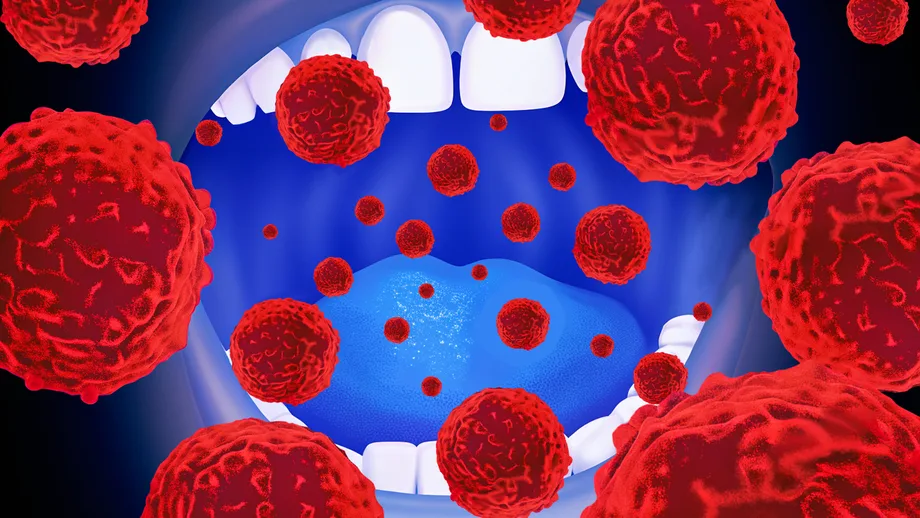
A mouth rinse could eventually serve as an initial sorting step, helping identify people who should undergo an endoscopy or colonoscopy. Those examinations let doctors inspect the digestive tract directly and take tissue samples when needed.
The two testing approaches look for different clues. A stool blood test searches for bleeding, while microbial analysis searches for patterns in the organisms present. A cancer that is not bleeding may still be accompanied by a microbial signal.
The Korean study included patients whose cancers had already been diagnosed. The next practical question is how accurately the approach can identify disease among people attending ordinary screening appointments, where most participants will be cancer free.
Yonsei professor Kim Ji-hyun and colleagues plan to combine microbial findings with genetic and clinical information to develop more individualised risk estimates. A related patent application has been filed. South Korea's Ministry of Science and ICT and the National Research Foundation supported the work through research programmes.
A blood test combines three pancreatic signals
City of Hope's PANXEON study announcement describes research published in Nature Medicine involving nearly 1,800 patients across the United States, Europe and Asia. The experimental test combines three measurements from a blood sample into a single risk score using artificial intelligence.
Two measurements involve microRNAs, small molecules that help regulate how cells use genetic instructions. PANXEON measures microRNAs circulating in blood and microRNAs carried inside exosomes, tiny packages released by cells. The third measurement is CA19-9, a protein marker associated with pancreatic cancer.
Ajay Goel, the study's senior author and chair of City of Hope's Department of Molecular Diagnostics and Experimental Therapeutics, explained why the team combined several signals:
"Most biomarkers tell you one part of the story. Combining multiple biological signals gives us a clearer picture of what may be happening in the pancreas," he said.
PANXEON identified 87% of stage 1 and stage 2 pancreatic cancers in the study. Expressed another way, it would miss about 13 of every 100 early cancers at that measured sensitivity. Doctors therefore still need to consider symptoms, medical history and other examination results when deciding what to investigate.
City of Hope says approximately 90% of pancreatic cancers are detected at advanced stages and gives a five year survival figure of 14%. Finding disease earlier could give more patients access to treatment while the cancer is less advanced.
False alarms and precancerous changes matter
PANXEON produced false positive results in 3% of people without cancer in groups at low risk and 16% in groups at high risk. For every 100 people without cancer in those respective groups, that means roughly three or 16 would receive a positive result and could need further investigation.
Kyaw Lwin Aung, a medical oncologist at Baptist Health Herbert Wertheim Cancer Institute, identified accuracy in the group at greater risk as an area requiring further work:
"PANXEON's sensitivity for early detection of pancreatic cancer is very promising, but the assay's specificity still needs improvement for high-risk groups," he said.
Specificity describes how well a test correctly identifies people who do not have the disease. It matters because a positive result can lead to additional scans, invasive procedures, expense and anxiety.
PANXEON also detected high grade dysplasia more than 64% of the time among people with pancreatic cysts considered at high risk. Dysplasia means abnormal cells; high grade describes more advanced changes that can precede invasive cancer.
Doctors monitoring pancreatic cysts need to judge which require closer observation or intervention. A blood signal could help guide that decision. City of Hope identifies people with inherited susceptibility, a family history of pancreatic cancer, pancreatic cysts or chronic pancreatitis as potential groups for assessment. Chronic pancreatitis is persistent inflammation of the pancreas.
The study received support from the US National Institutes of Health and National Cancer Institute, and the Italian Association for Cancer Research. City of Hope disclosed that Goel is a paid consultant to Biocartis, which has an option to acquire rights to PANXEON.
Mouth microbes offered clues years before diagnosis
A pancreatic cancer study published online in JAMA Oncology on September 18, 2025, examined samples collected before people developed the disease. It drew on two US cohorts whose participants had provided mouth rinse samples and were followed for an average of nine years.
Among approximately 122,000 participants who supplied samples, researchers selected 445 people who later developed pancreatic adenocarcinoma and 455 matched controls without pancreatic cancer. Adenocarcinoma is a cancer arising from glandular cells.
The analysis identified 27 oral microbial species associated with pancreatic cancer risk, comprising 23 bacterial and four fungal species. Three bacteria associated with gum disease, Porphyromonas gingivalis, Eubacterium nodatum and Parvimonas micra, were linked to greater risk.
Researchers combined microbial presence and abundance into a Microbial Risk Score. Each increase of one standard deviation, a statistical measure of variation, was associated with 3.44 times the odds of pancreatic cancer. The 95% confidence interval ranged from 2.63 to 4.51, showing the estimated uncertainty around that association.
The finding gives researchers a reason to test whether microbial profiles can help select people for pancreatic monitoring. It also differs from comparing samples taken after diagnosis: these mouth samples captured biological information before the cancer was recognised.
Dominique Michaud, an epidemiologist at Tufts University, cautioned that the findings need replication before clinical use for early detection. She pointed to the large difference in frequency between periodontal disease, affecting at least 50% of people, and pancreatic cancer, with an incidence of about five per 100,000. Turning a common oral feature into a useful test for a rare cancer requires a highly selective method.
Looking for changes before invasive cancer
Cambridge researchers have also been investigating ways to identify cellular changes before cancer develops. Work described in March 2024 included Cytosponge, a method for collecting cells from the oesophagus, the tube carrying food from the mouth to the stomach.
A patient swallows a small capsule attached to a thread. Once the capsule reaches the stomach, a sponge inside expands. Pulling it back up collects cells from the oesophageal surface, which can then be examined for protein markers associated with changes linked to cancer risk.
Research involving stored blood samples has revealed another long interval for possible observation. Cambridge scientists identified genetic changes in some people more than 10 years before a blood cancer diagnosis.
For these approaches, the clinical task is to identify which abnormalities are likely to progress and which people need monitoring. Some people with genetic or cellular changes will never develop cancer. Better risk estimates could help doctors concentrate repeated testing and treatment on those most likely to benefit.
How the research fits together
The investigations cover different points in the development of cancer, from changes associated with future risk to signals accompanying an existing tumour. Their sequence helps explain why a convenient sample is only the beginning of a useful screening programme.
- March 2024: Cambridge work described approaches involving oesophageal cell collection and genetic changes appearing years before blood cancer diagnosis.
- September 18, 2025: The oral microbiome study published online in JAMA Oncology linked microbial profiles collected before diagnosis with later pancreatic cancer.
- August 21, 2026: The Korean study published online in Cell Host & Microbe described microbial patterns associated with stomach and colorectal cancers.
- September 15, 2026: City of Hope announced PANXEON findings from nearly 1,800 patients across three regions.
The Korean model seeks to recognise cancer associated microbial patterns. The US oral microbiome investigation estimates later pancreatic cancer risk. PANXEON looks for blood signals associated with early pancreatic cancer and advanced precancerous changes. Each approach needs validation for the particular decision it is intended to guide.
Patients could benefit if simpler initial tests help doctors choose who needs a more demanding examination. The strongest next step is testing those decisions in larger clinical studies: how many cancers are found early, how many people undergo unnecessary procedures, and whether earlier detection improves health outcomes.
Key Points
- Korean researchers analysed 1,010 samples from 507 people and assessed their cancer classification model in seven external cohorts containing 2,031 samples.
- PANXEON identified 87% of pancreatic cancers at stages 1 and 2 in an international study involving nearly 1,800 patients.
- The blood test's false positive rate was 3% in groups at low risk and 16% in groups at high risk.
- A separate investigation linked 27 oral microbial species with later pancreatic cancer using samples collected before diagnosis.
- Cytosponge and stored blood research explore cellular changes that can appear before cancer is diagnosed.
- Further clinical validation is needed, with imaging, endoscopy and other diagnostic procedures remaining central to investigating suspicious findings.