A new obesity treatment enters at 129,800 won for the first month
Hanmi Pharmaceutical plans to make Efe Autoinjector, South Korea's first domestically developed GLP-1 obesity medicine, available for prescription at some medical institutions from October 29, 2026. The planned start comes 22 days after approval by the Ministry of Food and Drug Safety, with an expected first month supply price of 129,800 won.
Contents
- A new obesity treatment enters at 129,800 won for the first month
- Who can receive Efe?
- How the weekly injection works
- What the Korean trial found
- Changes beyond the number on the scale
- Digestive side effects remain part of treatment
- How the supply cost increases
- Price pressure reaches beyond South Korea
- Domestic production and a demanding sales target
- From an earlier diabetes project to the next studies
- Key Points
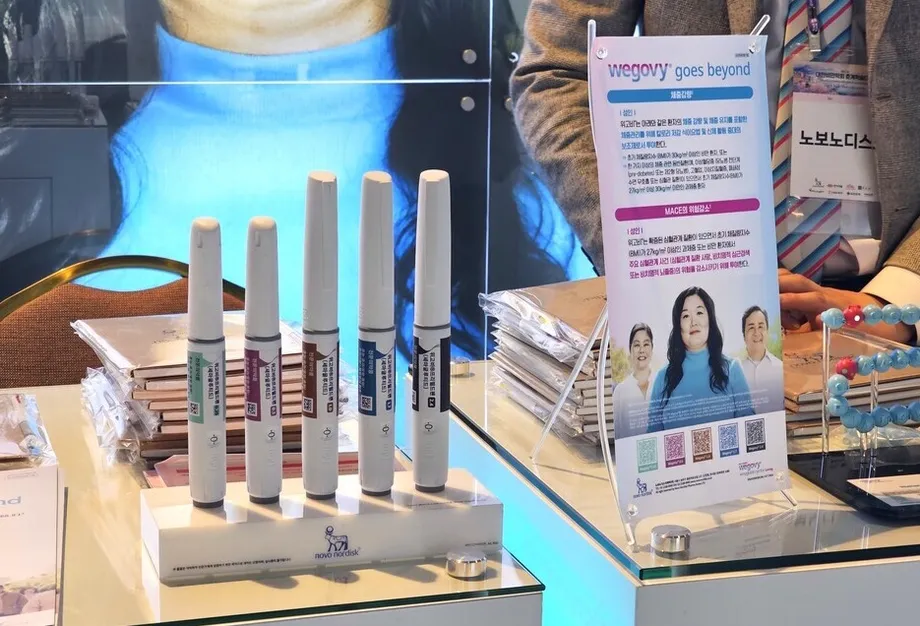
Hanmi announced the prescription schedule on October 22 at the Shilla Seoul hotel during a symposium restricted to medical professionals. The injection contains efpeglenatide and is South Korea's 45th domestically developed new drug. It enters a market dominated by Eli Lilly's Mounjaro and Novo Nordisk's Wegovy.
The starting supply price is roughly half the approximately 270,000 won quoted for four weeks of Mounjaro at its lowest dose, and below Wegovy's starting supply price in the low 200,000 won range. Costs rise as Efe's dose increases, reaching an expected 299,200 won for four weeks at the highest maintenance dose.
Efe is approved for certain adults without diabetes, alongside a diet containing fewer calories and increased physical activity. Hanmi says treatment produced average weight loss of about 10% after 40 weeks in its Korean clinical trial.
Hwang Sang-yeon, Hanmi Pharmaceutical's chief executive, described Efe at the symposium as a new treatment choice:
the fruit of innovation and a new option for treating obesity.
For patients, the immediate change is another prescription option with a lower expected starting supply price and domestic manufacturing. The launch is initially limited to some institutions, while the amount patients pay will depend on where they receive care.
Who can receive Efe?
The Ministry of Food and Drug Safety approved Efe for chronic weight management in adults without diabetes who meet specific body mass index requirements. Body mass index, or BMI, is calculated by dividing a person's weight in kilograms by the square of their height in meters.
Adults with an initial BMI of at least 30 qualify under the obesity indication. Adults with a BMI of at least 27 but below 30 must also have at least one condition related to their weight, such as high blood pressure, abnormal blood fat levels, sleep apnea or cardiovascular disease.
Sleep apnea causes repeated interruptions in breathing during sleep. Abnormal blood fat levels, also called dyslipidemia, include problems such as high cholesterol.
The approved treatment combines the medicine with diet and exercise over an extended period. A physician must assess eligibility and select treatment according to the approved prescribing conditions. Hanmi's separate research involving people with type 2 diabetes remains under development.
How the weekly injection works
Efpeglenatide acts on GLP-1 receptors in the brain and digestive system. Receptors are structures on cells that receive chemical signals. Activating these receptors helps suppress appetite and slows the movement of food out of the stomach, allowing a feeling of fullness to last longer.
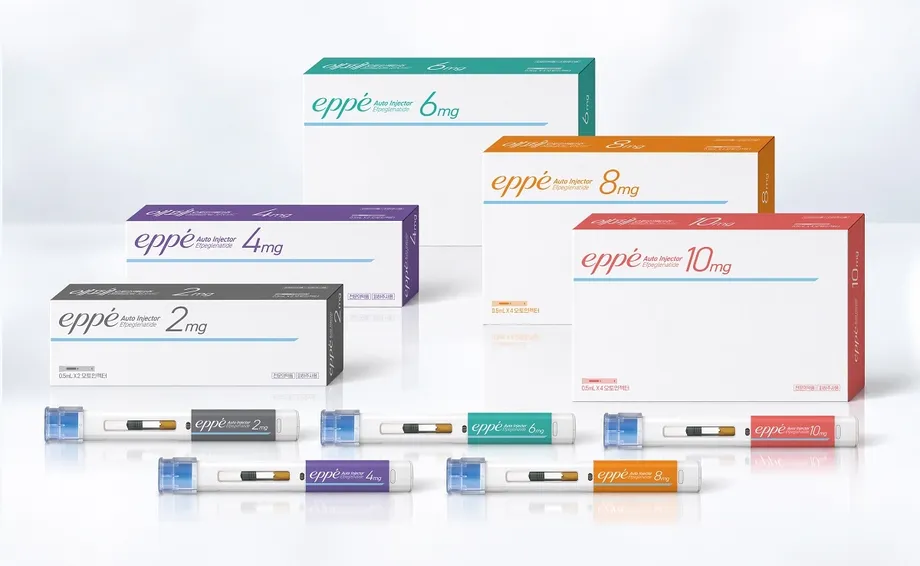
Hanmi used its LAPSCOVERY technology to extend the medicine's activity, supporting an injection under the skin once a week. Regulators approved five strengths: 2 milligrams, 4 mg, 6 mg, 8 mg and 10 mg.
The treatment schedule starts with 2 mg weekly for two weeks, followed by 4 mg weekly for two weeks. Patients then receive 6 mg for four weeks and 8 mg for four weeks, before the 10 mg maintenance stage begins in week 13. Gradual increases give the body time to adjust as the amount of medicine rises.
Efe comes in an automatic injection device designed for use without assembling a separate needle. Hanmi has also considered other delivery formats, including syringes supplied with medicine already inside and pens containing multiple doses.
What the Korean trial found
Hanmi's December 2025 announcement described interim results from a phase 3 trial involving 448 Korean adults with obesity. The company reported average weight loss of 9.75% at week 40, with the largest individual reduction reaching 30%. A phase 3 trial is a major stage of testing used to assess a medicine's effectiveness and safety before approval.
The interim analysis put average weight loss in the placebo group at 0.95%, producing a difference of 8.8 percentage points between the groups. A placebo is a treatment without the active medicine, used to help researchers measure the medicine's effect.
A second analysis of the trial put average weight loss at 9.02% with efpeglenatide and 0.89% with placebo. It also recorded 75.1% of treated participants losing at least 5% of their starting weight, compared with 13.5% receiving placebo. The interim figures were 79.42% and about 14.5%, respectively; the reason for the different analysis results was not specified.
The interim results also showed that 49.46% of Efe recipients lost at least 10% of their starting weight and 19.86% lost at least 15%. In everyday terms, approximately half reached the 10% threshold and approximately one in five reached the 15% threshold.
Participants had an average age of 43, an average weight of 89 kilograms and an average BMI of 32. The trial lasted 64 weeks, and weight loss observed at week 40 tended to persist through week 64. The final average weight reduction at week 64 was not disclosed.
Changes beyond the number on the scale
Clinical results presented during October's Korean Diabetes Association international meeting included an average waist reduction of 9.3 centimeters among Efe recipients, compared with 2.8 centimeters in the placebo group. The difference was 6.5 centimeters.
Body composition measurements showed fat mass falling by approximately 16.7% and lean mass by approximately 4.5% at week 40. Lean mass includes muscle, water, organs and other tissue apart from fat. These measurements help describe what changed as participants lost weight.
Hanmi has positioned Efe particularly toward patients with overweight or less advanced obesity. About 82% of trial participants were described as having stage 1 or stage 2 obesity. Commercial assessments have identified people with a BMI between 27 and 35 as a potential core market, within the approved eligibility requirements.
Digestive side effects remain part of treatment
Diarrhea, nausea, indigestion, constipation and vomiting were among the adverse events recorded during testing. Rates included approximately 17.6% for diarrhea, 16.6% for nausea, 15.6% for indigestion, 14.6% for constipation and 11.6% for vomiting.
Trial figures presented at the diabetes meeting put the proportion experiencing reactions attributed to the medicine at 53.8%, compared with 29.9% in the placebo group. Digestive symptoms were reported mainly during the period when doses increased.
One safety analysis recorded five of 301 participants, or 1.7%, stopping treatment because of adverse events through week 40. Another recorded five of 434, or 1.2%, permanently stopping because of gastrointestinal events. Those summaries use different participant totals and different categories of adverse events.
Professor Lim Hyeong-seok of Asan Medical Center and Hanmi researchers also examined nausea and vomiting across six clinical studies involving 678 patients. That work informed the company's account of how patients adjusted during gradual dose increases.
For a physician choosing treatment, these safety findings sit alongside the patient's medical conditions, tolerance and treatment goals. Published obesity trials for Wegovy and Mounjaro used different populations, doses and durations, including 68 weeks for a major Wegovy trial and 72 weeks for a major Mounjaro trial. Efe's main launch figures describe outcomes at 40 weeks.
How the supply cost increases
The expected 129,800 won starting cost covers two weekly doses of 2 mg and two of 4 mg. The quoted supply prices include value added tax and increase with the dose:
- Weeks 1 to 4: 129,800 won for the combined 2 mg and 4 mg stages.
- Weeks 5 to 8: 228,800 won for four weekly doses of 6 mg.
- Weeks 9 to 12: 277,200 won for four weekly doses of 8 mg.
- Weeks 13 to 16: 299,200 won for four weekly doses of 10 mg.
Adding those figures gives 635,800 won for the first 12 weeks and 935,000 won for the first 16 weeks. At 10 mg, the expected cost for four weeks is about 2.3 times the introductory supply cost.
Efe completes its first four weeks at the highest dose by week 16, compared with week 20 for Wegovy's corresponding schedule. Published estimates put Efe's cumulative supply cost through that stage about 30% below Wegovy's, while projected maintenance supply prices are 17% below Wegovy and 19% below Mounjaro.
Hanmi says Efe is a prescription medicine outside national health insurance reimbursement and that its supply price differs from the final patient charge. The company had not published a final official price list in the launch preparations described, so patients will need the total charge from their medical institution.
Price pressure reaches beyond South Korea
Chung Sang-won, director of pharmacy innovation at the Korea Pharmaceutical Association, said the arrival of a cheaper domestic competitor could increase pressure on existing manufacturers. He pointed to China, where Mounjaro's price fell from 1,758 yuan to 599 yuan, a reduction of about 66%.
Chinese competition includes Innovent Biologics' mazdutide and Sciwind Biosciences' ecnoglutide. More than 10 companies were also preparing generic versions of semaglutide, the ingredient in Wegovy, according to the China Specialist Forum run by the Korea Institute for International Economic Policy.
Chung explained why recurring costs matter to patients:
"Obesity drugs often require long-term use, so cost can play a significant role in whether patients start and continue treatment," he said.
South Korea's price pressures have also appeared at the border. The Korea Customs Service detected 5,030 obesity medicine smuggling cases through August 2026, 4.2 times the number a year earlier. A monthly 2.5 mg Mounjaro supply was quoted at at least approximately 270,000 won in Korea and around 10,000 yen in Japan.
Domestic competition is expanding too. HK inno.N has completed recruitment of 313 participants for a Korean phase 3 study of ecnoglutide. JW Pharmaceutical is pursuing bofanglutide, designed for injection once every two weeks, while Jetema and India's Dr. Reddy's plan Korean regulatory submissions and commercialization after April 2028.
Domestic production and a demanding sales target
Hanmi will manufacture Efe at its Pyeongtaek bio plant, handling production from the active ingredient through the finished medicine. That gives the company direct control of domestic manufacturing and makes supply continuity a central part of its pitch against imported products.
The company has set a sales target of 100 billion won for Efe's first year after launch. Against an estimated Korean obesity medicine market of 2 trillion won, that would represent approximately 5% of sales.
Financial projections are more cautious. Forecasts put Efe sales at approximately 21 billion won in 2027, 64 billion won in 2028 and 95 billion won in 2029. The gap between those forecasts and Hanmi's ambition makes actual prescription growth an important early measure of commercial progress.
Hanmi is also developing HM17321, a separate experimental medicine intended to support weight loss while preserving muscle. Genentech holds development, manufacturing and commercialization rights outside Korea. That project adds another obesity research program alongside Efe's entry into routine prescribing.
From an earlier diabetes project to the next studies
Efpeglenatide's development began well before the obesity launch. Hanmi licensed it to Sanofi in 2015, initially for diabetes development. Sanofi returned the rights in 2020, after which Hanmi resumed development and pursued obesity trials in Korea.
The regulatory and launch sequence includes several dated milestones:
- November 27, 2025: Efpeglenatide received designation under the ministry's Global Innovative Products on Fast Track program, known as GIFT.
- December 17, 2025: Hanmi announced completion of its Korean marketing authorization application.
- October 7, 2026: The Ministry of Food and Drug Safety approved Efe in five strengths.
- October 22, 2026: Hanmi announced the planned prescription schedule at its Seoul symposium.
- October 29, 2026: Prescriptions are expected to begin at some medical institutions.
Hanmi is now studying efpeglenatide alongside metformin and dapagliflozin in people with type 2 diabetes whose blood sugar remains inadequately controlled. The trial is expected to finish in 2028. The company's December 2025 development statement set a goal of obtaining diabetes approval in 2028.
The same statement targeted an application in the first quarter of 2026 to begin testing a product combining the medicine with a digital medical device. Hanmi is also developing an associated app, Epiday, intended to record meals, exercise, weight and adverse events, offer advice using artificial intelligence and allow clinicians to review data.
Kim Na-young, a Hanmi vice president involved in Efe's development, has described an ambition to launch the app alongside the medicine and is considering benefits linked to continued app use. The company's plans also include nutrition products and other health management packages.
Key Points
- Efe prescriptions are expected to begin at some South Korean medical institutions on October 29, 2026.
- The weekly injection is approved for eligible adults without diabetes, alongside diet and exercise.
- Hanmi's interim trial results showed average weight loss of 9.75% at 40 weeks.
- Expected supply costs rise from 129,800 won for the first four weeks to 299,200 won for four weeks at 10 mg.
- Patients' final charges will vary by medical institution.
- Digestive adverse events were common, including diarrhea, nausea and vomiting.
- Hanmi will produce Efe in Pyeongtaek and is pursuing a separate diabetes study expected to finish in 2028.