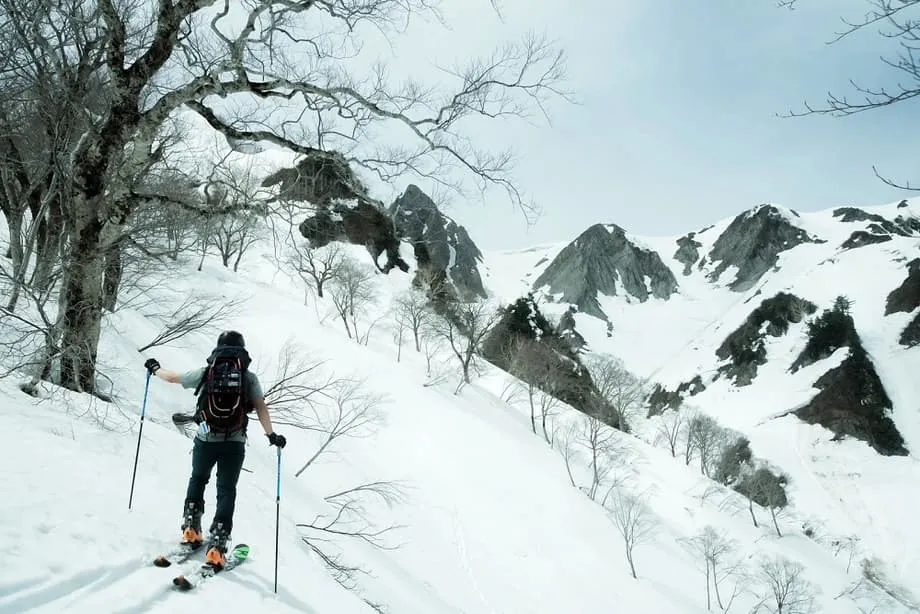
48 Foreign Nationals Among 58 People Needing Rescue
Hokkaido Prefectural Police recorded 58 skiers and snowboarders needing rescue in backcountry and off-piste areas between late November 2025 and early February 2026. Of those people, 48 were foreign nationals, accounting for 82.8 percent of the total. The figures have brought mounting anger over the use of public money to rescue visitors into the centre of Japan's winter tourism debate.
Contents
- 48 Foreign Nationals Among 58 People Needing Rescue
- Why Rescue Spending Has Become a Flashpoint
- Three Australian Deaths in Different Circumstances
- Avalanches and Searches Across Two Winters
- Why February and March Demand Particular Caution
- Who Pays When a Search Begins?
- What Earlier Police Data Shows About Getting Lost
- Different Groups Encounter Different Risks
- Equipment Gaps and Possible Changes to Niseko Rules
- Insurance Claims Rise as Tourism Expands
- Tourism Revenue Meets Local Resentment
- The Bottom Line
Hokkaido, Japan's northernmost prefecture, has attracted growing numbers of international visitors with its celebrated powder snow and the spending power that a weak yen gives travellers. Restaurants and hotels from Niseko to Furano have benefited from the influx. At the same time, residents facing higher living costs and stagnant wages are questioning who should pay when visitors become stranded outside ski resort boundaries.
Police and fire department rescues are generally funded through taxation, while searches involving civilian patrols or private organisations can produce substantial bills. That difference is central to the dispute: the cost to a stranded skier depends partly on which organisation carries out the rescue.
Several deaths this winter have added urgency to the discussion. Three young Australians have died in separate incidents in Japan since January, while avalanches and searches for lost groups have highlighted the dangers beyond maintained ski runs. Those incidents span different locations and circumstances, including a fatal ski lift accident in Nagano Prefecture.
As of February 11, the debate covers rescue funding, insurance, equipment, navigation and respect for local rules. Proposed changes include mandatory safety equipment and rescue insurance, alongside stronger education before visitors arrive. Communities are also weighing the benefits of tourism against the demands it places on local services.
Why Rescue Spending Has Become a Flashpoint
Local frustration reaches beyond the expense of helicopters and search teams. Many residents connect the arrival of international tourists with sharp price increases at nearby businesses, making some of the economic benefits of the tourism boom harder for them to share.
A widely circulated video of Hokkaido Prefectural Police using a helicopter to rescue a lost college student from overseas intensified concern about how public resources are allocated. Anger has been especially strong over rescues involving visitors who deliberately crossed safety boundaries.
An online commenter expressed resentment about public money being spent on such operations:
The money that everyone worked so hard to earn is being used to save inconsiderate foreigners.
Other online suggestions included charging foreign visitors 100 million yen for a rescue, requiring insurance before allowing access to ski areas, or sending rescue bills to embassies. These demands sit alongside broader proposals for changes to insurance and charging arrangements.
Residents already coping with tourism related price increases face a second source of frustration when taxes fund emergency responses. Local governments must maintain rescue services while meeting other community needs, creating pressure on budgets and choices about where resources go.
Three Australian Deaths in Different Circumstances
Brooke Day, a 22-year-old advanced snowboarder from Queensland, died after her avalanche backpack became entangled in a ski lift at Tsugaike Mountain Resort in Nagano Prefecture. Her death was one of three separate fatal incidents involving young Australians in Japan since January.
Michael Hurst, 27, from Melbourne, died days later while skiing between Niseko Moiwa and Niseko Annupuri resorts in Hokkaido. He had become separated from his group.
Rylan Pribadi, 17, a recent graduate of Brisbane Grammar School, died earlier in January after colliding with a course boundary rope in Niseko. Together, the deaths have sharpened concern about safety during a season drawing large numbers of international visitors.
Avalanches and Searches Across Two Winters
Mount Rishirizan was the scene of a fatal avalanche in March 2025. One participant in a backcountry tour died, and three other people, including the guide, were injured. Police subsequently referred the tour company president to prosecutors on suspicion of professional negligence causing death.
More recently, a woman in her 30s died when an avalanche struck a group of approximately 10 foreigners climbing Mount Yotei for backcountry skiing. The incident added to the winter's toll among visitors seeking snow beyond resort runs.
Seven foreign tourists also became stranded near Furano ski resort in mid-January 2026. They had likely been skiing in backcountry terrain outside patrolled areas when they became lost on Mount Furano Nishidake. The group used a smartphone's satellite communication feature to make an emergency call and was rescued without injuries.
The Furano search required substantial police resources and brought visitor preparedness and technology into the safety debate. A phone enabled the group to request help, while navigation skills remain a recurring concern in accounts of people becoming lost near resorts.
The incidents and safety figures span several periods:
- November 2019 to March 2024: Hokkaido Police recorded 16 avalanche related accidents over five seasons, with 11 deaths and 10 injuries.
- March 2025: An avalanche on Mount Rishirizan killed one tour participant and injured three others, including the guide.
- Late November 2025 to early February 2026: 58 skiers and snowboarders needed rescue in Hokkaido's backcountry and off-piste areas, including 48 foreign nationals.
- January 2026: Three young Australians died in separate incidents in Japan, and seven foreign tourists were rescued near Furano.
Why February and March Demand Particular Caution
Hokkaido Police figures show that 75 percent of the 16 avalanche related accidents recorded from November 2019 to March 2024 occurred in February and March. Those months are a particular concern because fresh snow can accumulate on slopes that have already become smooth, creating unstable conditions.
Yusuke Harada, chief researcher of the snow and ice team at the Civil Engineering Research Institute for Cold Region, has warned about new snow deposited by heavy snowfall and storms. A surface avalanche occurs when unstable snow near the surface slides down a slope.
Harada urged backcountry visitors to be prepared to abandon their plans:
It is expected that conditions will be more likely to cause surface avalanches than ever before. You will need the courage to turn back.
The warning matters during the same late winter period that accounts for most avalanche accidents in the police figures. The attraction of fresh powder comes with changing snow conditions that can make a planned route dangerous.
Who Pays When a Search Begins?
Police and fire department rescues are civil protection services supported by general taxation. People extracted by these public agencies typically receive no rescue bill, just as a theft victim is not normally sent an itemised bill for a police investigation.
Private searches operate differently. Civilian ski patrols often carry out rescues at resorts operating on leased national park land, and their work can involve substantial charges. Furano ski resort charges 20,000 yen per person per hour, plus 50,000 yen per hour for snowmobile use.
A recent rescue lasting three hours at night in Furano generated a bill exceeding one million yen for the lost skier. The example shows how charges for personnel and equipment can accumulate during a difficult search.
Some municipalities coordinate local authorities and civilian rescue organisations in a combined response. Under those arrangements, the components carried out by organisations outside government require payment, while public services remain funded by taxpayers.
Local governments therefore face continuing demands even where a skier receives a private rescue bill. Maintaining public rescue capacity competes with other community services for limited resources, helping explain why the issue has become a budget concern as well as a safety dispute.
What Earlier Police Data Shows About Getting Lost
Police statistics from 2014 to 2019 show that sidecountry incidents increased by more than 30 percent annually during that period. Sidecountry refers here to terrain reached by leaving a ski resort, rather than by starting at a mountain trailhead.
Foreign nationals required more sidecountry rescues than Japanese citizens in absolute numbers throughout that period. Comprehensive figures for the total number of people taking part were unavailable, leaving the rescue counts as the main measure of the pattern.
Navigation failures accounted for most of these incidents. Skiers crossed resort boundaries and quickly became lost in unfamiliar terrain. A Hokkaido Police representative attributed much of the demand for assistance to a lack of smartphone navigation skills:
If people knew how to use their smartphones as navigation devices, about 90 percent of callouts wouldn't have happened.
The older figures place this season's rescue numbers within a longer trend. They also identify a recurring problem close to resorts: visitors leaving familiar runs without being able to find their way through the surrounding mountain terrain.
Different Groups Encounter Different Risks
Japanese backcountry skiers involved in incidents during the historical period tended to travel alone or in smaller groups. Parties consisting of one person accounted for 35 percent of Japanese incidents, compared with 12 percent of incidents involving foreigners.
Foreign groups were larger on average. Japanese citizens more often encountered trouble in backcountry areas reached from trailheads, where bad weather and navigation errors were recurring difficulties. Foreign visitors predominantly ran into problems in sidecountry terrain immediately beside ski resorts.
The historical data also suggests that foreign skiers suffered injuries at higher rates than Japanese skiers in sidecountry incidents. Collisions with trees appeared more frequently in incident reports involving foreigners, pointing to possible gaps in technical skill or decisions about risk in Hokkaido's heavily forested terrain.
Many visitors appear to treat skiing outside maintained runs as an extension of resort facilities. Unlike organised ski mountaineers setting out from trailheads with suitable equipment, some sidecountry visitors lack avalanche beacons, probes, shovels or basic navigation skills. The terrain can contain hidden cliffs, tree wells and avalanche hazards.
Owen Lansbury of the Mountain Safety Collective urged visitors to understand that Japanese ski patrols typically do not travel beyond resort boundaries, unlike operations in many Western resorts. He described what crossing a boundary can mean:
The moment you go underneath a boundary rope there is no avalanche control and no ski patrol to help you if you get stuck or injured.
Police may then need to organise an extraction, bringing longer response times and higher costs. Being close to a resort does not make the surrounding terrain part of its patrolled operation.
Equipment Gaps and Possible Changes to Niseko Rules
A British couple in their late 20s needed helicopter rescue from Mount Yotei in spring 2025 after attempting to hike to an elevation of 1,750 metres in summer clothing. The woman wore short sleeves and long trousers; the man wore long sleeves and shorts.
They called emergency services at 6:10 pm, reporting that they were cold and could not find shelter. Mount Yotei is known for unpredictable weather even during warmer months, and the incident illustrated how visitors can arrive without clothing suited to mountain conditions.
The Niseko Rules, which govern behaviour in Japan's most popular ski area, may soon require avalanche beacons and helmets for backcountry access through ski resorts. The proposed equipment requirements would address part of the preparation gap among people leaving maintained runs.
The Ministry of Land, Infrastructure, Transport and Tourism commissioned a large research project for the 2024/2025 season to examine the demographics and behaviour of foreign backcountry skiers. The project represents the first official government acknowledgment of Hokkaido's backcountry as a legitimate space for recreation and travel.
Equipment requirements, mandatory rescue insurance for foreign visitors, charges for flagrant safety violations and stronger safety education before arrival are among the proposals being discussed. As of February 11, no implementation dates were given for those proposed changes.
Insurance Claims Rise as Tourism Expands
Southern Cross Travel Insurance recorded a 75 percent increase in skiing and snowboarding accident claims in Japan between 2023 and 2025. Average claim costs ranged from $1,100 to $1,500. Another insurer, 1Cover, reported a 43 percent increase from 2024 to 2025.
The increases have added to concern about whether current voluntary insurance arrangements are sufficient for the growing demand associated with winter tourism. Insurance has become a central part of proposals to change how the financial risks of adventure travel are managed.
More than one million Australians visited Japan in 2025, an increase of 15 percent from 2024. Visitors from the United States and other markets also increased. A weak yen has made Japan more affordable than traditional destinations, while its snow has drawn travellers away from resorts in North America affected by drought.
Matt Guy, an Australian guide who has lived in Japan for a decade, has observed that smaller lodges are not prepared for English speakers and are unfamiliar with the attitudes and behaviour of tourists seeking powder snow. Many remain more closely organised around the needs of local communities.
Facilities outside major resorts often lack English language support or modern safety equipment, according to observations from longtime visitors. Rapid tourism growth is forcing those facilities to catch up while communities manage the demands of an expanding international market.
Tourism Revenue Meets Local Resentment
Some international visitors have appeared on social media skiing outside designated courses and then citing language barriers when confronted. Such behaviour has strengthened local perceptions that foreign tourists are driving prices upward while disregarding safety rules.
Comparisons with Mount Fuji rescues in 2024, when foreign hikers required extraction during officially closed climbing seasons, have reinforced criticism of visitors treating Japanese safety restrictions as optional. In Hokkaido, the same frustration now surrounds winter searches and their cost.
Some foreign residents within skiing communities have urged visitors to respect local rules so that their actions do not give ammunition to media narratives hostile to foreigners. Their concern reflects the wider tension between welcoming visitors and protecting local services, safety and community relations.
Hokkaido's hotels, restaurants and mountain destinations benefit from international demand. Its rescue services and residents also bear pressures when visitors become lost, injured or trapped beyond resort boundaries. The debate remains unresolved, with attention focused on preparation, insurance and responsibility for the costs.
The Bottom Line
- Foreign nationals accounted for 48 of the 58 people needing rescue in Hokkaido's backcountry and off-piste areas between late November 2025 and early February 2026, or 82.8 percent.
- Three young Australians died in separate incidents in Japan since January, while avalanches on Mount Rishirizan and Mount Yotei also caused deaths.
- Police and fire department rescues are generally funded by taxes. Private operations can carry substantial charges, including a Furano rescue bill exceeding one million yen.
- Police data from 2014 to 2019 recorded annual growth of more than 30 percent in sidecountry incidents, with navigation failures accounting for most cases.
- February and March accounted for 75 percent of 16 avalanche related accidents recorded over five seasons from November 2019 to March 2024.
- Possible changes include mandatory beacons and helmets under the Niseko Rules, rescue insurance, charges for serious safety violations and stronger visitor education.
- Southern Cross Travel Insurance recorded a 75 percent rise in Japan skiing and snowboarding accident claims between 2023 and 2025; 1Cover recorded a 43 percent rise between 2024 and 2025.