A Geopolitical Shift in Critical Minerals
The United States and Indonesia finalized a trade agreement on Thursday that grants American companies unrestricted access to the archipelago’s vast reserves of nickel and other industrial commodities, a move analysts say could fundamentally reshape global supply chains and challenge China’s long-standing dominance in the sector. The deal, which locks in a 19 percent tariff on Indonesian goods while eliminating duties on over 99 percent of American exports to the Southeast Asian nation, represents one of the most significant shifts in critical minerals diplomacy in recent years.
Under the terms negotiated over seven rounds of talks, Indonesia committed to removing export restrictions on nickel, bauxite, and copper destined for the United States, while agreeing to purchase $38.4 billion in American goods including energy commodities, aircraft, and agricultural products. The agreement also establishes that Indonesia will not impose restrictions on ownership of local businesses by US investors using measures like mining sector divestment requirements, though a review of this provision will occur within 12 months.
Beyond traditional trade barriers, the deal addresses strategic national security concerns. Indonesia agreed to align with Washington on export controls, restricting the transfer of goods subject to American technology restrictions. The agreement also requires Jakarta to consult with Washington before entering digital trade agreements with other nations that might jeopardize US interests, and prohibits Indonesia from imposing digital services taxes that discriminate against American companies.
The critical minerals provisions stand at the center of the arrangement. Indonesia committed to lifting export restrictions on raw nickel ore for the US market, a significant policy shift for a nation that banned raw ore exports in 2020 to force domestic processing. The agreement also facilitates American investment in Indonesian mining, processing, and downstream production, including rare earth elements, while ensuring that foreign-owned industrial parks face the same tax and legal requirements as other companies.
Beijing’s Grip on Indonesian Nickel
Chinese companies currently control approximately 80 percent of Indonesia’s battery-grade nickel production, having invested an estimated $30 billion in the country’s mineral processing infrastructure over the past decade. This dominance resulted largely from Indonesia’s 2020 ban on raw nickel ore exports, which forced international buyers to build smelters within the country or lose access to the world’s largest nickel reserves, which represent 42.3 percent of the global total according to the US Geological Survey.
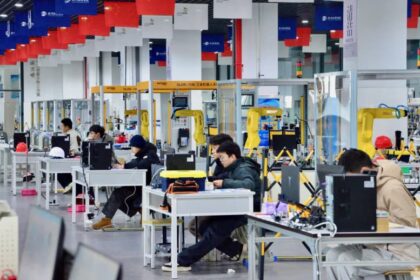
The investment transformed Indonesia from a raw materials exporter into the world’s dominant nickel processor, accounting for roughly 60 percent of global mine supply. Chinese firms including Tsingshan Holding Group, Zhejiang Huayou Cobalt, and Ningbo Lygend have constructed over 90 percent of Indonesia’s nickel smelters, often using High Pressure Acid Leach (HPAL) technology to extract battery-grade nickel and cobalt from low-grade laterite ores found on islands like Sulawesi.
These operations have benefited from lower environmental and labor standards compared to Western competitors, allowing Chinese-backed facilities to achieve cash costs of $3.17 per pound versus $6.56 to $8.24 per pound at Western-operated mines like Sorowako and Weda Bay. This cost advantage has driven a global supply glut, with nickel prices collapsing by 44.7 percent in 2023 and an additional 26.1 percent in 2024, forcing higher-cost producers in Australia and New Caledonia to suspend operations while increasing Indonesia’s market share.
The concentration of Chinese ownership creates complex challenges for American policymakers. Under previous Foreign Entity of Concern (FEOC) provisions governing Inflation Reduction Act tax credits, much of Indonesia’s nickel production would have been ineligible for subsidies due to Chinese majority ownership. While the elimination of the 30D clean vehicle tax credit under recent legislation has removed that specific barrier, concerns remain about supply chain security and the potential for market manipulation by Beijing.
Environmental and Labor Concerns
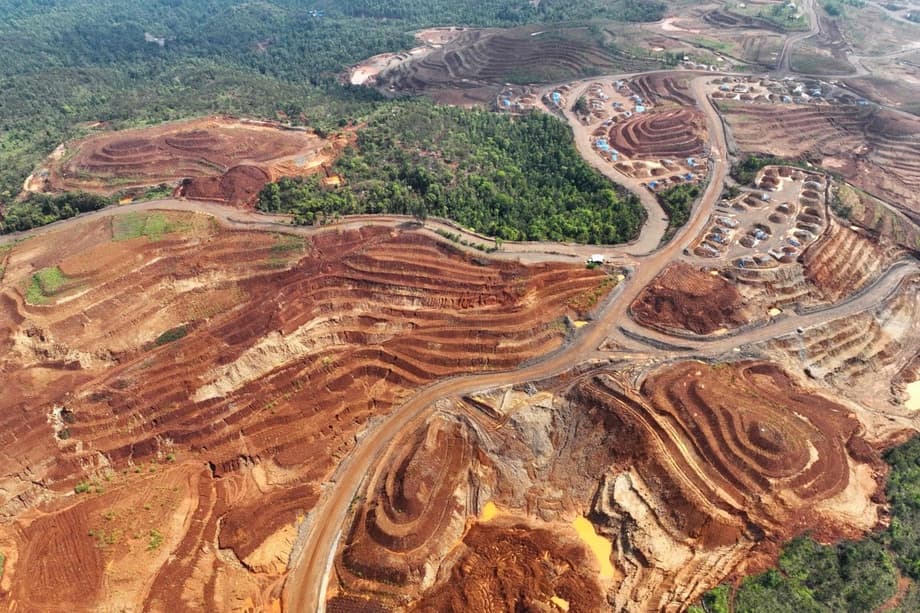
The nickel boom has generated significant environmental degradation, including the destruction of at least 156,000 hectares of forest since 2000, much of it old-growth rainforest critical for carbon sequestration. Mining operations on islands like Sulawesi and Halmahera have displaced indigenous communities, including uncontacted tribes such as the Hongana Manyawa, while polluting sensitive reef habitats in the Coral Triangle.
Processing facilities rely heavily on coal-fired power plants, with industrial parks accounting for 15 percent of Indonesia’s coal power output, a figure projected to rise to 24 percent as new projects come online. This fossil fuel dependence generates substantial carbon emissions, with major nickel producers emitting approximately 15 million metric tons of greenhouse gases in 2023, largely from coal consumption used to process laterite ore into Class 1 battery-grade nickel.
Labor conditions have drawn international scrutiny. The US Department of Labor has flagged Indonesian nickel products for forced labor concerns, particularly in Chinese-owned smelters. A December 2023 furnace explosion at a Chinese-owned nickel factory in Morowali killed 20 workers, highlighting safety deficiencies. These concerns have prompted civil society organizations to demand stricter oversight, with environmental groups noting that submarine tailings disposal continues despite official prohibitions, contaminating the Morowali Sea which contains 76 percent of the world’s coral reefs.
The United States government has reportedly funded labor monitoring initiatives through organizations like China Labor Watch, which received grants to train Indonesian unions and document forced labor cases. These efforts aim to create enforcement-ready dossiers linking labor violations to specific corporate actors and global buyers, potentially affecting the reputation of Chinese-operated facilities.
Great Power Competition Intensifies
The trade agreement emerges as Washington attempts to counter Beijing’s influence in Southeast Asia and secure supply chains for electric vehicle batteries and defense applications. Indonesia’s nickel reserves have become a focal point in the competition to dominate clean energy manufacturing, particularly as global demand for electric vehicles continues to grow despite recent market volatility.
The deal offers Indonesia a pathway to diversify its foreign partnerships beyond Beijing, though Jakarta faces the delicate task of maintaining relations with both superpowers. President Prabowo Subianto, who succeeded Joko Widodo in 2024, has maintained the resource nationalism policies of his predecessor while seeking increased American investment. However, Chinese investment in Indonesia increased 31 percent over the past six years, reaching $35 billion between 2020 and 2025, with over $15 billion directed toward metal processing.
Analysts warn that the agreement could strain Indonesia’s relationship with China, which remains Jakarta’s largest trading partner. When China’s economic growth slows by one percentage point, Indonesian growth drops by an estimated 0.3 percentage points, highlighting the risks of antagonizing Beijing. China purchases the majority of Indonesia’s palm oil, coal, and nickel exports, giving Beijing substantial economic influence over Jakarta.
Indonesia joined the BRICS economic bloc in January 2025 while simultaneously pursuing closer ties with Washington, illustrating the delicate balance Jakarta attempts to maintain. President Prabowo’s recent visit to Moscow, where he discussed nuclear energy cooperation with Vladimir Putin, further demonstrates Indonesia’s multi-aligned foreign policy. This positioning reflects Jakarta’s desire to maximize advantage among competing great powers rather than becoming exclusively dependent on either Washington or Beijing.
Price Volatility and Supply Security
Global nickel markets have experienced extreme volatility in recent months, with prices jumping more than 30 percent between mid-December and January following Indonesia’s decision to restrict mining volumes. Lavinia Forcellese, a commodities analyst with Goldman Sachs Research, noted that relatively small changes in Indonesian policy now have outsized impacts on global balances and prices.
Now Indonesia’s supply decisions are the lever the market is watching. And relatively small changes in policy or approvals can have an outsize impact on global balances and prices.
The price surge reflected market concerns about supply constraints from the dominant producer. Indonesia’s state-owned mining company has recently moved to tighten control over the sector, seizing more than 4 million hectares of mining concessions allegedly obtained through bribery or improper licensing, with potential seizures of another 4.5 million hectares planned for this year. This crackdown aims to assert state control but introduces new uncertainty for investors.
Market analysts note that the long-term demand picture for nickel faces uncertainty as battery technology evolves. Lithium iron phosphate (LFP) batteries, which contain no nickel, now power nearly half of all electric vehicles globally. Chinese automakers have increasingly shifted toward these iron-based designs, which are cheaper and more stable than nickel-rich alternatives. If this trend accelerates, Indonesia’s nickel-focused industrial strategy could face diminishing returns even as the country ramps up production capacity to meet current demand.
Implementation Risks and Resource Nationalism
Despite the agreement’s signing, significant obstacles remain to full implementation. Indonesian officials have reportedly backtracked on some commitments made during negotiations, particularly provisions that might limit Jakarta’s autonomy in managing relations with China and Russia. The United States has pressed for terms that would allow Washington to terminate the agreement if Indonesia enters into deals that threaten American interests, a condition Jakarta views as intrusive.
Indonesia’s mandatory divestment laws require foreign mining companies to transfer 51 percent ownership to Indonesian entities over time, creating long-term uncertainty for American investors. While existing operations often retain operational control despite ownership transfers, new entrants face higher barriers and limited bargaining power. This requirement contradicts the agreement’s nominal elimination of ownership restrictions, suggesting potential conflicts between the new trade deal and existing Indonesian mining law.
The technical challenges of processing Indonesian nickel also complicate American engagement. Most US defense and battery applications require Class 1 nickel, while Indonesia primarily produces Class 2 nickel suitable for stainless steel. Converting Indonesian output to battery-grade material requires sophisticated refining capacity that remains largely under Chinese control.
Furthermore, the elimination of the Inflation Reduction Act’s 30D tax credit has removed a key incentive for American automakers to source from Indonesia, potentially reducing the deal’s immediate impact on electric vehicle supply chains. Without the subsidy premium for FTA-compliant minerals, Indonesian nickel must compete purely on price and availability rather than regulatory preference. The agreement’s durability also faces legal questions in the United States, where the Supreme Court recently considered challenges to the administration’s use of emergency powers to enforce tariffs.
The Bottom Line
- The US and Indonesia finalized a trade deal granting American companies access to Indonesian nickel and critical minerals while setting tariffs at 19 percent.
- Chinese firms control approximately 80 percent of Indonesia’s battery-grade nickel production, creating potential supply chain vulnerabilities for the US.
- Indonesia committed to purchasing $38.4 billion in American goods and removing export restrictions on critical minerals.
- Environmental concerns include deforestation of over 156,000 hectares and heavy reliance on coal-fired power for processing.
- The agreement faces implementation risks, including Indonesian resource nationalism and requirements for majority local ownership of mines.
- Global nickel prices remain volatile, with Indonesia’s production decisions now serving as the primary market lever.
- The deal represents a strategic effort to diversify supply chains away from Chinese dominance, though Beijing retains significant economic influence in Indonesia.