The Smile That Defied Modern Standards
While contemporary beauty campaigns promote dazzling white smiles through bleaching strips and whitening toothpaste, ancient communities in northern Vietnam pursued a radically different ideal. Archaeological evidence now confirms that approximately 2,000 years ago, during the Iron Age, residents of the Red River delta deliberately transformed their teeth into glossy black surfaces using sophisticated chemical processes. This practice, documented in modern Vietnam until the early 20th century, represents one of humanity’s most enduring cosmetic traditions, spanning millennia with remarkably consistent techniques.
The recent discovery at Dong Xa, an archaeological site located roughly 70 kilometers from Hanoi, provides the earliest direct scientific evidence connecting ancient dental modifications to living cultural practices. Researchers from the Australian National University and collaborating institutions analyzed human remains dating between 2157 and 1830 years before present, uncovering chemical signatures that reveal an elaborate beauty ritual involving iron salts and plant extracts. The findings challenge assumptions that ancient dental discoloration resulted solely from dietary habits or environmental factors after death.
For centuries, Western observers struggled to comprehend why Vietnamese communities would darken their teeth rather than whiten them. French colonial writers in the late 1800s described blackened teeth as “an absolute dark abyss in the mouth,” revealing cultural bias rather than understanding. The new research demonstrates that this aesthetic choice encoded deep social meaning, functioning as a visible marker of maturity, cultural identity, and human distinction from the supernatural world.
Excavating the Dong Xa Cemetery
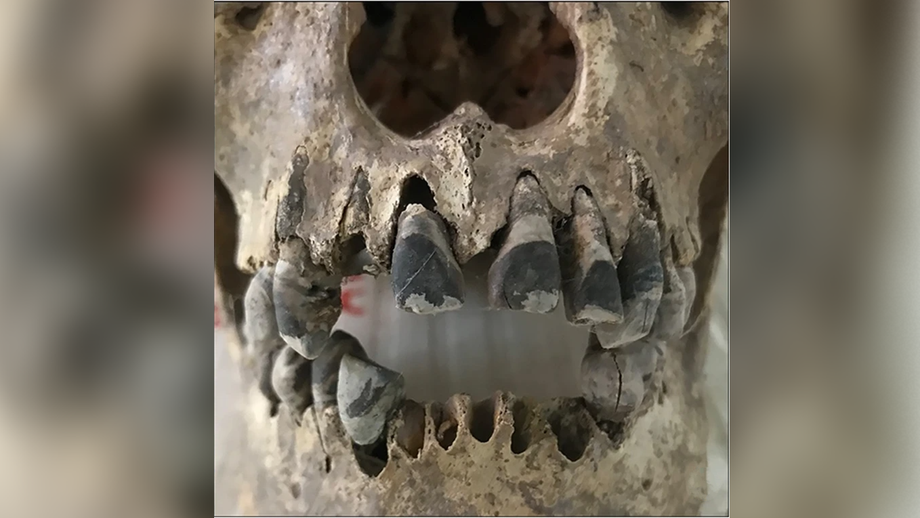
The Dong Xa site first emerged during agricultural canal construction between 1994 and 1997, when workers encountered a large log coffin cemetery containing numerous burials. Formal excavations conducted in 2001 and 2004 by Vietnamese and Australian teams recovered 72 human remains, many displaying unusual dental discoloration that ranged from deep black to reddish brown hues. The settlement belonged to the late Dong Son cultural period, a civilization renowned for sophisticated bronze casting, particularly the massive bronze drums that have become iconic symbols of ancient Vietnamese culture.
The Dong Son culture, flourishing between 500 BCE and 50 CE, represented a period of intense technological innovation and social complexity in northern Vietnam. These communities developed advanced metallurgical techniques, creating not only the famous bronze drums but also weapons, tools, and elaborate grave goods that indicate stratified social structures. The cemetery at Dong Xa contained burials with diverse offerings including cord marked pottery, lacquered winged cups, and Wuzhu coins dating to 118 BCE, establishing clear chronological context for the remains.
From these excavations, researchers selected three specific tooth samples for intensive analysis. Two specimens came from Iron Age burials (04DXD1K2 and 04DXUI2), while a third sample (04DXMPK) dated to approximately the 17th century. This chronological spread allowed scientists to examine whether chemical signatures remained consistent across two millennia of practice. The specimens included molars and a canine tooth, displaying visible black staining that adhered tightly to the enamel surfaces despite centuries of burial. The preservation varied across samples, with the 17th century specimen showing distinct black pigment coating resembling modern tooth blackening, while Iron Age samples required careful targeting of enamel regions free from sediment contamination.
Distinguishing Intention from Accident
Archaeologists have long faced challenges interpreting discolored teeth from ancient contexts. Dental staining can result from multiple sources: iron rich burial soils that leach into remains over centuries, habitual consumption of tannin containing plants like betel nut, or deliberate cosmetic application. Betel nut chewing, a widespread practice across the Asia Pacific region, produces characteristic reddish brown stains on teeth and gums, while incidental dietary staining typically creates uneven, brownish discoloration rather than the deep, glossy black observed at Dong Xa.
Determining whether the ancient Vietnamese staining resulted from deliberate cosmetic application, dietary habits, or post mortem environmental factors required sophisticated nondestructive analysis. The research team employed two complementary techniques to examine the elemental composition of the dental enamel without damaging the irreplaceable specimens. Scanning electron microscopy combined with energy dispersive spectrometry (SEM EDS) allowed researchers to bombard microscopic regions of the enamel with electrons, generating X rays characteristic of specific chemical elements. Portable X ray fluorescence (p XRF) provided additional measurements by detecting fluorescent X rays emitted from the samples when exposed to high energy radiation.
These methods revealed consistent patterns across all three ancient specimens, regardless of their chronological separation. The dominant elements identified included calcium, phosphorus, and oxygen, consistent with hydroxyapatite, the mineral matrix forming natural tooth enamel. However, the colored regions showed distinct anomalies. Iron concentrations ranged from 2.37% to 3.95% in targeted areas, accompanied by sulfur levels between 1.11% and 1.75%. One Iron Age specimen displayed iron oxide concentrations reaching 25% of the analyzed surface composition. These measurements far exceeded levels attributable to soil contamination or natural dietary accumulation, pointing instead to repeated application of iron based substances.
We believe that the combined presence of Fe and S signals is a strong indicator of the involvement of iron salts.
This statement from Yue Zhang, the study’s lead author and an archaeologist at Australian National University, highlights the diagnostic importance of these chemical signatures. Iron and sulfur together suggest iron sulfate compounds (FeSO4 or Fe2(SO4)3), substances produced when iron reacts with sulfur rich materials or acidic environments. The presence of these specific compounds serves as a fingerprint for intentional tooth blackening, distinguishing the practice from incidental staining or environmental contamination.
Reconstructing Ancient Chemistry
To confirm that the detected elements resulted from intentional tooth blackening rather than coincidental environmental exposure, the research team conducted experimental archaeology. They applied iron gall ink, a historical pigment containing iron salts and tannins, to modern animal teeth. This substance produces a deep black color through the same chemical principles hypothesized for the ancient Vietnamese practice. The experimental tooth showed chemical spectra nearly identical to the ancient Dong Xa samples, with elevated iron and sulfur signatures matching the archaeological specimens.
The chemistry underlying this transformation involves coordination bonding between iron ions and tannic acid, a natural polyphenol found in numerous plants. When tannins chelate iron in heated or acidic conditions, they form stable iron polyphenol complexes. Subsequent oxidation upon air exposure creates the characteristic jet black pigment known as iron tannate. This reaction has served humanity for centuries, appearing in medieval iron gall ink recipes and 14th century Chinese textile dyeing traditions. The stability of these compounds explains why the coloration remained permanent throughout individuals’ lifetimes and survived burial for two millennia.
The experimental match provided strong evidence that ancient communities were using a deliberate, chemically sophisticated technique. In one Iron Age tooth, the high levels of iron oxide suggested an intense buildup of iron on the enamel, consistent with repeated coating with a paste rather than single exposure. This pattern did not match staining from soil or betel nut chewing, which produces different chemical signatures and visual results. As Zhang noted, betel nut chewing creates brownish black discoloration, not the deep black observed in the Vietnamese samples.
The Twenty Day Transformation
Ethnographic records from the 19th and early 20th centuries describe an extraordinarily elaborate process for achieving the coveted black smile. Unlike simple betel nut chewing, which produces incidental reddish brown staining, Vietnamese tooth blackening required up to twenty days of meticulous treatment following a specific sequence of steps. The process began with sanitization, during which practitioners roughened the enamel surface using acidic substances such as lime juice or vinegar, sometimes combined with abrasive materials like charcoal or powdered glass. This etching phase, lasting approximately three days, prepared the tooth surface to better receive the dye by creating microscopic irregularities that improved adhesion.
The second stage involved red dyeing, where strips of leaves coated with heated tannin rich pastes adhered to the teeth overnight for eight to fifteen days, creating a reddish base layer. These pastes derived from sources like stick lac, pomegranate rind, or other botanical materials high in tannic acid. The critical black dyeing phase incorporated iron sources, either through powdered vitriol (iron sulfates) or by heating plant extracts on iron utensils to extract metallic compounds. Mixed with adhesives such as honey or glutinous rice, plus flavorings like cinnamon and star anise, this paste reacted chemically to produce the deep black color. This phase lasted between two and eight days, depending on the desired intensity.
Final polishing with burnt coconut shell powder or tar created the distinctive glossy, mirrorlike finish that characterized the completed procedure. The entire process could extend even longer than twenty days in some accounts. Once established, this coloration remained stable throughout the individual’s life, requiring only minor touch ups every two to three years to preserve the luster. The resulting teeth appeared deep black rather than the reddish brown associated with betel use, creating a striking visual contrast that signified completion of the beauty regimen and attainment of adult status.
Beyond Beauty: Markers of Identity
Tooth blackening in ancient Vietnam transcended mere aesthetic preference, functioning as a complex social signifier within the Dong Son cultural sphere. The practice emerged during a period of profound technological and social transformation, when ironworking technology became widespread across northern Vietnam and exchange networks with southern China intensified. Chinese historical texts from the Eastern Han dynasty (25 220 CE) describe a “kingdom of blackened teeth” in central Vietnam, providing written documentation that corresponds closely with the archaeological evidence from Dong Xa. Later accounts from the Tang and Ming dynasties confirm the practice’s persistence in southwestern China and northern Vietnam.
Anthropological research suggests multiple cultural functions for this bodily modification. In some traditions, blackened teeth distinguished humans from animals or supernatural entities, including the “humanoid demons” mentioned in oral histories. The practice served as a rite of passage marking the transition from childhood to adulthood, and functioned as an identity marker distinguishing community members from outsiders or those abducted by foreign invaders. This visual boundary making reinforced social cohesion during an era of increasing regional interaction and migration.
The emergence of tooth blackening may also represent a technological and cultural shift from earlier practices. During the Neolithic period, many Southeast Asian communities practiced tooth ablation, the ritual removal of healthy front teeth. Statistical analysis suggests that by the Iron Age, the probability of finding evidence for blackened teeth rather than extracted teeth increased twenty two fold. Blackening provided a similarly visible marker of group identity without the permanent physical loss or health risks associated with ablation, offering a less extreme alternative that maintained comparable social signaling functions. The practice may have developed as a way to enhance the visual impact of betel nut consumption or to mimic the appearance of ablation while preserving dental function.
Continuity and Change Across Millennia
The Dong Xa discovery establishes remarkable continuity in Vietnamese cultural practices. From the Iron Age through the 19th century, the fundamental chemical process remained consistent, even as specific techniques evolved. By the early 20th century, tooth blackening had become ubiquitous across Vietnam’s majority ethnic groups and numerous minority communities, practiced regardless of gender or social class. Historical paintings from Japan’s Edo period depict women with similarly blackened teeth, suggesting possible cultural diffusion or parallel development using identical chemical principles across East Asia.
However, the tradition faced decline under colonial and modernizing pressures. French observers in the late 1800s dismissed blackened teeth as barbaric, reflecting Eurocentric beauty standards that favored white teeth. Western cultural influence throughout the 20th century gradually displaced the practice, though it persists in some remote Southeast Asian communities today. Ancient genomic data from the Nui Nap site, another Dong Son cultural location, reveal genetic affinities between these ancient populations and modern Vietnamese groups (Kinh) as well as populations in Yunnan, China (Dai), where tooth blackening traditions also existed historically. This genetic and cultural connection underscores the deep interregional interactions that characterized the Iron Age in Southeast Asia.
The chemical evidence from Dong Xa now bridges archaeological remains and historical texts, confirming that the “kingdom of blackened teeth” described in ancient Chinese chronicles was not literary exaggeration but accurate ethnographic observation. This research provides an intimate glimpse into a lesser known aspect of bodily adornment among the Dong Son people, previously known primarily through their bronze artifacts. The decoration of the mouth reveals sophisticated knowledge of chemistry and a commitment to cultural identity that survived for two millennia. Future studies may examine additional burials across Southeast Asia to trace how and when this practice spread, offering a broader view of beauty standards that challenge contemporary Western norms.
Key Points
- Archaeologists confirmed intentional tooth blackening in Vietnam dating back 2,000 years to the Iron Age
- Chemical analysis of teeth from Dong Xa site revealed high concentrations of iron and sulfur, indicating iron salt use
- The process involved reacting iron salts with tannin rich plants to create permanent black pigmentation
- Ethnographic records describe a complex twenty day procedure including sanitization, red dyeing, black dyeing, and polishing
- The practice served as a cultural identity marker and rite of passage, distinguishing humans from spirits and community members from outsiders
- This represents the earliest known archaeological evidence connecting ancient dental modification to living cultural traditions